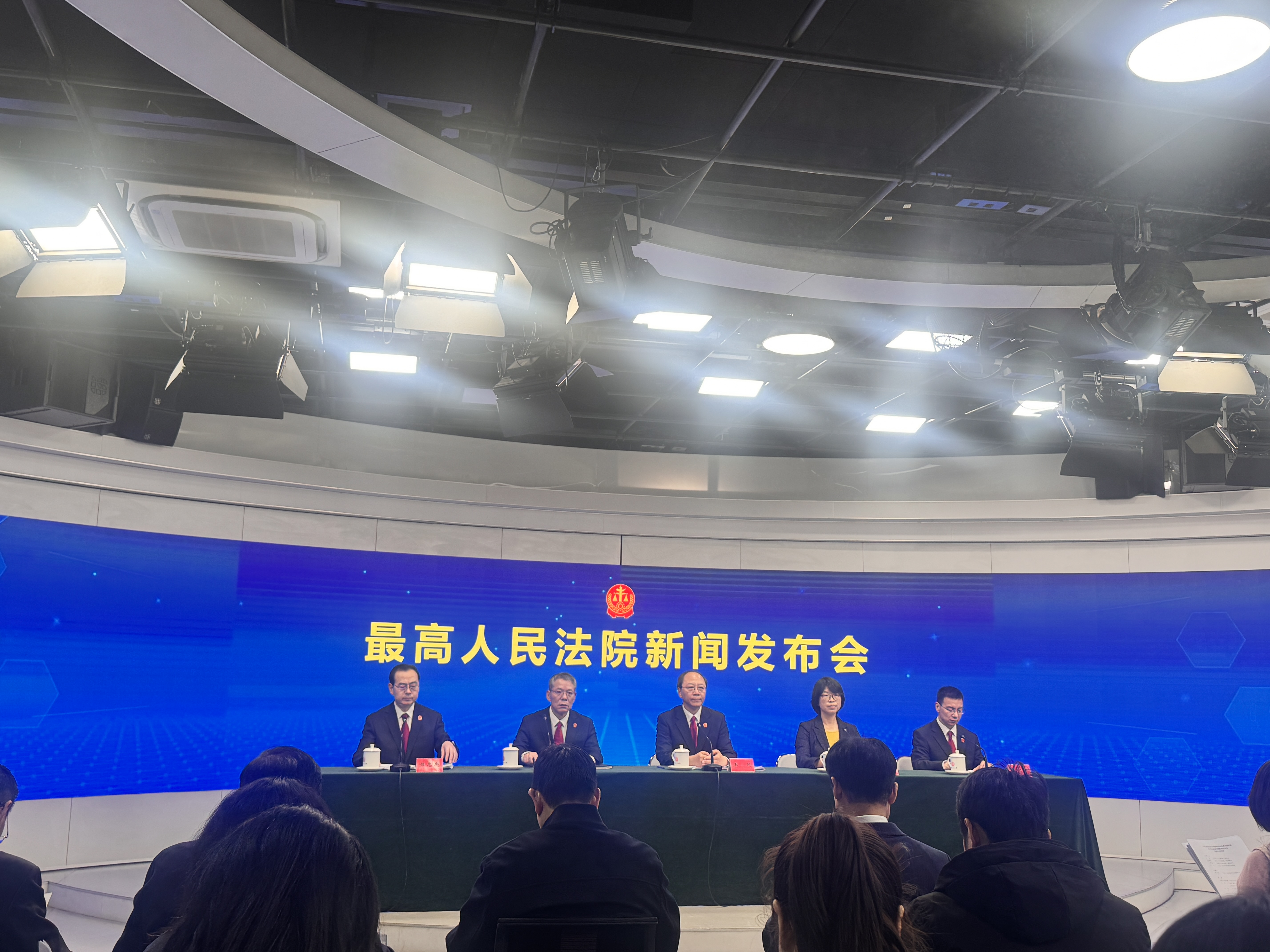
依法平等保护民营企业合法权益

Search documents
最高法:平等保护国企民企合法权益
Zhong Guo Zheng Quan Bao· 2025-12-04 20:22
Core Viewpoint - The Supreme People's Court has released seven typical civil and commercial cases to ensure equal legal protection of private enterprises' legitimate rights and interests, addressing issues such as financing difficulties and high costs for private enterprises [1][2]. Group 1: Legal Protection of Private Enterprises - The Supreme People's Court emphasizes the need to standardize the behavior of financial institutions to alleviate the financing challenges faced by private enterprises [2]. - The released cases cover various aspects, including optimizing the financing environment, activating limited liability for shareholders, addressing historical issues, and protecting corporate reputation [1][2]. - The principle of equal protection under the law is reinforced, ensuring that both state-owned and private enterprises' rights are safeguarded without retroactive application of laws [3][4]. Group 2: Encouraging Investment and Entrepreneurship - The court aims to enhance the confidence of private enterprises in investment and entrepreneurship by strictly adhering to the limited liability system for shareholders [4]. - Legal measures are in place to hold controlling shareholders accountable for any misuse of their position, thereby protecting the interests of honest investors [4]. - The cases illustrate a commitment to reducing operational costs for enterprises and maintaining the integrity of corporate reputation, which is crucial for fostering a favorable business environment [5].
司法保障持续为民企健康发展注入底气
Zheng Quan Ri Bao· 2025-12-04 16:05
Group 1 - The Supreme People's Court has released seven typical civil and commercial cases to protect the legitimate rights and interests of private enterprises, signaling a commitment to a fair business environment [1][2] - The cases address key issues such as optimizing the financing environment, activating shareholder limited liability, handling historical legacy issues, and protecting corporate reputation and credit [1][2] - The release of these cases aims to enhance the legal status and development opportunities of private enterprises in market competition, reinforcing the message that violations of their rights will incur consequences [1][2][3] Group 2 - The implementation of the Private Economy Promotion Law on May 20 established principles for equal treatment, fair competition, and protection of private enterprises [2] - The Supreme People's Court has introduced guiding opinions to ensure the equal protection of private enterprises' rights, emphasizing the importance of strict and fair judicial practices [2][4] - The court has taken various measures to protect private enterprises, including issuing special guidance, providing diverse dispute resolution services, and improving judicial efficiency [4] Group 3 - The typical cases released address the financing challenges faced by private enterprises, aiming to clear obstacles for equal access to financial resources [3][4] - The judicial system is committed to safeguarding the personal and property safety of entrepreneurs, as well as maintaining the integrity of the market order [4][5] - The emphasis on equal protection is not just a theoretical concept but is reflected in practical measures that enhance the operational environment for private enterprises [3][5]
最高法发布典型民商事案例依法平等保护民营企业合法权益
Xin Hua She· 2025-12-04 13:31
Group 1 - The Supreme People's Court released 7 typical civil and commercial cases that demonstrate the equal protection of the legal rights of private enterprises, reflecting the court's efforts to promote the healthy development of the private economy [1] - The cases cover various aspects such as optimizing the financing environment, activating shareholder limited liability, addressing historical legacy issues, and protecting the reputation and credit of enterprises [1] - A specific case involving a bank and a real estate development company highlighted the issue of excessive financing costs, where the court ruled to deduct an unjustified "financing commitment fee" from the loan principal, thus reducing the financial burden on the borrower [1] Group 2 - In the process of enterprise restructuring, disputes arising from unclear debt definitions and asset transfers can hinder the development of private enterprises [2] - A case involving an asset management company and a trading company effectively separated debts that should not be borne by the private enterprise, helping to resolve long-standing historical issues for local governments and allowing private enterprises to move forward [2] - The cases also illustrate the court's commitment to maintaining the limited liability system for shareholders, thereby enhancing the investment and entrepreneurial confidence of private enterprises [2]
最高法发布七大典型案例!相关部门答中证报记者问
Zhong Guo Zheng Quan Bao· 2025-12-04 04:34
Core Viewpoint - The Supreme People's Court has released seven typical civil and commercial cases to ensure equal legal protection for the legitimate rights and interests of private enterprises, addressing issues such as financing difficulties and costs [1][2]. Group 1: Legal Protection for Private Enterprises - The seven typical cases cover various aspects including optimization of the financing environment, activation of shareholder limited liability, resolution of historical issues, and protection of corporate reputation [2][3]. - The court emphasized the principle of equal protection for both state-owned and private enterprises, ensuring that legal rights are upheld without retroactive application of laws [3][4]. Group 2: Financial Institution Regulation - The court ruled against a bank that charged a "financing commitment fee" of 10 million yuan before providing a loan of 350 million yuan, deeming it a violation of transparency and fairness principles [2][3]. - In another case, a bank's demand for early loan repayment was rejected as the borrower had only a minor delay in interest payment, reinforcing the boundaries of financial institutions' rights [3][4]. Group 3: Shareholder Limited Liability - The court upheld the limited liability of shareholders, protecting those who have fulfilled their investment obligations from being added as defendants in execution cases, thereby encouraging investment and entrepreneurship [4][5]. - The court is committed to maintaining the independence of corporate assets and holding controlling shareholders accountable for any misuse of their position [4]. Group 4: Innovative Execution Measures - The court implemented pre-execution measures in a contract dispute case to ensure that the winning party could access their rights without jeopardizing their financial stability, promoting a win-win resolution [4]. - The focus is on creating a fair and predictable legal environment to support the sustainable and high-quality development of the private economy [5][6]. Group 5: Collaboration with Business Associations - The All-China Federation of Industry and Commerce plans to strengthen communication and collaboration with the Supreme People's Court to support the healthy development of the private economy [6]. - The federation's surveys indicate that the legal environment has consistently ranked high among various factors affecting business operations, reflecting the courts' commitment to their responsibilities [6].
最高法发布7大典型案例 银行违规收取“融资承诺费”位列第一
Zheng Quan Ri Bao Wang· 2025-12-04 03:56
Core Viewpoint - The private economy is a driving force for China's modernization and a crucial foundation for high-quality development. The Supreme People's Court has released seven typical civil and commercial cases that demonstrate the equal legal protection of private enterprises' legitimate rights and interests [1]. Group 1: Legal Protection of Private Enterprises - The seven typical cases cover various aspects, including optimizing the financing environment, activating limited liability for shareholders, addressing historical issues, and protecting the reputation and credit of enterprises [4]. - The cases reflect the latest progress made by the courts in legally protecting the legitimate rights and interests of private enterprises [4]. Group 2: Financing Challenges - The courts aim to address the financing difficulties faced by private enterprises by regulating financial institutions' behaviors, which is essential for ensuring the survival and development of these enterprises [5]. - Through the adjudication of financial loan disputes, the courts enforce national financial regulatory policies and promote the optimization of inclusive financial services [5]. Group 3: Equal Protection of Rights - The principle of non-retroactivity is upheld to ensure equal protection of the legitimate rights of both state-owned and private enterprises [9]. - The courts consider the complexities of enterprise restructuring while balancing the interests of all parties involved, ensuring that enterprises do not evade debts through restructuring [10]. Group 4: Shareholder Limited Liability - The courts maintain the independence of corporate assets and the separation of responsibilities between shareholders and companies, which is vital for enhancing the confidence of private enterprises and entrepreneurs [11]. - Legal responsibilities are enforced against controlling shareholders and actual controllers who misuse their positions, ensuring the protection of honest shareholders' rights [11]. Group 5: Maintaining Enterprise Credit - The courts innovate execution measures to protect the credit of private enterprises, ensuring that enforcement actions do not disrupt their operational management or financial flows [12]. - In a specific case, the courts implemented measures that allowed for the efficient resolution of disputes while safeguarding the financial stability and reputation of the involved enterprises [12].