保证收益

Search documents
银行员工直言:个人存款超30万,2026年这3个风险大概率没意识到
Sou Hu Cai Jing· 2026-02-19 10:34
Core Insights - The article emphasizes the importance of prudent financial management, particularly for individuals with savings exceeding 300,000 yuan, highlighting potential pitfalls in banking practices and the need for diversified asset allocation [1][3]. Group 1: Risks of Concentrated Deposits - The article warns against concentrating deposits in a single bank, as the maximum insurance coverage for deposits is 500,000 yuan, including both principal and interest, which poses a risk for amounts exceeding this limit [3][5]. - It notes that several local banks have faced regulatory actions in the past year, raising concerns about the stability of even large banks [3][5]. - Recommendations include diversifying deposits across two to three banks to mitigate risks while maintaining reasonable interest returns [5]. Group 2: Hidden Costs of VIP Banking - Customers with deposits over 300,000 yuan often become "VIP clients," but this status can come with hidden fees and costs, such as account management fees for not maintaining a minimum balance [6][7]. - The article highlights the difference between "expected returns" and "guaranteed returns," cautioning that many financial products may not deliver the promised yields [6][7]. - It advises clients to be vigilant about complex product terms and to ensure that all promises are documented in contracts [8][10]. Group 3: Inflation and Wealth Erosion - The article discusses the impact of inflation on savings, noting that while bank deposit rates are low (1.5% to 2%), the cost of living has been rising, effectively reducing purchasing power [10][11]. - It provides a calculation example showing that a 30,000 yuan deposit at an interest rate of 1.8% yields only 5,400 yuan, while a 2.5% increase in living costs results in a real loss of purchasing power [10][11]. - The article stresses the need for effective asset allocation to combat inflation, categorizing funds into "emergency," "core," and "growth" assets [11][12][14]. Group 4: Financial Literacy and Responsibility - The article concludes that managing finances is not just a technical skill but also a psychological challenge, urging individuals to take responsibility for their financial decisions [15]. - It emphasizes the importance of understanding the risks associated with financial products and not blindly trusting financial institutions [15].


保险公司炒股赚钱了 分红险万能险可“分钱”
Guang Zhou Ri Bao· 2025-05-15 15:39
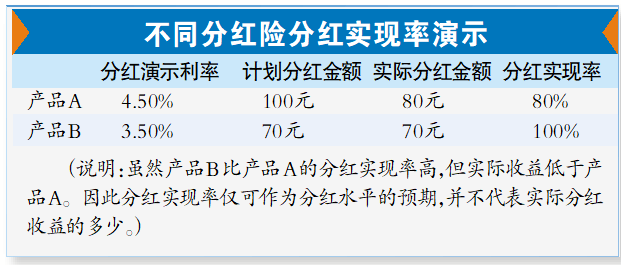
Group 1 - The trend of insurance capital entering the market is becoming a significant indicator for investors' decisions [1] - The floating returns of participating insurance and universal insurance are linked to the investment performance of insurance companies, with guaranteed returns remaining fixed [1] - The guaranteed return for participating insurance currently has a maximum preset interest rate of 2%, while the dividend portion depends on the company's investment performance [1] Group 2 - The dividend realization rate is an important metric for consumers when purchasing participating insurance, with many companies reporting rates at or above 100% for 2024 [2] - The actual dividend amount may differ from the expected amount, as seen in the comparison of different products where higher realization rates do not necessarily equate to higher actual returns [3] - A North American actuary emphasizes that the dividend realization rate should not be the sole basis for comparing different insurance companies, as it must be considered alongside the sales demonstration of dividend benefits [3] Group 3 - Universal insurance offers a guaranteed interest rate but deducts initial account management fees, which can affect the cash value perceived by the policyholder [4] - Consumers are advised to understand the payment methods and associated fees of universal insurance, including initial deductions and withdrawal penalties [4] - Some insurance companies have imposed restrictions on additional premium payments, which can impact the flexibility of the policyholder's investment [4]