信用周期拐点

Search documents
A股又暴跌,恒生科技更是跌破年线!背后发生了什么?
Sou Hu Cai Jing· 2025-12-16 19:02
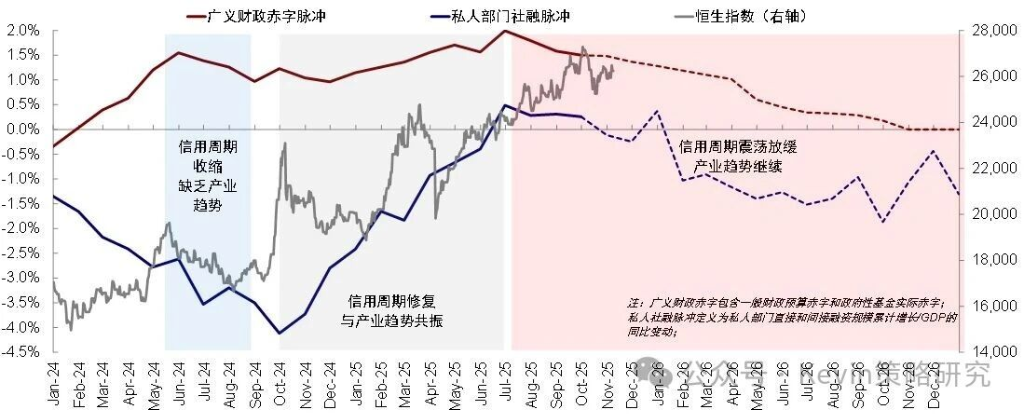
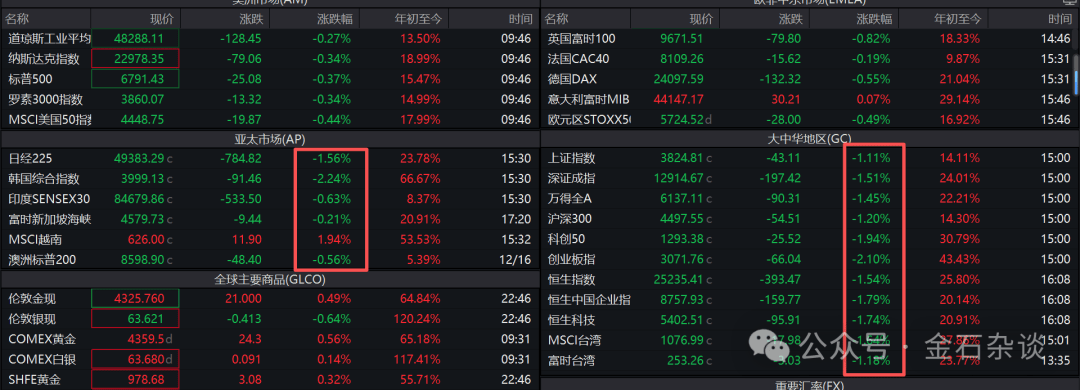
Market Overview - Global stock markets experienced declines, with the Nasdaq dropping 0.59% overnight and further declining by 0.42% today. Japanese stocks fell by 1.56%, and the Korean Composite Index decreased by 2.24% [2] - In the A-share market, the Shanghai Composite Index fell by 1.11%, approaching the 3800-point mark, while the Shenzhen Index dropped by 1.5%, and the ChiNext Index fell over 2%. A total of 4299 stocks in the market were down [2][4] Hong Kong Market Dynamics - The Hang Seng Index saw a significant drop of 1.54%, marking a 7.8% decline from its peak on October 2, while the Hang Seng Tech Index fell by 1.74%, nearing a technical bear market [2][6] - The Hang Seng Tech Index has dropped below the 250-day moving average, which is considered a critical threshold between bull and bear markets [6] Factors Influencing A-shares - A-shares are underperforming due to several factors, including uncertainty surrounding the Federal Reserve's interest rate decisions, which has led to volatility in the market. Major tech stocks like Oracle and Nvidia have seen significant declines, impacting related sectors in A-shares [8] - As the year-end approaches, fund managers are tightening their positions to secure annual profits, leading to a lack of clear market direction. The absence of strong policy stimuli or fundamental earnings recovery is also contributing to the market's weakness [8] Hong Kong Market Challenges - The Hong Kong market is facing liquidity issues, exacerbated by a surge in IPOs. A total of 101 new stocks have been listed this year, raising HKD 270.87 billion, which has created a "blood-sucking" effect on existing stocks [9] - The market is also affected by regulatory concerns regarding the quality of IPO submissions, leading to increased scrutiny from the Hong Kong Stock Exchange [9] Fund Management and Market Sentiment - New regulations for public funds have impacted the Hong Kong market, as fund managers are avoiding significant exposure to Hong Kong stocks to stay aligned with benchmarks, leading to increased selling pressure [11] - Recent data indicates a significant decrease in southbound capital inflows, with only HKD 11.6 billion entering the market in December, compared to an average of HKD 200 billion per month previously [12] Future Outlook - Analysts suggest that the current market weakness is not entirely unexpected, given the overall credit cycle and lack of substantial policy support. The upcoming events, including potential interest rate changes, will be crucial for market direction [17][18] - Looking ahead, there are expectations for a potential bull market in Hong Kong by 2026, driven by recovery in mainland China and anticipated interest rate cuts by the Federal Reserve [19]

中金:近期市场的弱势意外么?
Xuan Gu Bao· 2025-12-16 11:39
Market Overview - The recent significant decline in the AH market has seen the Hong Kong Hang Seng Index fall below the 120-day half-year line and test the 30-week line, with the Hang Seng Technology Index dropping below the 250-day annual line [1] - The unexpected rise last Friday left many investors puzzled, as there was no clear catalyst for the increase [1] Credit Cycle Insights - In September, it was indicated that the credit cycle would likely turn downward in the fourth quarter unless there was substantial policy intervention [1] - A downward turn in the credit cycle does not immediately lead to market corrections but constrains upward market potential, especially when combined with external disturbances and liquidity issues [1] Policy Analysis - The 2024 Central Economic Work Conference emphasized the need for more proactive macroeconomic policies, including an increase in fiscal deficit rates and the issuance of long-term special government bonds [3] - The monetary policy remains focused on maintaining moderate easing, with tools such as potential interest rate cuts and ensuring liquidity [3] Economic Factors - The lack of significant fiscal stimulus is expected to maintain the projected path of the credit cycle, as indicated by the recent economic work meeting [3] - The anticipated "hawkish rate cuts" from the Federal Reserve have not alleviated market pressures, as evidenced by rising long-term U.S. Treasury yields [4] Future Outlook - The end of the year is characterized as a policy window period, with upcoming events such as the Bank of Japan's interest rate decision influencing market dynamics [6] - Key factors to monitor include the nomination of a new Federal Reserve chair and the progress of U.S. fiscal stimulus, alongside domestic policies aimed at boosting consumption and internal demand [6]