
信用风险定价

Search documents
信用周报20260309:二永缩短久期,普信延续骑乘-20260310
China Post Securities· 2026-03-10 07:49
Group 1 - The report indicates that the secondary market for perpetual bonds is experiencing a notable increase in trading activity, particularly in the mid-term maturities, with significant demand for liquidity-driven bonds [13][11] - The yield curve for secondary capital bonds has shown a slight steepening, with short-term yields declining and long-term yields increasing, reflecting cautious pricing of long-term credit risk by institutions [11][9] - The trading volume for 4-5 year bonds has surged to approximately 805 billion, nearly doubling from the previous week, indicating a strong preference for mid-term bonds [13][12] Group 2 - The issuance of credit bonds has returned to normal levels, with a total of 333.52 billion issued, marking a significant increase compared to the previous week, although it is slightly down year-on-year [17][18] - The issuance of corporate bonds exceeded 100 billion, contributing the largest increment to the overall issuance, while financial bonds saw a notable decline [17][18] - The report highlights a substantial recovery in the issuance of sci-tech bonds, with a total of 202 billion issued this week, reflecting a year-on-year increase of nearly 70% [19]
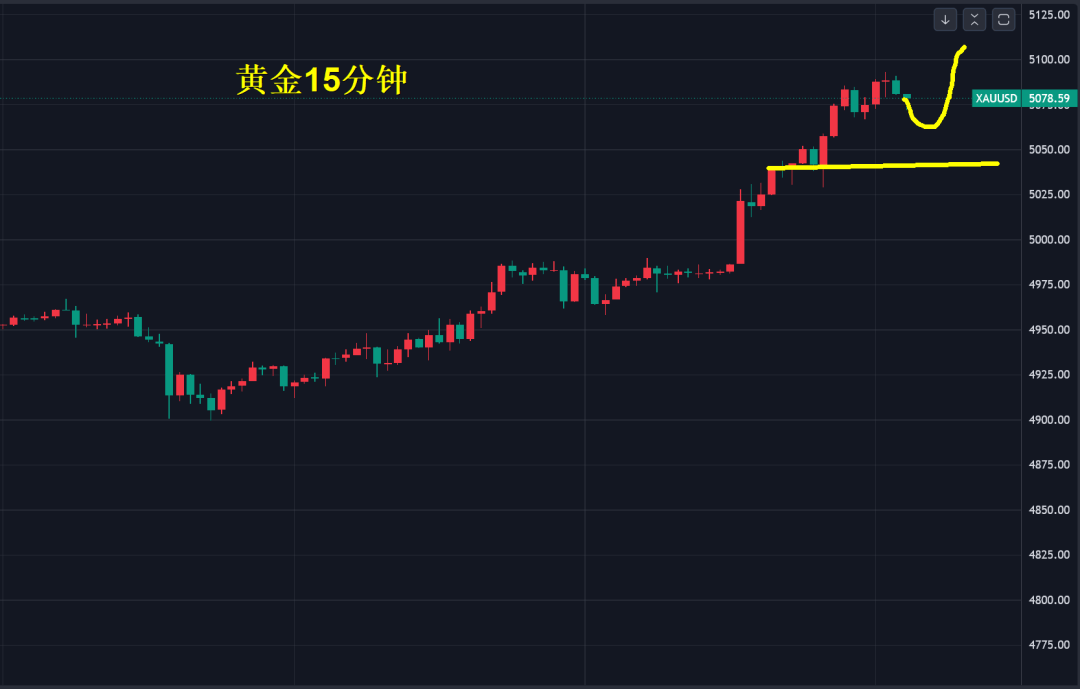
黄金年底目标变月计划,5100美元弹指可破!
Sou Hu Cai Jing· 2026-01-26 03:53
Core Insights - The article discusses the rapid increase in gold prices, with the price reaching $5,090, surpassing the previously set target of $5,040 for 2026, indicating a significant shift in market dynamics [2][7] - The author highlights that the time frame for achieving price targets has been significantly compressed, raising questions about the underlying reasons for this change [4][8] Group 1: Market Dynamics - Over the past three years, the gold market has experienced a notable change where price targets are being met much earlier than anticipated [3] - The market is no longer driven solely by trading funds but is influenced by long-term allocation funds, official purchases, and geopolitical risks [8] - The pricing of gold has shifted from being based on interest rates to being influenced by credit risk, reflecting a global shortage of "safe funds" [8] Group 2: Price Targets and Adjustments - The 2024 target for gold was initially set at $2,500 but was reached by August 2024, leading to an upward revision to $2,800, which was also achieved by the end of the year [4][5] - The 2025 target was revised from $3,318 to $3,864, with the price reaching $4,360 just six months later [6] - The 2026 target was set at $5,040, which was already surpassed in January 2026 [7] Group 3: Current Market Sentiment - Recent market behavior shows a strong bullish sentiment, with gold prices experiencing significant upward movements due to heightened risk aversion, particularly following geopolitical events [10] - Silver has also shown strong performance, surpassing $100, indicating a broader trend in precious metals [10] - The volatility in gold prices has increased, with daily fluctuations of around 3%, translating to $150 movements, suggesting a dynamic trading environment [12]

信用 - 乐观情绪将延续?
2025-10-21 15:00
Summary of Conference Call Notes Industry Overview - The credit bond market is currently experiencing a cautious sentiment, with limited compression in credit bond yield spreads, indicating that market participants are still pricing in credit risks [1][2] - The team holds a bearish outlook on future interest rate trends, although recent economic and financial data, including Q3 GDP figures, have had a limited impact on the bond market's trajectory [1][3] Key Insights and Arguments - Financial institutions are facing increasing pressure on credit supply, as evidenced by the rising loan-to-deposit ratio, which has increased from approximately 43.3 trillion yuan in January to nearly 60 trillion yuan in September [3] - Insurance companies showed weak performance in credit bond purchases earlier this year, particularly in the first half, but there was a recovery in net buying during Q3. Overall, insurance companies did not reduce their total bond purchases, although they bought fewer government and policy bank bonds while increasing local government bond purchases [4] - The current spread between perpetual bonds and other bonds has narrowed to around 5 basis points. If overall interest rates continue to decline, perpetual bonds may still present trading opportunities [5] Investment Recommendations - For ultra-long credit bonds, it is recommended to participate with a focus on allocation, as their coupon yields remain attractive. It is expected that yields will decline in the future, presenting a favorable risk-reward scenario [5] - In Q4, short-term credit bonds with maturities of around two years are expected to perform normally, with yields likely to decrease slightly as overall interest rates decline. However, the decline in yields for longer maturities, such as 10 or 30 years, is expected to be limited [6] - The investment strategy for Q4 should prioritize coupon income, while also allowing for participation in ultra-long duration strategies, but with controlled trading volumes to ensure stability and avoid excessive volatility [6] Additional Important Points - The overall bond purchasing behavior of insurance companies has been influenced by the strong performance of the stock market, which has alleviated some of the asset scarcity issues faced by these institutions [4] - The credit bond market has entered a period of fluctuation, with recent yield movements reflecting a recovery from previous increases, although the overall compression in yield spreads remains modest [2]
中美金融圈的两件大事
Sou Hu Cai Jing· 2025-08-10 04:20
Group 1 - The Chinese government will resume the collection of value-added tax (VAT) on interest income from newly issued government bonds, local government bonds, and financial bonds starting from August 8, 2023, while existing bonds issued before this date will remain exempt until maturity [1][2] - This policy change is expected to increase the new issuance rates of government bonds, leading to higher interest expenses for the government, while simultaneously boosting VAT revenue [2][3] - The removal of tax exemptions will fundamentally alter the after-tax yield calculations for large institutional investors, such as banks and insurance companies, who previously relied on tax-free returns when investing in government bonds [4][5] Group 2 - The shift in tax policy indicates a gradual weakening of implicit guarantees and special privileges associated with Chinese government bonds, suggesting a move towards a more market-oriented and standardized bond market [5][6] - The restoration of VAT on bond interest will compel investors to focus more on the actual credit risks and fiscal health of bond issuers, particularly local governments, thus enhancing the credit risk pricing logic in the market [6][7] - This change is anticipated to reduce the "crowding out" effect on private investments, allowing market funds to be allocated more equitably between government projects and the private sector [7] Group 3 - In the U.S., the resignation of Federal Reserve Board member Adriana Kugler is set to take effect on August 8, 2023, with speculation that former President Trump may nominate a potential future chair to fill the vacancy [1][8] - The recent U.S. non-farm payroll data showed a significant downward revision, with July's job growth at only 73,000, far below market expectations, and the previous two months' data also revised down substantially [8][9] - Trump's reaction to the disappointing employment data indicates a desire to exert more control over the Federal Reserve, as he perceives the current economic conditions as an opportunity to influence monetary policy ahead of critical trade negotiations [10][11]