债券借贷业务

Search documents
走在债市曲线之前系列报告(八):透视券商自营债市策略
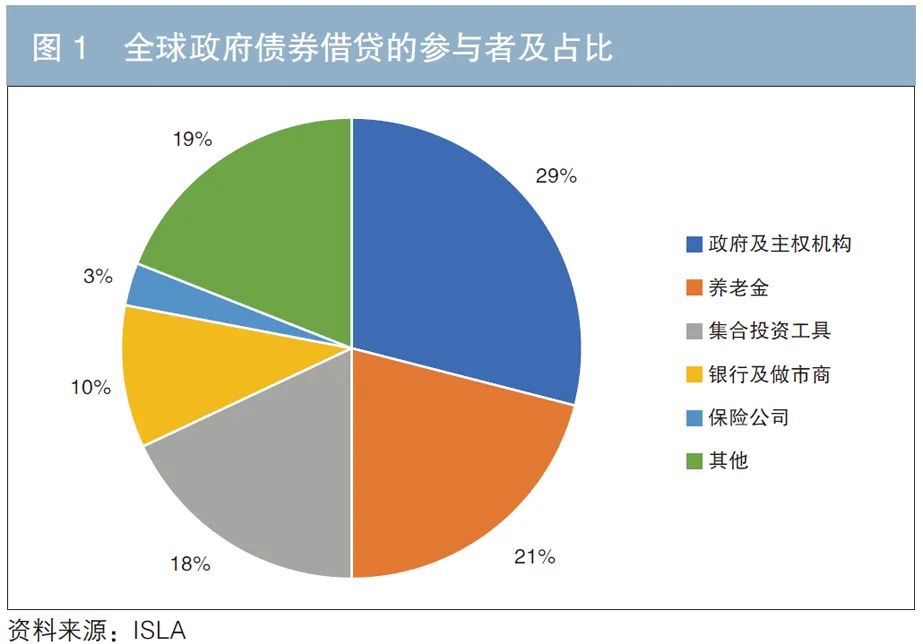
Changjiang Securities· 2025-11-25 05:54
Group 1: Report Summary - The scale of securities firms' proprietary bond holdings has been growing, but their market share has slightly declined. The allocation structure has shifted from mainly credit bonds to a balance between interest - rate bonds and credit bonds, indicating an increased demand for capital gains [4][7]. - Securities firms' trading behavior is characterized by high - frequency, flexibility, and significant internal differentiation. Their duration shows an upward trend to increase returns [4][8]. - Through the win - rate model, securities firms show strong control ability over the holding cost of 10 - year treasury bonds but weak performance in taking profits. In the case of secondary capital bonds, both the profit - taking and holding - cost win - rates are better [4][9]. - Bond lending is an important strategy tool for securities firms, with multiple motives including financing, short - selling, interest - rate arbitrage, and settlement emergency, aiming to achieve leverage, directional, and arbitrage returns [4][10]. Group 2: Scale and Structure Evolution - The scale of securities firms' proprietary bond holdings has increased from 2.83 trillion yuan in March 2021 to 4.36 trillion yuan in September 2025, with an increase of over 50%. However, the market share has dropped to about 2.3% in September 2025 [7]. - The proportion of interest - rate bonds in the holdings has risen from 34% in March 2021 to 53% in September 2025, with treasury bonds being dominant, followed by local government bonds. This change is due to regulatory policies and the demand for capital gains [7][24]. Group 3: Trading Behavior - Securities firms mainly buy medium - to long - term and long - term interest - rate bonds. From January to October 2025, the purchase scale of treasury bonds reached 38.00 trillion yuan, with a prominent proportion of long - term varieties [8][43]. - The turnover rates of treasury bonds, policy - financial bonds, and inter - bank certificates of deposit are relatively high, generally ranging from 400% to 2000%, indicating their trading - oriented nature [8][49]. - The overall duration of securities firms' proprietary portfolios has increased from a low level in 2021 to about 3.5 years in 2024, showing an intention to increase returns by extending the duration [8][58]. - There is significant internal trading divergence among securities firms, with a convergence index close to zero and a dispersion index as high as nearly 100%, reflecting different risk preferences and flexible strategy exploration [8][67]. Group 4: Win - Rate Model - In the case of 10 - year treasury bonds, the holding - cost win - rate is relatively high. When the significant reduction standard is the 20% quantile, the win - rate is 41.98%. However, the profit - taking win - rate within 3 days before and after the reduction is only 8.64% [9][72]. - For 10 - year secondary capital bonds, both the profit - taking and holding - cost win - rates are better than those of treasury bonds. When the significant reduction standard is the 20% quantile, the profit - taking win - rate is 49.38% [9][79]. Group 5: Bond Lending - Securities firms mainly participate in bond - borrowing business. The main motives for borrowing are financing to increase leverage, short - selling for price - difference gains, interest - rate arbitrage for stable spreads, and emergency settlement to relieve pressure [92]. - As bond lenders, securities firms aim to obtain lending fees, but they sacrifice the flexibility of selling bonds during the lending period [86]. - The lending fee rate is affected by factors such as bond type, term, activity, and new - old bond differences [87].
超六成的融资平台实现退出,资金面逐渐回稳,债市偏暖震荡
Dong Fang Jin Cheng· 2025-09-15 07:59
Report Summary 1. Report Industry Investment Rating No relevant content provided. 2. Core Viewpoints of the Report - On September 12, the liquidity situation gradually stabilized, with major repo rates declining; the bond market showed a mild and fluctuating trend; the main indices of the convertible bond market all closed higher, and most convertible bond issues rose; yields on U.S. Treasuries across various maturities generally increased, and yields on 10-year government bonds of major European economies also generally rose [1]. 3. Summary by Relevant Catalogs (1) Bond Market News - **Domestic News** - In August 2025, new RMB loans were 590 billion yuan, a year-on-year decrease of 310 billion yuan; new social financing scale was 2.5693 trillion yuan, a year-on-year decrease of 463 billion yuan; at the end of August, M2 increased by 8.8% year-on-year, the same as at the end of the previous month; M1 increased by 6.0% year-on-year, 0.4 percentage points higher than at the end of the previous month [3]. - As of the end of June 2025, over 60% of financing platforms achieved exit, meaning over 60% of implicit debts of financing platforms were cleared, and the reform and transformation of financing platforms accelerated. The government also issued 500 billion yuan of special treasury bonds this year to inject capital into large commercial banks, expected to drive about 6 trillion yuan in credit [4]. - The National Development and Reform Commission issued a notice to promote the expansion of the REITs market, and the central settlement company and the inter - bank lending center will jointly launch a centralized bond lending business on October 10, 2025. The National Financial Regulatory Administration released a management method for trust companies, effective January 1, 2026 [5][6]. - Eight departments jointly issued a work plan for the stable growth of the automobile industry, aiming for about 32.3 million vehicle sales in 2025, a year - on - year increase of about 3%, including about 15.5 million new energy vehicle sales, a year - on - year increase of about 20% [7]. - **International News** - On September 12, Fitch downgraded France's sovereign credit rating from AA - to A + due to the continuous rise in France's debt - to - GDP ratio, which is expected to increase from 113.2% in 2024 to 121% in 2027, and the lack of a clear debt stabilization path [8]. - **Commodities** - On September 12, international crude oil and natural gas futures prices turned up. WTI October crude oil futures rose 0.51% to $62.69 per barrel, Brent November crude oil futures rose 0.93% to $66.99 per barrel, COMEX gold futures rose 0.19% to $3680.50 per ounce, and NYMEX natural gas prices rose 1.09% to $2.973 per ounce [10]. (2) Liquidity Situation - **Open Market Operations** - On September 12, the central bank conducted 230 billion yuan of 7 - day reverse repurchase operations at a fixed interest rate of 1.40%. With 188.3 billion yuan of reverse repurchases maturing on the same day, the net injection of funds was 41.7 billion yuan [11]. - **Funding Rates** - On September 12, the liquidity situation gradually stabilized, and major repo rates declined. DR001 decreased by 0.60bp to 1.365%, and DR007 decreased by 2.38bp to 1.458% [12]. (3) Bond Market Dynamics - **Interest - rate Bonds** - **Spot Bond Yield Trends** - On September 12, affected by the stock market decline, stable liquidity, and the central bank's over - renewal of repurchase agreements, the bond market showed a mild and fluctuating trend. Yields on 10 - year treasury bonds and 10 - year China Development Bank bonds decreased [14]. - **Bond Tendering** - Information on the tendering of several bonds on September 12, including the 25 Jinchuchingfa 02 (Additional Issue 3), 25 Jinchuchingfa 007 (Additional Issue 8), 25 Coupon Treasury Bond 17, and 25 Coupon Treasury Bond 18, was provided [16]. - **Credit Bonds** - **Secondary Market Transaction Anomalies** - On September 12, the trading prices of 6 industrial bonds deviated by more than 10%. "H1 Bidi 01" fell by more than 86%, "H1 Bidi 04" fell by more than 50%, "H8 Longkong 05" fell by more than 41%; "H9 Longkong 01" rose by more than 77%, "H1 Bidi 03" rose by more than 162%, and "H1 Bidi 02" rose by more than 205% [17]. - **Credit Bond Events** - Multiple credit - related events were reported, such as Evergrande Property's resumption of trading, Guangxi Baise Development being included in the list of被执行人, and Moody's downgrading of Sinochem Hong Kong's issuer rating [19]. - **Convertible Bonds** - **Equity and Convertible Bond Indices** - On September 12, the three major A - share indices all closed lower, while the main indices of the convertible bond market all closed higher. The trading volume of the convertible bond market was 91.591 billion yuan, an increase of 342 million yuan from the previous trading day [19]. - **Convertible Bond Tracking** - On September 12, Qizhong Technology's application for issuing convertible bonds was approved by the exchange. Several convertible bonds announced redemption - related matters, and some were on the verge of triggering early redemption conditions [25]. - **Overseas Bond Markets** - **U.S. Bond Market** - On September 12, yields on U.S. Treasuries across various maturities generally increased. The yield on 2 - year U.S. Treasuries rose by 4bp to 3.56%, and the yield on 10 - year U.S. Treasuries rose by 5bp to 4.06% [23]. - **European Bond Market** - On September 12, yields on 10 - year government bonds of major European economies generally increased. Yields on 10 - year government bonds of Germany, France, Italy, Spain, and the UK rose by 6bp, 5bp, 7bp, 6bp, and 6bp respectively [27]. - **Daily Price Changes of Chinese - funded U.S. Dollar Bonds** - As of the close on September 12, price changes of Chinese - funded U.S. dollar bonds were provided, including details of the top 10 gainers and losers [29].
债券借贷业务现状与展望
Xin Hua Cai Jing· 2025-08-13 18:21
Core Viewpoint - The article discusses the rapid growth of the bond lending market in China, highlighting the development of regulations and practices that enhance market efficiency and mechanisms, while also exploring innovative paths for the future of bond lending [1]. Group 1: International Market Overview - The securities lending business originated in the 19th century in the UK and the US, initially as a custodial service to prevent transaction failures [2]. - By the 1970s, the establishment of the US Depository Trust Company (DTC) and the growth of arbitrage trading led to a rapid expansion of securities lending, which became a fundamental mechanism in modern financial markets [2]. - As of the end of 2024, the global securities lending market, including both equity and fixed-income securities, has a total outstanding size of €3.1 trillion, with government bond lending accounting for €1.5 trillion, or 48% of the total [3]. Group 2: Domestic Market Overview - Since its introduction in 2006, China's bond lending business has seen continuous growth in trading volume and market size, driven by economic development and market structure optimization [8]. - As of the end of 2024, the annual settlement volume of China's bond lending business reached ¥38.9 trillion, making it the third-largest trading type after repurchase agreements and cash transactions [9]. - The main participants in the bond lending market are banking financial institutions, with state-owned and joint-stock commercial banks playing significant roles in the early stages, while city commercial banks and securities companies have become key players as the market evolves [10]. Group 3: Business Models and Practices - The international bond lending market primarily features three business models: bilateral bond lending, agency bond lending, and centralized bond lending [15]. - Agency bond lending involves participants using an agent to facilitate transactions, leveraging the agent's client base and information advantages to enhance returns for lenders [15]. - Centralized bond lending pools securities from multiple lenders, allowing for automatic allocation to borrowers based on predetermined parameters, thus improving efficiency [15]. Group 4: Insights and Recommendations - Promoting centralized bond lending is crucial as it enhances risk management, transaction efficiency, and market liquidity, making it easier to implement in the Chinese market compared to agency lending [20]. - The establishment of a high-level infrastructure system is essential for efficient market operation, with a focus on improving transaction and collateral management processes [20]. - There is a need for a diversified bond lending product offering in China to meet various market demands, as the current offerings are relatively limited compared to international markets [20].