健康体检

Search documents
体检更精细 健康管理更有效
Xin Lang Cai Jing· 2026-01-02 17:26
Core Viewpoint - The release of the "Adult Health Examination Project Recommendation Guidelines (2025 Edition)" introduces a "health examination self-assessment questionnaire" and incorporates mental health screening into the evaluation system, shifting the health examination model from a "standardized package" to a "risk-oriented" approach, providing more scientific and precise health examination guidance for individuals aged 18 and above [2][3]. Group 1: Guidelines and Framework - The guidelines aim to standardize health examination practices, protect the health rights of examinees, and promote high-quality development in the health examination industry [2]. - The guidelines are based on previous regulations and expert consensus, updated to reflect changes in disease patterns and medical evidence, facilitating a transition from health examination to health management [2][3]. Group 2: Cancer Prevention and Health Education - The guidelines support the implementation of the three levels of cancer prevention: primary prevention (e.g., HPV vaccination), secondary prevention (early diagnosis and treatment), and tertiary prevention (standardized treatment) [3]. - Health examination institutions are encouraged to provide health guidance based on abnormal indicators, transforming individuals from passive examinees to active health participants, thereby enhancing health literacy and self-management capabilities [3]. Group 3: Personalized Screening Approach - The guidelines advocate for a three-tiered health examination system consisting of a "health examination self-assessment questionnaire + basic examination items + chronic disease risk screening projects," creating a closed-loop health management model [4][5]. - The self-assessment questionnaire includes personal lifestyle, medical history, and family disease history, guiding examinees to actively reflect on their health status and providing critical information for subsequent examination recommendations [5]. Group 4: Long-term Health Guidance - The guidelines establish a unified standard to enhance the standardization of health examination services and management, extending services from examination to long-term health guidance [6]. - Individuals are encouraged to complete the self-assessment questionnaire thoroughly to understand their health risks and select appropriate chronic disease risk screening projects based on their results [6]. Group 5: Targeted Health Examination for Different Populations - Age is a primary consideration in health examinations, with different focuses for youth (establishing health baselines), middle-aged individuals (cardiovascular diseases, cancer risks, diabetes), and the elderly (cognitive function, bone density) [7]. - Gender and family disease history are also critical factors, with specific screenings recommended based on these variables [7].

体检更精细 健康管理更有效(民生一线)
Ren Min Ri Bao· 2025-12-24 22:32
Core Viewpoint - The National Health Commission's "Adult Health Examination Project Recommendation Guidelines (2025 Edition)" introduces a "health examination self-assessment questionnaire" and incorporates mental health screening into the evaluation system, transitioning health examinations from a "standardized package" to a "risk-oriented" model, providing more scientific and precise health examination guidance for individuals aged 18 and above [1][2]. Group 1: Guidelines and Framework - The guidelines aim to standardize health examination practices, protect the health rights of examinees, and promote high-quality development in the health examination industry [1]. - The guidelines are based on previous documents and have been systematically revised to adapt to changes in disease patterns and medical evidence, facilitating a shift from health examinations to health management [2]. - Key tasks of adult health examinations include enhancing management of common diseases and early diagnosis and treatment of major diseases, with a focus on cancer risk [2]. Group 2: Health Management and Education - The guidelines encourage individuals to transition from passive examinees to active health participants, enhancing health literacy and self-management capabilities [3]. - The introduction of a health examination self-assessment questionnaire allows individuals to reflect on their health status and provides critical information for subsequent examination recommendations [4]. - The guidelines emphasize the importance of mental health alongside physical health, promoting equal attention to both areas in health management [4]. Group 3: Personalized Screening and Risk Assessment - The guidelines advocate for a three-tiered health examination system that includes a self-assessment questionnaire, basic examination items, and chronic disease risk screening projects, creating a closed-loop health management system [4]. - Risk assessment is integrated throughout the process, from questionnaire completion to basic examinations and in-depth risk screenings, ensuring targeted early prevention and intervention for various diseases [5]. Group 4: Long-term Health Guidance - The guidelines establish a unified standard for the health examination industry, extending services from mere examinations to long-term health guidance [6]. - Individuals are encouraged to complete the self-assessment questionnaire thoroughly to understand their health risks and select appropriate chronic disease risk screening projects based on their results [7]. - Continuous health management is emphasized, requiring ongoing observation and dynamic management of disease risk factors to improve health outcomes [7]. Group 5: Targeted Health Examination Focus - Different demographics require tailored health examination focuses, with age being a primary consideration [8]. - Specific health risks based on gender and family medical history should be prioritized, with early screening for high-risk individuals [8]. - Lifestyle factors, such as smoking and stress, are critical references for determining necessary health screenings and interventions [8].
国家卫生健康委发布《成人健康体检项目推荐指引(2025年版)》 体检更精细 健康管理更有效(民生一线)
Ren Min Ri Bao· 2025-12-24 22:16
Core Viewpoint - The National Health Commission has released the "Adult Health Examination Project Recommendation Guidelines (2025 Edition)", introducing a "health examination self-assessment questionnaire" and incorporating mental health screening into the evaluation system, transitioning health examinations from a "standardized package" to a "risk-oriented" model for individuals aged 18 and above [1] Group 1: Guidelines and Framework - The guidelines aim to standardize health examination practices, protect the health rights of examinees, and promote high-quality development in the health examination industry [1] - The guidelines are based on previous documents and have been systematically revised to adapt to changes in disease patterns and medical evidence, facilitating a shift from health examinations to health management [2] - Key tasks of adult health examinations include enhancing management of common diseases and early diagnosis and treatment of major diseases, with a focus on cancer risk [2] Group 2: Health Management and Education - The guidelines encourage individuals to transition from passive examinees to active health participants, enhancing health literacy and self-management capabilities [3] - The introduction of a three-tier health examination system, including a self-assessment questionnaire, basic examination items, and chronic disease risk screening, helps create a closed-loop health management process [4] - The self-assessment questionnaire includes personal lifestyle, medical history, and family disease history, guiding examinees to reflect on their health status and providing critical information for subsequent examinations [4] Group 3: Risk Assessment and Screening - The guidelines integrate risk assessment throughout the process from questionnaire to basic examination to in-depth risk screening, improving the specificity of early disease prevention and intervention [5] - Specific disease risk screening projects are categorized into recommended and optional levels, allowing targeted in-depth screening based on basic examination results [4] Group 4: Long-term Health Guidance - The guidelines establish a unified standard for enhancing the standardization of health examination services and management, extending services from examinations to long-term health guidance [6] - Individuals are encouraged to complete the self-assessment questionnaire thoroughly to understand their health risks and select appropriate chronic disease risk screening projects based on their results [7] Group 5: Targeted Health Examination Focus - Different populations have varying health examination focuses based on age, with young individuals focusing on establishing health baselines and screening for infectious diseases, while middle-aged individuals should prioritize cardiovascular diseases, cancer risks, and diabetes [8] - Gender and family disease history are critical considerations, with specific screenings recommended for women and men based on prevalent health risks [8] - Lifestyle factors are also important, with recommendations for additional screenings based on smoking, dietary habits, and stress levels [8]
国家卫健委印发《成人健康体检项目推荐指引(2025年版)》
Ren Min Wang· 2025-11-04 02:19
Core Points - The National Health Commission of China has issued the "Adult Health Examination Project Recommendation Guidelines (2025 Edition)" to standardize health examination practices and protect the health rights of examinees [1] Group 1: Guidelines Overview - The guidelines include a self-assessment questionnaire, basic examination items, and chronic disease risk screening projects [1] - The self-assessment questionnaire covers personal information, medical history, lifestyle information, and mental health status to evaluate the examinee's health risks [1] - Basic examination items consist of physical examinations, laboratory tests, and auxiliary checks, which are essential for establishing health records and supporting subsequent health management [1] Group 2: Chronic Disease Screening - Chronic disease risk screening projects are tailored for individuals at risk of cardiovascular diseases, common malignant tumors, chronic respiratory diseases, and diabetes, based on the self-assessment questionnaire [1] - These projects include personalized in-depth examination items to facilitate early diagnosis and treatment [1] Group 3: Applicability - The guidelines apply to individuals or organizations conducting collective health examinations for individuals aged 18 and above to identify health issues and risks early [1] - The guidelines do not cover specific examinations such as pre-employment, occupational health checks, school entry, military service, marriage checks, or public health service examinations [1]
29岁,得癌之后
Hu Xiu· 2025-09-04 05:30
Core Insights - The article highlights the alarming trend of increasing cancer rates among young people in China, particularly those aged 15 to 39, with nearly 200,000 new cases reported annually [1][2] - It emphasizes the importance of early detection and the inadequacies of current health check-ups, as illustrated by the case of a lawyer who was diagnosed with kidney cancer despite years of normal check-ups [2][24] Group 1: Cancer Trends - Thyroid cancer is one of the fastest-growing cancers among young people, with a 187% increase in incidence among those aged 20 to 29 over the past decade [1] - The proportion of young patients with colorectal cancer has surged from 3.8% in 2010 to 12.7% in 2023, marking the highest growth rate among all cancer types [1] - The incidence of stomach cancer in the 19 to 35 age group has increased by 89% over the past 30 years, with 70% diagnosed at advanced stages [1] Group 2: Lifestyle and Health Awareness - The article discusses the impact of lifestyle choices on cancer risk, noting that young people consume only one-third of the recommended daily fiber intake while exceeding the intake of processed meats by 2.8 times [6] - It highlights the correlation between obesity and cancer, with a threefold increase in obesity rates among those under 30 over the past decade, leading to a 3.6% annual increase in obesity-related cancers [6] - The narrative stresses the need for individuals to take proactive steps in managing their health, including dietary changes and regular health check-ups, to mitigate cancer risks [24][25] Group 3: Personal Experiences and Emotional Impact - The experiences of individuals diagnosed with cancer reveal the emotional toll and societal perceptions associated with the disease, as they navigate their identities as patients while trying to maintain normalcy in their lives [10][19] - The article illustrates the psychological challenges faced by cancer patients, including anxiety about their health and the fear of being labeled as "sick" by others [12][20] - It emphasizes the importance of support systems and the need for individuals to redefine their relationships with health and wellness post-diagnosis [14][22]

体检江湖恩怨录
3 6 Ke· 2025-08-07 06:36
Industry Overview - The health check industry in China has evolved over 20 years, transitioning from a nascent stage to a capital-driven market, with major players like Aikang Guobin and Meinian Health emerging as leaders [3][4] - The industry has seen significant mergers and acquisitions, shaping the competitive landscape, with Aikang Guobin and Meinian Health currently dominating the market [7][10] Key Players - Aikang Guobin was formed in 2007 through the merger of Aikang and Guobin Medical Center, expanding its reach across major cities [9] - Meinian Health, founded in 2006, has aggressively expanded its number of health check centers, becoming a leading player in the industry [6][9] - Ciming Health, another key player, has faced challenges in its attempts to go public, impacting its competitive position [11][12] Market Dynamics - The competition among the three major players has intensified, with Aikang Guobin being the first to go public in 2014, followed by Meinian Health in 2015 [12][13] - The market has shifted from a three-player competition to a duopoly between Meinian and Aikang, following Ciming's struggles [18] Financial Performance - Aikang Guobin reported revenues of approximately $290 million and a net profit of $36.3 million for the fiscal year 2014, outperforming its competitors [9] - Meinian Health's revenue for 2024 was approximately 10.7 billion yuan, showing a slight decline of 1.76% year-on-year, with a significant drop in net profit by 44.18% [23] - Ciming Health's 2024 revenue was 2.972 billion yuan, down 1.56%, indicating a broader trend of declining performance across the industry [26] Challenges and Trends - The industry faces structural challenges, including a lack of technological advancement and reliance on traditional methods, leading to increased competition and price wars [19][27] - The market is witnessing a slowdown in the expansion of health check centers, with Meinian's count dropping from 703 to 576 centers, and Aikang's growth stagnating [23][26] - The introduction of AI technology in health checks is seen as a potential avenue for innovation, but widespread adoption will take time [27]
几百元体检查什么?能查出哪些病?
3 6 Ke· 2025-07-31 12:31
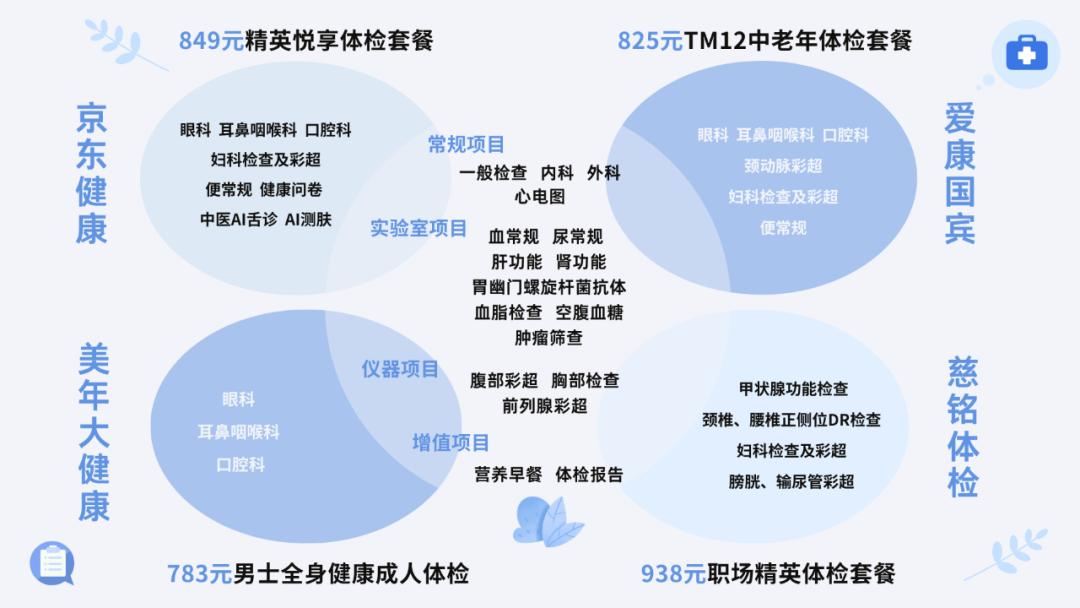
Core Viewpoint - The discussion around the affordability and effectiveness of health check-up packages priced at a few hundred yuan has gained attention, with consumers questioning what diseases can be detected through these packages [1][9]. Summary by Sections Health Check-up Packages - Various health check-up packages priced at a few hundred yuan typically include multiple imaging tests, ultrasound checks, laboratory tests, and routine examinations, as well as tumor screenings [2][12]. - Specific tests included in these packages cover heart, prostate, breast, liver, kidney, and gastrointestinal screenings, with tailored packages for different demographics such as middle-aged individuals and office workers [2][4]. Package Details - An example of a popular package is the 849 yuan elite health check-up, which includes 20 basic tests plus additional screenings like thyroid ultrasound and bone density tests [4]. - The TM12 test, which screens for 12 tumor markers, is included in many packages and is used to assist in diagnosing and monitoring various malignancies [5][13]. Effectiveness of Check-ups - Health check-up packages can identify potential health issues, with high-value tests such as chest CT scans and tumor marker tests being highlighted for their diagnostic capabilities [9][11]. - The accuracy of test results is emphasized by health service providers, who stress that abnormal results should lead to further examinations at hospitals [10][11]. Regulatory Standards - The "Health Check-up Quality Control Standards" were released to ensure quality management across health check-up services, focusing on structural, process, and result quality [14]. - The consensus on basic health check-up items includes physical examinations, laboratory tests, and auxiliary checks, which are generally covered by the low-cost packages [12][14]. Cancer Screening - Cancer screening methods in low-cost packages are relatively basic compared to more comprehensive approaches recommended by health authorities, which suggest a combination of diagnostic methods for different cancer types [13]. - The TM12 test is a common method used in these packages for tumor marker screening, but it is noted that not all cancer types will produce detectable markers [11][13].
爱康召开媒体说明会公开回应体检争议:无责 以医学事实厘清责任
Guo Ji Jin Rong Bao· 2025-07-30 20:32
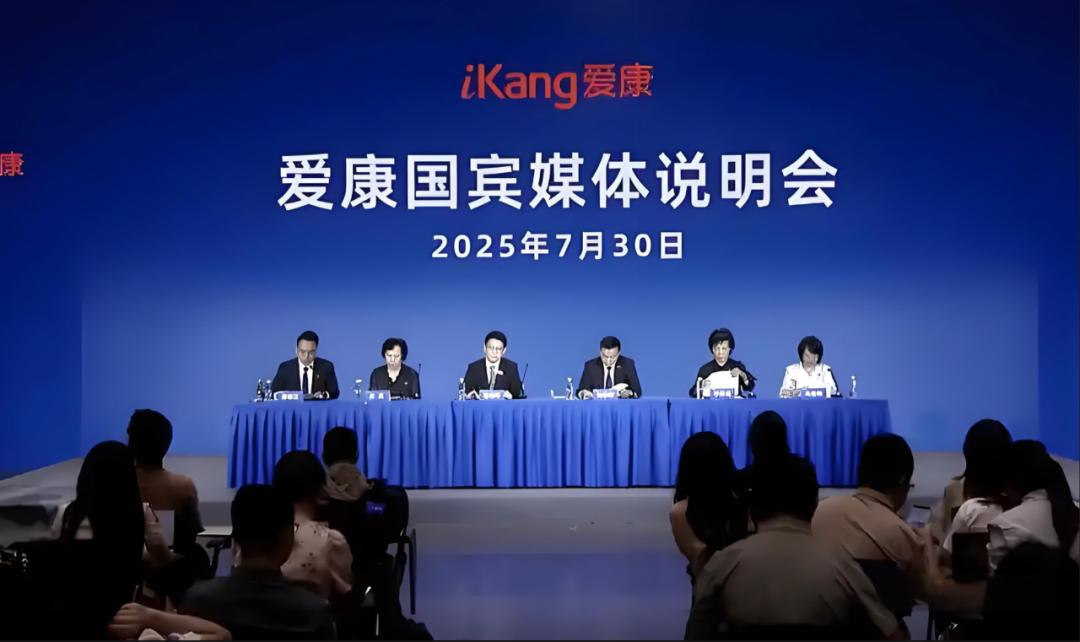
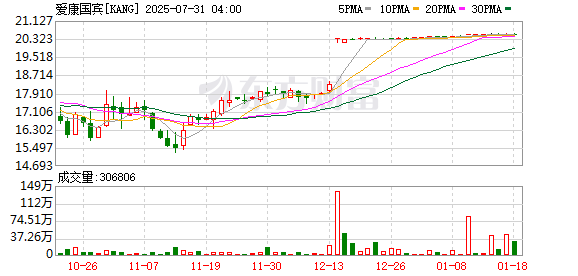
Core Viewpoint - Aikang Group held a media briefing to address the incident involving Ms. Zhang, who claimed that her kidney cancer was not detected during ten years of health check-ups. The company asserts that there were no diagnostic errors or omissions in her health checks and has filed a lawsuit against her for defamation [2][4][15]. Group 1: Company Response - Aikang Group confirmed that there were no missed diagnoses or misdiagnoses in Ms. Zhang's health checks, and the company has taken legal action against her for spreading false information [2][4][15]. - The founder and CEO of Aikang Group emphasized the importance of health checks in early disease detection, stating that approximately 1.5 million cancer cases are identified through Aikang's services each year [4][5]. - The company highlighted that health checks are not equivalent to clinical diagnoses and are intended to guide patients to seek further medical evaluation if necessary [4][5]. Group 2: Incident Timeline and Findings - The timeline of events was reviewed, indicating that Ms. Zhang underwent a health check on October 9, 2023, where her report indicated potential issues with her kidneys and recommended further examinations [5][8]. - Aikang Group conducted internal and external reviews, confirming that the findings in Ms. Zhang's report were accurate and consistent with her ultrasound results [8][9]. - The company provided evidence of quality control in their testing processes and stated that all medical personnel are certified and comply with national regulations [9][11]. Group 3: Medical Expert Opinions - Medical experts clarified that the cancer marker CEA is not relevant for kidney cancer screening, as early diagnosis primarily relies on imaging techniques rather than blood tests [11][13]. - Experts also noted that there are currently no specific blood markers for early detection of kidney cancer, reinforcing the validity of Aikang's diagnostic approach [11][13]. - Aikang Group's medical professionals expressed concern over the misinformation spread by Ms. Zhang, which could undermine public trust in the healthcare system [14][15].
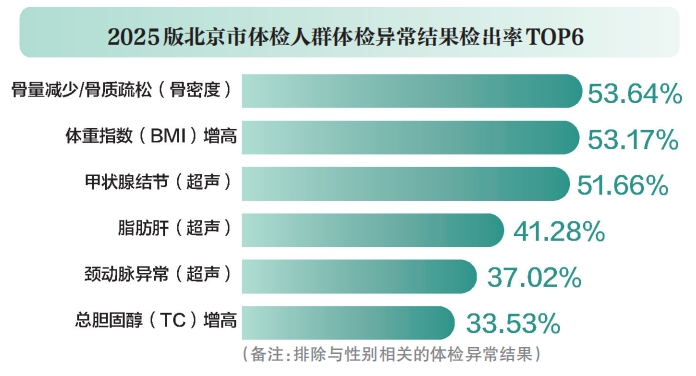
新版北京健康报告发布,男性“超重”率明显高于女性
Bei Ke Cai Jing· 2025-06-27 02:32
Core Insights - The report highlights the increasing health issues among the population in Beijing, emphasizing the importance of regular health check-ups [1][2][8] - The data collected from 1.483 million health check-ups reveals alarming trends in various health indicators, particularly among different age groups and genders [1][5] Group 1: Health Issues Identified - Bone density reduction/osteoporosis has become the leading health concern in Beijing, with a detection rate of 53.64% [2] - The detection rate for increased Body Mass Index (BMI) and thyroid nodules also exceeds 50%, marking them as significant health threats [2] - Fatty liver, carotid artery abnormalities, and elevated total cholesterol levels have detection rates above 30% [2] Group 2: Gender-Specific Health Trends - Male participants show a higher prevalence of increased BMI, with detection rates nearing 70%, and a fatty liver detection rate of 55.11% among men aged 40-49 [5] - In contrast, females have a higher detection rate of thyroid nodules at over 57%, with a significant increase in breast nodules from 25.33% in 2021 to 40.53% [5] Group 3: Cancer Detection Rates - Thyroid cancer has the highest detection rate among the cancer cases identified, exceeding 48%, with a total of 1,535 cancer diagnoses among the health check-up participants [8] - The cancer detection rate among individuals under 40 years old is concerning, with nearly one-third of the diagnosed cases falling into this age group [8] - The report suggests that the high detection rate of thyroid cancer is due to the widespread use of ultrasound in health check-ups, with a participation rate of 78.85% for thyroid ultrasounds [8]