
健康化战略

Search documents
消费降级中的赢家!可口可乐精准收割穷人群,靠三招绝地反杀
Sou Hu Cai Jing· 2025-10-23 13:55
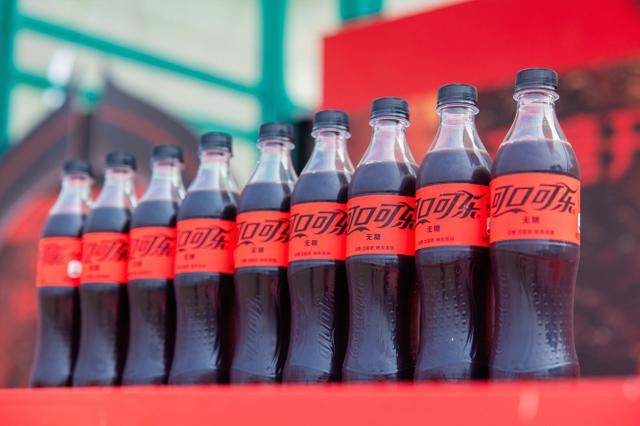
Core Insights - Coca-Cola reported Q3 2025 revenue of $12.46 billion, a 5.1% year-over-year increase, slightly exceeding market expectations [1] - The company achieved a 6% year-over-year growth in organic revenue, marking a recovery from previous negative growth in the first half of the year [1] - The introduction of smaller, lower-priced packaging and eco-friendly options helped stabilize concentrate sales, which remained flat year-over-year [1] Revenue Performance - In Latin America and India, the launch of smaller cans of Coca-Cola was well-received by price-sensitive consumers, driving organic growth [3] - The price of concentrates increased by 6% year-over-year, supported by a higher proportion of premium products in the product mix [3] - The Asia-Pacific region showed strong performance with revenue of $1.51 billion, an 11% year-over-year increase, particularly benefiting from increased cooler placements in China [3][5] Product Category Analysis - Zero-sugar Coca-Cola experienced explosive growth, with a 14% year-over-year increase, maintaining double-digit growth for five consecutive quarters [5] - Classic Coca-Cola grew by only 1% year-over-year, while other carbonated beverages declined by 1% [5] - Health-related products, including ready-to-drink tea and sports drinks, outperformed industry averages, with Fairlife milk experiencing strong demand due to its health benefits [7] Profitability and Cost Management - Coca-Cola's gross margin improved by 0.8 percentage points to 61.5%, aided by lower core raw material prices and an enhanced product mix [7] - Despite increased marketing and channel expenses during peak season, the company's overall expense ratio decreased by 1.7 percentage points to 29%, leading to a core operating margin of 32% [9] - The use of AI in various operational processes has significantly improved efficiency and cost structure [9] Future Outlook - Coca-Cola plans to continue its "De-averaging" strategy, utilizing AI for refined operations across different regions and channels [11] - The company is expected to maintain its leading position in the global beverage market while delivering more enjoyable products to consumers [11]


元气森林慢熬系列:新品突围背后的战略挑战与行业隐忧
Xin Lang Zheng Quan· 2025-05-19 09:37
Group 1: Product Launch and Market Strategy - Yuanqi Forest has launched a new series of plant-based beverages called "Slow Boil," featuring two products: Wu Mei Shan Zha and Pi Pa Xue Li, emphasizing "sugar reduction ≥ 25%" and "traditional boiling process," priced at 6 yuan per bottle, targeting family consumption scenarios [1] - The company aims to continue its "healthification" strategy and differentiate itself in the health beverage market, although the market acceptance of the new products will require time to validate [1] - Historically, Yuanqi Forest's successful product launches take over two years, as seen with Zizai Water, which took one year to exceed 1 billion in sales [1] Group 2: Growth Concerns - Despite announcing "double-digit growth" at the 2024 dealer conference, Yuanqi Forest's growth is heavily reliant on new products like Alien Electrolyte Water, Ice Tea, and Zizai Water, while its core sparkling water market share has not fully recovered [2] - According to Euromonitor data, Yuanqi Forest's market share in the no-sugar sparkling beverage segment decreased by nearly 1 percentage point from 2022 [2] - The decline in sparkling water's prominence at the dealer conference, from first to second place, indicates the company's ongoing dependency on "hit products" [2] Group 3: Channel Management and Cost Challenges - Yuanqi Forest has adopted a "co-building agent" channel management system, covering 60%-70% of agent salaries to enhance terminal control, with plans to add 32,000 ice cabinets by 2025 [3] - Feedback from some distributors indicates improved inventory turnover, with days decreasing from 40 in 2022 to near the industry average, but penetration in lower-tier markets remains insufficient [3] - Increased production costs due to health-oriented investments, such as the elimination of over 100 ingredients for Zizai Water, may compress profit margins, with distributors noting profit margins are now close to traditional brands like Nongfu Spring and Coca-Cola [3] Group 4: Market Penetration Challenges - The convenience store channel in first and second-tier cities is saturated, while penetration in lower-tier markets is still lacking, with reports indicating that Yuanqi Forest products take significantly longer to sell compared to competitors like Coca-Cola [4] - The pricing of Yuanqi Forest's products, such as sparkling water at 5-5.5 yuan per bottle, lacks competitiveness in lower-tier markets, leading distributors to prefer stable profit traditional brands [4] - The launch of the Slow Boil series represents another strategic attempt in the health sector, but the company faces challenges beyond the product itself, requiring a balance between traditional and innovative approaches [4]