
冰茶

Search documents
元气森林饮料“大比武”
经济观察报· 2026-03-31 12:09
Core Insights - The beverage industry is experiencing accelerated product iteration and increasingly segmented consumer demands, making it crucial for companies to capture real needs, transform ideas into products, and quickly adjust based on feedback [2][5]. Group 1: Product Development and Innovation - Genki Forest held a product competition showcasing 19 new beverages, including iterations of existing lines and innovative drinks like non-alcoholic cola beer and prebiotic sparkling water [2][6]. - The company emphasizes a philosophy of simplicity in product development, focusing on visible consumer needs rather than abstract demands [5][6]. - The event featured a voting system where attendees could provide immediate feedback on products, reflecting a commitment to consumer engagement and market testing [4][5]. Group 2: Market Trends and Consumer Preferences - The beverage lineup covered mainstream categories, with sparkling water remaining a core product, and new functional drinks targeting specific health benefits, such as enhanced athletic performance and immune support [6][9]. - The introduction of innovative products like the "Danzhen Brown Rice Milk," which is positioned as a meal replacement, indicates a shift towards health-conscious offerings [8][9]. - Genki Forest's internal testing mechanism allows employees to trial new products, ensuring that consumer feedback is integrated before market launch [8][9]. Group 3: Sales and Distribution Strategy - The company employs a phased approach to product launches, starting with online sales and gradually expanding to offline channels based on consumer acceptance [9]. - Genki Forest has established a research and development center in Xianning, aimed at enhancing innovation and market feedback efficiency, with a total investment of nearly 500 million yuan [9]. - The company reported significant growth in its product lines, with vitamin water experiencing a 128% year-on-year increase, indicating strong market performance [9].


农夫山泉(09633.HK)2025年报点评:业绩超预期 竞争力强化
Ge Long Hui· 2026-03-26 13:50
Core Viewpoint - The company reported strong financial performance for 2025, with significant revenue and profit growth, driven by recovery in packaged water and exceptional growth in tea beverages [1][2]. Financial Performance - In 2025, the company achieved revenue of 52.553 billion yuan, a year-on-year increase of 22.5%, and a net profit attributable to shareholders of 15.868 billion yuan, up 30.9% [1]. - For the second half of 2025, the company recorded main business revenue of 26.931 billion yuan, a year-on-year increase of 30.0%, and a net profit of 8.246 billion yuan, up 40.2% [1]. - The company proposed a cash dividend of 0.99 yuan per share, with a payout ratio of 70.2% [1]. Product Performance - In the second half of 2025, revenue from packaged water reached 9.266 billion yuan, growing 24.9% year-on-year, with market share recovery contributing to significant improvement [1]. - Beverage revenue totaled 17.664 billion yuan, a year-on-year increase of 32.8%, with tea beverages, functional drinks, and juices showing strong growth rates of 38.4%, 20.27%, and 32.55% respectively [1]. - New product launches, such as the carbonated tea and the 900mL low-sugar black coffee, contributed to the growth in other beverage categories [1]. Cost and Profitability - The gross profit margin for the second half of 2025 was 60.72%, an increase of 3.37 percentage points year-on-year, benefiting from lower raw material costs and improved product mix [2]. - The net profit margin reached a historical high of 30.62%, up 2.23 percentage points year-on-year, despite a slight decline in other income due to reduced interest and deposit income [2]. Future Outlook - The company is expected to maintain strong growth momentum in 2026, with plans for new product launches and expansion into new markets, including Hong Kong and Singapore [3]. - Cost pressures are manageable, with price locking strategies in place for PET costs, and new water sources expected to enhance operational efficiency [3]. Investment Recommendation - The company is positioned well for continued high-quality growth, with a target price of 57 HKD, corresponding to a 32 times PE for 2026, indicating a favorable investment opportunity [4].

华源晨会精粹20260326-20260326
Hua Yuan Zheng Quan· 2026-03-26 11:26
Group 1: Robotics - Woan Robotics (06600.HK) - The company achieved revenue of 900 million yuan in 2025, a year-on-year increase of 48%, with a gross profit of 490 million yuan, up 54%, resulting in a gross margin of 54%, an increase of 2.3 percentage points year-on-year [2][8] - The global market strategy has shown significant results, with revenue growth in core markets such as Germany, which saw a 108.9% increase [9] - The product lines, including enhanced execution robots and AI solutions, have all experienced high growth, validating the sustainability of core category growth [9][10] Group 2: Utilities - China Resources Power (00836.HK) - The company reported a net profit of 14.519 billion HKD in 2025, a slight increase of 0.9% compared to 2024, with core business profit rising by 9.9% [14][15] - The growth in 2025 was primarily driven by a decline in coal prices and new power generation units, despite a decrease in renewable energy performance due to accounting changes [15] - The company plans to add 5.45 million kilowatts of wind and solar capacity in 2026, focusing on comprehensive energy services as a new growth engine [18] Group 3: Food and Beverage - Nongfu Spring (09633.HK) - The company achieved total revenue of 52.553 billion yuan in 2025, a year-on-year increase of 22.51%, with a net profit of 15.868 billion yuan, up 30.89% [21][22] - The tea beverage segment has become the largest revenue source, with a 29% increase in revenue to 21.6 billion yuan, accounting for 41.1% of total revenue [22][23] - The packaging water business has shown a strong recovery, with revenue increasing by 17.3% to 18.71 billion yuan, demonstrating the company's robust brand and channel capabilities [22][23] Group 4: North Exchange - Audiwei (920491.BJ) - The company reported revenue of 683 million yuan in 2025, an 11% year-on-year increase, with a net profit of 94.03 million yuan, up 7% [25][26] - The sensor business revenue grew by 20% due to increased applications in smart homes and enhanced collaboration with automotive manufacturers [26][27] - The company has initiated the construction of a high-performance sensor R&D base in Guangzhou, aiming to enhance its technological capabilities [27] Group 5: North Exchange - Xingtux Control (920116.BJ) - The company achieved revenue of 321 million yuan in 2025, an 11% increase, with a net profit of 100.83 million yuan, up 19% [30][31] - The commercial aerospace sector saw a 62% revenue increase, driven by the expansion of services to mainstream commercial satellite companies [31][32] - The company plans to build an AI-enabled space cloud product system to meet the growing demand for low-orbit internet constellations [33] Group 6: North Exchange - Lechuang Technology (920425.BJ) - The company is focused on the adhesive control system market, with expected revenue of 123 million yuan in 2025, a 58% year-on-year increase, and a net profit of 33.69 million yuan, up 100% [38][39] - The company is expanding its applications in AI glasses and power batteries, enhancing its market share in the adhesive control system sector [39][40] - The overall market for adhesive machines in China is projected to grow significantly, with a CAGR of 18% from 2025 to 2029 [37]

农夫山泉(09633):业绩高增,新品类多点开花,平台型企业优势延续
Hua Yuan Zheng Quan· 2026-03-25 15:31
Investment Rating - The investment rating for the company is "Accumulate" (maintained) [5] Core Views - The company, Nongfu Spring, achieved strong revenue growth in 2025, surpassing market expectations with total revenue of 52.553 billion RMB, a year-on-year increase of 22.51%, and a net profit attributable to shareholders of 15.868 billion RMB, up 30.89% year-on-year, indicating a significant improvement in profitability [5] - The company's gross margin improved by 2.4 percentage points to 60.5% due to a decrease in raw material costs, while the sales expense ratio decreased by 2.8 percentage points to 18.6%, leading to a net profit margin increase of 1.93 percentage points to 30.19% [5] - The dual-engine growth model of "packaged water + tea beverages" is driving the company's growth, with the tea beverage segment becoming the largest revenue source, achieving a revenue of 21.6 billion RMB, a year-on-year increase of 29% [5] Summary by Sections Market Performance - Closing price (HKD): 42.44 - Market capitalization (million HKD): 477,300.03 - Circulating market capitalization (million HKD): 213,671.24 - Debt-to-asset ratio (%): 39.43 [3] Financial Forecasts - Revenue forecast for 2026: 60.219 billion RMB, with a year-on-year growth rate of 14.59% - Net profit forecast for 2026: 17.859 billion RMB, with a year-on-year growth rate of 12.54% - Earnings per share forecast for 2026: 1.59 RMB [7][8] Business Segments - Packaged water revenue in 2025: 18.71 billion RMB, a year-on-year increase of 17.3% - Tea beverage revenue in 2025: 21.6 billion RMB, accounting for 41.1% of total revenue - Juice beverage revenue: 5.18 billion RMB, a year-on-year increase of 26.7% [5][6]
一图读懂农夫山泉(09633.HK)2025全年业绩
Jin Rong Jie· 2026-03-25 11:59
Core Insights - The company achieved significant revenue and profit growth in 2025, with revenue surpassing 50 billion yuan for the first time, marking a year-on-year increase of 22.5% and a net profit growth of 30.9% to 15.868 billion yuan [3][5]. Revenue and Profit Growth - The beverage industry is experiencing a ceiling increase, with the company leveraging both water and beverage segments as dual growth engines [3][4]. - The drinking water business saw a year-on-year growth of 17.3%, supported by new water source developments in Hunan and Sichuan [5][6]. Brand Value and Global Expansion - The company ranked third in the 2025 global soft drink brand value assessment by Brand Finance, with a brand value of 11.09 billion USD, reflecting a 34% year-on-year increase [5]. - The company is expanding its global footprint, with products entering markets like Hong Kong and Singapore in 2025 [5]. Market Position and Product Innovation - The company holds the largest market share in China's packaged drinking water sector, with a strategic focus on building factories at water sources to enhance efficiency [6]. - The beverage segment, including tea and functional drinks, has shown robust growth, with tea beverages increasing by 29% to over 21.596 billion yuan [6][7]. Innovation Strategy - The company adopts a "slow innovation" approach, focusing on early market positioning and product diversification to mitigate volatility [9]. - New product launches include carbonated tea and various juice and soda options, expanding the product matrix to cater to diverse consumer needs [7][8]. Transparency and Trust - The company emphasizes transparency in sourcing and production, enhancing consumer trust through open factory visits and quality assurance initiatives [10]. - The company has engaged over 700,000 people in its sourcing initiatives, reinforcing its commitment to quality and brand value [10]. Team and Corporate Culture - The company has developed a mature team culture, focusing on grassroots growth and business expertise, which supports long-term stability and innovation [12][13]. - The corporate strategy emphasizes long-termism over short-term gains, positioning the company for sustainable growth and future opportunities [15].

营收首次突破500亿元大关,农夫山泉拟派息超111亿元
Huan Qiu Lao Hu Cai Jing· 2026-03-25 08:17
Core Insights - The core viewpoint of the article highlights the strong financial performance of Nongfu Spring in 2025, with significant revenue and profit growth, driven by diverse product offerings and strategic innovations. Group 1: Financial Performance - In 2025, Nongfu Spring achieved total revenue of 52.553 billion yuan, a year-on-year increase of 22.5%, marking the first time revenue surpassed 50 billion yuan [1] - The net profit attributable to shareholders reached 15.868 billion yuan, reflecting a year-on-year growth of 30.9% [1] - The company proposed a dividend of 0.99 yuan per share, totaling approximately 11.134 billion yuan [1] Group 2: Business Structure and Growth Drivers - Nongfu Spring's product portfolio includes packaged drinking water, tea beverages, functional drinks, and fruit juices, with tea beverages emerging as a new growth engine [1] - Revenue from tea beverages reached 21.596 billion yuan, up 29% year-on-year, accounting for 41.1% of total revenue, surpassing packaged drinking water as the largest business segment [1] - The packaged drinking water segment saw a steady recovery, generating revenue of 18.709 billion yuan, a 17.3% increase year-on-year, representing 35.6% of total revenue [1] Group 3: Other Product Categories - Functional drinks generated revenue of 5.762 billion yuan, a year-on-year increase of 16.8%, contributing 11% to total revenue [2] - Fruit juice revenue grew by 26.7% to 5.176 billion yuan, with its revenue share slightly increasing by 0.3 percentage points to 9.8% [2] - Other beverage products, including soda, coffee, and plant-based drinks, collectively achieved revenue of 1.309 billion yuan, a 10.7% year-on-year growth [2] Group 4: Profitability and Market Reaction - The company's gross margin improved to 60.5%, up 2.4 percentage points from the previous year, attributed to lower raw material costs and better control over e-commerce channel sales [2] - Following the positive earnings report, Nongfu Spring's stock price opened over 6% higher and later increased by 9.24%, reaching 46.36 HKD, with a total market capitalization of 523.164 billion HKD [2]
农夫山泉(09633):2025年报点评:业绩超预期,竞争力强化
Huachuang Securities· 2026-03-25 03:53
Investment Rating - The report maintains a "Strong Buy" rating for Nongfu Spring (09633.HK) with a target price of HKD 57 [2][7]. Core Insights - The company reported a revenue of HKD 52.553 billion for 2025, representing a year-on-year growth of 22.5%, and a net profit of HKD 15.868 billion, up 30.9% year-on-year [2][7]. - In the second half of 2025, the company achieved a revenue of HKD 26.931 billion, a 30% increase year-on-year, with a net profit of HKD 8.246 billion, reflecting a 40.2% growth [2][7]. - The company plans to distribute a cash dividend of HKD 0.99 per share, resulting in a payout ratio of 70.2% [2][7]. Financial Performance Summary - **Revenue and Profit Forecasts**: - 2025A Revenue: HKD 52.553 billion, 2026E: HKD 60.242 billion, 2027E: HKD 67.658 billion, 2028E: HKD 74.896 billion [2][11]. - 2025A Net Profit: HKD 15.868 billion, 2026E: HKD 17.636 billion, 2027E: HKD 19.856 billion, 2028E: HKD 22.320 billion [2][11]. - **Earnings Per Share (EPS)**: - 2025A: HKD 1.41, 2026E: HKD 1.57, 2027E: HKD 1.77, 2028E: HKD 1.98 [2][11]. - **Valuation Ratios**: - Price-to-Earnings (P/E) Ratio: 2025A: 26, 2026E: 24, 2027E: 21, 2028E: 19 [2][11]. - Price-to-Book (P/B) Ratio: 2025A: 10.6, 2026E: 9.6, 2027E: 8.5, 2028E: 7.5 [2][11]. Market Performance - The company’s market performance shows a significant recovery in the second half of 2025, with a notable increase in market share and revenue from various product lines, including packaged water and tea beverages [7][8]. - The gross margin for the second half of 2025 reached a historical high of 60.72%, benefiting from lower raw material costs and improved product mix [7][8].
拟派息超111亿元!农夫山泉2025年营收破500亿元
Zhong Guo Zheng Quan Bao - Zhong Zheng Wang· 2026-03-25 01:04
Core Insights - In 2025, the company achieved a revenue of 52.553 billion yuan, marking a 22.5% year-on-year increase, and net profit attributable to shareholders reached 15.868 billion yuan, up 30.9%, reflecting continuous improvement in profitability [1][3] - The company plans to distribute a dividend of 0.99 yuan per share, totaling approximately 11.134 billion yuan, demonstrating confidence in its development [1] Revenue Growth and Cost Control - The increase in profitability was supported by cost control and product structure optimization, with gross margin rising by 2.4 percentage points to 60.5%, primarily due to lower procurement prices for key raw materials such as PET, paper boxes, and sugar [3] - The company effectively managed the sales proportion through e-commerce channels, stabilizing the pricing order of the distribution system, which ensured overall profitability stability [3] Business Structure and Product Performance - The company has established a multi-category collaborative development pattern, with tea beverage products showing the most significant growth, achieving revenue of 21.596 billion yuan, a 29.0% increase, and accounting for 41.1% of total revenue, surpassing packaged drinking water as the largest business segment [3] - The core brand "Oriental Leaf" has been actively expanding, introducing new packaging and flavors, and enhancing user engagement through interactive activities [3] - The newly launched carbonated tea beverage "Ice Tea" features "real tea extraction + dense bubbles," further enriching the tea beverage product matrix [3] Water and Other Beverage Segments - The packaged drinking water business steadily rebounded, generating revenue of 18.709 billion yuan, a 17.3% increase, with new water sources added in Hunan, Sichuan, and Tibet, and another planned in Yunnan for 2026 [4] - Functional beverages, juice drinks, and other products also experienced robust growth, with functional beverages generating 5.762 billion yuan (up 16.8%), juice drinks 5.176 billion yuan (up 26.7%), and other products 1.309 billion yuan (up 10.7%) [4] Strategic Development - The company has set 2026 as a new starting point for its 30th anniversary, proposing a development philosophy of "stability, gradualness, and long-term vision" [4] - While deepening its domestic market presence, the company is also steadily advancing its internationalization efforts, exploring more overseas growth opportunities [4]
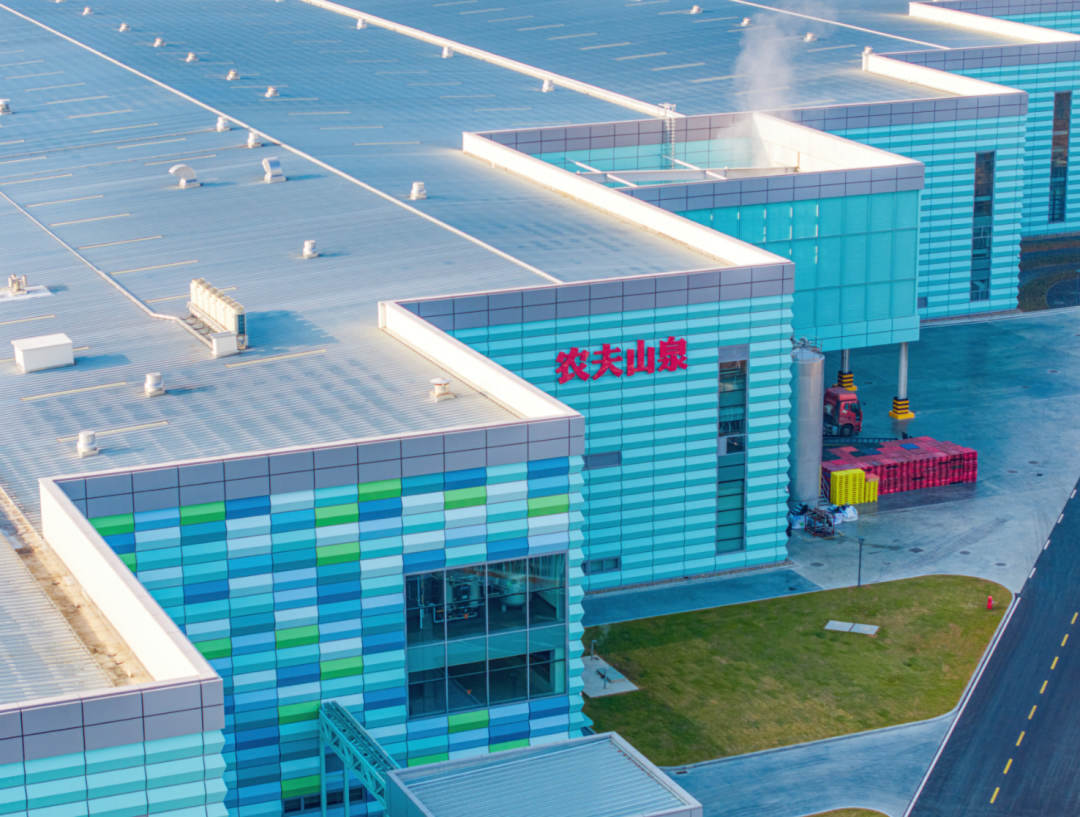
农夫山泉:2025年营收破500亿元 拟派息超111亿元
Zhong Zheng Wang· 2026-03-24 21:01
Core Viewpoint - In 2025, Nongfu Spring achieved total revenue of 52.553 billion yuan, a year-on-year increase of 22.5%, marking its first revenue surpassing 50 billion yuan, with net profit attributable to shareholders reaching 15.868 billion yuan, up 30.9%, reflecting continuous improvement in profitability [3] Financial Performance - The company’s gross margin increased by 2.4 percentage points to 60.5%, primarily due to a decrease in the procurement prices of key raw materials such as PET, cardboard, and sugar [3] - The company plans to distribute a dividend of 0.99 yuan per share, totaling approximately 11.134 billion yuan, demonstrating confidence in its development [3] Business Structure - Nongfu Spring has established a multi-category collaborative development pattern, with tea beverage products showing the most significant growth, achieving revenue of 21.596 billion yuan, a year-on-year increase of 29.0%, and accounting for 41.1% of total revenue, surpassing packaged drinking water as the largest business segment [3][4] - The packaged drinking water segment saw revenue of 18.709 billion yuan, up 17.3%, with new water sources added in Hunan, Sichuan, and Tibet, and another source planned in Yunnan for 2026 [4] - Functional beverages and juice drinks also experienced steady growth, with functional beverages generating revenue of 5.762 billion yuan (up 16.8%) and juice drinks at 5.176 billion yuan (up 26.7%) [4] Strategic Development - Nongfu Spring aims to use its 30th anniversary in 2026 as a new starting point, adopting a development philosophy of "stability, gradualness, and long-term vision" while continuing to deepen its domestic market presence and exploring international growth opportunities [5] - The chairman emphasized the commitment to quality and innovation, focusing on water source layout to promote health beverage consumption upgrades, aiming to strengthen its leading position in the industry amid ongoing market differentiation [6]
饮领新势-旺季前瞻-掘金饮料行业
2026-03-09 05:18
Summary of Conference Call on Beverage Industry Industry Overview - The beverage industry is entering a critical phase known as "water head" from late February to early March, leading up to the peak consumption season from March to May. This phase involves manufacturers increasing inventory and promotional efforts to capture market share before the peak season [3][4]. Key Companies Discussed Nongfu Spring - Expected to recover packaging water revenue to 2023 levels by 2026, with an estimated growth rate of about 8%. Growth drivers include penetration in lower-tier markets and expansion into household water scenarios [1][5]. - The company has 15 water sources, with a cost per ton approximately 85% of its competitor, Yi Bao. This cost advantage, along with a strong national supply chain, provides a competitive moat against private label brands [1][6][8]. - Anticipated gross margin stability in 2026 despite a recent 7%-8% increase in PET prices, due to a 10% decrease in sugar prices and a shift towards sugar-free tea products [1][17][18]. - 2026 revenue growth is projected at 12%-13%, with a PE ratio of about 25, close to historical lows [2][15]. Dongpeng Beverage - Expected revenue growth of 20% in 2026, driven by the "Brew Water" product benefiting from digital channel expansion and increased distribution efforts [1][16]. - The company is also focusing on new product launches in the sugar-free tea segment, with a positive outlook for its "Beicha" series [16]. - Despite recent valuation adjustments due to "sugar tax" rumors, the company remains attractive based on projected growth [2][16]. Oriental Leaf - Projected market share of approximately 80% by 2025, with revenue growth of 15%-20% in 2026. Growth will shift from distribution expansion to enhancing single-point sales efforts [1][9][10]. - The brand's success is attributed to strong product design and effective channel incentives, leading to higher dealer profitability [10]. Financial Metrics and Valuation - Nongfu Spring's 2026 PE ratio is projected at 25, while Dongpeng's valuation is considered attractive based on a 20% growth forecast [2][15]. - The beverage sector is expected to see a stable gross margin despite rising PET costs, with Nongfu Spring and Dongpeng both positioned to manage these cost pressures effectively [17][18]. Market Dynamics - The beverage industry is experiencing a shift towards sugar-free products, with significant growth in the sugar-free tea segment, expected to grow by 20%-30% [9][10]. - The competitive landscape is evolving, with new entrants in the sugar-free tea market, but established brands like Oriental Leaf are expected to maintain their market share [11]. Product Innovations - New product launches, such as electrolyte water and iced tea, are anticipated to contribute positively to revenue growth in 2026 [13][14]. - The "open cap reward" campaign is set to expand in 2026, enhancing consumer engagement across multiple product lines [14]. Conclusion - The beverage industry is poised for growth, driven by strategic investments in product innovation and market expansion. Key players like Nongfu Spring and Dongpeng are well-positioned to capitalize on emerging trends and consumer preferences, despite potential cost pressures from raw materials.
