儿童体重管理

Search documents
假期运动有讲究,科学锻炼护成长
Xin Lang Cai Jing· 2026-02-18 15:12
Group 1 - The core idea emphasizes the importance of exercise during the winter vacation to help children manage their weight effectively by balancing energy intake and expenditure [1] - Exercise enhances metabolic capacity, increasing the basal metabolic rate and promoting energy consumption from food, which is crucial for weight management [1] - Engaging in strength training can increase muscle mass, which burns more energy than fat, thereby aiding in weight control [1] Group 2 - Recommended activities include strength training to improve muscle strength and bone health, with suggestions for exercises that can be done using body weight or light equipment [2] - Aerobic exercises such as running, swimming, and cycling are encouraged to burn excess fat and improve cardiovascular health, with a recommendation of at least one hour of aerobic activity daily for children aged six and above [2] - Family involvement in physical activities is highlighted as a way to enhance health and strengthen family bonds, with encouragement for children to set personal fitness goals [2] Group 3 - Safety measures before exercising include warming up for 5-10 minutes and performing dynamic activities to activate the body, along with gentle stretching [3] - It is advised to gradually increase exercise intensity and duration, aiming for 60-100 minutes of activity daily, while ensuring adequate rest days [3] - Proper equipment and safe environments are crucial, including supportive footwear and protective gear for certain activities, as well as checking the exercise area for hazards [3] Group 4 - Post-exercise care involves static stretching to relax muscles and rehydration, along with monitoring for any signs of injury that may require medical attention [4] - Immediate medical attention is necessary for severe injuries such as dislocations, fractures, or significant swelling and pain [5]
每5个孩子就有1个“小胖墩”,专家呼吁关注儿童体重管理
Xin Lang Cai Jing· 2026-01-13 09:25
Core Insights - Childhood obesity has become a significant issue, with 1 in 5 children classified as overweight or obese, which poses long-term health risks [2][3][4] - The establishment of the "Fudan Pediatric Medical Alliance for Weight Management" aims to address childhood obesity through a comprehensive health management approach [2][5] Group 1: Childhood Obesity Statistics - As of 2022, 159 million children and adolescents globally suffer from obesity, with the obesity rate for children approximately four times higher than in 1990 [3] - In China, the overweight and obesity rate among children aged 6-17 is nearly 20%, while for children under 6, it is 10.4% [3] - The rising obesity rates in rural areas are concerning, with some regions surpassing urban obesity rates [3] Group 2: Weight Management Strategies - The alliance aims to create a comprehensive service system for weight management, focusing on early screening, intervention, and treatment for overweight children [2][5] - A multi-level approach involving families, schools, communities, and hospitals is essential for effective weight management [4][5] - The use of technology, such as AI and wearable devices, will enhance monitoring and early intervention strategies [4][5] Group 3: Collaborative Efforts - The alliance will leverage a multidisciplinary team, integrating expertise from endocrinology, nutrition, psychology, and traditional Chinese medicine [5] - Collaboration with parents, teachers, community doctors, and specialists is crucial for a new model of children's health management [5] - The Fudan Pediatric Medical Alliance has already partnered with 96 medical units to improve pediatric capabilities and establish a tiered diagnosis and treatment system [5]


专家提醒:骤增骤减都不好,警惕暑期儿童体重波动大
Xin Hua Wang· 2025-08-12 10:53
Core Viewpoint - The article emphasizes the importance of balanced weight management and dietary health for children during the summer, highlighting the need for scientific and flexible approaches to avoid weight anxiety while monitoring significant weight fluctuations [1][2]. Group 1: Weight Management Guidelines - Experts recommend that parents record their child's weight weekly and measure height monthly, adjusting dietary and exercise plans if BMI changes exceed 5% over two weeks [2]. - The article introduces the "plate method" for healthy eating, suggesting that one-third of the plate should consist of grains and tubers, one-third of quality proteins, and one-third of vegetables, with deep-colored vegetables making up over 50% of the vegetable portion [2]. Group 2: BMI and Growth Monitoring - The article outlines the international standard for assessing children's weight using Body Mass Index (BMI), calculated as weight (kg) divided by height (m) squared, with specific BMI ranges indicating underweight, overweight, and obesity [1]. - It is noted that weight changes during the summer should not follow a fixed range but should consider factors like age, height growth, and body composition, particularly during puberty [1].
暑期轻盈计划助小胖墩科学减重
Bei Jing Qing Nian Bao· 2025-07-18 01:00
Core Insights - The article discusses the "Summer Light Plan" launched by the Capital Medical University Affiliated Capital Children's Medical Center, aimed at managing children's weight during the summer, a critical period for obesity management [1] Group 1: Dietary Management - The summer provides a controllable family dietary environment, making it an ideal time to adjust dietary structures [1] - Key dietary management strategies include controlling portion sizes and cultivating good eating habits, such as the "put down the utensils" method to slow down eating [1] - Parents are encouraged to educate children about nutrition, helping them read food labels to avoid hidden sugars in snacks and beverages [2] Group 2: Physical Activity - Establishing regular exercise habits during summer is crucial to prevent rapid weight gain, with recommendations for 1 to 2 hours of outdoor activities daily [2] - Activities can include team sports and household chores to reduce sedentary behavior, with screen time limited to 2 hours for non-educational purposes [2] Group 3: Sleep and Emotional Support - Adequate sleep is emphasized as a factor in weight management, with recommendations of 9-11 hours for elementary school students and 8-10 hours for middle school students [3] - A supportive family environment is essential for effective weight management, with parents playing a crucial role in fostering confidence and self-management in children [3][4] - Parents should avoid excessive criticism and focus on positive reinforcement, while also being attentive to children's emotional states that may lead to overeating [4]
当心“小胖墩”变成“小病号”(民生一线)
Ren Min Ri Bao· 2025-05-28 22:31
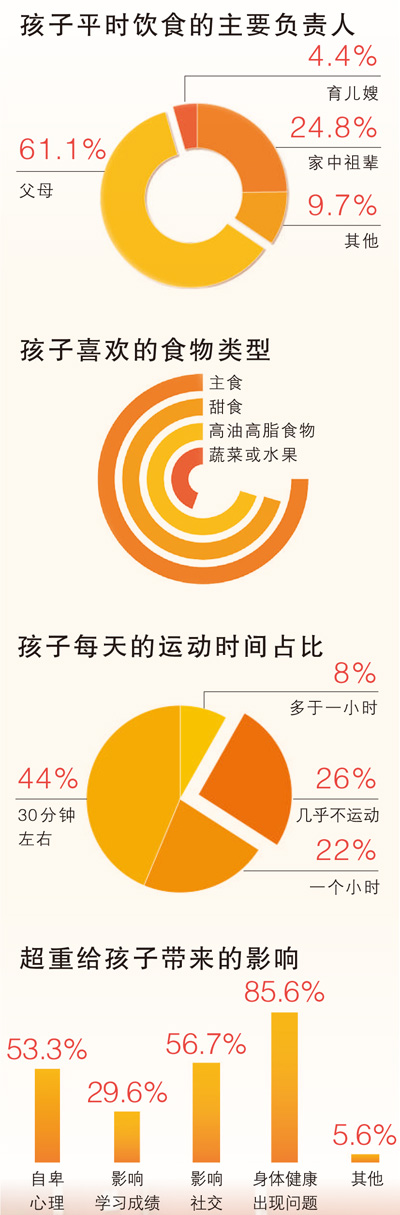
Core Viewpoint - The rising obesity rates among children and adolescents in China pose significant health risks, necessitating urgent intervention and awareness from families, schools, and society at large [5][6][13]. Group 1: Current Situation of Childhood Obesity - A survey conducted in 2019 revealed that the obesity detection rate among children aged 7-18 years increased to 9.6%, up from 0.1% in the 1980s [5]. - Predictions indicate that if not effectively controlled, the obesity rate among children could reach 31.8% by 2030 [5]. - A recent survey of nearly 300 effective questionnaires showed that 85.6% of overweight children face health issues, while 53.3% experience psychological problems [5][6]. Group 2: Health Implications of Obesity - Obesity in children is linked to various health risks, including metabolic disorders, psychological issues, and potential diseases in adulthood [6][10]. - The most common health issues reported among obese children include fatty liver (32.2%), high insulin levels or type 2 diabetes, and delayed sexual development (23.3% each) [10]. - Psychological effects are prevalent, with 53.3% of surveyed obese children exhibiting varying degrees of low self-esteem [10][11]. Group 3: Contributing Factors to Obesity - Key factors contributing to childhood obesity include genetic predisposition, excessive caloric intake, and insufficient physical activity due to increased academic and social pressures [11][12]. - The rise in the consumption of high-calorie, high-fat, and high-sugar foods, coupled with a lack of awareness about healthy eating, exacerbates the issue [12][13]. Group 4: Societal Response and Initiatives - The National Health Commission has initiated a "Weight Management Year" campaign, emphasizing the need for collaborative efforts from government, industry, and individuals to address childhood obesity [13][14]. - Educational institutions are implementing policies to ensure daily physical activity for students, with various regions mandating specific hours for sports and physical education [13][14]. - Community initiatives, such as weight management clinics and summer camps for children, are being established to promote healthy weight loss strategies [14].