
充电设施三年倍增

Search documents
全国新能源充电设施突破2000万个,大功率快充与乡村布局仍不足
Jing Ji Guan Cha Wang· 2026-01-24 06:20
Core Viewpoint - The National Energy Administration of China has reported significant growth in electric vehicle (EV) charging infrastructure, projecting a total of 20.092 million charging points by 2025, representing a year-on-year increase of 49.7% [2] Group 1: Charging Infrastructure Growth - By 2025, the number of private charging facilities is expected to reach 15.375 million, up 82% year-on-year, while public charging facilities will total 4.717 million, reflecting a 31.9% increase [2] - The growth in charging infrastructure has accelerated, with the time taken to increase from 1 million to 10 million charging points reduced from 13 years to just 18 months [2][3] - The average charging power of public charging stations has increased to 46.5 kW, with a 33% improvement in charging efficiency [2][3] Group 2: Coverage and Accessibility - Charging stations have been established in 98% of highway service areas, with 71,500 charging points built, and 19 provinces achieving full coverage of charging facilities in rural areas [3] - The current charging infrastructure is concentrated in economically developed regions, with the top 10 regions accounting for 65.7% of public charging facilities by 2025 [4] Group 3: Market Dynamics and Competition - The market share of the top five charging operators is projected to decline from 65.4% in 2024 to 61.1% in 2025, indicating increased competition [5] - The total number of battery swap stations is expected to reach 5,155 by 2025, marking a 16% increase from the previous year [5] Group 4: Future Projections - The "Three-Year Doubling" action plan aims to establish 28 million charging facilities by the end of 2027, catering to over 80 million electric vehicles [3][4] - Predictions indicate that by 2026, there will be an addition of 7.419 million private charging facilities and 1.448 million public charging facilities [5]


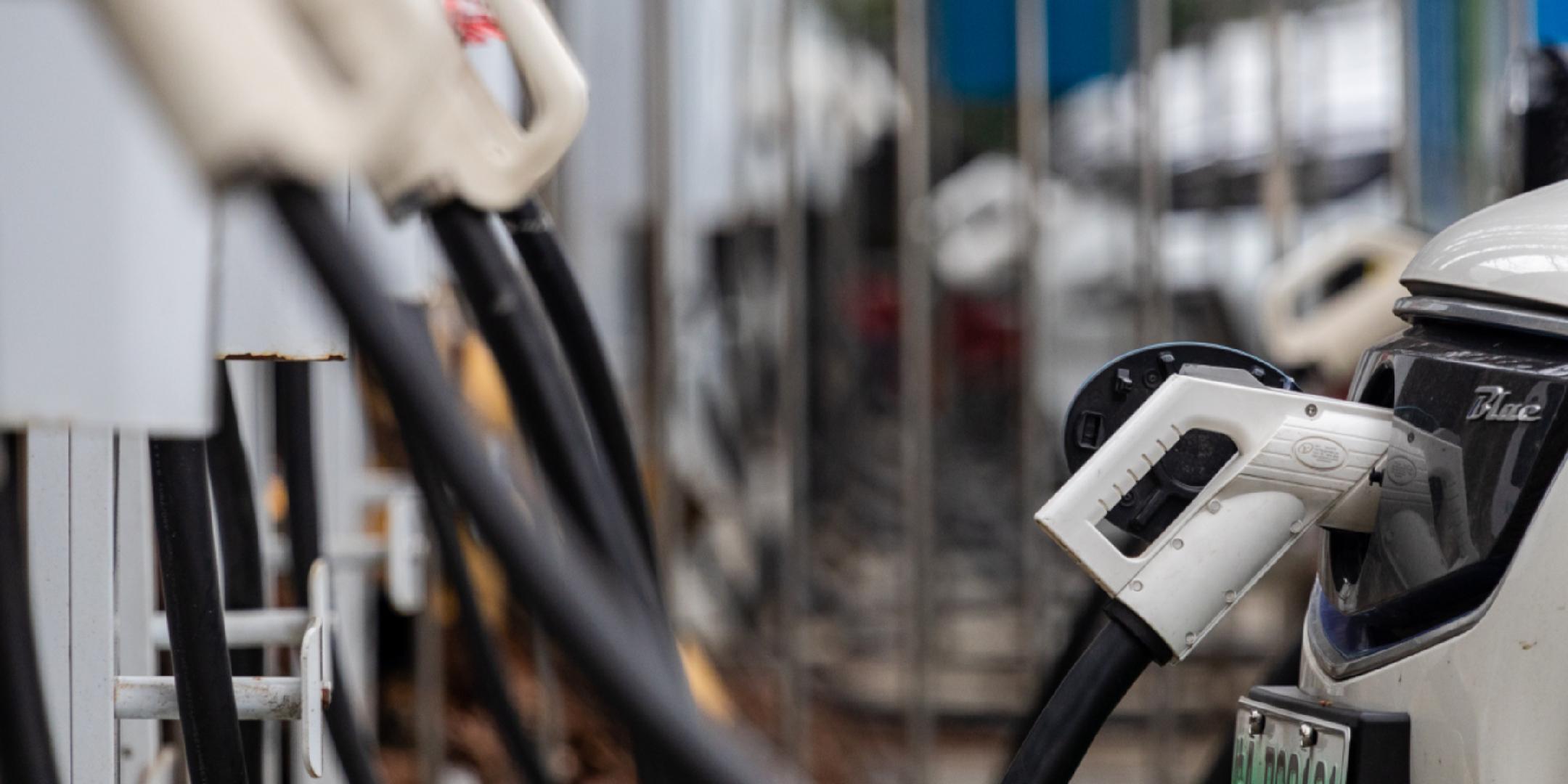
“三年倍增”为汽车强国充电
Jing Ji Ri Bao· 2025-10-22 22:10
Core Viewpoint - The development of charging infrastructure is crucial for the consumption of electric vehicles (EVs) in China, with a new action plan aiming to significantly enhance charging capacity by 2027 [1][2]. Group 1: Action Plan Overview - The "Three-Year Doubling" Action Plan aims to establish 28 million charging facilities and provide over 300 million kilowatts of public charging capacity by the end of 2027, meeting the charging needs of over 80 million electric vehicles [1]. - The plan addresses the current shortcomings in charging infrastructure and aims to support the rapid growth of the new energy vehicle industry in China [1]. Group 2: Current Challenges - Despite rapid development, there are still issues such as uneven distribution of public charging networks, insufficient service in residential areas, and the need for improved operational management [2]. - During peak travel times, such as holidays, there have been reports of long wait times for charging, with some drivers waiting 3 to 4 hours [2]. Group 3: Infrastructure Development Focus - The action plan emphasizes balanced development of charging facilities, particularly in rural areas, and aims to enhance high-power charging infrastructure in key cities and along highways [3]. - The initiative is expected to boost market confidence and stimulate potential vehicle purchases by addressing concerns about infrastructure lagging behind sales growth [3]. Group 4: Economic Impact - The addition of over 10 million charging facilities is projected to drive a thriving supply chain, creating new jobs and increasing demand for materials like copper and aluminum, with an estimated investment of over 200 billion yuan in charging equipment manufacturing and construction [3]. Group 5: Innovation and Future Prospects - The evolution of charging stations into bidirectional energy nodes will facilitate energy exchange and contribute to the development of virtual power plants [4]. - The action plan encourages the exploration of innovative pricing policies and market mechanisms, which could lead to new business models and improved energy management [4]. - Challenges such as land resource constraints in urban areas and the need for sustainable business models for charging station operations remain to be addressed [4].