
光伏产业价值重估

Search documents
市场化下光伏产业链面临价值重估
Di Yi Cai Jing Zi Xun· 2026-01-11 11:37
Group 1 - The core viewpoint of the article highlights a significant policy shift in the photovoltaic (PV) industry, marked by the cancellation of export VAT rebates and the cessation of industry self-regulation, indicating a historical turning point for the sector [2][3]. - The Ministry of Finance and the State Taxation Administration announced the cancellation of export VAT rebates for PV products starting April 1, 2026, transitioning the industry into a "no rebate subsidy" phase [3]. - The cancellation of the export VAT rebate follows a period of declining export prices and increased competition in overseas markets, leading to substantial losses across the industry [3][4]. Group 2 - The market reacted sharply to these changes, with significant declines in the prices of polysilicon futures and related stocks, indicating a loss of investor confidence [4][8]. - The recent discussions between the State Administration for Market Regulation and leading companies in the PV sector, including Tongwei Co. and Daqo New Energy, focused on addressing monopoly risks and enforcing compliance with new regulations [4][5]. - Despite rising prices for upstream materials like polysilicon and silicon wafers, downstream component prices have not followed suit, leading to squeezed margins for developers [5][6]. Group 3 - The first quarter is traditionally a slow season for the PV industry, and the anticipated price increases for components face resistance due to weak demand [6][7]. - The shift in policy is prompting a reevaluation of the PV sector's value in the capital markets, with significant sell-offs observed in the stock prices of major companies [7][8]. - Analysts suggest that while the overall valuation of the PV industry is at historical lows, the uncertainty surrounding future profitability and market dynamics poses challenges for attracting investment [8].




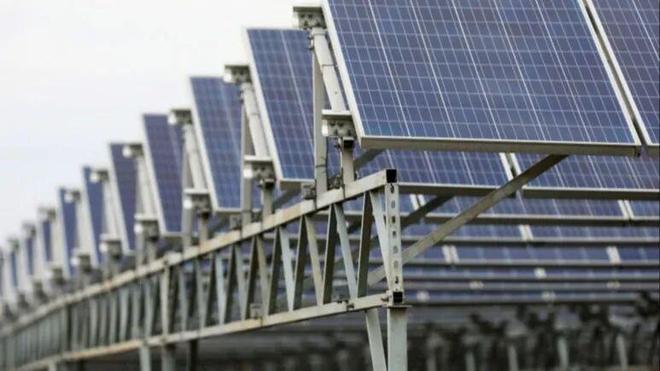
出口退税取消叠加自律机制调整,市场化下光伏产业链面临价值重估
Di Yi Cai Jing· 2026-01-11 11:11
Core Viewpoint - The photovoltaic industry is undergoing significant changes in 2026 due to the cancellation of export VAT rebates and the halting of industry self-regulation, leading to a historical turning point for the sector [1][2]. Policy Changes - The Ministry of Finance and the State Taxation Administration announced the cancellation of export VAT rebates for photovoltaic products starting April 1, 2026, marking the transition to a "no rebate subsidy" phase [2]. - The export VAT rebate policy for the photovoltaic industry began in October 2013, with rates gradually decreasing over the past two years, culminating in a drop from 13% to 9% in December 2024 [2]. Market Reactions - The market reacted sharply to these policy changes, with the price of polysilicon futures dropping significantly, indicating a loss of confidence among investors [3][8]. - On January 8 and 9, polysilicon futures contracts fell by 9% and 8%, respectively, with related stocks also experiencing substantial declines [3][8]. Industry Self-Regulation - The recent discussions between the State Administration for Market Regulation and major companies in the photovoltaic sector signal a shift away from previous self-regulatory practices, which had aimed to stabilize prices [3][4]. - Companies are now prohibited from coordinating on production capacity, sales prices, and other market behaviors, which could lead to increased volatility in pricing [3][4]. Price Dynamics - Despite rising prices for upstream materials like polysilicon and silicon wafers, downstream component prices have not followed suit, leading to squeezed margins for developers [5][6]. - The average transaction price for n-type polysilicon rose to 59,200 yuan/ton, a 9.83% increase week-on-week, while the average price for N-type G10L monocrystalline silicon wafers increased by 9.17% [5]. Demand Outlook - The first quarter is traditionally a slow season for the photovoltaic industry, with both domestic and international demand showing signs of weakness [7]. - The overall market demand has been declining, with new orders becoming less visible, further complicating the pricing landscape [7]. Market Valuation - The shift in policy is prompting a reevaluation of the photovoltaic sector's value in the capital markets, with significant sell-offs observed in early January [8]. - From January 8 to 9, the photovoltaic sector saw a drop of 10.2% in polysilicon futures, with major companies like Tongwei Co. and Daqo New Energy experiencing notable declines in stock prices [8].