光纤上车

Search documents
【新能源周报】新能源汽车行业信息周报(2026年3月9日-3月15日)
乘联分会· 2026-03-17 08:37
Industry Information - The Ministry of Transport will enhance high-power charging capabilities at highway service areas to alleviate the difficulties of finding charging stations and long waiting times for electric vehicle owners. Currently, the coverage rate of charging facilities at highway service areas is 98.8% [7] - National Committee member Jiang Haoran suggests accelerating the large-scale application of high-level autonomous driving, addressing issues such as outdated laws and regulations, limited application scope, and insufficient integration of infrastructure [8] - National People's Congress representative Liu Wu advocates for the acceleration of "fiber optics on vehicles" to resolve bandwidth anxiety in smart connected vehicles, emphasizing the limitations of traditional copper cables [9] - Honeycomb Energy reported that 39% of its overseas shipments in January-February 2026 were for electric vehicles, indicating a strong global expansion strategy [9] - CATL forecasts a net profit of 72.2 billion yuan for 2025, a year-on-year increase of 42.28%, with a projected revenue of 423.7 billion yuan [10] - The Ministry of Industry and Information Technology emphasizes the need to accelerate the research and promotion of advanced process technologies to improve the comprehensive utilization of electrolytic manganese slag [11] - The first domestically produced high-performance automotive-grade MCU chip by Fenghuo Communication will enter mass production this year, marking a significant step in domestic automotive electronics [12] - The first automotive-grade chip packaging and testing factory in China has been established in Shanghai, enhancing the domestic supply chain for automotive chips [13] - Insurance companies are exploring the "separation of vehicle and battery" model for car insurance, which may reduce costs for electric vehicle consumers but requires further development before widespread adoption [14] - Guoxuan High-Tech has commenced construction of a new industrial park in Ganzhou with an initial investment of 3.2 billion yuan, focusing on low-altitude economic power batteries [15] - The "14th Five-Year Plan" supports the new battery industry, promoting high-quality development through a three-fold closed-loop strategy [15] - Sodium-ion battery technology is entering a new phase of large-scale application, with major players accelerating their layouts in this area [15] - Hunan Highway Group and BYD are collaborating to implement a 5-minute fast charging solution across the province's highway service areas [16] - In February, the domestic power battery installation volume reached 26.3 GWh, with a year-on-year increase of 11.4% [17] - The Ministry of Industry and Information Technology is organizing the selection of the first batch of national emerging industry development demonstration bases, focusing on key sectors such as AI and smart connected vehicles [20] - Weinan Battery has signed a contract with Wuhan East Lake High-tech Zone to establish a new infrastructure project with a total investment of 9.8 billion yuan [20] - Academician Ouyang Minggao predicts that the next five years will see significant advancements in seven key technology directions for new energy vehicles [20] - Chinese companies are actively participating in the development of the "Battery Valley" in France, enhancing the local electric vehicle supply chain [20] Policy Information - Qingdao, Shandong, will issue 250 million yuan in subsidies for vehicle trade-ins, with a maximum subsidy of 120,000 yuan for personal purchases of new energy vehicles [22] - The Guangdong government is accelerating the development of high-level autonomous driving and establishing safety sandboxes for comprehensive testing [24] - Chengdu has launched a new round of automotive consumption rewards, offering up to 8,000 yuan in subsidies for new car purchases [27] - Yibin, Sichuan, aims to strengthen its photovoltaic industry chain, targeting a scale of 40 billion yuan by 2026 [28] - The Zhangjiakou government plans to improve electric vehicle charging infrastructure, with 1,196 new charging facilities to be constructed [28]




“光纤上车”促进智能汽车功能升级
Ke Ji Ri Bao· 2025-12-11 00:40
Core Viewpoint - The introduction of V-PON vehicle optical communication solutions by China Information Communication Technology Group's subsidiary, FiberHome Technologies, aims to address the data transmission challenges in smart vehicles, enhancing their functionality through fiber optic technology [1][2]. Group 1: Data Transmission Challenges - The increasing intelligence of connected vehicles necessitates the deployment of numerous sensors and display terminals, which significantly raises the demands for bandwidth and transmission speed within the vehicle [2]. - A single uncompressed 4K display in vehicles requires over 10G of bandwidth, and even compressed, it still needs between 2G to 4G, highlighting the inadequacy of traditional copper wiring in meeting these high demands [2]. Group 2: V-PON Optical Communication Solution - The V-PON solution utilizes passive optical network (PON) technology, commonly used in home fiber optic installations, to create a point-to-multipoint transmission architecture, connecting displays and cameras via fiber optics [2]. - This solution allows for simultaneous upstream and downstream high-speed transmission through a single cable, potentially reducing the required cable length and weight by up to 90%, aligning with the lightweight development needs of smart vehicles [2]. Group 3: Current Applications and Future Potential - Optical communication technologies have already been validated in certain scenarios, with bend-resistant optical cables passing internal tests by some automotive companies [3]. - The application of V-PON technology is expected to transform vehicles into multifunctional "embodied intelligent entities," enabling features such as personalized seat adjustments, automatic wiper adjustments based on weather, and real-time monitoring of vehicle conditions [4]. Group 4: Industry Significance - China has established a leading position in fiber access technology, achieving comprehensive autonomy in technology, chips, and standards, which supports the development of domestic automotive companies and reduces reliance on foreign technologies [5]. - The company plans to continue advancing automotive-grade optical communication technology, aiming for breakthroughs in core components like PON chips and optical cables, thereby enhancing the competitiveness of China's smart connected vehicles [5].

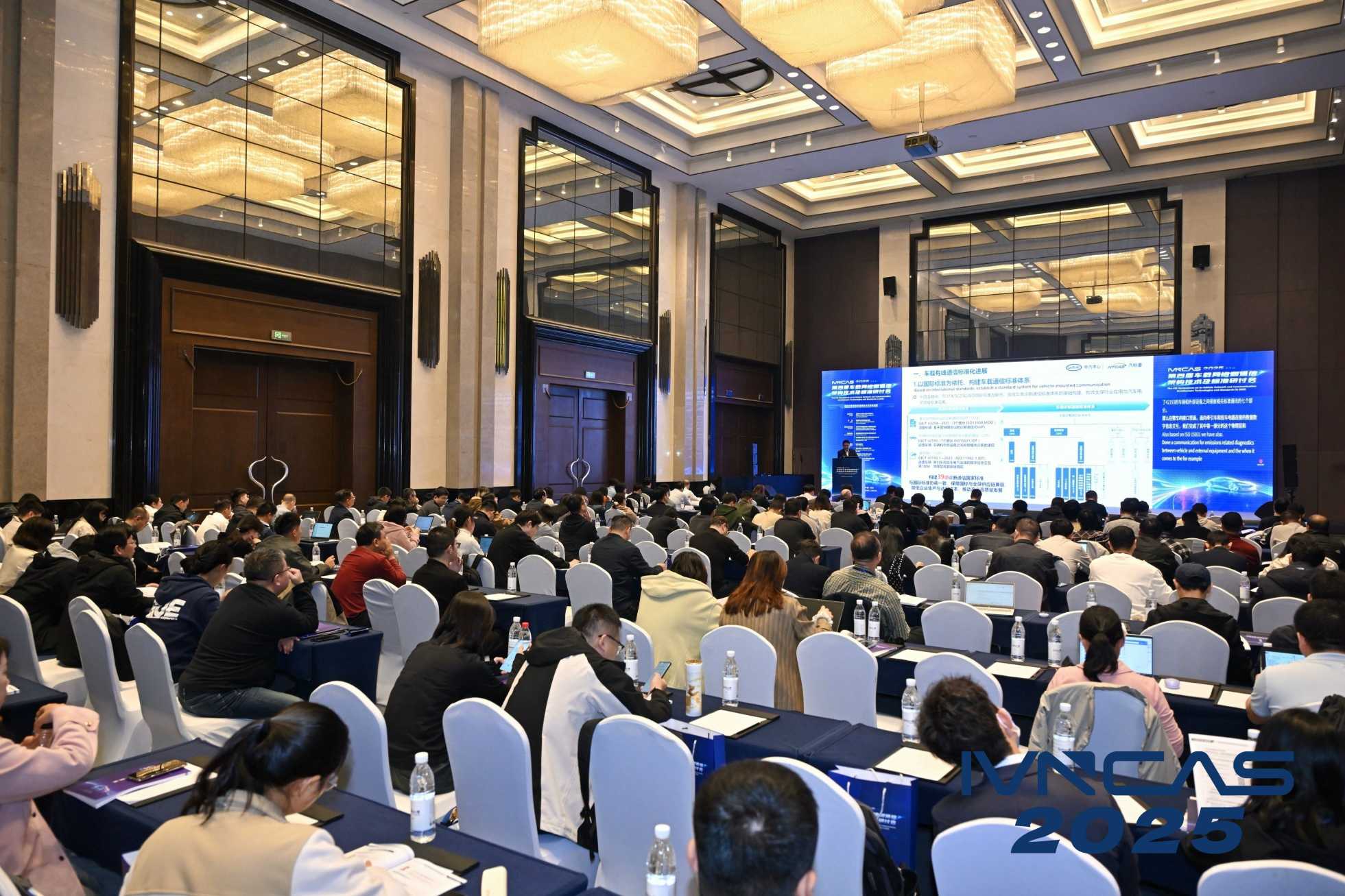
车载网络通信标准研讨会在汉召开,“光纤上车”成智能汽车产业升级关键方向
Chang Jiang Ri Bao· 2025-11-09 09:01
Core Insights - "Optical fiber integration" is becoming a key direction for upgrading the smart automotive industry and reshaping the industrial chain structure [1] - The demand for communication speed is growing exponentially with the development of advanced intelligent driving and "vehicle-road-cloud integration" [1][4] - The automotive Ethernet is widely used in smart cockpits and autonomous driving, with a projected penetration rate of 85% in China by 2030 [4] Group 1 - The "optical fiber integration" is seen as a new starting point for industrial upgrades, requiring collaborative efforts across the industry chain to transition from technology research to large-scale vehicle applications [5] - The technology connects the automotive and optical communication industries, which are both trillion-dollar sectors, accelerating collaboration across the supply chain [5] - The establishment of automotive-grade optical device standards and high-speed vehicle optical communication protocols will enhance vehicle communication performance and drive upgrades across the entire supply chain [5] Group 2 - The "optical fiber integration" will be a key research and development area during the "14th Five-Year Plan" period for the smart automotive industry [5] - The recent seminar gathered over 160 experts from domestic and international automotive companies, parts suppliers, and testing organizations, fostering consensus on vehicle communication standards [5] - This initiative aims to support the transition from technology research to large-scale applications, helping the Chinese smart automotive industry gain a competitive edge globally [5]