
光纤通信

Search documents
锚定五万亿,工业名城苏州再展硬核实力
Xin Lang Cai Jing· 2026-01-13 10:28
Core Insights - Suzhou aims to achieve an industrial output value of 4.89 trillion yuan by 2025, with a target of surpassing 5 trillion yuan by 2026, positioning itself as the second city in China to reach this milestone after Shenzhen [1][3] - The city's industrial growth has shown remarkable resilience despite global economic pressures, with an average annual increase of nearly 300 billion yuan over the past five years [3][4] Industrial Growth - Suzhou's industrial output surpassed 3.5 trillion yuan in 2020 and reached 4.43 trillion yuan in 2023, with projections of 4.7 trillion yuan in 2024 and 4.89 trillion yuan in 2025 [3][4] - The city has maintained an impressive growth rate, even amid external trade challenges, with an average annual increase exceeding 200 billion yuan in recent years [3][4] Industry Structure - Suzhou's industrial strength lies in its balanced multi-pillar industry system, which includes electronics, high-end equipment, and advanced materials, unlike Shenzhen's focus on electronics [3][4] - The electronic information, equipment manufacturing, and new materials sectors achieved output values of 1.36 trillion yuan, 1.47 trillion yuan, and 937.1 billion yuan respectively in 2025, all showing positive growth [4] Economic Drivers - Suzhou effectively combines foreign investment and domestic growth, hosting over 18,000 foreign enterprises with cumulative foreign investment exceeding 160 billion USD, while also nurturing local giants in emerging sectors [5][6] - The city is characterized by a strong industrial presence across various districts, with specialized industrial parks focusing on biomedicine, nanotechnology, and automotive components, creating a robust industrial landscape [5][6] Future Strategies - The city plans to leverage artificial intelligence to enhance industrial production, with initiatives such as the "Top Ten Actions for Suzhou Intelligent Manufacturing" aimed at elevating industrial capabilities [5][6] - Despite the ambitious targets, challenges remain, including the need for traditional industries to adapt and the increasing constraints on land and environmental resources [5][6] Competitive Landscape - Suzhou faces intense regional competition from cities like Shenzhen, Chongqing, Guangzhou, and others, as well as from neighboring cities within the Yangtze River Delta [6] - The city's industrial resilience is supported by a vast network of 160,000 industrial enterprises across 34 major industrial categories, highlighting its competitive edge in the global market [6]

武汉光博会打造光电产业旗舰展会
Chang Jiang Ri Bao· 2025-12-22 01:04
Core Viewpoint - The 21st "China Optics Valley" International Optoelectronic Expo and Forum will be held in May 2026 in Wuhan, focusing on laser optics, optical communication, and the entire downstream industry chain, showcasing cutting-edge technologies and innovations in the global optoelectronic field [1][3]. Group 1: Event Overview - The theme of the 2026 expo is "Connecting Everything with Light, Leading the Future" [1]. - The event is expected to expand in scale, with an exhibition area projected to exceed 30,000 square meters, gathering over 400 global exhibitors and 30,000 professional visitors [1]. - In 2025, the expo attracted 390 companies from 12 countries and regions, receiving more than 27,000 professional visitors [1]. Group 2: Involvement of Reed Exhibitions - Reed Exhibitions, a leading global exhibition organization, will leverage its extensive client network and marketing capabilities to enhance the expo [2]. - The organization aims to integrate high-quality procurement resources from sectors like electronics manufacturing, automotive, and semiconductors, facilitating connections between optoelectronic companies and downstream applications [2]. - Reed Exhibitions plans to attract more international exhibitors and professional visitors, increasing the expo's global influence [2]. Group 3: Focus Areas and Activities - The expo will concentrate on four core areas: laser technology, optical communication, precision optics, and optoelectronic technology and applications [2]. - It will feature high-end seminars covering topics such as smart photonics, laser industry, and silicon photonics, with participation from academicians and industry leaders [2]. - The event aims to promote the integration of optoelectronic technology with key industries in Central and Western China, such as automotive engineering and biomedicine [2][3].
全球GDP40强城市洗牌:巴黎首破6.5万亿,苏州逼近香港,武汉远超墨尔本!
Sou Hu Cai Jing· 2025-11-26 19:10
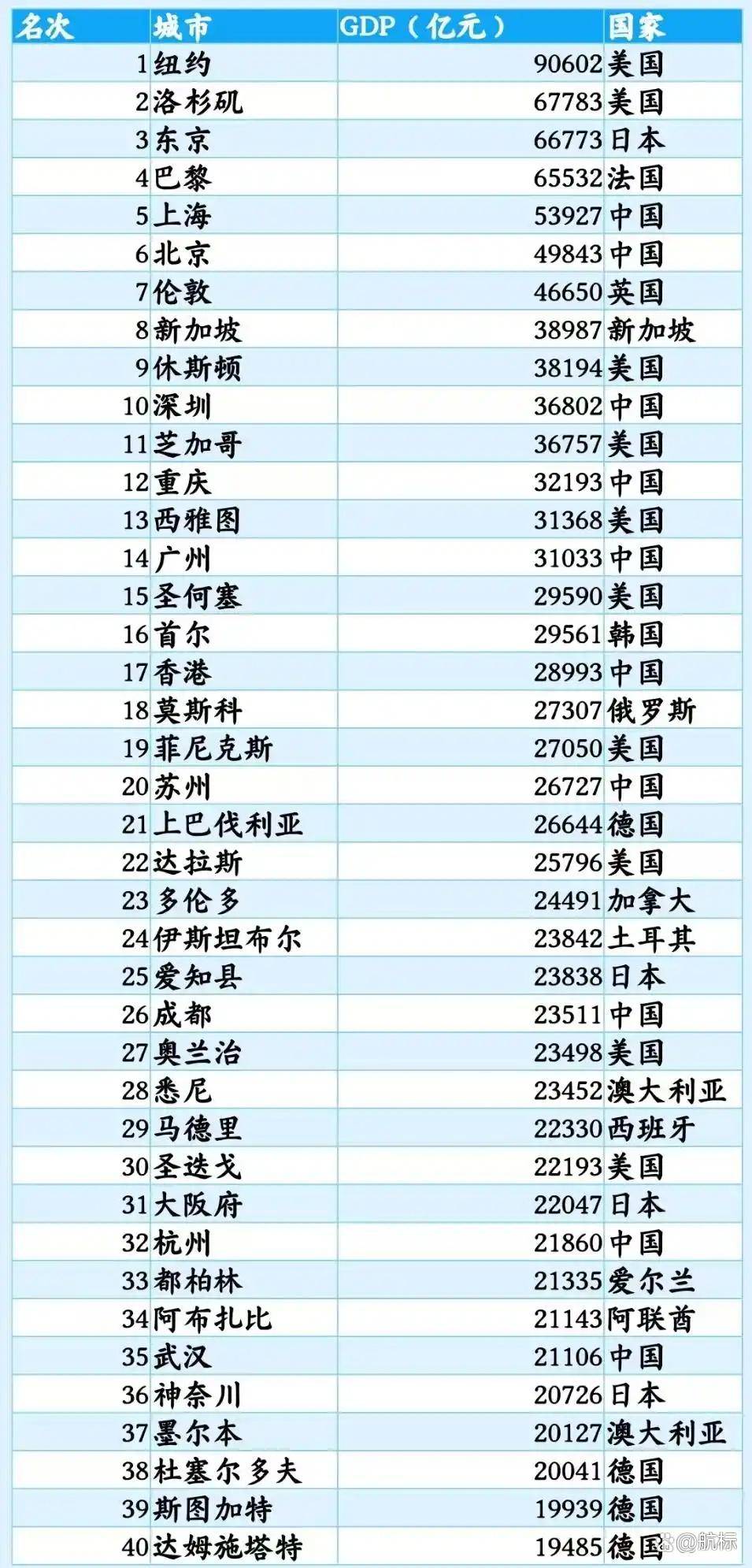
Core Insights - The 2024 Global City GDP Top 40 list reveals significant economic advancements in major cities, driven by national strategic benefits, with U.S. cities leading in technology clusters, Chinese cities accelerating through regional development policies, and European cities solidifying their positions via industrial upgrades [1] Group 1: Key City Performances - Paris has surpassed a GDP of 65.5 trillion yuan, marking a significant milestone as Europe's economic "ballast" [1][3] - Suzhou's GDP gap with Hong Kong has narrowed to 220 billion yuan, showcasing the city's rapid manufacturing growth against Hong Kong's financial hub status [1][5] - Wuhan's GDP of 21,106 billion yuan has overtaken Melbourne's 20,127 billion yuan, highlighting the release of potential in regional hubs [1][7] Group 2: Growth Drivers - Paris's economic strength is supported by its strategic location as a European transport and financial hub, alongside the digital transformation of luxury brands like LVMH, which has seen online revenue reach 35% [3] - Suzhou's industrial upgrades, driven by the "smart transformation" policy, have led to a 20% increase in annual patent applications in semiconductor firms, with its logistics efficiency enhancing foreign trade resilience [5] - Wuhan's growth is attributed to its status as a national central city, with significant advancements in the optoelectronics sector, where it holds 35% of national fiber optic communication patents [7] Group 3: Economic Restructuring - The reshuffling of global city GDP rankings reflects a precise alignment of self-positioning and national strategies, with cities leveraging their geographical advantages, industrial innovations, and supportive policies [9]
车载网络通信标准研讨会在汉召开,“光纤上车”成智能汽车产业升级关键方向
Chang Jiang Ri Bao· 2025-11-09 09:01
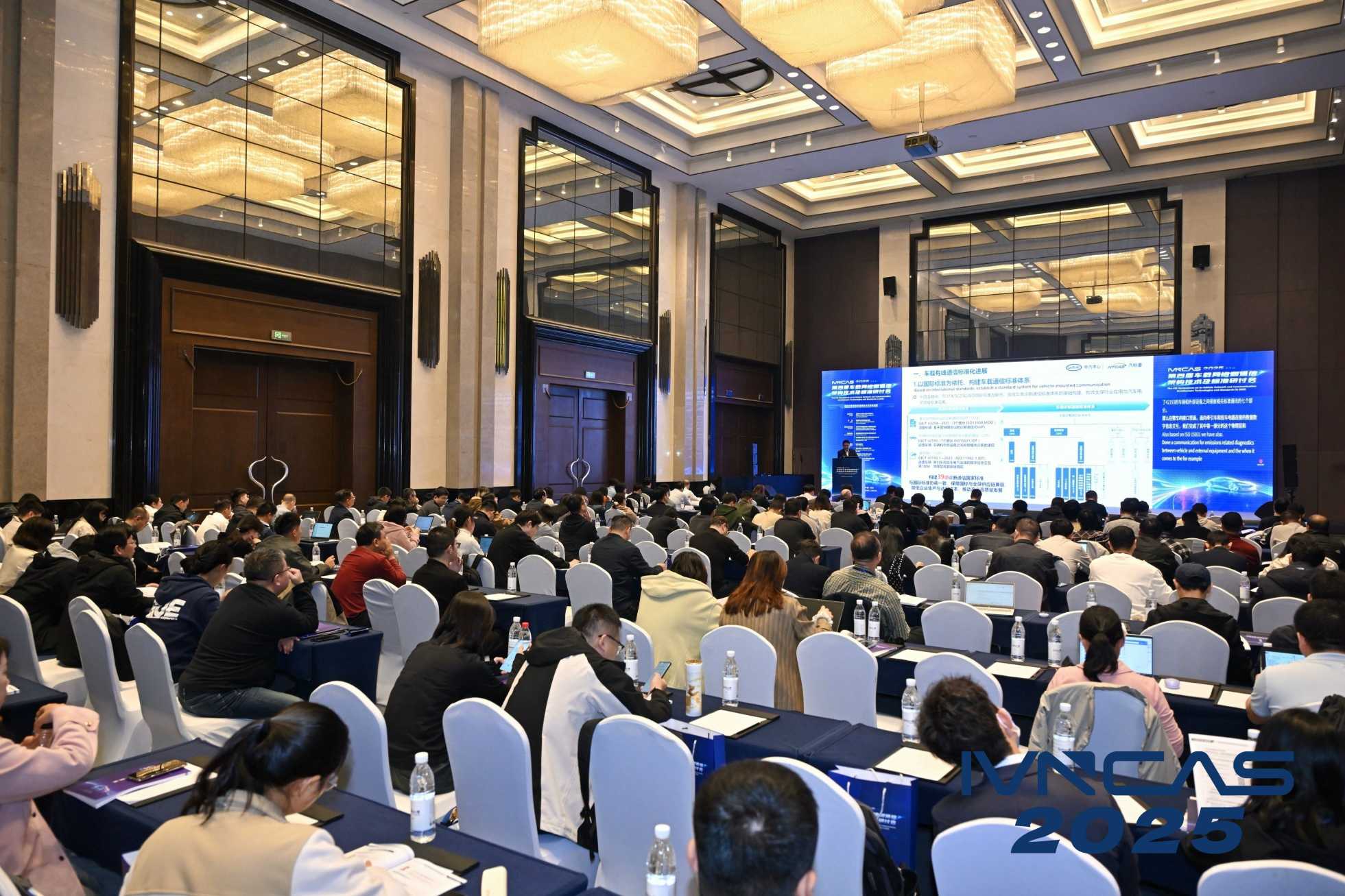
Core Insights - "Optical fiber integration" is becoming a key direction for upgrading the smart automotive industry and reshaping the industrial chain structure [1] - The demand for communication speed is growing exponentially with the development of advanced intelligent driving and "vehicle-road-cloud integration" [1][4] - The automotive Ethernet is widely used in smart cockpits and autonomous driving, with a projected penetration rate of 85% in China by 2030 [4] Group 1 - The "optical fiber integration" is seen as a new starting point for industrial upgrades, requiring collaborative efforts across the industry chain to transition from technology research to large-scale vehicle applications [5] - The technology connects the automotive and optical communication industries, which are both trillion-dollar sectors, accelerating collaboration across the supply chain [5] - The establishment of automotive-grade optical device standards and high-speed vehicle optical communication protocols will enhance vehicle communication performance and drive upgrades across the entire supply chain [5] Group 2 - The "optical fiber integration" will be a key research and development area during the "14th Five-Year Plan" period for the smart automotive industry [5] - The recent seminar gathered over 160 experts from domestic and international automotive companies, parts suppliers, and testing organizations, fostering consensus on vehicle communication standards [5] - This initiative aims to support the transition from technology research to large-scale applications, helping the Chinese smart automotive industry gain a competitive edge globally [5]
三名量子物理学家获诺奖,他们让微波通信成为可能
Xin Jing Bao· 2025-10-07 23:37
Core Insights - The 2025 Nobel Prize in Physics was awarded to John Clarke, Michel H. Devoret, and John M. Martinis for their contributions to the realization of macroscopic quantum tunneling effects and energy quantization in circuits, marking a significant milestone in quantum mechanics as it celebrates its centenary [1] Group 1: Quantum Tunneling Effect - The macroscopic quantum tunneling effect refers to the phenomenon where macroscopic objects exhibit quantum behavior by passing through energy barriers, which is significant at the nanoscale and limits the miniaturization of microelectronic devices and the information retention time of storage devices [2][3] - The research demonstrated that quantum mechanical properties can be manifested on a macroscopic scale, allowing systems to escape a zero-voltage state through tunneling effects, which was previously thought impossible [3] Group 2: Applications in Technology - The principles of macroscopic quantum tunneling and energy quantization are applicable in semiconductor devices such as tunnel diodes and superconducting quantum interference devices, which are crucial for the operation of electronic devices like smartphones and computers [4][5] - Tunnel diodes, which utilize these quantum principles, have significant applications in high-speed electronic devices, including RF oscillators and frequency converters, and are essential for microwave communication systems [5][6] Group 3: Future Implications - The advancements in quantum tunneling and energy quantization could lead to breakthroughs in microwave communication, potentially surpassing current fiber optic technologies by providing faster wireless broadband and effective signal transmission for devices like smartphones and satellites [6][7] - The research also highlights the role of quantum tunneling in solar nuclear fusion, which is vital for sustaining life on Earth by providing energy through the fusion process, demonstrating the broad implications of these quantum principles for future technological developments [7]
伊通社编译版:伊朗启动全国光纤通信计划
Shang Wu Bu Wang Zhan· 2025-10-01 15:07
Core Viewpoint - Iran is launching a nationwide fiber optic communication plan aimed at covering 20 million households by the end of its seventh five-year development plan (2023-2027), which corresponds to approximately 80 million people [1] Group 1: Project Overview - The Iranian telecommunications company has initiated a comprehensive migration plan from copper cables to fiber optics [1] - The project has already connected 600,000 users with internet speeds reaching 1000 Mbps [1] - The initiative is being implemented simultaneously across 31 provincial centers [1] Group 2: Investment and Coverage - The total investment for the fiber optic project is estimated at $5 billion [1] - By the end of the development plan, the fiber optic network is expected to cover 20 million households [1]
日企急跳脚了!中国断供镓锗后,连美国都绕不开的中国供应链
Sou Hu Cai Jing· 2025-09-17 20:15
Core Insights - China's recent export controls on gallium and germanium mark a significant response to Western technology restrictions, particularly targeting the semiconductor industry [1][3] - The new regulations require extensive approval processes for exporting these critical materials, indicating China's strategic leverage in the global high-tech supply chain [1][3] Group 1: Impact on Global Supply Chains - China produces 98% of the world's gallium and 60% of germanium, making these metals essential for modern semiconductor applications [3] - Following the export controls, gallium prices in Europe surged by 100%, while germanium prices increased by over 30%, highlighting immediate market disruptions [3] - Japanese companies, heavily reliant on Chinese imports, face significant challenges in sourcing alternative supplies, with gallium imports from China projected to drop by 85% by February 2025 [3][4] Group 2: Strategic Responses and Challenges - Japan is investing hundreds of billions of yen to diversify its supply chains, seeking alternatives from countries like Australia and the U.S., but faces high costs and inefficiencies [6] - China's export controls extend to all companies, including those outside China, preventing third-party countries from re-exporting these materials to the U.S., complicating global trade dynamics [8] - Japanese officials express concerns over the difficulty of tracking gallium content in products, adding uncertainty to the supply chain [9] Group 3: Financial Implications for Companies - The export controls have led to a 15% drop in Tokyo Electron's stock price, reflecting the financial strain on companies dependent on these materials [11] - Despite challenges, Tokyo Electron has shown resilience by increasing sales of less advanced semiconductor equipment to China, which now accounts for 43% of its total revenue [11] Group 4: Broader Geopolitical Context - China's export restrictions are part of a broader strategy to enhance national security and control over critical resources, with potential implications for global supply chain stability [13][14] - The ongoing tension between technology restrictions and the need for stable supply chains presents a complex dilemma for nations, emphasizing the importance of balancing cooperation and control [14]
专精特新“京品出海”推介交流会搭建出海“新”平台
Sou Hu Cai Jing· 2025-05-08 12:14
Group 1 - The "Beijing Products Going Global" promotion event was held as part of the 27th Beijing Science and Technology Expo, aiming to enhance the international competitiveness of specialized and innovative enterprises in Beijing [1][2] - The Beijing government has significantly increased support for specialized and innovative enterprises, resulting in a notable rise in their overseas market expansion [1][2] - As of the end of 2024, Beijing has 2.133 million active small and medium-sized enterprises, with 10,199 specialized and innovative enterprises and 1,035 national "little giant" enterprises, maintaining its position as the leading city for "little giants" in China for three consecutive years [2] Group 2 - The "Beijing Specialized and Innovative Enterprises Export Products Reference Directory" was officially released, collecting information from 161 enterprises across various industries, including robotics, biomedicine, and electronic communication technology [2] - Successful case studies of enterprises that have successfully expanded overseas were shared, highlighting replicable "going global" experiences in fields such as smart manufacturing and medical devices [2][3] - The event included product promotion sessions where companies showcased innovative products and technologies, attracting attention from domestic and international business associations and investment institutions [3]