
入境游红利

Search documents
全球游客,突然涌向中国春节
投资界· 2026-02-10 03:11
Core Viewpoint - The article highlights a significant increase in foreign tourists visiting China during the Spring Festival, indicating a shift in the perception of the holiday as a cultural experience not limited to Asian travelers [4][6][8]. Group 1: Foreign Tourist Trends - A notable proportion of hotel bookings during the Spring Festival in Chengdu showed that around one-third of guests were foreigners, with significant increases in bookings from countries like Vietnam and Singapore [5][6]. - Data from various travel platforms indicated that foreign flight bookings for the Spring Festival surged over four times compared to the previous year, with cities like Shanghai, Guangzhou, Beijing, and Chengdu being the most popular entry points [7][8]. - The demand for small language tour guides has increased significantly, with some services in Shanghai charging up to 2,500 yuan per day due to the rising number of foreign tourists [7][8]. Group 2: Cultural and Diplomatic Context - The influx of foreign tourists coincides with increased diplomatic visits from European leaders to China, suggesting a broader geopolitical context where tourism and diplomacy intersect [9][10]. - The Chinese government has implemented visa facilitation measures, such as extending visa-free policies for citizens from 45 countries, which has contributed to the rise in foreign tourist numbers [9][10]. Group 3: Economic Impact - In 2025, the number of foreign visitors entering China reached approximately 82.04 million, marking a 26.4% increase year-on-year, with visa-free entries accounting for 30.08 million of these visits [10][12]. - Shanghai and Beijing reported record high numbers of inbound tourists in 2025, with Shanghai receiving over 9.36 million visitors, a nearly 40% increase from 2024 [12]. Group 4: Cultural Significance of the Spring Festival - The Spring Festival is increasingly recognized as a cultural event that attracts global attention, with its elements like red lanterns and dragon dances being easily understood and shared across cultures [14][15]. - The natural and authentic presentation of the Spring Festival allows it to resonate with foreign visitors, making it a unique cultural experience that is less commercialized compared to other global festivals [15][16].


韩国游客扎堆上海商超“扫货”,零售端抢抓入境游红利
Zhong Guo Jin Rong Xin Xi Wang· 2026-01-12 11:03
Core Insights - The implementation of the visa-free policy between China and South Korea has significantly increased the enthusiasm of South Korean tourists to visit China, with Shanghai emerging as a preferred destination due to its unique blend of international and local consumer experiences [1][2] Group 1: Tourist Trends - The Da Run Fa Pingxingguan store has become a popular spot for South Korean tourists, receiving an average of 200-300 visitors daily, with weekend peaks exceeding 500 [1] - The surge in popularity is attributed to social media sharing, where tourists highlighted the store's competitive pricing on nut products, leading to a chain reaction of interest [1][2] Group 2: Consumer Behavior - The store has adapted its services to cater to South Korean tourists, including bilingual signage and a curated list of 13 popular products for easy identification [2] - Special checkout lanes and payment options, including Kakao Pay and UnionPay, have been introduced to enhance the shopping experience, along with a promotional offer of 25 yuan off for purchases over 300 yuan [1][2] Group 3: Product Popularity - Popular items among South Korean tourists include small bottles of Jiangxiaobai liquor, Hawaii macadamia nuts, and themed souvenirs like "I Love Shanghai" T-shirts, which have seen monthly sales exceeding 800 units [2][3] - The store's unique offerings and services have made it a standout in the Shanghai retail sector, particularly with the introduction of an immediate tax refund service for foreign tourists [3] Group 4: Industry Response - Other retail companies, such as Bailian Group and Hangzhou Jiebai, are following suit by launching similar tax refund services to capitalize on the influx of foreign tourists [3] - Industry experts recommend that retail businesses further explore local product resources, enhance multilingual services, and integrate shopping experiences into tourism itineraries to foster sustainable growth in consumer spending [3]
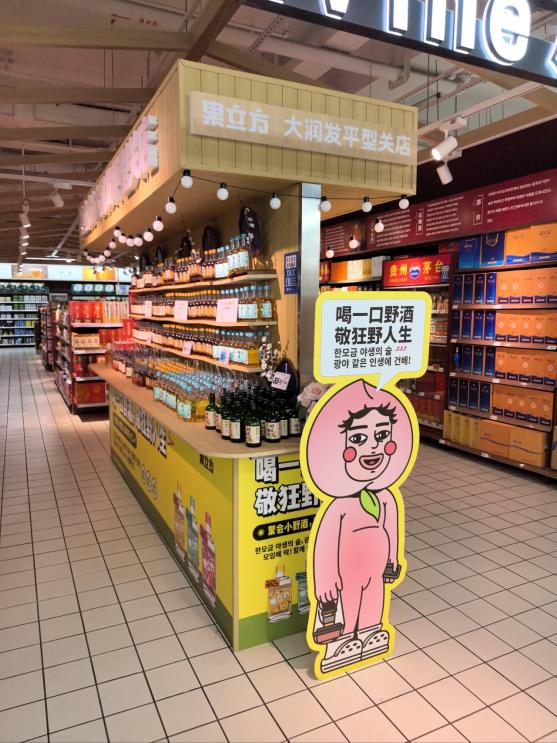
上海超市走红韩国社交平台,成韩国游客心中“宝藏购物地”
Yang Zi Wan Bao Wang· 2026-01-08 08:09
Core Insights - The implementation of the visa-free policy between China and South Korea has significantly boosted the popularity of the RT-Mart Pingxingguan store in Shanghai, attracting 200-300 Korean tourists daily, with weekend peaks exceeding 500 visitors [1] - The store has become a "treasure check-in spot" for Korean tourists, primarily due to the low prices of certain products, such as Hawaiian macadamia nuts, which are priced at half of what they cost in Korea [1] Group 1 - The store has optimized its offerings across multiple dimensions, including product selection, services, and payment methods, to cater to the influx of Korean tourists [2] - Special areas for popular products have been established, and bilingual signage in Chinese and Korean has been implemented throughout the store [2] - A dedicated checkout lane for Korean tourists has been introduced, along with support for popular payment methods like Kakao Pay and UnionPay, and exclusive discounts for Kakao Pay users [2] Group 2 - The store has launched a tax refund service for international tourists, with immediate refund options available at the Pingxingguan store and other locations in Shanghai [2] - The service is expanding to cover tourists from various countries, including Japan, Vietnam, and Malaysia, enhancing the shopping experience for international visitors [2] - RT-Mart is committed to maintaining a familiar shopping environment for local residents while providing enhanced services for international tourists, ensuring that local customer experiences are not compromised [2]
对话携程王韦:入境游红利 推动文旅市场三重“变革”
2 1 Shi Ji Jing Ji Bao Dao· 2025-12-26 08:45
Core Insights - The implementation of visa facilitation policies in 2025 has significantly boosted China's inbound tourism market, with a 27.2% year-on-year increase in foreign visitors, totaling 40.6 million [1] - The growth in visa-free transit has led to a 60.8% increase in travelers benefiting from the 240-hour visa exemption, with major cities like Shanghai, Beijing, and Guangzhou seeing over 55% of inbound travelers enjoying this convenience [1] - The combination of optimized departure tax refund policies and "buy and refund immediately" services has created a stimulating effect on consumption, with a 285% increase in the number of foreign travelers processing tax refunds [1] Inbound Tourism Growth - In the first three quarters of 2025, the number of foreign visitors entering China visa-free reached 20.89 million, marking a growth of over 50% [1] - The surge in inbound tourism has led to a 300% increase in bookings for related projects, indicating a strong consumer demand [1] Structural Changes in the Industry - Three structural "watersheds" have emerged in the tourism market: changes in source markets, the evolving role of platforms, and the integration of AI in demand creation [6][7] - The source of inbound tourism has shifted from primarily Asian markets to a significant increase in visitors from Europe and America, indicating a broader global appeal [7] - Platforms are transitioning from mere sales channels to industry coordinators, enhancing operational efficiency through technology and connectivity [7] Service and Experience Enhancement - The dual flow of outbound and inbound tourism is fostering a mutual enhancement of service capabilities and quality standards, improving user experiences for both Chinese tourists abroad and foreign visitors in China [5] - The industry is now required to provide immersive experiences rather than just selling tickets and accommodations, reflecting a shift in consumer expectations [4] Addressing Industry Bottlenecks - Despite the explosive growth in visitor numbers, the tourism industry faces challenges in upgrading its service capabilities, particularly among small hotels and local businesses that lack the tools to serve international tourists [8] - Efforts are being made to empower these businesses through AI-driven solutions and partnerships with airports to enhance the overall travel experience [8] Cultural and Product Innovation - The transformation of intangible cultural heritage and local culture into marketable experiences is crucial, with innovative product offerings like immersive dining experiences attracting global tourists [10] - A tourism innovation fund has been established to reward successful cultural transformation cases, promoting the development of engaging and shareable cultural products [10] Global Service Integration - The trend of "Chinese tourism services going global" reflects the natural overflow of capabilities, with Chinese platforms becoming key players in establishing new global service standards [11] - This evolution allows Chinese tourists to receive seamless services in their native language worldwide, while also contributing to the global tourism industry's upgrade [11]

对话携程王韦:入境游红利,推动文旅市场三重“变革”
2 1 Shi Ji Jing Ji Bao Dao· 2025-12-26 08:21
Core Insights - The implementation of visa facilitation policies in 2025 has significantly boosted China's inbound tourism market, with a 27.2% year-on-year increase in foreign visitors, totaling 40.6 million [1] - The influx of visa-free travelers has led to a substantial increase in consumer spending, with a 300% rise in related project bookings and a 50% increase in the number of foreign visitors entering China in the first three quarters of 2025 [1] - The combination of optimized departure tax refund policies and "buy and refund immediately" services has created a stimulating effect on consumption [1] Group 1: Inbound Tourism Growth - The number of foreign visitors benefiting from 240-hour visa-free transit has increased by 60.8%, with major cities like Shanghai, Beijing, and Guangzhou seeing over 55% of inbound travelers enjoying this convenience [1] - By November 2025, over 12,000 departure tax refund stores were established, with a 285% increase in the number of foreign travelers processing refunds and nearly doubling the sales of tax refund products [1] Group 2: Structural Changes in the Industry - Three structural "watersheds" have emerged in the tourism market: a shift in inbound tourism sources, a change in the role of platforms, and the evolution of AI in demand creation [2][6] - The engine of inbound tourism has shifted from primarily Asian markets to a rapid increase in visitors from Europe and America, indicating a broader global appeal of Chinese tourism [6] - Platforms are evolving from mere sales channels to industry coordinators, utilizing technology to optimize operational efficiency across the tourism sector [6] Group 3: Service and Experience Enhancement - The dual flow of outbound and inbound tourism is enhancing service capabilities and quality standards, with a 15-point increase in user satisfaction for products adhering to new quality standards [5] - The industry is now required to provide immersive experiences rather than just selling tickets and accommodations, reflecting a shift in consumer expectations [4] Group 4: Addressing Industry Bottlenecks - The rapid growth in visitor numbers has outpaced the upgrade of the tourism supply chain, particularly affecting small hotels and local businesses that lack the tools to serve international tourists [8] - Initiatives are being implemented to empower local businesses, such as providing AI translation tools and optimizing transfer services at airports to enhance the overall travel experience [8] Group 5: Cultural and Product Innovation - The transformation of intangible cultural heritage into marketable experiences is crucial, with innovative product offerings like immersive dining experiences attracting global visitors [10] - A tourism innovation fund of 1 billion yuan has been established to reward successful cultural transformation cases, promoting the development of experiential and shareable cultural products [11] Group 6: Global Service Integration - The trend of "Chinese tourism services going global" reflects the natural process of capability overflow, enhancing the global experience for Chinese tourists and contributing to international tourism industry standards [11] - Chinese platforms are becoming co-builders of new global rules, promoting payment interoperability and service quality systems, which is essential for transitioning from a "tourism powerhouse" to a "service powerhouse" [11]