
全球产业格局

Search documents
史上最大电网投资!国家电网将斥资5万亿元,锁死东南亚未来?
Sou Hu Cai Jing· 2026-02-21 23:41
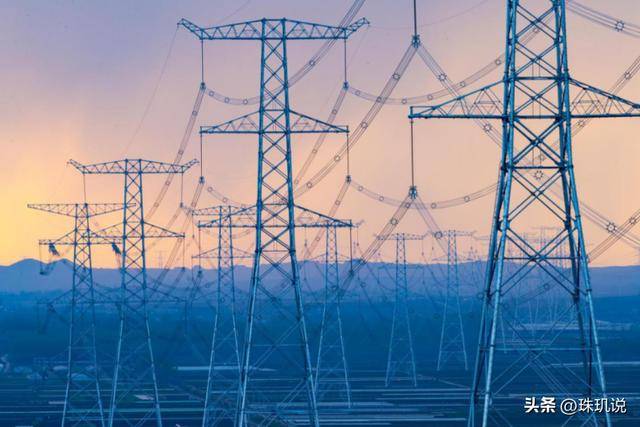
Core Viewpoint - China's two major power grids announced an investment of nearly 5 trillion yuan over the next five years, aiming to reshape the Southeast Asian power grid industry and break the stereotype that China's infrastructure investment is limited to roads and bridges [1][3]. Investment Strategy - The 5 trillion yuan investment is more than half of the total investment from the "13th Five-Year" and "14th Five-Year" plans combined, indicating a strategic global industrial layout rather than merely stimulating domestic economic growth [3][12]. - This investment is targeted at key areas such as cross-regional transmission, renewable energy integration, and new energy storage, addressing domestic supply-demand issues while ensuring power supply for high-energy and high-value-added industries in the future [14][41]. Global Power Supply Context - The core reality is that global industries will compete based on stable power supply, which is essential for the development of AI, electric vehicles, and the upgrading of traditional manufacturing [5][7]. - Countries like Vietnam and India face significant challenges due to unstable power systems, which hinder their industrial growth and competitiveness [16][26]. China's Power Stability - China's approach to power supply is proactive, investing in infrastructure before shortages occur, contrasting with many countries that react only after problems arise [10][33]. - The stability of China's power grid, with a reliability rate of 99.9%, provides a competitive advantage for industries, allowing for predictable production and cost management [39][41]. Regional Energy Dynamics - The investment not only stabilizes domestic industries but also alters the global industrial landscape, potentially leading Southeast Asian countries into a dependency on Chinese power [41][43]. - By establishing a regional energy system centered around China, the country can assist neighboring nations during power shortages, reinforcing its dominant position in regional energy [44].

当前经济与政策思考:美国与其他经济体达成贸易协议的内容与影响
ZHONGTAI SECURITIES· 2025-08-28 11:00
Trade Agreements Overview - Recent trade agreements between the U.S. and various economies include specific tariff rates ranging from 10% to 20% for exports to the U.S., with the U.K. at 10%, Japan and South Korea at 15%, and Vietnam at 20%[7] - Import commitments include significant purchases, such as Indonesia's $15 billion in energy products and Japan's commitment to buy $8 billion in agricultural products, including a 75% increase in rice imports[12] Short-term Impacts - The agreements are expected to reshape global trade patterns, with U.S. imports from China declining by 15.6% while imports from Taiwan and Vietnam increased by 61.2% and 42.6%, respectively[21] - The average tariff on Chinese goods is 54.9%, compared to 14.5% for other countries, leading to a shift in import sources[21] Medium-term Impacts - The agreements may lead to a restructuring of global industrial patterns, with countries like Indonesia and Vietnam enhancing their local supply chains to meet U.S. standards[42] - Increased competition among economies, particularly in sectors like semiconductors and pharmaceuticals, is anticipated as countries strengthen their domestic industries[44] Risks and Considerations - Potential risks include geopolitical tensions and the possibility of unfulfilled commitments, as seen with Japan's agricultural purchase promises, which may face internal resistance[50] - The agreements may also lead to increased production costs due to higher labor and environmental standards imposed on partner countries[18]