
全球健康治理

Search documents
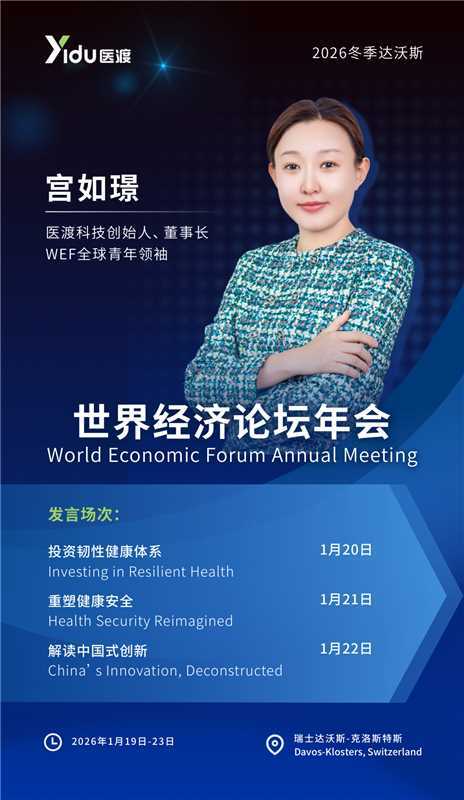
医渡科技董事长宫如璟将出席2026冬季达沃斯论坛
Sou Hu Cai Jing· 2026-01-16 05:49
Core Viewpoint - The 56th Annual Meeting of the World Economic Forum will take place from January 19 to January 23 in Davos, Switzerland, focusing on the theme of "the spirit of dialogue" and gathering nearly 3,000 leaders from over 130 countries, including a record number of political leaders and top executives [1]. Group 1: Key Themes and Discussions - The session "Investing in Resilient Health" will explore sustainable health systems, emphasizing how intelligent technology can connect climate risks with health investment decisions to create more resilient and equitable health systems [2]. - The "Health Security Reimagined" session will highlight the integration of AI and big data in public health and drug development, advocating for a proactive approach to health security through global data sharing and collaboration [2]. - The discussion "China's Innovation, Deconstructed" will focus on China's unique path in healthcare technology innovation, examining how large-scale scenario-driven technology iterations and the resonance of policy, market, and technology can provide inclusive and efficient solutions for emerging markets [3]. Group 2: Engagement and Collaboration - During the annual meeting, the founder and chairwoman of Yidu Tech, Gong Rujing, will engage in multidimensional exchanges with global leaders from politics, business, and academia, participating in several national strategic dialogues [4]. - The insights shared by Gong Rujing, based on Chinese practices and a global perspective, are expected to contribute to the spirit of dialogue, fostering consensus and cooperation on key issues such as resilient health, security governance, and inclusive innovation [4].

聚集防治三大传染病,全球基金在南非G20峰会前筹资113亿美元
第一财经· 2025-11-25 16:02
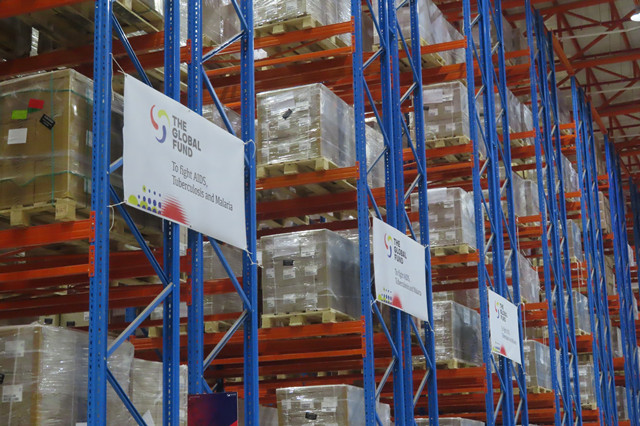
Core Insights - The article discusses the role of the Global Fund in combating AIDS, tuberculosis, and malaria, particularly in Africa, highlighting its funding efforts and partnerships with countries like China [3][5][10]. Funding and Financial Goals - The Global Fund aimed to raise $14 billion at the recent replenishment conference but only secured approximately $11.3 billion, falling short of its target [5]. - The United States remains the largest donor, committing $4.6 billion, despite previous pledges being unfulfilled due to government transitions [5][6]. - The Gates Foundation is the largest private donor, pledging $912 million, contributing nearly $5 billion since the fund's inception [6][8]. Impact and Achievements - Since its establishment in 2002, the Global Fund has mobilized over $69 billion, saving approximately 70 million lives and reducing the mortality rate from the three diseases by 63% [8]. - The World Health Organization reported that deaths from AIDS, tuberculosis, and malaria have been cut by at least half compared to 20 years ago, showcasing significant progress [8]. China's Role and Contributions - China has transitioned from a recipient to a donor and governance partner of the Global Fund, contributing $9.9 million to date, with a commitment of $1.8 million in the seventh replenishment round [10]. - China's involvement reflects its evolving role in global health governance, emphasizing technical cooperation and experience sharing, particularly in Africa [10][11]. - The article highlights China's efforts to enhance local pharmaceutical production capabilities in Africa, aiming to transform the continent's health systems [11].
聚集防治三大传染病,全球基金在南非G20峰会前筹资113亿美元
Di Yi Cai Jing· 2025-11-25 08:01
Core Viewpoint - The Global Fund has significantly reduced deaths from AIDS, tuberculosis, and malaria by at least half compared to two decades ago, showcasing the importance of international cooperation in combating these diseases [1][5]. Fundraising Efforts - The Global Fund aimed to raise $14 billion at the recent replenishment conference but only secured approximately $11.3 billion, falling short of its target. Despite this, the outcome reflects global unity and determination to tackle these diseases amid financial constraints and geopolitical uncertainties [3]. - Traditional donors are primarily from G7 countries, but many have indicated difficulties in maintaining previous funding levels due to domestic economic pressures. For instance, the UK reduced its commitment from £1 billion to £850 million [3]. U.S. Contributions - The U.S. remains the largest donor to the Global Fund, pledging $4.6 billion this time, despite previous commitments not being fully met due to government transitions. The U.S. supports the Global Fund's model, which emphasizes capacity building in recipient countries [4]. Private Contributions - The Gates Foundation is the largest private donor to the Global Fund, committing $912 million at the recent conference, contributing nearly $5 billion since the fund's inception [4]. Procurement and Cost Reduction - The Global Fund's bulk purchasing power has led to significant cost reductions for medications, exemplified by the drop in annual treatment costs for a specific AIDS drug from $1,300 to $37, although challenges remain for some countries [5]. Impact on Health Outcomes - Since its establishment in 2002, the Global Fund has mobilized over $69 billion, saving approximately 70 million lives and reducing the overall mortality rate from the three diseases by 63% [5]. China's Role - China has transitioned from a recipient to a donor and governance partner of the Global Fund, contributing $99 million to date. This shift reflects China's evolving role in global health governance, emphasizing technical cooperation and experience sharing [6]. - China's involvement includes providing high-quality medical products and assisting African nations in strengthening local pharmaceutical production capabilities, which could transform health systems in Africa [7].
中英医疗科创高峰论坛成功举办 BMJ推动全球医学创新协同发展
Huan Qiu Wang· 2025-09-17 08:12
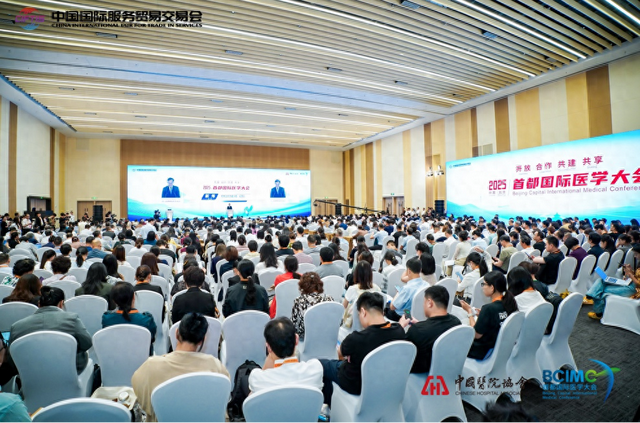
Core Viewpoint - The 2025 Capital International Medical Conference emphasizes the importance of international collaboration in medical technology innovation, particularly between China and the UK, to enhance global health governance and address common health challenges [3][4][6]. Group 1: Conference Highlights - The conference was attended by over 1,500 leaders and experts, showcasing the commitment to advancing medical technology and health research [1]. - Keynote speeches included a presentation by Kamran Abassi, editor of the British Medical Journal, focusing on deepening Sino-British medical technology cooperation [3][4]. - The conference featured the release of the "2025 China Hospital Research Impact Report," which analyzes the citation of Chinese hospital research in global health policies and clinical guidelines over the past 20 years [5][6]. Group 2: Report Insights - The report covers the period from 2005 to 2024 and evaluates how research from selected hospitals translates into real-world impacts, highlighting the contributions of Chinese hospitals to global health policy [5][6]. - A total of 12,601 research outputs from Chinese hospitals were cited in health policies and clinical guidelines across over 75 countries, with a total citation count of 34,675 [5]. - The report underscores the growing international influence of Chinese medical research in shaping healthcare standards and improving patient outcomes globally [6]. Group 3: Collaborative Opportunities - The Sino-British Medical Technology Innovation Forum gathered policymakers, hospital managers, and medical researchers to discuss opportunities for collaboration in addressing shared healthcare challenges [7][8]. - Experts discussed the importance of data-driven approaches and the role of artificial intelligence in advancing medical innovation, while also acknowledging the challenges that lie ahead [8][9]. - The conference initiated a competition for innovative medical technology projects, aiming to foster an open and collaborative ecosystem for medical innovation in China [9].
综述|第78届世界卫生大会取得关键成果 推进全球健康议程
Xin Hua Wang· 2025-05-28 16:30
Group 1 - The 78th World Health Assembly concluded with key resolutions aimed at strengthening global health systems and response capabilities [1][2] - The assembly approved the significant "Pandemic Accord," which is a result of over three years of negotiations among countries to enhance global cooperation for future pandemics [1][2] - The World Health Organization's (WHO) budget for 2026-2027 was set at $4.2 billion, reduced from the initially proposed $5.3 billion, with a 20% increase in assessed contributions from member states [2] Group 2 - The assembly addressed various global health issues, including rare diseases, climate change and health, and antimicrobial resistance [3] - A resolution on rare diseases was passed to accelerate actions addressing the diagnostic delays and inadequate treatment faced by over 300 million patients globally [3] - The assembly approved a draft global action plan on climate change and health, setting new action goals for member states and the WHO in this area [3]
二度退出WHO、对药品征收关税,特朗普将如何动摇全球健康治理?
2 1 Shi Ji Jing Ji Bao Dao· 2025-04-10 10:02
Group 1: Impact of Tariffs on Pharmaceutical Industry - The U.S. will impose tariffs on pharmaceuticals, which were previously excluded from broader tariffs on imports [1] - Trump believes that imposing tariffs will incentivize pharmaceutical companies to establish manufacturing facilities in the U.S. due to its large market size [1] - The Chinese pharmaceutical industry, which primarily exports intermediates and medical supplies to the U.S., will face significant challenges as the new tariffs will erode their already thin profit margins [2] Group 2: Export and Import Statistics - In 2024, China's pharmaceutical exports are projected to reach $107.964 billion, a 5.9% increase year-on-year, with the U.S. being the largest export destination at nearly $20 billion [2] - China's pharmaceutical imports are expected to decline to $91.412 billion in 2024, a 2% decrease, with a notable drop in imports from the U.S. by 4.6% [3] Group 3: Global Health and Aid Implications - The new tariffs will not only affect U.S.-China trade but also have repercussions on the global public health market, particularly impacting procurement costs for organizations like the UN and NGOs [4] - The escalation of trade tensions may hinder international cooperation on global issues such as infectious diseases and climate change, as trust between nations diminishes [4] Group 4: Uncertainty in U.S. Policy - The U.S. has withdrawn from the World Health Organization (WHO) and significantly reduced international development aid, leading to uncertainty in future U.S. health policies [5] - The reduction in U.S. aid and withdrawal from global health initiatives exposes vulnerabilities in the global public health system, necessitating reforms for resilience and sustainability [6] Group 5: Long-term Challenges in Public Health Infrastructure - The ongoing isolationist policies may lead to long-term challenges in maintaining public health infrastructure in recipient countries, complicating future recovery efforts [7]