全球新秩序

Search documents
中信建投:科技立国的美国模式两个弊端逐步显露 科技垄断褪色,外部供应链脆弱
Sou Hu Cai Jing· 2026-02-02 12:31
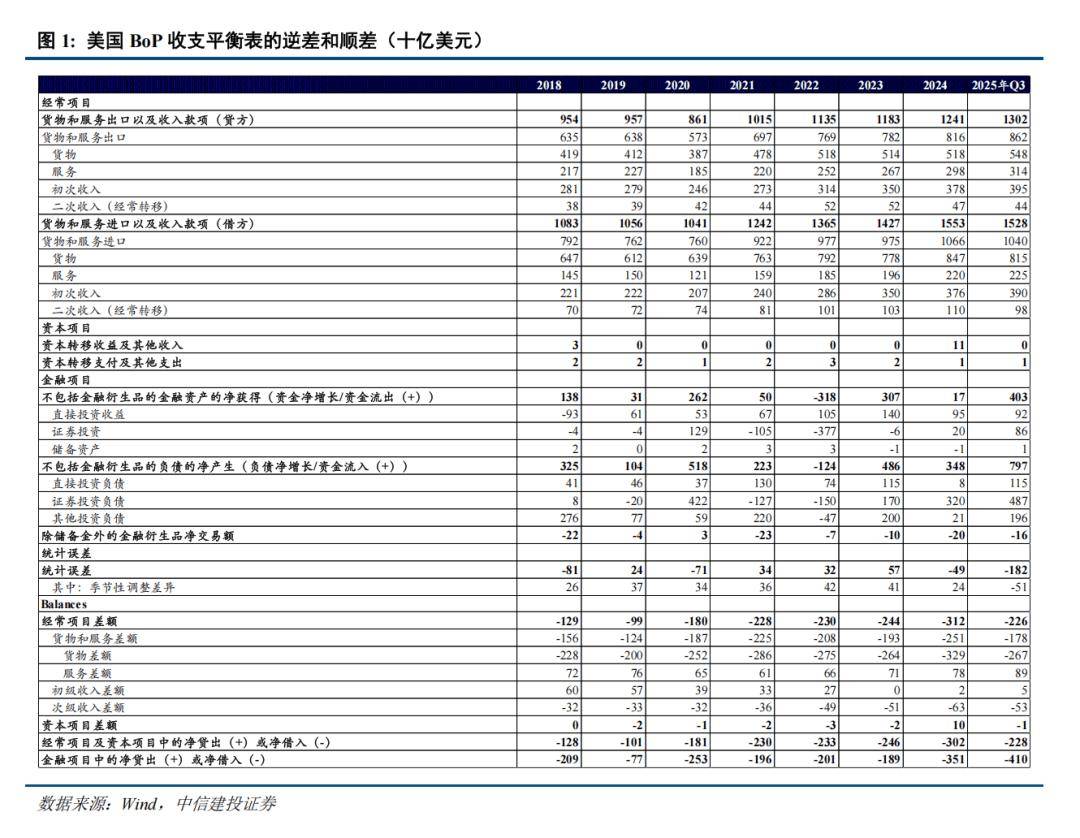
Group 1 - The core viewpoint is that the U.S. technology-driven model is facing two significant drawbacks: the fading of tech monopolies and the fragility of external supply chains, leading to a restructuring of the global framework [1][6][48] - The elasticity of the technology and non-ferrous metal market can be found in the historical level of the Japanese bond yield spread, indicating that loose liquidity cannot be absorbed by bonds, directing funds towards four asset classes: gold, structurally favorable assets like copper, Chinese assets, and technology [1][12][64] - The sustainability of the technology and non-ferrous metal market will end with a rebound in global inflation expectations, which is an inevitable result of the U.S. "impossible trinity" and a moment of retreat from global super liquidity [1][64] Group 2 - The market's price fluctuations reflect opinions on the new Federal Reserve chair candidate, focusing on whether the technology and non-ferrous metal market will end and under what circumstances [2][4] - A significant paradigm shift is occurring in the underlying macro logic, which is detached from conventional cycles and is a reason for the sustained strength of technology and non-ferrous metals in recent years [2][4] - The performance of traditional macro assets like gold, currency, and bonds has been particularly unique over the past two years, indicating a need for macro researchers to broaden their perspectives [2][4] Group 3 - The "dislocation" surge in precious metals, with annual gains in gold and silver reaching historical highs, is not solely explained by liquidity [4][5] - The U.S. credit cracks and the strong performance of technology have led to a decline in the dollar, which is historically rare [4][5] - The reversal of the 30-year low trend in Japanese bonds is difficult to control, and while inflation is expected to rise, the yen's exchange rate signals a contrasting situation [4][5] Group 4 - The cracks in the dollar indicate a loosening of the old international order determined by the U.S. model, suggesting that a super cycle is upon us, creating significant investment opportunities [5][6] - The U.S. model, established in the 1980s, has led to a decline in manufacturing and a continuous slide of the middle class, resulting in a focus on external supply chain security and increasing social stratification [6][30] - The U.S. faces a dilemma where it cannot simultaneously maintain tech hegemony, social stability, and low inflation, creating an "impossible trinity" [8][35][41] Group 5 - The transition from the old to the new order will see the U.S. relying heavily on fiscal and monetary measures, with inflation expectations being the fundamental reason for the inability to suppress long-term U.S. Treasury yields [10][56] - In this context, four asset classes will enjoy rare liquidity support: gold, scarce physical assets like copper, assets relatively independent of the Western credit system, and technology [11][12][58] - The simultaneous decline of the dollar and U.S. Treasury bonds, along with the rise of non-ferrous metals and technology, indicates a significant shift in the global order [60][61]


金刻羽最新演讲
Xin Lang Cai Jing· 2025-12-08 00:55
Core Insights - The lecture by Professor Jin Keyu emphasizes the shift from an era of "hyper-globalization" driven by economic development to a new phase where political forces are significantly shaping economic structures [3][9] - Geopolitical risks are increasingly influencing economic decisions, leading to inflation and capital market volatility, yet globalization shows unexpected resilience [4][10] - China's position in global supply chains is strengthening despite external pressures, with a notable decrease in reliance on imported intermediate goods, indicating enhanced supply chain autonomy [4][10] Geopolitical and Economic Dynamics - Geopolitical logic is deeply penetrating economic decision-making, with rising geopolitical risks reflected in economic phenomena such as inflation and market fluctuations [4][10] - Despite Western countries imposing technology blockades and protectionist measures against China, global dependence on China is increasing [4][10] - The importance of countries in trade networks is now more about their "hub" position in global production, trade, and knowledge networks rather than just their production scale [4][10] Role of Intermediate Countries - Middle-sized countries in a "non-aligned" or "intermediate" position are becoming crucial "connectors" in the global economy, facilitating trade and investment amidst weakening geopolitical group trade [5][11] - These countries are emerging as important buffers for maintaining global economic interactions, contributing to the resilience of globalization and indicating a complex multi-centered network rather than a simple bipolar world [5][11] Future Competition and Technological Dynamics - The core logic of future technological competition is shifting from pursuing "technological monopoly" to developing "technology diffusion and application capabilities" [5][12] - China is leveraging its advantages in large-scale manufacturing, cost innovation, and rapid application to drive technology diffusion and lower global costs [5][12] - Protectionism and technology blockades may backfire, potentially stimulating domestic innovation in targeted countries and accelerating the formation of alternative systems [5][12] Conclusion on Globalization - Globalization is undergoing profound restructuring and demonstrating remarkable resilience, with countries needing to enhance their hub and connectivity roles in global networks [5][12] - The emphasis on maintaining openness and cooperation is crucial for achieving sustainable growth and shared prosperity in the new geopolitical economic landscape [5][12]

美国彼得森国际经济研究所马丁·乔赞帕:合作与开放依然是唯一可持续的出路|2025外滩年会
Guo Ji Jin Rong Bao· 2025-10-24 05:01
Core Insights - The interview with Martin Chorzempa highlights the evolution of China's digital finance and the implications of central bank digital currencies (CBDC) in the context of a global "new order" [1] Group 1: Digital Finance Development - The transition from a cash-dominated payment system to a cashless society in China, led by platforms like Alipay and WeChat Pay, has significantly reshaped daily consumption and accelerated financial inclusion [3] - Following the publication of Chorzempa's book, the pace of innovation in China's fintech sector has slowed due to a shift in policy focus from encouraging private sector innovation to emphasizing risk control and regulatory coordination [3] - The People's Bank of China's (PBOC) promotion of the digital currency (ECNY) is strategically significant but has yet to establish a widely adopted ecosystem [3] Group 2: Global Monetary Policy Trends - The demand for renminbi borrowing is increasing, although its influence in international financial markets remains limited compared to the US dollar [4] - The trajectory of US monetary and tariff policies will continue to influence global capital flow patterns [4] - The current state of international relations is characterized by chaos rather than order, with traditional multilateral institutions losing some influence [5] Group 3: Future Global Cooperation - A true "new order" has not yet emerged, but cooperation and openness at the intersection of multipolarity, digitalization, and green initiatives are seen as the only sustainable paths forward [5] - Both China and the broader global community need to seek common ground amid uncertainty [5]