全球能源秩序

Search documents
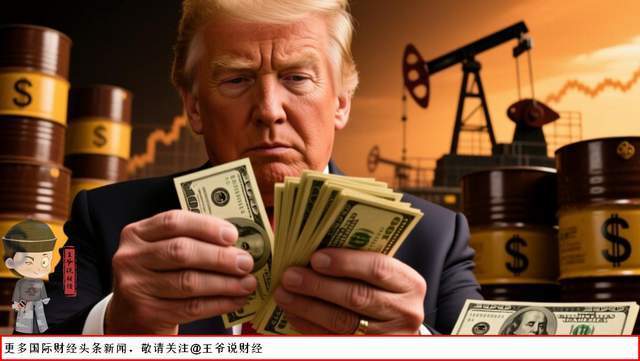
美国的无敌操作:先搞垮你,再“拯救”你,顺便把你的石油卖了
Sou Hu Cai Jing· 2026-02-27 09:47
Core Viewpoint - The article discusses the complex dynamics between the U.S. and Venezuela regarding oil exports, portraying the U.S. as a "savior" while revealing underlying motives of control and exploitation [1][10][16]. Group 1: U.S. Actions and Venezuela's Oil Revenue - U.S. Energy Secretary Chris Wright announced that Venezuela's oil export revenue is expected to reach $2 billion this month due to a new oil supply agreement [1][3]. - In a few months, Venezuela's monthly oil sales could exceed $5 billion, marking a significant increase in revenue [3]. - The U.S. claims that its policies are helping Venezuela's economy recover, while in reality, it has imposed extensive sanctions that have severely crippled the country's oil exports [6][10]. Group 2: Historical Context of U.S.-Venezuela Relations - The relationship between the U.S. and Venezuela has shifted from one of sanctions to one of perceived assistance, driven by Venezuela's refusal to align with U.S. foreign policy [4][6]. - Over a decade of sanctions has reduced Venezuela's oil exports from over 2 million barrels per day to less than 500,000 barrels [6][10]. - The U.S. has taken control of Venezuela's oil export rights, claiming to help restore the economy while actually consolidating its own power over Venezuelan resources [7][10]. Group 3: Implications of U.S. Control - The U.S. is using Venezuela's heavy crude oil to strengthen its position in the global energy market, undermining competitors like Russia and Iran [13]. - The U.S. maintains a dual standard by promoting human rights and democracy while simultaneously exploiting Venezuela's resources [14]. - The article highlights the dangers of U.S. unilateralism and its impact on global energy trade, suggesting that the U.S. is undermining international law and fairness in resource distribution [14][16].


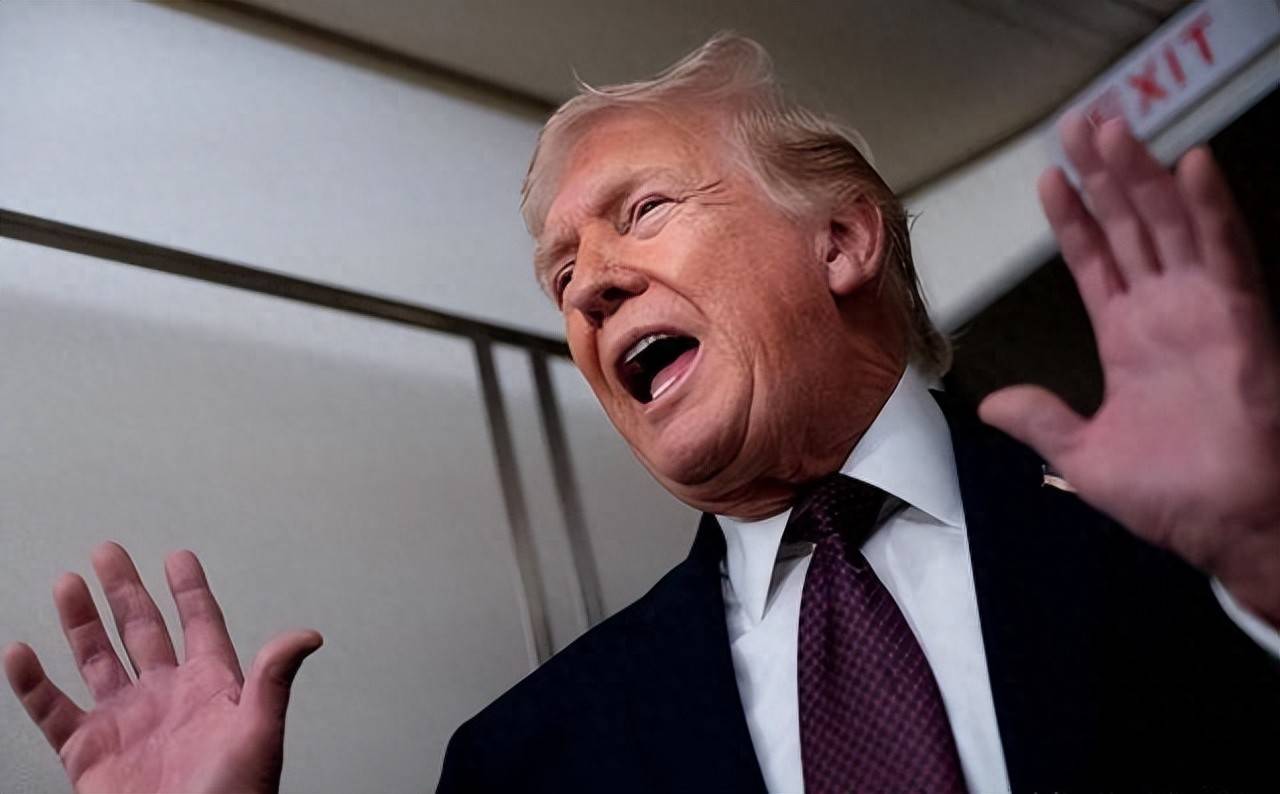
特朗普曾喊话中国,赶紧向美国臣服,将能得到3大好处!
Sou Hu Cai Jing· 2026-02-18 10:08
Group 1 - The core viewpoint of the articles highlights Trump's strategic approach to energy, attempting to draw China into a U.S.-led energy framework while masking underlying ambitions to control global oil resources [1][8][11] - Trump's energy policy favors fossil fuels, with significant moves such as allowing oil drilling in Alaska and restarting oil trade with Venezuela, aiming to influence global markets by controlling Venezuelan oil supplies [3][8] - The U.S. has successfully negotiated with India to reduce tariffs on Venezuelan oil imports, which is expected to decrease Russian oil imports significantly, and Trump is now inviting China to follow suit [3][6] Group 2 - China's energy supply strategy remains diversified, with significant imports from Russia due to cost advantages, making it unlikely to abandon this source easily despite U.S. offers [5][11] - Trump's promises to China regarding market access and stable oil supplies are seen as attempts to integrate China into a U.S.-dominated energy system, while also reinforcing the dollar's global status [6][8] - The geopolitical landscape is shifting, with Russia reaffirming support for China amid U.S. pressures, indicating a strengthening of Sino-Russian ties in energy cooperation and broader strategic interests [10][11]
不到48小时,美国突然改口,中国能买委内瑞拉石油,但有一个条件
Sou Hu Cai Jing· 2026-01-25 00:18
Core Viewpoint - The U.S. has shifted its stance, allowing China to purchase Venezuelan oil under the condition that it is bought at a market price of $45 per barrel, rather than the previous arrangement of debt-for-oil at $31 per barrel, indicating a strategy to weaken China's cost advantage in energy procurement [1][3][5][10]. Group 1: U.S. Strategy and Conditions - The U.S. initially announced that China would no longer be able to purchase oil from Venezuela, but quickly reversed this position, suggesting that China could buy oil if it adhered to the new pricing structure [3][5]. - The U.S. aims to present a façade of fair competition while actually manipulating the pricing mechanism to limit China's energy procurement costs [5][10]. - The U.S. has taken control of Venezuela's oil exports and has implemented reforms that favor American companies, allowing them to sell oil at the new market price [8][16]. Group 2: China's Response and Position - China has historically engaged in a long-term cooperative relationship with Venezuela, characterized by low-cost oil purchases in exchange for infrastructure development, which the U.S. is now attempting to undermine [10][12]. - The Chinese government has stated that it will not accept the U.S.'s imposed conditions and maintains that its cooperation with Venezuela is based on mutual benefit and respect for sovereignty [12][20]. - China is diversifying its energy sources and is not reliant on Venezuelan oil, with imports from Venezuela constituting only 0.27% of its total oil imports in 2024 [14][20]. Group 3: Global Energy Dynamics - The U.S. strategy to control Venezuelan oil is part of a broader attempt to redefine global energy pricing and market dynamics, but it faces significant challenges due to the complexities of the Venezuelan oil industry and international reactions [16][18]. - The situation reflects a systemic struggle for influence in global energy markets, with the U.S. seeking to re-establish its dominance while China pushes back against unilateral pricing mechanisms [20][22]. - The ongoing competition over Venezuelan oil is not merely a trade issue but a fundamental contest over who sets the rules in the global energy market [22].
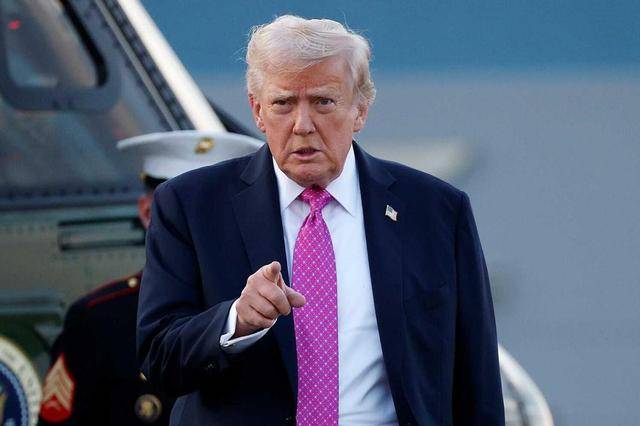
最新!突袭委内瑞拉后,特朗普放话:美国将控制全球55%的石油?
Sou Hu Cai Jing· 2026-01-11 05:47
Group 1 - Trump's statement about the U.S. controlling 55% of global oil is linked to recent military actions in Venezuela, where the U.S. aims to dominate oil resource development [3] - Current OPEC data shows that Venezuela holds 19% of the world's proven oil reserves, while the U.S. only holds 3%, making Trump's claim of 55% unrealistic [3] - The combined oil production of the U.S. and Venezuela is projected to be less than 15% of global production in 2025, further questioning the feasibility of Trump's assertion [3] Group 2 - The U.S. is interested in Venezuela's oil reserves due to its significant proven reserves, and aims to control these resources through military intervention [5] - The U.S. seeks to weaken OPEC+ by disrupting its influence on global oil prices through control of Venezuelan oil [5] - The U.S. aims to reinforce the dominance of the petrodollar by linking Venezuelan oil exports to the U.S. dollar amidst a global trend of de-dollarization [5] Group 3 - The global oil supply chain may become polarized, with the U.S. potentially linking oil distribution to compliance with its policies, affecting many countries' energy strategies [7] - A low oil price cycle may be on the horizon due to increased production from the U.S. and Middle Eastern countries, alongside a slowdown in global oil demand [7] - The assertion of U.S. energy control reflects a broader strategy to reshape global energy order, raising concerns about geopolitical stability and energy security for importing nations [9]