
HeartMate3

Search documents
国产人工心脏龙头,三年半烧掉10.6亿
Sou Hu Cai Jing· 2026-02-11 11:00
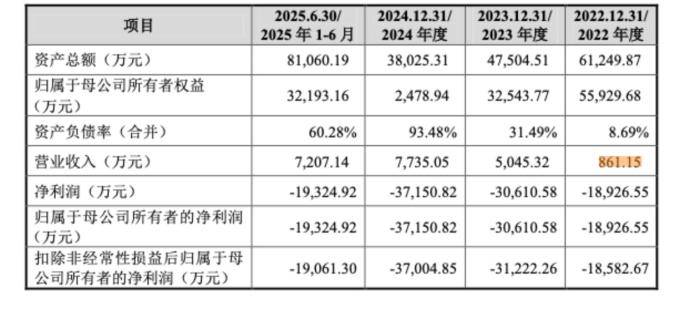
Core Viewpoint - The artificial heart, known as the "crown jewel" of medical devices, is entering a period of accelerated capitalization, with Suzhou Tongxin Medical Technology Co., Ltd. aiming to become the first domestic company to go public in this sector [1]. Company Overview - Tongxin Medical's core product, CH-VAD, is the first fully magnetic levitation implantable artificial heart approved for sale in China. However, the company has struggled with profitability since its commercialization began four years ago, facing intense competition from other companies [2][3]. Financial Performance - The company is experiencing a typical "high R&D, high growth, high loss" dilemma, with revenues from 2022 to mid-2025 projected at approximately 8.61 million, 50.45 million, 77.35 million, and 72.07 million yuan, respectively. Net losses during the same period are expected to exceed 1.06 billion yuan [4][10]. - R&D expenses are significant, with projections of 93.82 million, 108 million, 148 million, and 93.15 million yuan from 2022 to mid-2025, contributing to ongoing financial losses [6][10]. Market Position and Competition - The company relies heavily on the CH-VAD product, which accounted for 96.9% of its revenue in the first half of 2025. The product's market share has declined to 26.9% by the end of 2024 due to increased competition and price reductions [11][13]. - The company has reduced the price of CH-VAD from 459,600 yuan in 2022 to 362,300 yuan in the first half of 2025, a decrease of 26.8%, in an attempt to maintain market share [13]. Sales and Customer Concentration - The company has a high customer concentration, with the top five customers accounting for 86.73% of sales in 2024. The largest customer, Quankeda, represented over 50% of sales in 2023 [16][18]. International Expansion - The company is focusing on international markets, with its BrioVAD product being the first Chinese active implantable medical device to enter clinical trials in the U.S. This product is expected to generate significant revenue, contributing 29.61 million yuan in the first half of 2025 [18][19]. - The company plans to raise 1.064 billion yuan through its IPO, with a significant portion allocated to global clinical trials and registration for BrioVAD, indicating a strong commitment to international expansion [19].

同心医疗科创板IPO获受理,以全磁悬浮技术领跑人工心脏赛道
Zheng Quan Shi Bao Wang· 2025-12-27 07:07
Core Viewpoint - The company, Suzhou Tongxin Medical Technology Co., Ltd., has received acceptance for its IPO application on the Sci-Tech Innovation Board, focusing on the development and commercialization of full magnetic levitation ventricular assist devices, positioning itself as a global competitor in the artificial heart market [1][2]. Group 1: Company Overview - Founded in 2008, the company specializes in full magnetic levitation artificial hearts, leveraging independent technology and operational entities in China, the U.S., and Europe to establish a global business framework [1]. - The company's first product, CH-VAD, entered the special approval process for innovative medical devices in China in 2016 and became the first approved full magnetic levitation artificial heart in China in November 2021 [2][3]. Group 2: Market Context - Heart failure is a critical cardiovascular disease affecting over 60 million people globally, with a 50% annual mortality rate for late-stage heart failure, making artificial hearts a vital treatment option due to limited donor availability for heart transplants [2]. - The artificial heart industry has high entry barriers, with full magnetic levitation technology recognized as the mainstream approach, dominated by Abbott's HeartMate3, leaving a gap for Chinese companies [2]. Group 3: Product Performance - CH-VAD has shown superior performance in clinical settings, with over 670 implantations across more than 80 hospitals in China, and sales revenue projected to grow from 8.27 million yuan in 2022 to 67.06 million yuan in 2024 [3]. - The product features innovative designs that enhance blood compatibility and reduce infection rates, demonstrating excellent safety and reliability with no reported pump thrombosis or failures during clinical studies [3]. Group 4: Global Strategy - The company aims for global market expansion, aligning its R&D and clinical strategies with international standards, and has established a cross-national R&D team to support this goal [4]. - The BrioVAD, a next-generation device, has received FDA approval for clinical trials, marking a significant milestone as the first active implantable medical device from China to enter U.S. clinical trials [5]. - The company is also pursuing market entry in Europe and Japan, with plans for clinical trials and expanding indications for pediatric heart failure [5].

人工心脏“技术门”背后的安全之问
Tai Mei Ti A P P· 2025-12-22 09:23
Core Viewpoint - The ongoing debate in the academic community regarding the definition and standards of artificial heart technologies is crucial for patient safety and clinical outcomes [2][3][8]. Group 1: Technical Definitions and Standards - The definition of "full magnetic suspension" in contemporary durable rotary blood pumps is ambiguous, leading to potential misinterpretations of product safety [2][4]. - Experts emphasize that any blood pump relying on fluid dynamic bearings in its primary operating mode cannot be classified as "full magnetic suspension" [2][8]. - A recent paper by Dr. Kurt Dasse highlights the need for clear definitions and evaluation standards for different bearing technologies in artificial hearts [3][8]. Group 2: Key Characteristics of CorHeart 6 - The CorHeart 6 device is categorized as a "centrifugal pump with magnetic-assisted dual fluid dynamic bearings" in authoritative literature, yet its manufacturer describes it as a "full magnetic suspension device" [4][24]. - Key specifications of the CorHeart 6 include a rotor speed range of 2200-4300 RPM, a device height of 26 mm, a diameter of 34 mm, a weight of 90 g, and a power consumption of 2.6 W at 2.0 L/min [5][24]. Group 3: Consensus on Magnetic Suspension - Experts at the ISMCS conference reached a consensus that true magnetic suspension must rely solely on magnetic forces for rotor stability across multiple degrees of freedom [14][20]. - The safety threshold for suspension gaps is established at ≥200 microns for full magnetic suspension, contrasting with ≤100 microns for fluid dynamic bearings [20][24]. - Stability verification methods, such as air testing, are proposed to ensure that magnetic bearings can maintain rotor suspension without fluid assistance [23][24]. Group 4: Clinical Implications and Data Transparency - The distinction between bearing technologies is critical as it directly impacts blood compatibility and patient outcomes, with fluid dynamic bearings showing significantly higher mortality risks compared to full magnetic suspension devices [24][25]. - The lack of long-term clinical data and transparency in the CorHeart 6's public disclosures raises concerns about its safety and efficacy [24][25]. - The industry is urged to adopt standardized definitions and transparent data sharing to enhance patient safety and foster innovation [24][25].


哈工大博士创业,最小“人工心脏”企业冲刺科创板
2 1 Shi Ji Jing Ji Bao Dao· 2025-11-10 10:41
Core Insights - The article highlights the rapid capitalization phase of the artificial heart sector in China, particularly focusing on Shenzhen Core Medical Technology Co., Ltd. (Core Medical), which has recently had its IPO application accepted by the Shanghai Stock Exchange's Sci-Tech Innovation Board after two and a half years of preparation [2][8] - Core Medical's flagship product, Corheart6, is noted as the smallest and lightest commercialized magnetic levitation implantable artificial heart globally, having received NMPA approval in June 2023 and projected to capture over 45% of the national market share by 2024 [2][5] Company Overview - Core Medical is recognized as the fastest capitalizing company among domestic artificial heart manufacturers, aiming to become the first publicly listed company in the "domestic artificial heart" category [2][4] - The company has developed multiple products, including five implantable and six interventional artificial heart products, with Corheart6 being the only one currently commercialized [4][9] Product Development - Corheart6 has been praised for its innovative design, which includes a simpler structure and lower power consumption, leading to quicker patient recovery and a broader applicable demographic [5][10] - The company is also expanding internationally, with Corheart6 expected to receive approvals in Colombia and Ukraine in 2024, and has submitted a CE registration application for the European market [5][10] Market Position - Despite being a latecomer to the market, Core Medical's Corheart6 has achieved a significant market share, with a 52.86% implantation rate from January to May 2025, outperforming competitors [7][9] - The company has completed six rounds of financing, with notable investors including Hillhouse Capital and Prosperity7 Ventures, indicating strong market confidence [8] Financial Performance - Core Medical's financials show a trend of increasing revenue but also significant losses, with revenues of 0 million, 16.55 million, 93.69 million, and 70.48 million from 2022 to the first half of 2025, alongside net losses of 1.78 billion, 1.7 billion, 1.32 billion, and 727.51 million in the same periods [9] - The company's strategy of low pricing to gain market share has raised concerns about its long-term profitability, as the average selling price of Corheart6 has decreased over the years [9][10] Regulatory Environment - Recent developments have seen artificial hearts included in medical insurance reimbursement lists in several regions, which could impact the market dynamics and pricing strategies for Core Medical [10][11] - The company faces potential risks related to dynamic adjustments in provincial medical insurance policies, which could affect product sales and profitability [11]

