全链路营销

Search documents
品牌策划公司如何靠全域打法实现2025年霸屏?
Sou Hu Cai Jing· 2026-01-02 15:41
Core Insights - The article discusses the emerging "attention economy" where user attention is a scarce resource, emphasizing the need for brands to adopt a comprehensive marketing strategy to achieve significant visibility and engagement [1][10] - It highlights the shift from traditional advertising methods to an integrated approach that combines creativity, data insights, and platform operations to dominate brand presence across various channels [1][10] Group 1: Full-Spectrum Strategy - The "full-spectrum strategy" is not merely about multi-platform advertising but involves intelligent collaboration based on user behavior paths, as proposed by Google and BCG [2] - Brands must break down data silos across platforms using Customer Data Platforms (CDPs) to create unified user profiles and allocate advertising budgets dynamically for precise targeting [2] Group 2: Practical Implementation - A leading company achieved over 800 million exposures in a month and reduced conversion costs by 37% through the integration of search ads, short video sales, and private community operations [5] - This success is attributed to the deep tracking of user behavior and dynamic optimization by the brand planning company, which has developed proprietary algorithms for precise coverage across major platforms [5] Group 3: Content and Algorithm Synergy - Achieving "dominant visibility" requires not just quantity but quality, necessitating the training of content models to produce highly relevant and interactive content [6] - The ranking of search results for brand names combined with industry keywords reflects the brand's mental occupation in the market, with a successful example showing a brand occupying three out of five top positions in search results [6] Group 4: Execution and Strategy - The execution of brand planning is crucial, with a methodology that starts from the end goal of achieving "category mental dominance" and works backward to design strategies [9] - Continuous review of channel data and dynamic adjustments to content strategies are essential for maintaining long-term visibility, as demonstrated by a food brand that became synonymous with "healthy snacks" through strategic content optimization [9] Group 5: Future Outlook - The full-spectrum strategy is set to become a standard in brand marketing by 2025, requiring companies to develop three core capabilities: cross-platform operational integration, data-driven content optimization, and dynamic, scenario-based advertising strategies [10] - The reliance on algorithmic collaboration and intelligent decision-making will increase as AI models become more integrated into content production and distribution, enabling brands to achieve sustainable category mental dominance [13]

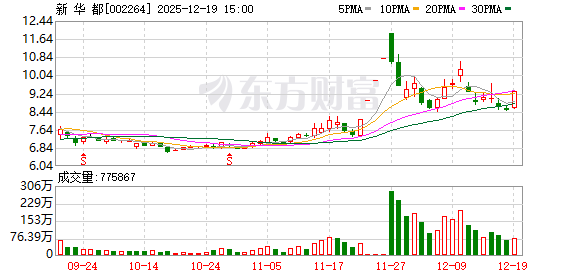
新 华 都:公司当前与阿里旗下天猫平台保持合作,该平台为公司互联网营销业务的重要渠道之一
Mei Ri Jing Ji Xin Wen· 2025-12-19 13:36
Group 1 - The company is currently collaborating with Alibaba's Tmall platform, which serves as a significant channel for its internet marketing business [2] - The company is continuously optimizing its full-link marketing strategy through Alibaba's advertising platform, including core functionalities such as full-site promotion, AI Xiaowan, Gravity Cube, and Direct Train [2] - The optimization efforts aim to enhance user profiling, data collection and analysis, and advertising placement, ultimately achieving an increase in return on investment (ROI) and reducing costs while improving efficiency [2]


石基信息:2025年文旅行业新媒体营销趋势报告
Sou Hu Cai Jing· 2025-11-06 02:46
Group 1 - The core viewpoint of the report is that the marketing logic in the cultural tourism industry is undergoing a structural transformation from "traffic harvesting" to "value co-creation" due to the impact of digitalization [1][2] - The report identifies eight key trends based on 12 cutting-edge cases from the 2025 DTA Digital Tourism Awards, highlighting the importance of digital transformation in the hotel industry in 2025 [1][2] - Marketing objectives are evolving from "brand exposure" to "integrated effectiveness and sales," emphasizing a full-link value co-creation approach [1][2][6] Group 2 - In platform ecology, the focus is shifting from "advertising" to "co-construction" to maximize traffic leverage, with examples such as Wanda Hotels creating the "Wanyouji" IP on Xiaohongshu [1][2][24] - AIGC technology is becoming a new engine for content efficiency and creative explosion, as demonstrated by Ctrip's use of AIGC tools to generate viral videos during the Double Eleven shopping festival [1][2][24] Group 3 - The tourism destination marketing is transitioning from symbolic representation to experiential engagement, as seen in the case of Xilin Gol League's "Grassland Fuwa Aqi La" IP [2][6] - Event-based marketing is gaining traction, with examples like Fliggy and Changbai Mountain Wanda's Guinness World Record challenge, which adds social significance to marketing nodes [2][6] - Vertical community operations are being emphasized, with Kaiyuan Travel's "City Brush Circle" activity targeting specific customer groups to convert communities into private assets [2][6] Group 4 - Offline experiences are being integrated with online communication, as AI robots are introduced as new IPs in scenic areas, enhancing visitor experiences [2][6] - The "IP+" strategy is becoming a key approach for breaking through in cultural tourism, with Tongcheng Travel collaborating with major films and variety shows to create a marketing ecosystem [2][6] - The report also discusses the core values of the 2025 digital transformation trends in the Chinese hotel industry, including maturity index models and multi-dimensional performance insights [2][6]