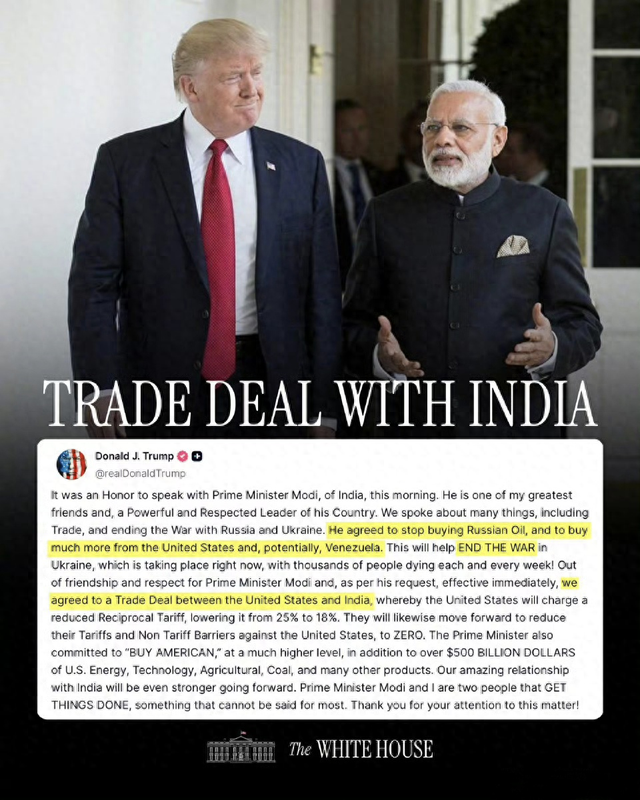
关税双向减免

Search documents
特朗普官宣大获全胜!莫迪只敢谢降税:美印协议暴露印度割肉内幕
Sou Hu Cai Jing· 2026-02-12 14:38
Group 1 - The trade agreement between the US and India appears to favor the US, with India making significant concessions, including halting oil purchases from Russia and increasing imports from the US fivefold [1][3][6] - The core of the agreement involves mutual tariff reductions, but India is required to lower tariffs on US agricultural and technology products by 30% to 50% within six months, while the US has reduced its punitive tariffs on India [3][5] - India is expected to purchase a total of $500 billion worth of US goods, focusing on energy, technology, agriculture, and coal, which raises concerns about the impact on local industries and farmers [6][8][9] Group 2 - The agreement's requirement for India to stop buying Russian oil and instead purchase from the US and Venezuela could lead to increased costs and inflation for Indian consumers, as well as a potential loss of strategic partnerships with Russia [6][9] - The trade deal may undermine India's "Make in India" initiative, as the influx of US goods could severely impact local manufacturing and agriculture, particularly small and medium enterprises [5][8] - Strategically, the agreement forces India to choose sides between the US and Russia, complicating its historical stance of non-alignment and potentially isolating it in international relations [9]

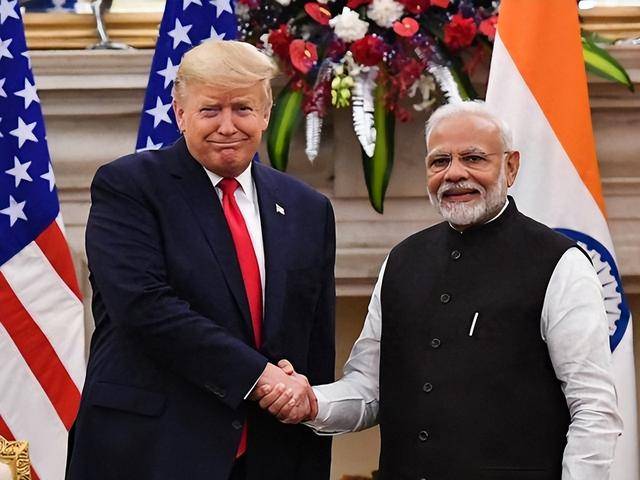
特朗普又搞定了一个大块头?
Xin Lang Cai Jing· 2026-02-03 23:55
Core Viewpoint - The recent trade agreement between the United States and India marks a significant step towards reducing tariffs and enhancing bilateral trade relations, with both countries making concessions to achieve mutual benefits [1][4][23]. Group 1: Trade Agreement Details - The agreement establishes a framework for "reciprocal tariff reduction," where India commits to gradually lowering tariffs on U.S. goods, particularly in agriculture, technology, and energy sectors, within a specified timeline [4][6]. - India will reduce tariffs on U.S. agricultural, technology, and energy products by 30%-50% within six months, while non-tariff barriers will be phased out over one year [4][6]. - The U.S. will eliminate a 25% punitive tariff on Indian goods and reduce "reciprocal tariffs" from 25% to 18%, maintaining tariff exemptions for Indian pharmaceuticals and electronics [4][6]. Group 2: Economic Commitments - India has pledged to purchase over $500 billion worth of U.S. goods over the next five years, focusing on energy, technology, agriculture, and coal [6][7]. - In the energy sector, India will cease importing Russian oil and instead increase purchases of U.S. and Venezuelan oil, with an expected total import of 120 million tons of crude oil and 50 million tons of LNG valued at approximately $250 billion [6][7]. - In technology, India will procure cloud services and related technologies from major U.S. companies, totaling around $150 billion, while gradually lifting market access restrictions for U.S. tech firms [7][8]. Group 3: Strategic Implications - The agreement reflects a shift from punitive measures to conditional reciprocity, addressing U.S. demands for market access while allowing India to retain competitiveness in key industries [6][8]. - The trade deal is seen as a strategic move by the U.S. to counterbalance the recent India-EU trade agreement, which could impact U.S. influence in the Indo-Pacific region [12][15]. - The agreement also serves domestic political interests for the U.S., particularly in agricultural and energy-producing states, as it aims to alleviate economic pressures on voters affected by previous tariffs [16][21].