具身通用人工智能

Search documents
全球竞速无人驾驶,全国政协委员建言政策创新破局
Xin Lang Cai Jing· 2026-02-26 14:30
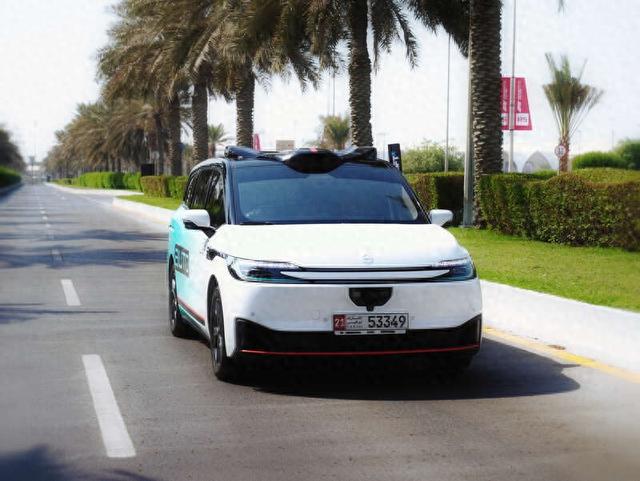
Group 1 - Autonomous driving is becoming a focal point as an important application of artificial intelligence integrated with the real economy, with significant discussions among national political advisors and industry experts [2] - The U.S. House of Representatives has passed the "Autonomous Driving Bill," establishing a national regulatory framework for autonomous vehicles at the federal level, allowing for the legalization of vehicles without steering wheels or pedals [2] - Tesla's first Cybercab, which lacks a steering wheel and pedals, has rolled off the production line and is set for mass production in April, while Waymo is expanding its market presence in the U.S. and accelerating entry into global cities like Tokyo and London [2] Group 2 - National political advisors emphasize the strategic importance of autonomous driving as a key to future industry layout, with calls for accelerated institutional supply to support its development [3] - Current pilot programs for autonomous driving are limited in scale and regional scope, which hinders large-scale industrialization; suggestions include establishing 5 to 10 regional engineering verification platforms in urban areas [3] - A collaborative mechanism involving government guidance, enterprise leadership, and research support is recommended to promote policies for new models and services in autonomous driving [3] Group 3 - User experience surveys in Wuhan, identified as the "first city for autonomous driving," show that approximately 95% of users would continue using the service, with over 70% expecting it to become a primary mode of transportation [4] - Chinese autonomous driving companies are accelerating their international expansion, with Baidu's "萝卜快跑" operating in 22 global cities, including Dubai and Abu Dhabi [4] - Recommendations have been made to include autonomous driving in the national "14th Five-Year Plan" to support broader application scenarios in various regions [4]


劈柴哥和哈萨比斯亲自站台!谷歌世界模型Project Genie刷屏,幕后团队揭秘60秒不是极限,内存是巨大约束
AI前线· 2026-01-30 09:58
Core Viewpoint - Google has launched "Project Genie," a groundbreaking world model prototype that allows users to create interactive virtual worlds with just a sentence or an image, marking a significant advancement in the field of artificial general intelligence (AGI) [2][12]. Group 1: Project Genie Overview - Project Genie is built on the latest world model, Genie 3, and utilizes a self-regressive generation mechanism to create environments based on user descriptions and actions, rather than pre-recorded content [10][11]. - The quality of the generated virtual worlds is significantly higher than previous research demos, approaching that of mature gaming products, with a resolution of approximately 720p and a frame rate of 20-24 frames per second [7][16]. - The application potential of world models is vast, including areas such as autonomous driving simulations, environmental understanding for embodied intelligence, game development, film production, and interactive education [13][14]. Group 2: User Interaction and Experience - Users can select from predefined templates or fully customize their environments and characters, allowing for a unique virtual world creation experience [20][23]. - The system allows for real-time interaction, with a maximum exploration time of 60 seconds per generated world, and can remember key changes made by users for up to one minute [17][19]. - Despite its innovative features, early user experiences have highlighted limitations, such as low-quality generated worlds, simple structures, and occasional input delays affecting the overall experience [15][32]. Group 3: Future Implications and Concerns - The launch of Project Genie has sparked discussions about its potential impact on the gaming industry, with concerns that it may lead to job losses among game developers [30]. - Critics have pointed out that the generated worlds can lack depth and complexity, with limited interactive elements and occasional inconsistencies in the virtual environment [32][34]. - Google emphasizes that Genie is not a game engine but rather a tool for enhancing creativity and accelerating prototyping, with ongoing improvements expected as user feedback is collected [35][40]. Group 4: Development and Collaboration - The development of Project Genie involved extensive collaboration across various Google teams, highlighting the company's ability to integrate advanced technologies into user-friendly applications [48][51]. - The team acknowledges that while the current model has limitations, it represents a significant step towards creating interactive and immersive virtual experiences [41][46]. - Future iterations of the model aim to expand its capabilities and applications, particularly in entertainment and education, with a focus on personalized learning experiences [55][57].