内容资产

Search documents
AI 堆里做传播,得换个活法了
3 6 Ke· 2026-02-25 04:44
Core Insights - The article discusses the evolving landscape of media channels and the challenges faced in effectively allocating marketing budgets in a fragmented media environment [1][2][21]. Group 1: Media Channel Classification - Media channels should be categorized by their functional value rather than traditional classifications like type or audience [2]. - There are four main types of media channels: endorsement channels (e.g., top financial media), recognition channels (e.g., industry KOLs), penetration channels (e.g., community forums), and capture channels (e.g., SEO) [3][5][7]. Group 2: Selecting Influencers - When selecting influencers from a vast pool of self-media, companies should assess the source of information, risk judgment, audience alignment, and peer recommendations [10][12][13]. - The credibility of influencers is determined by their ability to generate original content and their willingness to take risks in their conclusions [10][12]. Group 3: Content Strategy - Companies should focus on creating content that AI cannot replicate, such as personal experiences and specific insights from industry interactions [17][18]. - Valuable content often has a narrow focus and a clear stance, which can engage audiences more effectively than generic statements [19][20]. Group 4: Measuring Effectiveness - The effectiveness of communication strategies should be measured by the accumulation of trust and content assets rather than superficial metrics like views or impressions [22][23]. - Successful communication builds a narrative that shifts audience perceptions, which is essential for long-term brand positioning [26][27]. Group 5: Strategic Questions - Before launching a project, companies should clarify the problems to be solved, target audience perceptions, and the lasting assets to be created [28].
这个夏天,济南餐饮商家率先实现“堂食自由”
Sou Hu Cai Jing· 2025-08-16 02:08
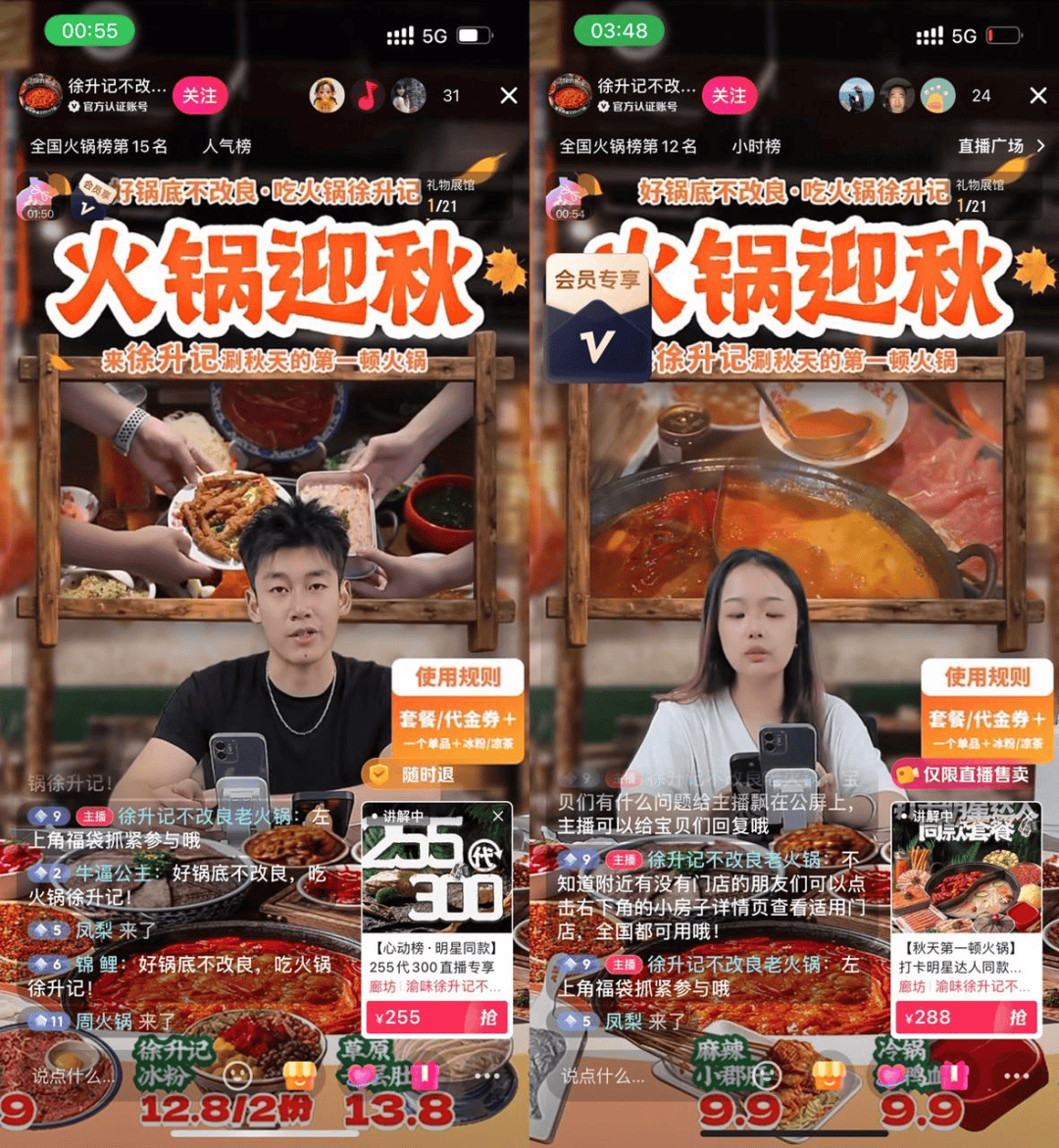
Group 1 - The article discusses the impact of the food delivery competition on consumer prices and the potential long-term risks for food quality and service efficiency [1] - It highlights the phenomenon of price discrepancies between online and offline dining, leading to a disruption in the pricing structure for restaurants [1] - The article emphasizes the importance of in-store dining experiences, which cannot be replaced by delivery services, and the need for restaurants to maintain stable pricing to cover operational costs [1] Group 2 - The article details the success of Xu Sheng Ji, a hot pot brand, which has rapidly expanded to over 310 locations since its inception in November 2022, achieving a 334% year-on-year increase in group buying sales from May to July [5][6] - It mentions the effective use of short videos and live streaming on platforms like Douyin to enhance brand visibility and attract customers within a specific geographic area [5][6] - The article also discusses the strategies employed by other local brands, such as Lu Wei Zhai and Lao Pan Chuan, to leverage live streaming and group buying to boost sales and expand their customer base [6][7] Group 3 - The article notes that many restaurants in Jinan are increasingly focusing on content marketing through live streaming and social media to attract customers, especially during peak seasons [7][11] - It highlights the shift in consumer behavior towards valuing quality and price-performance ratio, with a growing preference for in-store dining experiences despite the rise of delivery services [11][12] - The article points out that the restaurant industry in Jinan is experiencing significant growth, with a reported increase in orders exceeding 100% due to effective marketing strategies [11][12] Group 4 - The article predicts that by 2025, the share of restaurant consumption in second and third-tier cities will reach 40%-45%, indicating a core market for brand expansion [13] - It mentions that Xu Sheng Ji has established a strong presence in Shandong with 193 locations, while Lu Wei Zhai and Lao Pan Chuan are also expanding their reach in nearby cities [13][16] - The article concludes that the successful integration of content marketing and operational efficiency is crucial for restaurants to thrive in a competitive environment [16]