军事对峙

Search documents
伊朗为何边谈判边军演
Xin Lang Cai Jing· 2026-02-18 05:56
Core Viewpoint - The article discusses the simultaneous military exercises conducted by Iran in the Strait of Hormuz while indirect negotiations with the United States are ongoing, highlighting the tension between diplomatic efforts and military posturing [1] Group 1: Negotiations and Military Actions - Iran and the United States held the second round of indirect negotiations in Geneva on the 17th, amidst increasing military threats from the U.S. towards Iran [1] - The U.S. is deploying a second aircraft carrier strike group from the Caribbean to the Middle East, alongside sending dozens of fighter jets, including F-22, F-35, and F-16, to the region [1] Group 2: Details of Iranian Military Exercises - The Iranian Revolutionary Guard Corps Navy conducted military exercises in the Strait of Hormuz from the 16th to the 17th, showcasing capabilities such as "24-hour intelligence monitoring" and ensuring navigation safety [1] - The exercises included rapid response drills against potential threats, naval operations in electronic warfare environments, and the use of drones to target both fixed and moving objectives [1] Group 3: Strategic Implications - The military exercises serve a dual purpose: to demonstrate Iran's self-defense resolve and retaliatory capabilities, warning the U.S. of potential consequences if military action is taken [1] - Analysts suggest that if Iran were to block the Strait of Hormuz, it could lead to turmoil in global energy markets, potentially increasing oil prices and impacting U.S. inflation levels [1] - Gulf countries, including Saudi Arabia, Oman, and Qatar, have reportedly been lobbying the U.S. against military action towards Iran, emphasizing the potential repercussions on regional stability and the international oil market [1]
美伊核谈“取得进展”,特朗普副手泼冷水:红线问题仍未解决
Jin Shi Shu Ju· 2026-02-17 22:49
Core Insights - The negotiations between the US and Iran have made progress, but many details remain to be resolved, with Iran expected to submit a detailed proposal in the next two weeks [1] - The talks are focused on Iran's nuclear program and the potential lifting of US economic sanctions, with the US also wanting to discuss Iran's missile development [1][2] - There is a consensus on a set of "guiding principles" to draft a potential agreement, although significant differences in positions still exist [2][3] Group 1: Negotiation Progress - The US official stated that while progress has been made, there are still many details to discuss [1] - Iran's Foreign Minister described the atmosphere of the negotiations as "more constructive" and indicated that both sides agreed to advance the drafting of a potential agreement [2] - The next round of negotiations has not yet been scheduled, and the timeline for a potential agreement remains uncertain [2] Group 2: Military Tensions - The US has increased its military presence in the region, deploying the "Abraham Lincoln" aircraft carrier and sending the "Gerald R. Ford" aircraft carrier to the Middle East [5] - Iran's Supreme Leader responded to US military threats, emphasizing that the real danger lies in the weapons capable of sinking aircraft carriers [5] - Iran has conducted military exercises in the Strait of Hormuz, showcasing its military capabilities in response to US actions [6]
美伊博弈加剧:华盛顿考虑扣押伊朗油轮,德黑兰强硬回应军事威胁
Xin Lang Cai Jing· 2026-02-11 14:39
Group 1 - The core viewpoint of the article highlights the ongoing tensions between the U.S. and Iran, with the U.S. considering further military and economic pressure on Iran, while Iran firmly states that its missile capabilities are not negotiable [1][3]. - The U.S. government is contemplating the seizure of Iranian oil tankers to increase economic pressure on Tehran, with over 20 vessels already sanctioned since 2026 [1]. - Analysts warn that such actions could provoke Iranian retaliation, potentially escalating tensions in the region and impacting global oil prices [1][3]. Group 2 - Iranian officials have made clear statements during the 47th anniversary of the Islamic Revolution, asserting that discussions about Iran's missile capabilities are off the table [5]. - Iran's leadership has criticized the U.S. for combining threats with negotiations, indicating a consistent pattern of behavior [6]. - Iranian President Pezeshkian emphasized that Iran does not seek nuclear weapons and is open to verification, but also highlighted the severe distrust towards the U.S. and Europe as a barrier to successful dialogue [6].

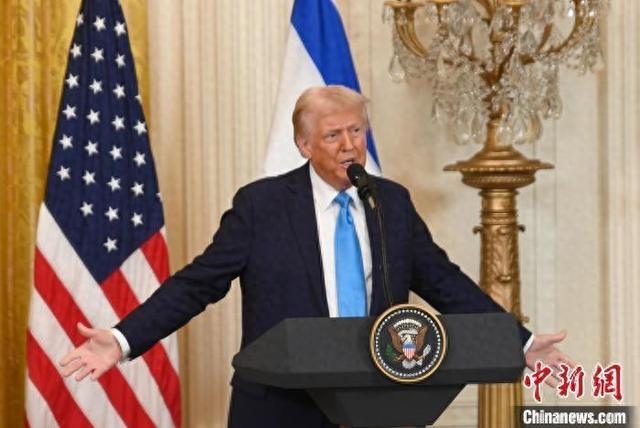
“如挑起战争,将是一场全地区性战争”!哈梅内伊严正警告美国,伊武装部队准备就绪
Hua Xia Shi Bao· 2026-02-01 15:17
Group 1 - Iran's Supreme Leader Khamenei issued a stern warning to the U.S., stating that any attempt to provoke war would lead to a regional conflict, not just a localized one [1] - Khamenei emphasized that Iran will not initiate war but will respond decisively to any aggression [1] - The Iranian Revolutionary Guard Corps (IRGC) claimed that its military readiness has significantly improved compared to the past, particularly during the "12-day war" period [5] Group 2 - The U.S. has been increasing military pressure on Iran, deploying multiple warships, including aircraft carriers, in the region [2] - Iranian officials indicated that a framework for negotiations with the U.S. is gradually taking shape [2] - Iran's parliament speaker, Ghalibaf, stated that European military forces will now be regarded as "terrorist organizations" following the EU's designation of the IRGC as such [6][8]
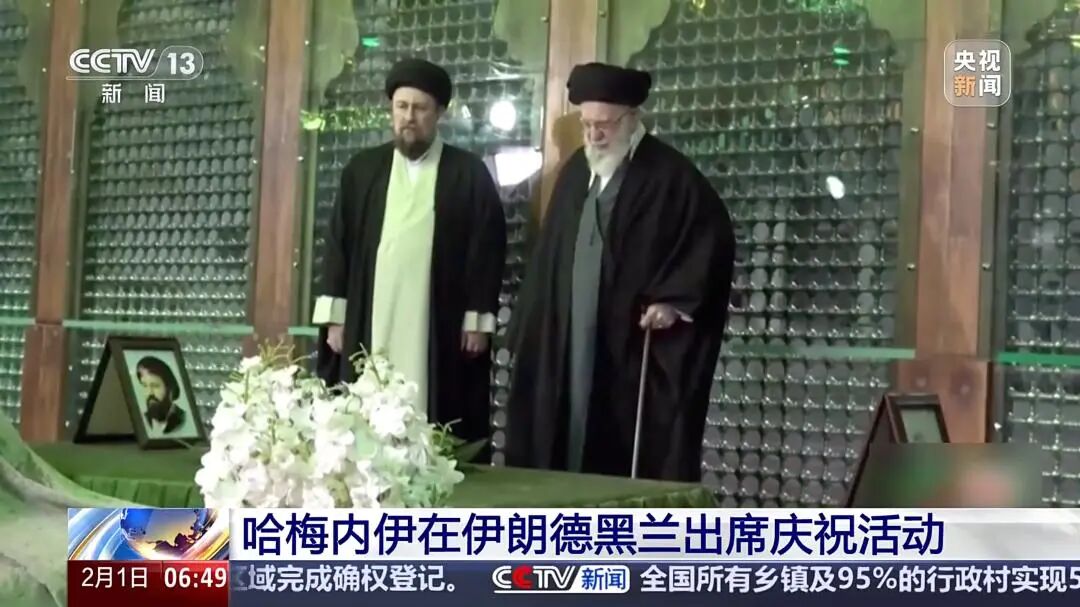
“哈梅内伊已进入加固地堡”
Xin Jing Bao· 2026-01-26 05:43
Core Viewpoint - Tensions between the United States and Iran are at a peak, with Iran preparing for potential military confrontations and asserting its readiness to respond aggressively to any threats [1][2]. Group 1: Iran's Military Readiness - Iran's armed forces have entered a state of full alert, monitoring all hostile movements in the region, and are prepared to retaliate against any form of aggression [1]. - The Iranian leadership, including Supreme Leader Ali Khamenei, is reportedly in a fortified bunker, indicating a high level of concern regarding potential attacks [1]. - Iran's military response is expected to extend from the Strait of Hormuz to all U.S. interests in the region, with capabilities that may exceed enemy expectations [1]. Group 2: U.S.-Iran Relations - Iranian officials have dismissed U.S. threats as psychological warfare, suggesting that the U.S. is reluctant to engage in direct conflict [2]. - The Iranian parliament has firmly rejected any negotiation proposals from the U.S., citing a lack of trust due to past experiences where negotiations were followed by attacks [2]. - The U.S. has been increasing its military presence in the Middle East, including deploying an aircraft carrier and additional missile defense systems, in response to escalating tensions with Iran [2].
美国“林肯”号航母打击群抵达中东!伊朗:伊武装力量进入全面戒备状态!
Mei Ri Jing Ji Xin Wen· 2026-01-26 00:29
Core Viewpoint - The situation in the Middle East is escalating, with the U.S. military increasing its presence and readiness in response to potential threats from Iran, while Israel prepares for possible repercussions from U.S. actions against Iran [1][2]. Group 1: U.S. Military Actions - The U.S. Navy's Abraham Lincoln aircraft carrier strike group has arrived in the Middle East and is conducting operations within the U.S. Central Command area [1]. - The U.S. Air Force is set to begin several days of readiness exercises in the region to demonstrate its capability to deploy and maintain air combat forces [1]. Group 2: Israel's Preparedness - The Israeli Defense Forces (IDF) are on high alert due to the ongoing regional tensions and are preparing for potential military actions by the U.S. against Iran, which could have repercussions for Israel [1]. - IDF Northern Command Chief, Rafi Milo, indicated that Israel is closely monitoring developments and is prepared for possible responses from Iran that may affect Israeli security [1]. Group 3: Iran's Response - Iranian military forces have entered a state of full readiness, monitoring all hostile movements in the region, and are prepared to retaliate against any form of aggression, with a focus on U.S. interests in the area [2]. - Iranian officials have dismissed U.S. threats as psychological warfare, warning that any strategic miscalculation by the U.S. could lead to devastating consequences for U.S. military bases and Israel [2]. Group 4: Regional Diplomatic Dynamics - Turkey's Foreign Minister, Hakan Fidan, has warned external forces against attempting regime change in Iran, emphasizing that the current situation will not lead to a change in the Iranian government [3]. - Fidan also noted that while Iran has shown a willingness to negotiate, the U.S. must approach discussions in a manner that respects Iran's national dignity [3].

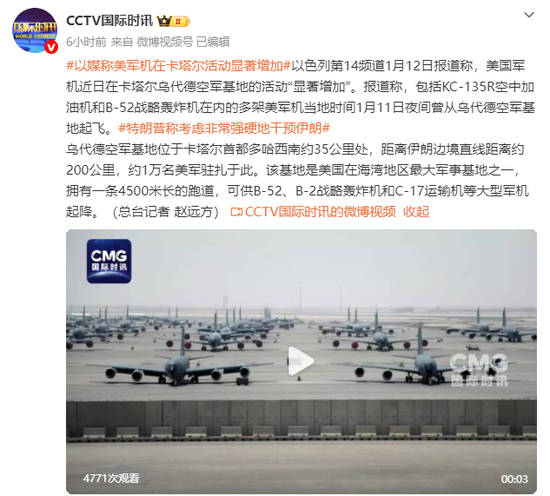
美军机活动“显著增加”,距伊朗边境直线200公里,约1万名美军驻扎
Xin Lang Cai Jing· 2026-01-13 01:47
Group 1: Military Activities - The activity of U.S. military aircraft at the Al Udeid Air Base in Qatar has significantly increased, with multiple aircraft including KC-135R refueling planes and B-52 bombers reported to have taken off on January 11 [1][12] - Al Udeid Air Base, located approximately 35 kilometers southwest of Doha and about 200 kilometers from the Iranian border, is one of the largest U.S. military bases in the Gulf region, housing around 10,000 U.S. troops [1][12] Group 2: U.S.-Iran Relations - The U.S. State Department has urged American citizens to leave Iran immediately, indicating rising tensions [4][12] - Iranian officials, including Speaker of Parliament Mohammad Baqer Qalibaf, have warned that any attack on Iran will result in retaliation against U.S. and Israeli military bases in the region [5][12] - Iranian Supreme Leader Ali Khamenei praised the Iranian people for thwarting foreign plots and warned U.S. politicians to cease deceptive practices [7][14] Group 3: Military Preparedness - Iranian Foreign Minister Mohammad Javad Zarif stated that Iran is prepared for any potential military action from the U.S. and emphasized that the current military readiness is extensive compared to previous conflicts [8][14] - Iran's Defense Minister warned that any attack on Iran's national interests would lead to strikes against enemy facilities anywhere [15] Group 4: Economic Measures - President Donald Trump announced a 25% tariff on any country conducting business with Iran, effective immediately, stating that this decision is final and unchangeable [10][16][18]
海上争锋 北约与俄罗斯互“秀肌肉”
Xin Hua Wang· 2025-06-11 17:06
Group 1 - NATO's large-scale military exercise "Baltic Operation-2025" has commenced in the Baltic Sea, involving 16 NATO countries, over 40 ships, 25 aircraft, and approximately 9,000 personnel, indicating a significant military presence aimed at countering Russia [2][3] - The exercise includes various training aspects such as unmanned systems operation, medical evacuation, air defense, maritime interception, anti-submarine warfare, mine countermeasures, airborne operations, and engineering [2] - Analysts suggest that NATO's military activities are intended to enhance monitoring and disruption capabilities of Russian maritime oil transport, reflecting a strategic intent to further contain Russia [2][4] Group 2 - In response to NATO's exercises, Russia conducted its own large-scale military drills in the Baltic region, involving over 20 ships, approximately 3,000 personnel, 25 aircraft, and nearly 70 pieces of military equipment, interpreted as a preemptive countermeasure [3] - Russian officials have characterized NATO's military maneuvers as provocative, indicating a preparation for potential military conflict, and emphasizing the need for Russia to ensure its borders are protected from possible provocations [3][4] - The ongoing military tensions have escalated since Finland and Sweden joined NATO, leading to a perception of the Baltic Sea as a "NATO lake," which has heightened Russia's security concerns and intensified the standoff in the region [4]
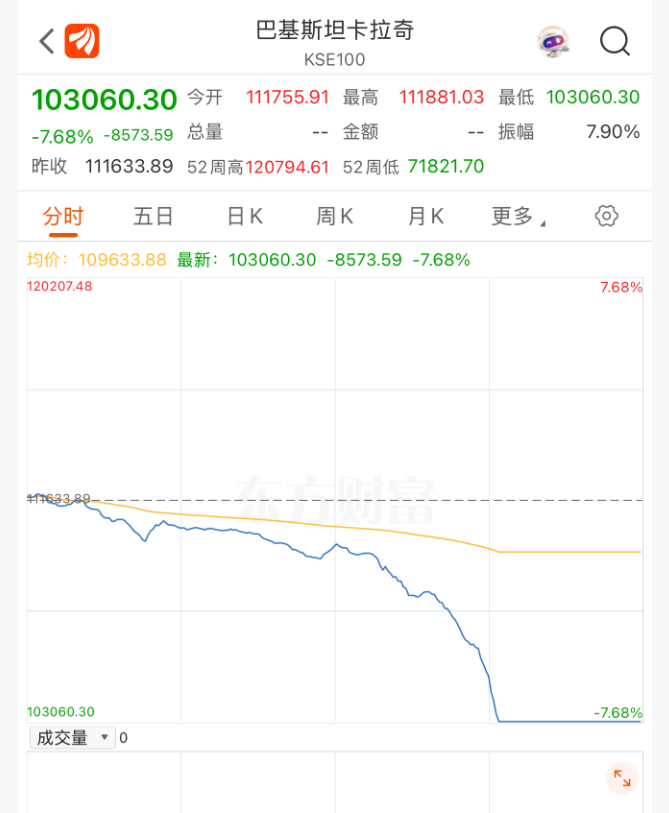
熔断了,这国股市暴跌超8000点
Zhong Guo Ji Jin Bao· 2025-05-08 10:20
Core Viewpoint - The escalating military conflict between India and Pakistan has led to a significant drop in the Pakistan stock market, triggering a trading halt due to a decline of over 7% in the KSE-100 index, which fell by more than 8500 points [1][3]. Group 1: Market Impact - The Pakistan stock market experienced a sharp decline, with the KSE-100 index dropping over 8500 points, resulting in a trading suspension for one hour [1]. - Following the announcement of the Pakistani military shooting down 12 Indian drones, the market's decline intensified, indicating heightened tensions between the two nuclear-armed nations [3]. Group 2: Military Actions and Responses - The conflict escalated after a recent attack in the Kashmir region that resulted in 26 civilian deaths, with India accusing Pakistan of involvement, which Pakistan denies [4]. - Pakistan's military spokesperson confirmed the downing of Indian drones, which were reportedly responsible for civilian casualties, further aggravating the situation [3]. - In retaliation to Indian military strikes, Pakistan's Prime Minister stated that the country would respond appropriately, indicating a potential for continued military engagement [4][5]. Group 3: Political Statements - Pakistan's Prime Minister described India's military actions as illegal acts of war, asserting that Pakistani pilots successfully engaged Indian aircraft during the conflict [5]. - Indian officials emphasized their intent to avoid escalation while maintaining a readiness to respond to any actions taken by Pakistan [7].