海外投资风险

Search documents
突发!巴拿马政府强行接管李嘉诚旗下港口
Xin Lang Cai Jing· 2026-02-24 06:43
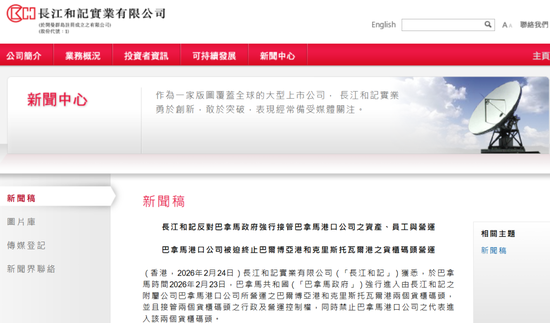
Core Viewpoint - The announcement from Cheung Kong Holdings indicates strong opposition to the Panamanian government's forcible takeover of the Panama Ports Company's assets, employees, and operations, leading to the termination of operations at Balboa and Cristobal ports [2][3][4]. Group 1: Government Actions - On February 23, 2026, the Panamanian government forcibly entered the Balboa and Cristobal ports, taking control of administrative and operational functions, and prohibiting representatives of the Panama Ports Company from entering the ports [2][10]. - This takeover is seen as the culmination of a series of actions by the Panamanian government against the Panama Ports Company and its concession contract over the past year [2][10]. - The government published a ruling from the Supreme Court and an executive decree that effectively nullified the concession rights of the Panama Ports Company, ordering the occupation of all its movable assets [2][10]. Group 2: Company Response - Cheung Kong Holdings asserts that the government's actions, including the termination of the concession rights and the forced takeover, are illegal and pose serious risks to the operations, health, and safety at the ports [3][11]. - The Panama Ports Company has been forced to cease all operations at the two ports as of February 23, 2026, due to the government's directives [3][11]. - Cheung Kong Holdings plans to consult legal advisors regarding the ruling and the forced takeover, exploring all possible legal avenues, including domestic and international legal actions against the Panamanian government and any colluding third parties [3][11]. Group 3: Financial Impact - Following the announcement, Cheung Kong Holdings' stock price dropped nearly 2%, with a total market capitalization of HKD 241.5 billion [4][12]. - The company has been managing the ports since 1997, with a concession that was extended for 25 years in 2021, indicating a long-term investment in the region [6][14].

中方港口被接管不到一天,鲁比奥全球喊出“感到鼓舞”
Xin Lang Cai Jing· 2026-02-01 02:56
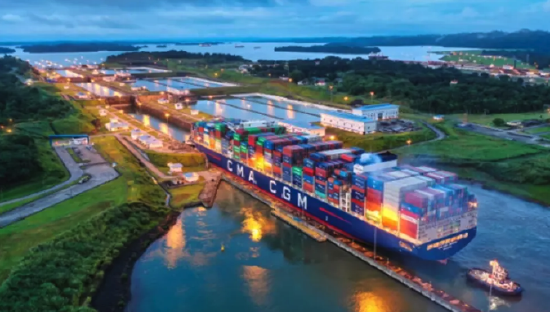
Core Viewpoint - The ruling by the Panama Supreme Court invalidating the port contract of a subsidiary of Cheung Kong Holdings is not merely a legal decision but reflects the ongoing geopolitical struggle between the U.S. and China in Latin America [1][11]. Historical Context - The Panama Canal and its ports have been strategic hubs for global trade, with Chinese companies operating in Balboa and Cristobal ports for many years. The contract renewal in 2021 faced scrutiny from the Panama Audit Office, leading to the court's ruling based on constitutional grounds [3][13]. - The ruling aligns with U.S. interests in limiting Chinese participation in strategic assets in Latin America, highlighting the vulnerability of overseas investments amid political tensions [3][13]. Key Geopolitical Struggle - Following the ruling, U.S. politician Marco Rubio expressed encouragement, framing it as a victory for the U.S. in Latin America and signaling to other countries the benefits of restricting Chinese investment in strategic assets [5][15]. - China responded promptly, asserting its rights and indicating that it would take necessary measures to protect its interests, while the Hong Kong government opposed foreign pressure on local enterprises [5][16]. Impact on Chinese Enterprises and Consumers - The ruling poses significant challenges for Chinese enterprises, affecting their revenue and contractual rights, and may lead to increased logistics costs due to potential disruptions in global supply chains [7][18]. - The ports operated by Cheung Kong handle approximately 2% of global container throughput, and the ruling could result in short-term logistical chaos and rising supply chain costs [7][18]. - The event underscores that overseas investments are not just commercial decisions but also part of a broader national strategic competition [7][18]. Future Implications - The focus of U.S.-China competition in Latin America will likely extend to issues of judicial independence, sovereignty, and investment rule-making, with the policy choices of smaller countries becoming increasingly significant [8][20]. - The control of strategic assets is now seen as a reflection of global power dynamics, with the stability of global shipping, investment security, and supply chains being directly influenced by U.S.-China relations [10][20].
港口交易生变?巴拿马港口运营合同被裁定违宪,李嘉诚旗下长和股价大跌!香港政府:强烈不满,企业应认真审视其现时及未来在当地的投资
Mei Ri Jing Ji Xin Wen· 2026-01-30 16:05
Core Viewpoint - The sale of port assets by Cheung Kong Holdings, led by Li Ka-shing, faces significant challenges due to a ruling by the Panama Supreme Court declaring the contracts for two ports unconstitutional, which may impact investor confidence and the overall business environment in Panama [2][3][5]. Group 1: Legal and Regulatory Context - The Hong Kong government expressed strong dissatisfaction and opposition to the Panama Supreme Court's ruling, emphasizing the need for a fair business environment for Hong Kong enterprises operating in Panama [2]. - The ruling has raised concerns about the legitimacy of contracts and the treatment of foreign businesses, potentially undermining investor confidence and bilateral relations [2][3]. Group 2: Financial Implications - Following the court ruling, Cheung Kong's stock price experienced a significant drop, falling over 5% at one point and closing down 4.6% [5]. - The company had previously announced plans to sell a portfolio of 43 port assets, including those in Panama, valued at $22.8 billion [6][7]. Group 3: Future Prospects - The company is currently in discussions with a consortium, including major investors from mainland China, to secure necessary regulatory approvals for the transaction, although the timeline for completion is expected to be longer than initially planned [7][8].
美油企对“投资委内瑞拉”犹疑 特朗普威胁施以“禁入令”
Sou Hu Cai Jing· 2026-01-13 09:53
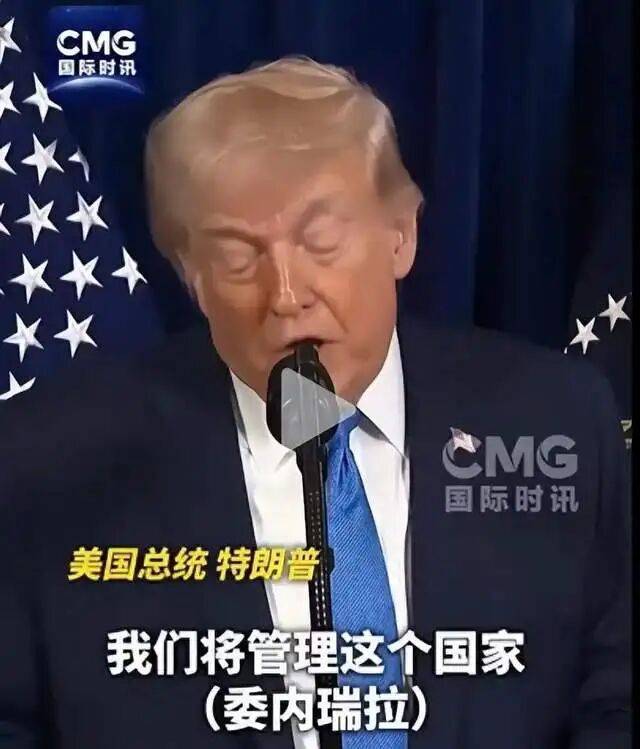
Group 1 - The core viewpoint of the article highlights the lack of interest from major U.S. oil companies in investing in Venezuela, despite President Trump's push for a $100 billion investment plan [1][3] - ExxonMobil's CEO Darren W. Woods stated that the company's assets in Venezuela have been seized twice, making the country "uninvestable" without significant reforms to its business and legal framework [3][6] - Trump expressed dissatisfaction with ExxonMobil's response and indicated potential actions against the company for not committing to investments in Venezuela [3][6] Group 2 - Chevron is currently the only major U.S. oil company still operating in Venezuela, while ExxonMobil and ConocoPhillips had their assets seized in 2007 [6] - Analysts suggest that Trump's intention to leverage Venezuela's oil resources for U.S. interests faces challenges due to outdated infrastructure, political instability, and high extraction costs of heavy crude oil [6] - There was no explanation provided by Trump regarding how the government would offer guarantees and security to oil companies considering investments in Venezuela [6]

美油企对“投资委内瑞拉”犹疑,特朗普威胁施以“禁入令”
Sou Hu Cai Jing· 2026-01-13 08:44
Group 1 - The core idea of the articles revolves around the challenges faced by U.S. oil companies in investing in Venezuela, despite President Trump's push for significant investments to exploit the country's oil reserves [1][2]. - President Trump met with executives from about 20 U.S. and Western oil companies, aiming for a commitment of at least $100 billion in investments in Venezuela's oil industry, but received little positive response [1]. - ExxonMobil's CEO Darren W. Woods stated that Venezuela is currently "uninvestable" due to past asset seizures and the need for significant reforms in the country's business and legal framework [1][2]. Group 2 - Chevron is currently the only major U.S. oil company still operating in Venezuela, while ExxonMobil and ConocoPhillips had their assets seized in 2007 [2]. - Analysts note that while Trump aims to leverage Venezuela's oil resources for U.S. interests, the country's outdated infrastructure and unstable political situation pose significant risks for potential investors [2]. - Trump did not provide explanations on how the U.S. government would offer guarantees and security to oil companies considering investments in Venezuela [2].
将启动地面打击!特朗普,突发威胁!
Zheng Quan Shi Bao Wang· 2026-01-10 15:17
Group 1: Military Actions and International Relations - President Trump announced that military actions against drug cartels in Mexico will "soon" commence, highlighting the increasing tension in U.S.-Mexico relations [2][3] - Trump emphasized that drug cartels are controlling Mexico and are responsible for the deaths of 250,000 to 300,000 people annually in the U.S. [2] - Mexican President López Obrador opposes U.S. military actions in Mexico, advocating for cooperation rather than subordination [2] Group 2: Greenland Island Controversy - Trump stated that the U.S. needs to acquire Greenland and warned of taking "difficult measures" if a simple agreement cannot be reached [3][4] - The U.S. has previously expressed intentions to acquire Greenland, with Trump indicating that military options are on the table [3][4] - European officials, including those from Denmark and the EU, have expressed strong opposition to U.S. threats regarding Greenland, calling for respect for international law [4][5] Group 3: Investment in Venezuela's Oil Industry - Trump met with executives from about 20 major U.S. oil companies to discuss potential investments in Venezuela's oil sector, but many executives expressed caution [5] - ExxonMobil's CEO stated that Venezuela is currently "not investable" without significant changes to its legal and business framework [5] - Trump proposed that U.S. oil companies invest at least $100 billion to rebuild Venezuela's oil infrastructure, promising "full" security guarantees for these companies [5]
控制了马杜罗,特朗普却很尴尬,美国的石油巨头未必愿到委去冒险
Sou Hu Cai Jing· 2026-01-05 16:02
Group 1 - The core objective of the U.S. intervention in Venezuela is to establish a government that is fully controlled by the U.S., effectively turning Venezuela into a colony to exploit its oil resources [3][4] - U.S. oil companies have shown little interest in entering Venezuela despite the potential for oil extraction, indicating a lack of enthusiasm for Trump's plans [4][6] - Concerns among U.S. oil giants include the uncertain future of Venezuela, the current oversupply in the oil market, and low oil prices, which make investment in Venezuela's oil infrastructure risky [6][8] Group 2 - Even if U.S. oil companies manage to enter Venezuela and extract oil, there are significant challenges regarding the sale of this oil due to the illegitimate means of U.S. control, which may deter other countries from purchasing it [8] - The potential for Venezuela to become another burden similar to Iraq is highlighted, with the possibility of domestic anti-American sentiment complicating U.S. influence in the region [8][10] - The historical context of Trump's criticism of previous U.S. interventions raises questions about how future leaders will view his actions in Venezuela [10]
800亿美元天价索赔,中企遭非洲人盯上 || 焦点
Sou Hu Cai Jing· 2025-10-22 02:12
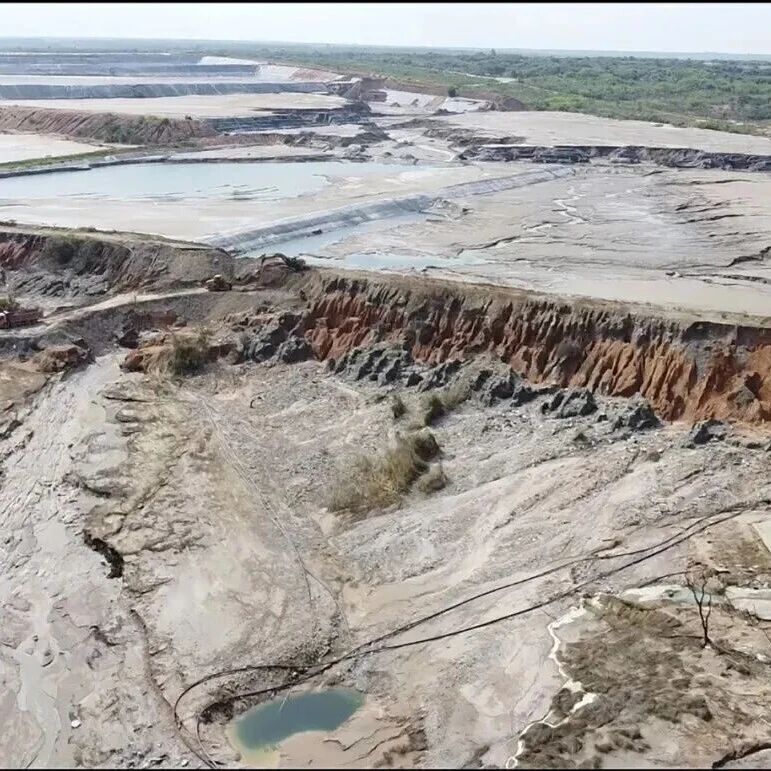
Core Viewpoint - The lawsuit against Chinese mining companies in Zambia, demanding $80 billion for environmental damages, highlights significant concerns regarding corporate responsibility and environmental management in the mining sector [1][2][5]. Group 1: Lawsuit Details - Over 100 residents from the Chimbishi mining area have filed a collective lawsuit against Sino Metals Leach Zambia and NFC Africa Mining, subsidiaries of China Nonferrous Metal Mining Group, demanding the establishment of an environmental restoration fund of $80 billion [2][9]. - The lawsuit also requests an additional $200 million for emergency relief and health/environmental assessment funds [2][9]. - The $80 billion claim is equivalent to Zambia's GDP for three years, raising eyebrows as it surpasses the highest compensation in global mining history, which was $23 billion [3][4][14]. Group 2: Incident Background - The lawsuit stems from a tailings dam collapse at the Chimbishi copper mine on February 18, which released toxic waste into the Kafue River, a vital water source for approximately 60% of Zambia's population [6][8]. - Following the incident, the Chinese companies involved took immediate action to contain the damage and restore water quality, with the Zambian government reporting improvements in water conditions by August [6][7][8]. Group 3: Company and Industry Context - China Nonferrous Metal Mining Group has been a significant player in Zambia's mining sector since the late 1990s, with the Chimbishi copper mine being a flagship project [10][11]. - The mine has a production capacity exceeding 30,000 tons annually, showcasing the importance of Chinese investment in Zambia's copper industry [11]. - The lawsuit reflects broader challenges faced by Chinese mining companies in Africa, including issues of local governance, environmental management, and community relations [17][21].
800亿天价索赔,中企遭非洲人盯上
商业洞察· 2025-10-20 12:10
Core Viewpoint - The article discusses a significant environmental lawsuit in Zambia, where over 100 residents are demanding $80 billion in compensation from two Chinese companies for environmental damages caused by a tailings dam collapse at the Chimbishi copper mine, which is a record claim in global mining history [6][10][11]. Group 1: Lawsuit Details - The lawsuit involves Sino Metals Leach Zambia and NFC Africa Mining, subsidiaries of China Nonferrous Metal Mining Group, which are accused of causing environmental harm and health risks to the local community [7][20]. - The residents are requesting the establishment of an environmental restoration trust fund with $80 billion for remediation and an additional $200 million for emergency aid and health assessments [7][20]. - The $80 billion claim is equivalent to Zambia's GDP for three years, highlighting the enormity of the demand [8]. Group 2: Company Response and Actions - China Nonferrous Metal Mining Group has stated that it is actively cooperating with the Zambian government and has taken steps to address the incident, including compensation for affected residents [11][18]. - The company reported that the water quality in the affected areas has returned to normal, and no severe health issues have been linked to the pollution [18][19]. - The company has engaged local legal teams to respond to the lawsuit, asserting that the claims lack a legal basis [20]. Group 3: Context and Implications - Zambia is a major copper producer in Africa, and the mining industry is crucial to its economy, making the outcome of this lawsuit significant for both local communities and foreign investors [22][25]. - The lawsuit reflects broader issues of environmental management and corporate responsibility in foreign investments, particularly in developing countries [30][34]. - The incident has raised concerns about the operational risks faced by Chinese mining companies in Africa, including theft, local unrest, and environmental compliance [33][36].

800亿天价索赔,中企遭非洲人盯上
首席商业评论· 2025-10-20 04:21
Core Viewpoint - The article discusses a significant environmental lawsuit in Zambia, where over 100 residents are demanding $80 billion in compensation from two Chinese mining companies, a claim that is unprecedented in the global mining industry and equivalent to three years of Zambia's GDP [4][6][20]. Group 1: Background of the Incident - The lawsuit stems from a tailings dam collapse at the Chambishi Copper Mine on February 18, which released millions of tons of toxic waste into the Kafue River, a vital water source for approximately 60% of Zambia's population [7][9]. - The Chinese companies involved, Sino Metals Leach Zambia and NFC Africa Mining, are subsidiaries of China Nonferrous Mining Corporation, which has been deeply involved in Zambia's mining sector since the late 1990s [14][16]. Group 2: Legal and Financial Implications - The $80 billion claim is not only the largest in Zambia's history but also far exceeds the previous record for mining compensation, which was $23 billion related to the Brumadinho dam disaster in Brazil [6][20]. - The Chinese companies have responded by stating that the claims lack legal basis and have engaged local legal teams to protect their rights [12][20]. Group 3: Broader Context and Challenges - Zambia's mining sector faces numerous challenges, including a lack of skilled labor and issues with illegal mining activities, which complicate the operational environment for foreign investors [22][24]. - The incident highlights the risks associated with overseas investments by Chinese mining companies, as they may be perceived as resource exploiters, potentially damaging their reputation and trust in international markets [25][27].