农村发展

Search documents
从政府工作报告的一组数据,看民生保障持续加力
券商中国· 2026-03-05 11:52
Employment - The urban survey unemployment rate is projected to be around 5.5% by 2026, with over 12 million new urban jobs expected to be created [2] - Actions will be implemented to stabilize jobs in labor-intensive industries and to cultivate new jobs in emerging and future industries [2] Income - The economic growth target for this year is set between 4.5% and 5%, with resident income growth expected to align with economic growth [3] - A plan will be developed to increase income for urban and rural residents, focusing on low-income groups and enhancing property income, salary, and social security systems [3][4] Consumption - A special action plan will be implemented to boost consumption [5] - In 2026, 250 billion yuan will be allocated for long-term special government bonds to support the replacement of consumer goods [6] - A special fund of 100 billion yuan will be established to promote domestic demand, expanding personal consumption loans and service industry loan interest subsidies [6] Education - Conditions for participating in the high school entrance examination will be relaxed based on local circumstances [8] - There will be adjustments in the allocation of educational resources and an increase in the supply of ordinary high school places [9][10] - The enrollment scale for quality undergraduate education will continue to expand [11] - By the end of the "14th Five-Year Plan" period, the average years of education for the labor force is expected to increase to 11.7 years [12] Healthcare - A health-first development strategy will be implemented, establishing a comprehensive health promotion policy system [13] - By 2026, the per capita financial subsidy standard for resident health insurance will increase by 24 yuan [14] - A multi-tiered medical security system will be established, promoting the development of commercial health insurance and high-quality innovation in drugs and medical devices [15][16] - The average life expectancy is projected to increase to 80 years by the end of the "14th Five-Year Plan" period [17] Pension - By 2026, the minimum monthly standard for urban and rural residents' basic pensions will increase by 20 yuan [18] - A nationwide coordination system for basic pension insurance will be improved and implemented [19] - A national strategy to actively respond to population aging will be deeply implemented, expanding the supply of inclusive elderly care services [20] - The proportion of nursing beds in elderly care institutions is expected to increase to 73% by the end of the "14th Five-Year Plan" period [21] Agriculture - A new round of actions to enhance grain production capacity will be implemented, targeting an output of approximately 1.4 trillion jin by 2026 [22][23] Rural Development - A second round of land contract extensions for 30 years will be comprehensively carried out after the expiration of the current contracts [24] - Continuous improvement of rural living environments will be prioritized, addressing issues such as toilet renovations and waste management [25][26] Major Projects in Livelihood - During the "14th Five-Year Plan" period, 25 major projects will be proposed to ensure and improve people's livelihoods, focusing on cultural prosperity, high-quality education, health, and social care services [27]


斯总理发表讲话,称国家必将再次站起
Shang Wu Bu Wang Zhan· 2025-12-09 18:19
Core Viewpoint - The Prime Minister of Samoa, Su'a Amala Suria, has reaffirmed the government's commitment to a 7% economic growth target despite facing various challenges [1] Group 1: Economic Growth Strategy - The government has set an ambitious medium-term economic growth target of 7% [1] - Six key pillars have been identified to drive this vision: inclusive growth, export diversification, policy sustainability, production-oriented economy, rural development, and digital transformation [1] Group 2: Structural Reforms - The government will not deviate from other structural reforms, including state-owned enterprise reform, trade facilitation measures, and the establishment of a single-window investment platform [1] - The central bank governor has stated that the central bank will leverage its expertise to buffer against economic shocks [1] Group 3: Economic Resilience - The nation is now better equipped than ever to withstand sudden economic shocks [1]
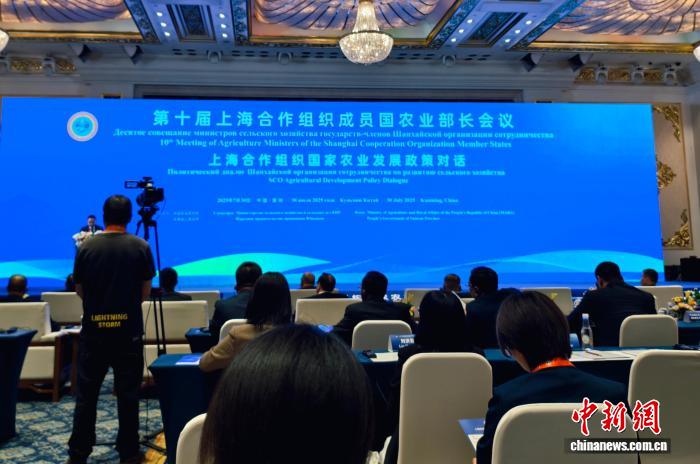
上合组织国家农业专家昆明共议农村发展与减贫合作
Zhong Guo Xin Wen Wang· 2025-07-30 21:26
Core Viewpoint - The Shanghai Cooperation Organization (SCO) member states are focusing on agricultural development policies, emphasizing rural development, poverty reduction, and smart agriculture during the recent dialogue held in Kunming, Yunnan [1][4]. Group 1: Agricultural Development Strategies - Yunnan province is advancing agricultural structural adjustments by developing high-quality, high-value, and high-tech agriculture, which enhances overall agricultural quality and competitiveness [2]. - The SCO countries face challenges such as uneven water resource distribution and limited land resources, necessitating regional cooperation in agricultural innovation and infrastructure [2]. - Cambodia is implementing three mechanisms to promote poverty reduction through agriculture, including building modern agricultural communities and providing technical support [3]. Group 2: Regional Cooperation and Knowledge Sharing - Myanmar is looking to leverage the experiences of neighboring countries like China, Thailand, and India in poverty reduction and agricultural infrastructure development [5]. - The emphasis is on sustainable development and support for smallholder farmers in the poultry industry to ensure food security and promote green transformation [2].