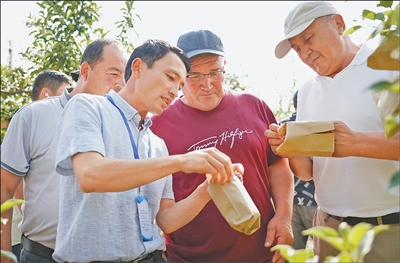
减贫合作

Search documents
打造中泰减贫合作新成果
Ren Min Ri Bao· 2026-01-26 21:50
Core Viewpoint - The construction of a water dam in Ban K village, funded by the Chinese Consulate in Khon Kaen, has significantly improved local water resource management, agricultural productivity, and food security in the region [2][3]. Group 1: Water Resource Management - The water dam, completed in January 2025, plays a crucial role in managing water resources by storing excess rainwater during the rainy season and providing irrigation during droughts [2]. - The dam's construction involved multiple site inspections and planning sessions between local authorities and the Chinese Consulate, highlighting the collaborative effort in addressing water scarcity issues in Northeast Thailand [2]. Group 2: Agricultural Impact - Local farmers have reported increased agricultural yields, with one farmer harvesting several thousand kilograms of rice from 5 rai (approximately 8,000 square meters) of land, thanks to the improved irrigation system [2]. - The town mayor expressed plans to diversify crop production, including tomatoes, watermelons, and eggplants, and emphasized the desire for further cooperation with China in agricultural technology and seed cultivation [3]. Group 3: Bilateral Cooperation - The water dam project is seen as a practical example of Sino-Thai cooperation in improving livelihoods, with the Chinese Consulate actively supporting poverty alleviation initiatives in the region [3]. - Thai officials have visited various regions in China to learn about poverty reduction strategies, indicating a strong interest in adopting Chinese development experiences to achieve economic and social goals [3].

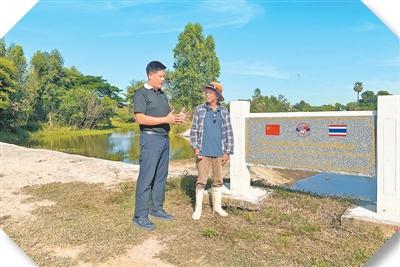
打造中泰减贫合作新成果——中国援建的泰国孔敬府水堰项目助力当地防洪灌溉和民生改善
Ren Min Ri Bao· 2026-01-22 02:31
Group 1 - The water dam project in Ban K village, funded by the Chinese Consulate in Khon Kaen, was completed in January 2025 and plays a crucial role in local water resource management and irrigation [2][3] - The dam helps store excess rainwater during the rainy season to reduce flood risks and releases stored water for irrigation during the dry season, significantly benefiting local agriculture [3] - Local farmers report improved fishing conditions and increased agricultural yields due to the dam, with plans to expand crop varieties and enhance cooperation with China in agricultural technology [3][4] Group 2 - The project exemplifies practical cooperation between China and Thailand in the field of livelihood improvement and poverty alleviation [3][4] - Thai officials have visited regions in China to learn about poverty alleviation strategies, indicating a desire to adopt Chinese development experiences for economic and social progress [4]
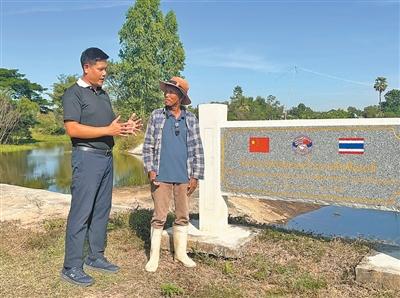
打造中泰减贫合作新成果(共创繁荣发展新时代)
Ren Min Ri Bao· 2026-01-21 23:31
Core Viewpoint - The construction of a water dam in Ban K village, funded by the Chinese consulate, plays a crucial role in improving water resource management and irrigation in the northeastern region of Thailand, thereby enhancing agricultural productivity and food security [4][5]. Group 1: Project Details - The water dam, completed in January 2025, is 4 meters wide and features a 30-meter protective embankment [4]. - The dam helps store excess rainwater during the rainy season to mitigate flood risks and releases stored water for irrigation during the dry season [4]. Group 2: Agricultural Impact - Local farmers report increased fish populations and improved water quality since the dam's construction, with one villager noting the ability to catch over 20 fish in a single day [5]. - The town plans to expand its crop varieties, including tomatoes, watermelons, and eggplants, and seeks further cooperation with China in agricultural technology and seed cultivation [5]. Group 3: Bilateral Cooperation - The project exemplifies practical cooperation between China and Thailand in the field of livelihood improvement, contributing to poverty alleviation efforts [5]. - Thai officials have visited China to learn about poverty reduction strategies, emphasizing the value of China's development experience for Thailand's socio-economic goals [5].
【丰收澜湄】老挝篇丨携手同行,桂老农业合作多点开花惠民生
Xin Lang Cai Jing· 2026-01-04 12:47
Core Viewpoint - The collaboration between Guangxi and Laos, leveraging the Lancang-Mekong cooperation, focuses on agricultural development, trade growth, and poverty alleviation, resulting in tangible benefits for local communities [2][4][7]. Group 1: Agricultural Investment and Cooperation - Guangxi has established two China (Guangxi)-Laos agricultural cooperation demonstration zones and supported 11 Guangxi agricultural enterprises to invest in Laos [4]. - Companies like Guangxi Zufa Investment Co., Ltd. and Guangxi Jinsui Agricultural Group have developed banana plantations and tropical fruit industry parks in Laos, enhancing local agricultural standards [4]. - The investment in smart agriculture drip irrigation by Jiejiarun Technology Group in Laos has led to cost reduction and quality improvement for 4,000 acres of banana farms [4]. Group 2: Trade Growth - From January to November 2025, the agricultural trade between Guangxi and Laos increased by 46.76%, with Guangxi's exports to Laos rising by 53.8% and imports by 46.6% [7]. Group 3: Poverty Alleviation Initiatives - Guangxi has successfully implemented poverty alleviation projects in Laos, reducing the poverty rate in specific villages from 52% to 25% through infrastructure improvements and industry development [9]. - The introduction of high-standard smart greenhouses in Jin Hua Village is expected to increase annual income for participating farmers by over 8,000 RMB [13]. Group 4: Agricultural Technology and Training - The China (Guangxi)-Laos Crop Variety Experiment Station has established standardized planting demonstration sites and promoted 73 suitable crop varieties over an area exceeding 40,000 acres [22]. - Guangxi has conducted 18 international training sessions for agricultural technology, training 741 agricultural talents from Laos in the past three years [27]. Group 5: Future Events and Collaborations - The upcoming online and offline exhibitions will showcase the agricultural cooperation achievements of Lancang-Mekong countries, focusing on smart agriculture and cross-border industrial chain collaboration [33][35].

第三届中国-巴伊亚州合作论坛在巴西举办
Xin Hua She· 2025-12-02 01:04
Group 1 - The third China-Bahia Cooperation Forum was held in Salvador, Brazil, focusing on sustainable economic development and poverty reduction cooperation between China and Brazil [1][2] - Over 2.4 million people in Brazil have escaped poverty due to China's poverty alleviation experience, with 1 million from Bahia state, highlighting the significant impact on Brazil [1] - China has played a crucial role in infrastructure development in Bahia, and there is close cooperation in energy transition, particularly in hydrogen, wind, and solar energy [1] Group 2 - The China-Brazil relationship is at its historical best, with deepening strategic alignment and practical cooperation in infrastructure, industrial chain development, and ecological transition [2] - Bahia state is highlighted as an important region in Brazil with unique advantages in energy, ports, innovation, agriculture, and tourism, providing a solid foundation for cooperation with China [2] - Several Chinese projects in Bahia have made progress this year, including the production launch of BYD's electric vehicle factory and the signing of a supplementary agreement for the Salvador-Itaparica bridge project [2]
中国援助巴新菌草旱稻项目永久性示范基地落成
Xin Hua She· 2025-09-29 15:14
Core Viewpoint - The establishment of a permanent demonstration base for the mushroom grass drought-resistant rice project in Papua New Guinea marks a significant milestone in China-PNG poverty alleviation cooperation [1] Group 1: Project Details - The demonstration base is located in Goroka, the capital of Eastern Highlands Province, and covers an area of 1.68 hectares [1] - The base will serve multiple functions including seed breeding, technical training, and production processing demonstration [1] - The project aims to enhance the application and promotion of mushroom grass drought-resistant rice technology in Papua New Guinea [1] Group 2: Sustainability and Local Impact - China will train a group of local technical personnel to ensure the sustainable development of the project [1] - The collaboration is expected to contribute to the local economy and improve agricultural practices in the region [1]
上海合作组织成员国元首理事会关于进一步加强科技创新合作的声明
Xin Hua Wang· 2025-09-01 17:30
Core Points - The Shanghai Cooperation Organization (SCO) member states emphasize the importance of enhancing technological innovation cooperation to find new growth points and promote economic transformation towards innovation [1][2] - The declaration outlines specific actions to be taken based on voluntary participation and mutual cooperation principles, including strengthening communication on existing innovation policies and promoting joint projects [1][2] Group 1: Actions for Technological Cooperation - Strengthening communication and collaboration among member states' technology ministers to facilitate strategic discussions and practical cooperation in the technology sector [1] - Promoting joint pilot projects in priority areas and enhancing cultural exchanges in innovation through various events such as youth innovation competitions and scientific conferences [1] - Encouraging cross-border technology transfer and establishing an international technology transfer platform to facilitate the sharing of technological resources [1] Group 2: Focus Areas for Innovation - Fostering research projects in artificial intelligence and establishing joint laboratories, particularly in sectors like agriculture, energy, education, and healthcare [1] - Promoting the application of innovative technologies in healthcare, including sharing experiences in medical information technology and conducting joint research on disease prevention [1] - Collaborating on digital economy initiatives, including cloud computing, big data, and smart cities, while addressing issues like data flow and digital market openness [1] Group 3: Sustainable Development and Knowledge Protection - Focusing on poverty reduction through agricultural technology research and collaboration in areas such as soil improvement and pest control [1] - Engaging in joint research and experience sharing to develop renewable energy solutions aimed at reducing greenhouse gas emissions and addressing climate change [1] - Enhancing cooperation on the effective protection of intellectual property rights arising from technological innovation collaborations [1]
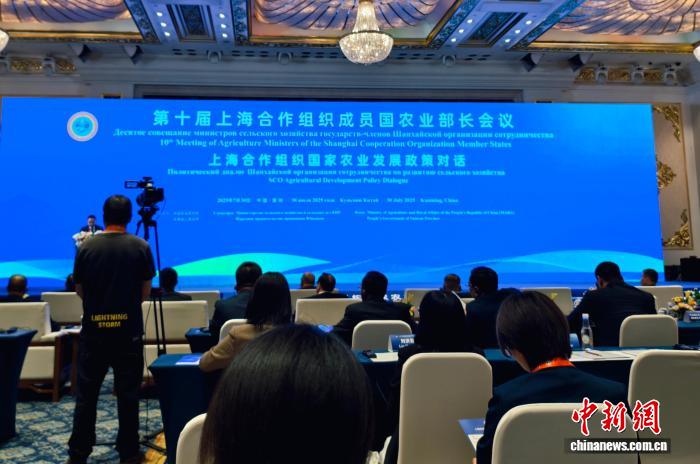
上合组织国家农业专家昆明共议农村发展与减贫合作
Zhong Guo Xin Wen Wang· 2025-07-30 21:26
Core Viewpoint - The Shanghai Cooperation Organization (SCO) member states are focusing on agricultural development policies, emphasizing rural development, poverty reduction, and smart agriculture during the recent dialogue held in Kunming, Yunnan [1][4]. Group 1: Agricultural Development Strategies - Yunnan province is advancing agricultural structural adjustments by developing high-quality, high-value, and high-tech agriculture, which enhances overall agricultural quality and competitiveness [2]. - The SCO countries face challenges such as uneven water resource distribution and limited land resources, necessitating regional cooperation in agricultural innovation and infrastructure [2]. - Cambodia is implementing three mechanisms to promote poverty reduction through agriculture, including building modern agricultural communities and providing technical support [3]. Group 2: Regional Cooperation and Knowledge Sharing - Myanmar is looking to leverage the experiences of neighboring countries like China, Thailand, and India in poverty reduction and agricultural infrastructure development [5]. - The emphasis is on sustainable development and support for smallholder farmers in the poultry industry to ensure food security and promote green transformation [2].
中国中亚合作之路越走越宽广(环球热点)
Ren Min Ri Bao Hai Wai Ban· 2025-06-25 22:50
Poverty Alleviation Cooperation - The China-Central Asia Poverty Alleviation Cooperation Center was established during the second China-Central Asia Summit, aiming to leverage Xinjiang's advantages to implement effective projects that enhance food production, employment, and farmers' income [3][4] - The cooperation is seen as a response to Central Asia's urgent need for revitalization and capacity building, with a focus on sharing China's poverty alleviation experiences [3][4] - Future cooperation should consider the different national conditions and development stages of each country, emphasizing sustainable and complementary advantages [4][5] Educational Exchange Cooperation - The China-Central Asia Educational Exchange Cooperation Center was unveiled, promoting collaboration in vocational education and joint research in fields like energy, agriculture, and artificial intelligence [6][7] - Recent initiatives include the establishment of the China-Central Asia Industry-Education Integration Alliance and various cooperative agreements among universities [6][7] - The focus is on cultivating high-quality talent and enhancing mutual understanding through educational exchanges, particularly in emerging fields [7] Desertification Prevention Cooperation - The China-Central Asia Desertification Prevention Cooperation Center was established, with a focus on enhancing regional capabilities in combating desertification through technology and project collaboration [8][10] - China has been actively involved in international cooperation on desertification, sharing its experiences and technologies to address common challenges faced by both China and Central Asia [8][10] - Future efforts will include international training and education to cultivate talent in desertification prevention [10] Trade Facilitation Cooperation - The China-Central Asia Trade Facilitation Cooperation Platform was launched to enhance trade connections and simplify trade procedures between China and Central Asia [11][12] - The platform aims to promote high-quality trade development and diversify trade structures, leveraging existing trade agreements and cooperation mechanisms [11][12] - The establishment of this platform reflects a strategic approach to enhance economic ties and facilitate mutual growth in various sectors, including digital economy and clean energy [12]
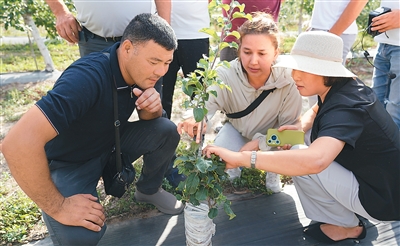
拓展农业合作 深化减贫交流(携手同行:中国中亚合作提质升级)
Ren Min Ri Bao· 2025-06-21 21:47
Core Viewpoint - The collaboration between China and Central Asian countries in agriculture is deepening, enhancing agricultural investment, industry, and trade, which benefits both regions and contributes to poverty alleviation [1] Group 1: Agricultural Cooperation and Trade - China welcomes Central Asian countries to promote their agricultural products through significant exhibitions like the China International Import Expo [1] - Agricultural cooperation has led to increased crop yields and quality in Central Asia, enriching the diets of people in both regions [1] - The West Xi'an Aijiu Group has established various agricultural processing facilities in Kazakhstan, including oil and flour production, which supports local farmers through "order agriculture" agreements [3][4] Group 2: Employment and Training Initiatives - The establishment of vocational training programs for farmers in Central Asia aims to enhance agricultural skills and knowledge, with the first training class set to begin in 2025 [2][8] - Local workers, like Manshuk, have benefited from stable employment and opportunities for family reunification through Chinese agricultural investments [3] Group 3: Technological and Methodological Advancements - Chinese agricultural technology, such as water-saving irrigation, has significantly improved cotton yields in Uzbekistan, demonstrating the effectiveness of Chinese methods in local contexts [7][8] - The introduction of e-commerce and modern sales techniques has transformed the marketing strategies of Central Asian agricultural producers, allowing them to access the Chinese market more effectively [5][6] Group 4: Broader Economic Impact - The agricultural collaboration is part of a larger strategy to enhance economic ties between China and Central Asia, with investments in agricultural parks and processing facilities across multiple countries [4] - The success of these initiatives is expected to lead to increased income for local populations and improved living standards [4][5]