冷数据存储

Search documents
都快2026年了,机械硬盘居然涨价了
芯世相· 2025-12-27 01:06
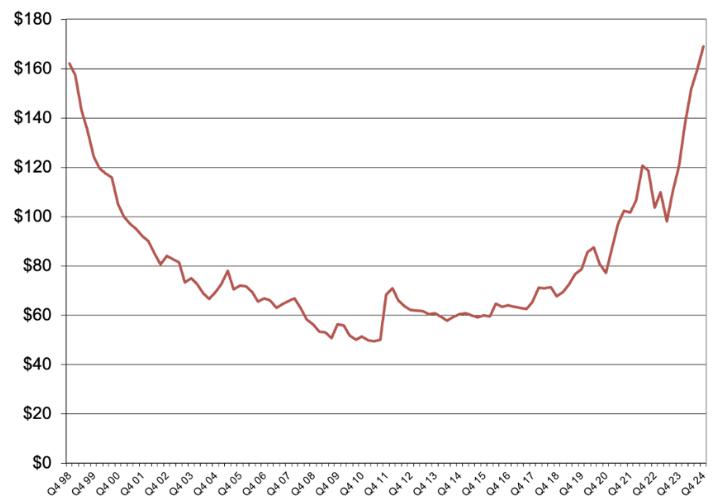
Core Viewpoint - The article discusses the unexpected resurgence of mechanical hard drives (HDDs) in 2024, driven by the demand for cold data storage due to artificial intelligence (AI) infrastructure, leading to significant price increases and a notable rise in sales volume after nearly a decade of decline [5][6][10]. Group 1: Market Dynamics - The consumer electronics market has struggled to profit from AI advancements, facing price increases in memory and flash storage, which have also affected downstream products like smartphones and PCs [5]. - In 2024, HDD shipments are projected to grow for the first time in ten years, with average prices returning to levels not seen since 1998, resulting in a 50% increase in overall sales compared to 2023 [6][10]. - Major HDD manufacturers, Western Digital and Seagate, have raised prices across the board, attributing this to increased demand from AI and data centers, similar to past trends seen in the graphics card market [8][10]. Group 2: Data Storage Trends - The article distinguishes between "hot" and "cold" data, with hot data requiring high-speed access and cold data being less frequently accessed but voluminous, leading to different storage needs [10][11]. - HDDs are favored for cold data storage due to their lower cost per GB compared to solid-state drives (SSDs), which are more suitable for hot data due to their speed and reliability [11][12]. - The demand for cold data storage is increasing as AI models generate vast amounts of data, revitalizing the HDD market that had been stagnant for years [11][12]. Group 3: Manufacturer Strategies - HDD manufacturers are controlling production to maintain prices, with Western Digital and Seagate opting not to expand capacity despite rising demand [12][14]. - The market for consumer-grade HDDs is shrinking, with manufacturers focusing on enterprise-level products to maximize profits, as indicated by a significant drop in revenue share from over 20% to below 10% for consumer-grade HDDs [24][22]. - The competitive landscape is shifting, with SSDs becoming more prevalent, but HDDs still hold a cost advantage in specific enterprise applications, allowing manufacturers to maintain a stable market despite the overall decline in consumer demand [22][24].


都快2026年了,机械硬盘居然涨价了
3 6 Ke· 2025-12-23 23:48
Core Insights - The consumer electronics market has struggled for years without profiting from artificial intelligence (AI), facing significant price increases in storage components due to AI infrastructure demands [1][5] - Mechanical hard drives (HDDs), which have seen a decline in shipments for nearly a decade, are experiencing a resurgence in 2024, with a notable increase in shipment volume and average selling prices returning to levels not seen since 1998 [1][8] Group 1: Market Dynamics - The average price of mechanical hard drives has significantly increased, with major manufacturers like Western Digital and Seagate raising prices due to heightened demand from AI and data centers [3][10] - The demand for HDDs is primarily driven by the need for "cold data storage," which is less frequently accessed but requires large storage capacities, making HDDs a cost-effective choice compared to solid-state drives (SSDs) [5][7] Group 2: Competitive Landscape - The market for HDDs is characterized by a lack of new production capacity, as major manufacturers are prioritizing higher-margin enterprise products over consumer-grade offerings, leading to price increases in the consumer market [10][24] - The competitive landscape is shifting, with SSDs becoming more prevalent, but HDDs still hold a significant cost advantage for large-scale cold storage needs, maintaining a price ratio of 7:1 compared to enterprise SSDs [21][22] Group 3: Industry Trends - The trend of rising prices in the storage market is not isolated to HDDs; other sectors, such as memory chips, are also experiencing price surges, impacting various consumer electronics [26][30] - Companies like Micron are exiting the consumer storage market to focus on larger-scale strategic clients, indicating a broader industry shift towards enterprise and data center solutions [28]
都快2026年了,机械硬盘居然涨价了
远川研究所· 2025-12-23 13:12
Core Viewpoint - The article discusses the unexpected resurgence of mechanical hard drives (HDDs) driven by the demand for cold data storage in the context of artificial intelligence (AI) infrastructure, leading to significant price increases and a notable rise in sales volume for the first time in a decade [6][12]. Group 1: Market Dynamics - The consumer electronics market has struggled to profit from AI advancements, with prices for memory and flash storage rising, impacting downstream products like smartphones and PCs [6]. - Mechanical hard drives, which had seen a decline in shipments for nearly ten years, experienced a sales increase in 2024, with average prices returning to levels not seen since 1998, resulting in a 50% increase in overall sales revenue compared to 2023 [6][12]. - Major HDD manufacturers, Western Digital and Seagate, have raised prices across the board, attributing this to increased demand from AI and data centers [8][12]. Group 2: Data Storage Needs - Data is categorized into "hot" and "cold" based on access frequency, with hot data requiring high throughput and cold data being less frequently accessed but larger in volume [9][10]. - Cold data, which includes backups and records, is primarily stored on HDDs due to their lower cost per GB compared to solid-state drives (SSDs), which are about seven times more expensive [11][20]. - The demand for cold data storage is growing rapidly as AI models generate vast amounts of data, leading to increased HDD demand and a supply shortage [11][12]. Group 3: Industry Trends - HDD manufacturers are not expanding production capacity despite rising demand, focusing instead on maintaining profits by prioritizing enterprise users over consumer products [11][22]. - The market share of consumer-grade HDDs is expected to decline significantly, with revenue contributions from Western Digital and Seagate dropping from over 20% to below 10% [22]. - The competitive landscape for HDDs is stable, as the cost reduction of SSDs has slowed, allowing HDDs to maintain a niche market in enterprise-level cold storage [20][22]. Group 4: Broader Implications - The article highlights a trend where semiconductor companies are prioritizing supply for larger strategic customers, such as data centers, over consumer products, as seen with Samsung and Micron [23][24]. - NVIDIA is also shifting focus from gaming graphics cards to data center GPUs, indicating a broader industry trend towards prioritizing AI and data center needs over traditional consumer markets [26].

研报 | AI推理需求导致Nearline HDD严重缺货,预计2026年QLC SSD出货有望趁势爆发
TrendForce集邦· 2025-09-15 05:46
Core Insights - The article highlights the impact of AI-generated data on global data center storage, leading to a shortage of Nearline HDDs and a shift towards high-performance, high-cost SSDs, particularly QLC SSDs, which are expected to see explosive growth in shipments by 2026 [2][5]. Data Center Storage Trends - Nearline HDDs have traditionally been the main solution for cold data storage due to their low cost per GB, but the demand for cold data storage is rapidly increasing with the expansion of Inference AI applications [2]. - SSDs are primarily responsible for hot and warm data storage due to their high read and write performance, with QLC SSDs offering better efficiency and approximately 30% lower power consumption compared to Nearline HDDs [2]. Supply Chain and Market Dynamics - Major HDD manufacturers have not planned to expand production lines, resulting in delivery times for Nearline HDDs extending from weeks to over 52 weeks, exacerbating the storage gap for cloud service providers (CSPs) [5]. - CSPs in North America are considering the use of SSDs for cold data storage due to the severe HDD shortage, but face challenges related to cost and supply chain management [5][6]. Pricing and Profitability - The demand shift towards SSDs presents an opportunity for suppliers to improve profit margins, but limited capacity for high-capacity products means suppliers are unlikely to significantly lower prices [6]. - A price negotiation is anticipated between buyers and sellers, leading to an expected 5-10% increase in overall Enterprise SSD contract prices in Q4 2025 [6].