
减产控销

Search documents
积极信号!减产控销破“内卷”,多因素支撑光伏硅料价格上涨!
证券时报· 2025-08-23 11:51
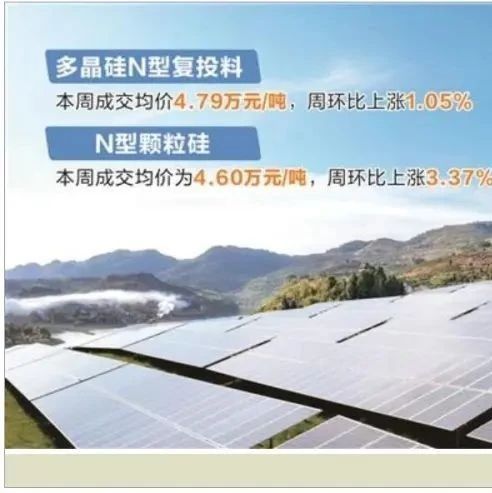
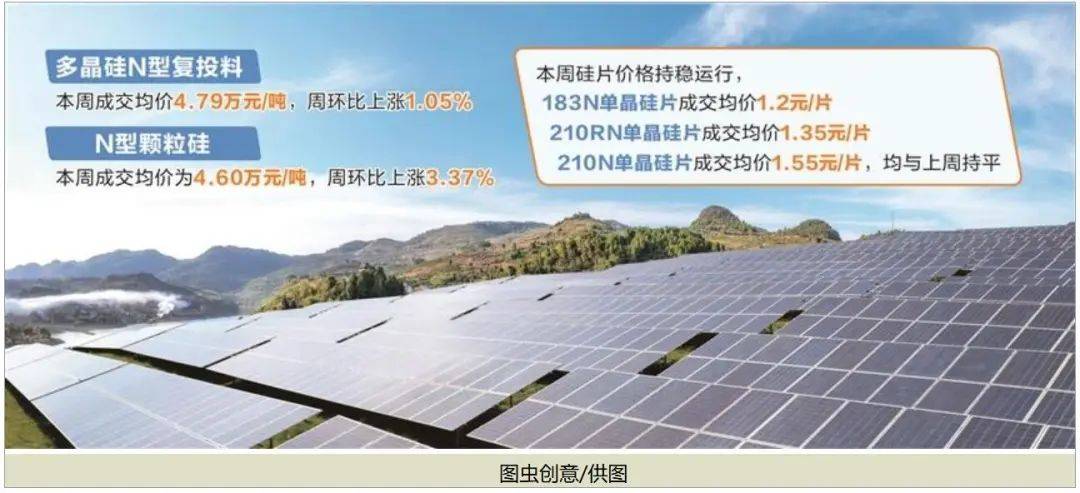
Core Viewpoint - The article discusses the recent trends in the polysilicon market, highlighting price increases due to supply constraints and production cuts by major manufacturers, while also addressing the challenges faced in the silicon wafer and battery sectors. Group 1: Polysilicon Market Trends - The average transaction price for N-type polysilicon has risen to 47,900 yuan/ton, a week-on-week increase of 1.05%, while N-type granular silicon reached 46,000 yuan/ton, up 3.37% week-on-week [3] - Major polysilicon manufacturers are implementing production cuts, which are expected to lead to increased costs and a continued rise in market prices due to supply constraints and a "buy high, not low" mentality among downstream buyers [3][5] - Despite the increase in production planned by some manufacturers, the overall inventory levels are expected to rise, with an estimated additional inventory of about 20,000 tons in August and September [5] Group 2: Silicon Wafer Market Dynamics - Silicon wafer prices have remained stable, with average transaction prices for 183N, 210RN, and 210N wafers at 1.20 yuan/piece, 1.35 yuan/piece, and 1.55 yuan/piece respectively, unchanged from the previous week [5] - The market sentiment for silicon wafers is positive due to recent policy advancements, but the lack of significant recovery in end-user demand has led to a stalemate between buyers and sellers [5][6] - Some silicon wafer manufacturers have begun to slightly increase prices, with new quotes for 183N at 1.25 yuan/piece, 210RN at 1.40 yuan/piece, and 210N at 1.60 yuan/piece, contingent on downstream acceptance [6] Group 3: Battery and Component Pricing - The average transaction prices for battery cells (183N, 210RN, and 210N) remain stable at 0.29 yuan/W, 0.285 yuan/W, and 0.285 yuan/W respectively, reflecting ongoing pressure from upstream and downstream market dynamics [7] - The component market is experiencing weak demand, with new orders being minimal and primarily focused on fulfilling previous contracts, leading to lower overall transaction prices [7] - Recent bidding prices for components have ranged from 0.68 yuan/W to 0.75 yuan/W, indicating a need for careful observation of policy implementation to gauge future market movements [7]

积极信号!减产控销破“内卷”,多因素支撑光伏硅料价格上涨!
Sou Hu Cai Jing· 2025-08-23 08:45
Core Viewpoint - The recent increase in polysilicon prices is attributed to production cuts and controlled sales by polysilicon manufacturers, which have alleviated market supply pressure [1][3]. Polysilicon Market - The average transaction price for N-type polysilicon has risen to 47,900 yuan/ton, a week-on-week increase of 1.05%, while N-type granular silicon has reached 46,000 yuan/ton, up 3.37% week-on-week [1]. - Major polysilicon producers are implementing varying degrees of production cuts, with the largest reductions from the top two companies, leading to increased overall costs and expectations for price increases [1]. - The controlled sales strategy by polysilicon companies has further tightened supply, contributing to a "buy high, not low" mentality among downstream buyers, resulting in increased procurement demand [1]. Supply Chain Dynamics - Despite the price increases, there are still pressures in the silicon supply chain, with some manufacturers planning to resume production due to the significant price rise, although inventory levels are expected to increase [3]. - The silicon industry association anticipates an additional inventory accumulation of approximately 20,000 tons in August and September [3]. - The average price of silicon wafers has remained stable, with 183N, 210RN, and 210N wafer prices at 1.20 yuan/piece, 1.35 yuan/piece, and 1.55 yuan/piece, respectively, unchanged from the previous week [3]. Future Outlook - The silicon industry association predicts that polysilicon prices will continue to rise due to policies promoting price increases, with some wafer manufacturers already starting to raise prices slightly [4]. - Current prices for 183N, 210RN, and 210N wafers are reported at 1.25 yuan/piece, 1.40 yuan/piece, and 1.60 yuan/piece, respectively, with future price adjustments dependent on downstream acceptance [4]. - The battery segment's average prices for 183N, 210RN, and 210N remain stable at 0.29 yuan/W, 0.285 yuan/W, and 0.285 yuan/W, respectively, with limited volatility expected in the short term due to weak terminal demand [4]. Component Market - The component market continues to experience weak terminal demand, with new order volumes being low and primarily focused on fulfilling previous orders [5]. - Recent bidding prices for components range from 0.68 yuan/W to 0.75 yuan/W, with rising prices affecting market sentiment and requiring close observation of policy implementation [5].
积极信号!减产控销破“内卷” 多因素支撑光伏硅料价格上涨!
Zheng Quan Shi Bao· 2025-08-23 08:40
Group 1 - The average transaction price of N-type polysilicon has increased to 47,900 yuan/ton, up 1.05% week-on-week, while N-type granular silicon has reached 46,000 yuan/ton, up 3.37% week-on-week [1] - The reduction in production and sales control by polysilicon companies has alleviated market supply pressure, with major companies implementing varying degrees of production cuts [1][2] - Despite the increase in prices, there is still pressure in the supply chain, with an expected inventory increase of approximately 20,000 tons in August and September [1] Group 2 - The silicon industry association remains optimistic, predicting that the average price of polysilicon will continue to rise due to production cuts and increased costs, despite inventory pressures [2] - The prices of silicon wafers have remained stable, with 183N, 210RN, and 210N wafer prices holding steady at 1.20 yuan/piece, 1.35 yuan/piece, and 1.55 yuan/piece respectively [2] - The market for silicon wafers is currently in a stalemate, with stable shipment rhythms from wafer manufacturers but weak demand from the battery and component sectors [2][3] Group 3 - The average transaction prices for battery cells remain unchanged, with 183N, 210RN, and 210N prices at 0.29 yuan/W, 0.285 yuan/W, and 0.285 yuan/W respectively [3] - The battery segment faces significant pressure from upstream and downstream, with ongoing weak terminal demand and requests for price reductions from component manufacturers [3] - The component market is experiencing weak demand, with new orders being limited and prices for recent bids ranging from 0.68 yuan/W to 0.75 yuan/W [3]

减产控销破“内卷” 多因素支撑光伏硅料价格上涨
Sou Hu Cai Jing· 2025-08-22 22:17
Group 1 - The average transaction price of N-type polysilicon has increased to 47,900 yuan/ton, up 1.05% week-on-week, while N-type granular silicon has reached 46,000 yuan/ton, up 3.37% week-on-week [1] - The reduction in production and sales control by polysilicon companies has alleviated market supply pressure, with major companies implementing varying degrees of production cuts [1][2] - Despite the increase in prices, there is still pressure in the supply chain, with an expected inventory increase of approximately 20,000 tons in August and September [1][2] Group 2 - The silicon wafer prices have remained stable, with average transaction prices for 183N, 210RN, and 210N silicon wafers at 1.20 yuan/piece, 1.35 yuan/piece, and 1.55 yuan/piece respectively [2] - The market sentiment for silicon wafers is positive due to recent policy advancements, but terminal demand has not significantly improved, leading to a stalemate between upstream and downstream [2][3] - Some silicon wafer manufacturers have started to slightly increase prices, with new quotes for 183N at 1.25 yuan/piece, 210RN at 1.40 yuan/piece, and 210N at 1.60 yuan/piece, depending on downstream acceptance [2] Group 3 - The average transaction prices for battery cells remain unchanged at 0.29 yuan/W for 183N, 0.285 yuan/W for 210RN, and 0.285 yuan/W for 210N [3] - The battery cell segment is under pressure due to weak terminal demand, with ongoing requests for price reductions from module manufacturers [3] - The opening bid prices for modules have ranged from 0.68 yuan/W to 0.75 yuan/W, indicating a need for observation regarding the implementation of policies [3]