
出海欧洲

Search documents
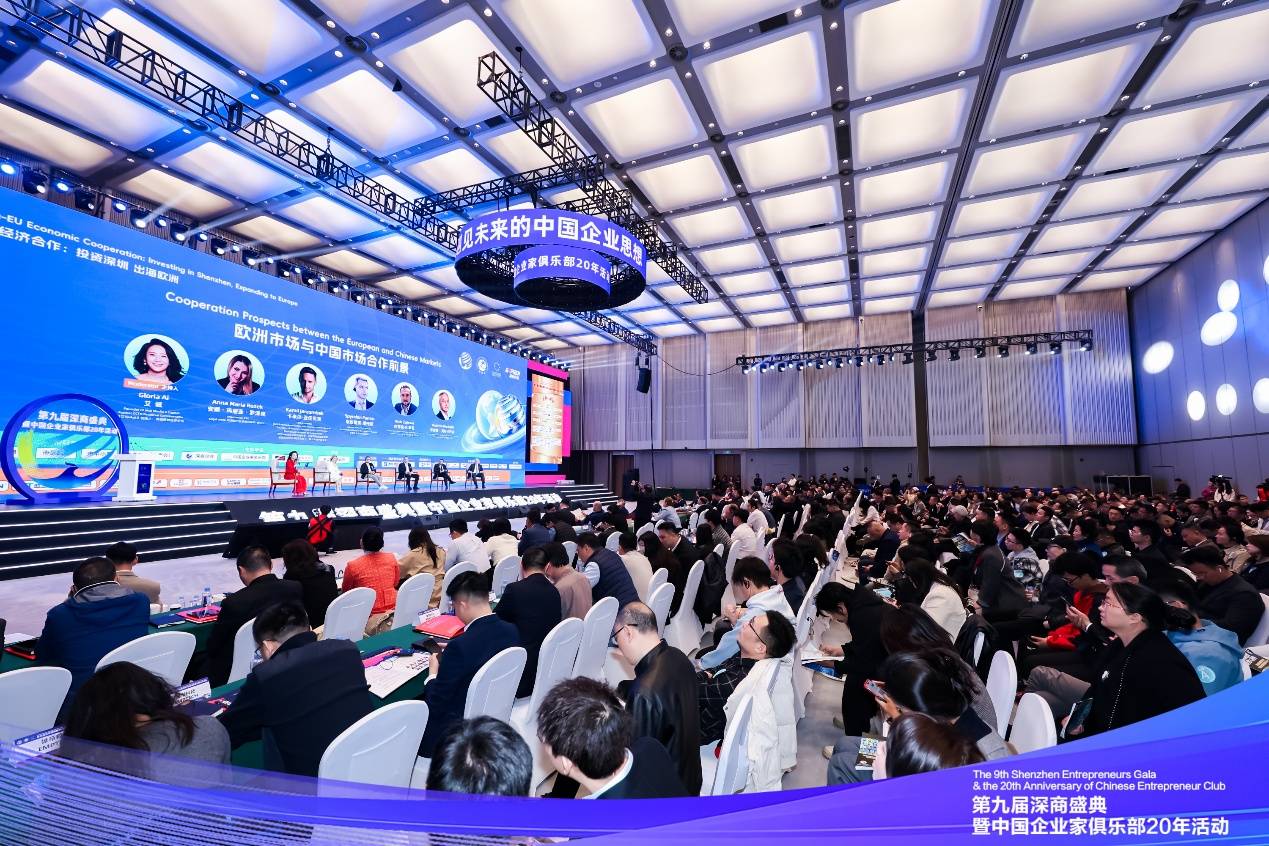
解锁新能源、金融科技合作密码!“中欧经济合作论坛”在深圳举行
Sou Hu Cai Jing· 2026-01-12 12:13
Core Insights - The ninth Shenzhen Business Convention and the China-Europe Economic Cooperation Forum focused on "Investing in Shenzhen, Going to Europe," discussing strategic emerging industries such as new energy, fintech, life health, cultural tourism, and digital economy [1] Group 1: Trade and Economic Cooperation - China and Europe have a strong economic symbiosis, with a trade volume of $749.34 billion in the first 11 months of 2025, marking a 4.6% year-on-year increase [2] - Shenzhen's exports to Europe reached 42.09 billion yuan in the first 11 months of 2025, a 3.4% increase, with nearly 80% of exports being electromechanical products [4] Group 2: Industry Collaboration - The cooperation between China and Europe has evolved from simple trade to technology exchange and industrial chain collaboration, creating significant economic growth opportunities [4] - New energy, fintech, and cultural tourism are identified as key areas for potential collaboration, with specific emphasis on the synergy between China's manufacturing strengths and Europe's green transition needs [8][10] Group 3: Compliance and Localization - Compliance has become a critical capability for companies entering the European market, with complex legal frameworks such as GDPR and CBAM posing significant challenges [11] - Localized data management and carbon emission tracking are highlighted as essential yet often overlooked requirements for successful market entry [11]

CEO锦囊·出海季|出海欧洲,新机会来了?
3 6 Ke· 2025-06-06 11:05
Core Insights - The European market presents both challenges and opportunities for Chinese companies looking to expand internationally, with a focus on understanding local characteristics and consumer behavior [3][5][9] Group 1: Market Opportunities - The European market is characterized as a large and high-quality market, with various sub-markets that require localized strategies for successful entry [3][4] - Platforms like TikTok are successfully establishing a presence in Europe due to their localized operational advantages, indicating a growing opportunity in e-commerce [4][5] - Different regions within Europe, such as Germany and Hungary, offer unique advantages for market entry, including strong industrial bases and favorable investment policies [5][7] Group 2: Consumer Behavior and Trends - European consumers are becoming more cautious and rational in their purchasing decisions, influenced by economic uncertainties and a shift away from materialism [9][10] - There is a growing trend towards environmentally conscious consumption, where consumers are willing to pay a premium for products that align with sustainability values [12][13] - The demand for high-quality, cost-effective products is prevalent, with consumers increasingly focused on functionality and value [10][11] Group 3: Market Entry Challenges - Entering the European market requires compliance with various regulations, including trademark registration, tax obligations, and product certifications [14][15] - The logistics and supply chain in Europe can be complex and costly, necessitating careful planning and consideration of transportation methods [14][16] - Cultural and linguistic differences across European countries pose additional challenges for market penetration and brand communication [8][15] Group 4: Branding and Marketing Strategies - Effective branding in Europe requires a deep understanding of local consumer preferences and values, with an emphasis on storytelling and brand positioning [17][18] - Companies should focus on product quality and functionality, especially in technology sectors, to compete effectively against local brands [18][19] - Utilizing flexible employment models can help companies manage costs and adapt to local labor regulations during the initial stages of market entry [19]
