分化时代

Search documents
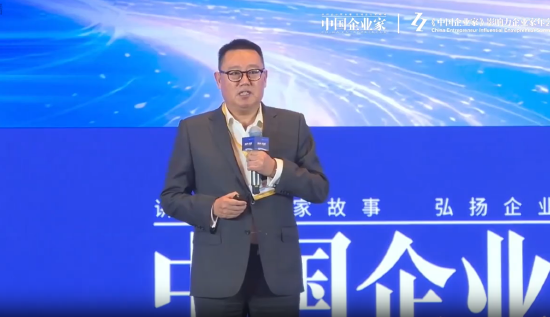
侯孝海谈新时代最大挑战:市场进入“分而化之”时代,大单品打天下的时代已终结
Xin Lang Cai Jing· 2025-12-10 09:22
Core Insights - The core theme of the conference is "Emergence·Infinity - Co-creating a New Form of Intelligent Business" [1][7] - The speaker, Hou Xiaohai, emphasizes the challenges and opportunities in the current business landscape, particularly in the beer industry [3][5] Group 1: Challenges - The first challenge identified is differentiation, which is seen as the biggest challenge in the new era, affecting demand, products, and consumer experiences [3][9] - The second challenge is the restructuring of the commercial foundation, where traditional distribution channels are being disrupted by instant retail, changing the entire industry chain [3][9] - The third challenge is internal competition (involution), which arises from supply-demand imbalances and has led to significant capacity reductions in the beer industry, with companies like China Resources Beer closing 40 factories and reducing over 5 million tons of capacity [4][10] Group 2: Opportunities - Opportunities arise from product iteration, driven by technology and quality improvements, which can lead to significant market advantages [5][10] - The development of digital intelligence (digitalization) is expected to play a crucial role in the recovery and growth of Chinese consumer goods companies over the next five years [5][10] - A focus on personalized strategies is necessary to meet the evolving consumer demands in the differentiation era [5][10] Group 3: New Management Concepts - The concept of co-integration and co-existence within the industry chain and value chain is emphasized, advocating for collaboration rather than competition among companies [6][11] - The "three precision management" approach—lean, streamlined, and detailed management—is recommended for companies to navigate tighter economic conditions [6][11] Group 4: Green Development - Green development should be viewed as a driving force and competitive advantage rather than a mere obligation, influencing industry structure and brand value [6][12]


寒冬来临,房地产还有未来吗?
Sou Hu Cai Jing· 2025-10-22 05:05
Core Viewpoint - The real estate industry in China is transitioning from a phase of rapid growth to a new stage characterized by structural adjustments and a focus on high-quality development, indicating a future with different dynamics compared to the past two decades [2][3][6]. Group 1: Market Trends - New home sales are projected to drop to approximately 900 million square meters by 2025, a 50% decrease compared to 2021 [2]. - In the first half of 2025, the national commodity housing sales area saw a year-on-year growth of only 3.5%, marking the lowest growth rate in nearly five years [2]. - The average price of second-hand residential properties in 100 cities was 13,691 yuan per square meter in June, reflecting a year-on-year decline of 7.26% [2]. Group 2: Future Directions - The focus will shift from "incremental development" to "stock operation," emphasizing the revitalization and fine-tuning of existing properties rather than new construction [3]. - The concept of housing is evolving from merely being a "living machine" to creating "living scenes," where the quality of life and community engagement are prioritized [3]. - The market will transition from a "universal appreciation myth" to a "differentiation era," where property values will vary significantly based on location and quality [3]. Group 3: Property Value Determinants - Properties in core cities with scarce resources and strong product capabilities are expected to remain resilient, while properties in areas lacking industrial and population support will revert to their fundamental residential nature [4]. - The value of real estate will increasingly be determined by the quality of life it offers [5]. Group 4: Industry Resilience - The demand for housing is perpetual, indicating that while the industry has a future, individual companies may face challenges, particularly those with high leverage [6].