
制度开放

Search documents
【光大研究每日速递】20260318
光大证券研究· 2026-03-18 07:58
Macro Insights - The "14th Five-Year Plan" introduces three new policy ideas: the establishment of the "investment in people" concept to enhance human capital quality, a focus on "first establish then break" in policy formulation to ensure systemic resilience during the transition period, and a dual-driven approach of "innovation-driven" and "institutional openness" to reshape global competitive advantages [5]. Fixed Income - Economic data from January to February 2026 shows that the industrial added value growth rate is within the range of the same period in the past two years. Fixed asset investment growth has significantly increased after a decline since Q2 2025, and retail sales growth has also improved. The government bond yield curve has steepened, and small-cap stocks have outperformed in equity assets. Market sentiment in the bond market is under pressure due to rising inflation expectations and geopolitical tensions [6]. Banking - The newly released "Interim Measures for the Regulatory Rating of Wealth Management Companies" aims to guide the high-quality development of the wealth management industry, emphasizing risk-based and capability-oriented assessments. The market anticipates a shift towards quality improvement over quantity expansion in the wealth management sector, with an estimated annual growth of 2-3 trillion yuan, reflecting a year-on-year decrease [7]. Materials - The price of iridium has increased by 12% this week and has risen by 71% year-to-date. In contrast, prices for beryllium and neodymium oxide have decreased, while uranium prices have risen. The price of silicon for photovoltaic materials has also declined, indicating mixed trends across various new materials [8]. Hydrogen Energy - The Ministry of Industry and Information Technology, the Ministry of Finance, and the National Development and Reform Commission have jointly issued a notice to launch hydrogen energy comprehensive application pilot projects. The policy framework aims to scale down costs and establish a closed-loop ecosystem for hydrogen energy applications, with a focus on expanding application scenarios, particularly in green ammonia and industrial settings [9]. Company Performance - For the year 2025, Jiantao Laminated Board (1888.HK) reported a revenue of 20.4 billion HKD, a year-on-year increase of 10.0%, and a net profit of 2.442 billion HKD, up 83.6%. This growth is attributed to multiple price increases in copper-clad laminate products and a significant recovery in fair value gains [9]. - Qiu Tai Technology (1478.HK) achieved a revenue of 20.877 billion RMB in 2025, a 29.3% increase year-on-year, with a gross margin improvement of 1.7 percentage points to 7.8%. The net profit surged by 435.2%, driven by a focus on mid-to-high-end camera modules and expansion into automotive and IoT sectors [10].

【宏观】通读“十五五”规划的三个新思路——《“十五五”规划》系列报告五(赵格格/王佳雯/刘星辰/周可)
光大证券研究· 2026-03-18 07:58
Core Viewpoint - The "14th Five-Year Plan" emphasizes proactive policy measures to address challenges from international order restructuring, domestic demographic changes, and economic transformation, with "new productive forces" as the core engine [5]. Policy Changes - The concept of "investing in people" is fully established to enhance human capital quality, counteract the demographic turning point, and unleash consumer potential, creating a new growth driver led by domestic demand [6]. - Policy formulation focuses on "establishing before breaking," ensuring systemic resilience and bottom-line safety during the transition period. This includes enhancing industrial chain resilience and optimizing traditional industries to avoid hollowing out, while also ensuring a reliable and orderly transition from fossil to non-fossil energy sources [6]. - The dual drive of "innovation-driven" and "institutional openness" is maintained to reshape global competitive advantages. This involves accelerating technological progress to lead industrial upgrades and aligning with high-standard trade agreements, particularly in services, digital trade, and cross-border data flow [6].

光大证券晨会速递-20260317
EBSCN· 2026-03-17 01:03
Macro Analysis - The economic data for January-February 2026 shows a positive start, with production, consumption, and investment growth rates exceeding market expectations. This is attributed to strong consumer performance driven by the extended Spring Festival holiday and pre-released funds for "old-for-new" exchanges, robust export performance, and improved corporate profits due to narrowing PPI declines, alongside effective investment policies from 2025 [1][2][3]. Industry Research Real Estate - As of March 15, 2026, new home transactions in 20 cities totaled 98,000 units, reflecting a decrease of 29.9%. Notable declines include Beijing at 4,764 units (-28%), Shanghai at 15,000 units (-14%), and Shenzhen at 2,866 units (-59%). In the secondary housing market, 10 cities recorded 174,000 transactions, down 8.0%, with Beijing at 30,000 units (-7%), Shanghai at 48,000 units (-2%), and Shenzhen at 9,845 units (-13%) [4]. Company Research Jiang Tao Laminated Board (1888.HK) - For the full year 2025, the company reported revenue of HKD 20.4 billion, a year-on-year increase of 10.0%, and a net profit of HKD 2.442 billion, up 83.6%. This growth is driven by multiple price increases in copper-clad laminate products, enhancing gross margins, and a significant recovery in fair value changes of equity instruments, which contributed HKD 504 million compared to a loss of HKD 79 million in 2024. The company is expected to maintain profit growth due to rising prices and potential growth in high-end electronic fabrics, leading to an upward revision of net profit forecasts for 2026-2027 by 28% and 26% to HKD 5.07 billion and HKD 6.08 billion, respectively, with a new forecast for 2028 at HKD 6.71 billion. The rating is maintained at "Buy" [5].
《十五五规划》系列报告五:通读十五五规划的三个新思路
EBSCN· 2026-03-16 12:40
Group 1: Economic Development Strategies - The "14th Five-Year Plan" emphasized "innovation" and "reform," while the "15th Five-Year Plan" establishes "new quality productivity" as the core engine for economic growth[4] - The "15th Five-Year Plan" identifies three new policy changes: a comprehensive establishment of the "investment in people" concept, a focus on "establishing before breaking" in policy formulation, and a dual drive of "innovation-driven" and "institutional openness"[3] - The GDP growth target for the "15th Five-Year Plan" is set at 5% annually, reflecting a shift towards quality over quantity in economic growth[7] Group 2: Key Indicators and Goals - The urbanization rate is targeted to increase from 67.9% in 2025 to 71% by 2030, indicating a focus on urban development[7] - The plan aims for the per capita disposable income to grow by 5% annually, aligning with GDP growth[10] - The proportion of non-fossil energy in total energy consumption is expected to increase by 3.3 percentage points during the "15th Five-Year Plan" period[9] Group 3: Investment and Infrastructure - The "15th Five-Year Plan" outlines 109 major projects, an increase from 102 in the "14th Five-Year Plan," focusing on enhancing industrial resilience and green transformation[23] - The plan emphasizes the construction of a new energy system, including renewable energy sources, to ensure energy security amid geopolitical risks[25] - Investment in human resources and public services is prioritized, with a focus on improving education, healthcare, and elderly care services[30] Group 4: Consumption and Economic Interaction - The "15th Five-Year Plan" aims to significantly increase the resident consumption rate, with specific measures to enhance income and improve the consumption environment[30] - Policies will focus on expanding service consumption and improving the quality of supply to meet diverse consumer needs[31] - The plan seeks to eliminate unreasonable restrictions in the consumption sector to unleash consumer potential[32]
政策优势显著,发展机遇更多,国际社会看好海南封关“红利”
Huan Qiu Shi Bao· 2025-12-19 23:07
Core Insights - The launch of the Hainan Free Trade Port marks a significant step in China's high-level opening-up strategy, attracting international attention and praise [1] - Hainan's zero-tariff policy and favorable business environment are designed to showcase China's commitment to openness amid global trade challenges [1] Group 1: Economic Impact - On the first day of the closure, customs reported zero-tariff imports valued at 360 million yuan, with additional goods benefiting from relaxed trade management measures [3] - The range of zero-tariff goods has expanded to approximately 6,600 tax items, increasing from 21% to 74%, with goods that undergo value-added processing of 30% exempt from tariffs when sold to other regions in China [3] - Hainan's GDP was approximately 113 billion USD last year, and the closure aims to attract foreign investment and stimulate economic activity [3] Group 2: Talent and Business Opportunities - The closure has led to the issuance of new business licenses and work permits for foreign personnel, highlighting the release of talent and business incentives [4] - Hainan's innovative talent policy exempts personal income tax exceeding 15% for eligible individuals, which has been positively received by business managers [4] - The number of companies seeking to establish operations in Hainan has significantly increased, positioning the region as a gateway for foreign enterprises to access China's vast market [4] Group 3: Strategic Significance - Hainan is viewed as a testing ground for China's institutional openness, with potential experiences in free movement of people, goods, capital, and data to be replicated nationwide [5] - The Hainan Free Trade Port is seen as a landmark initiative in China's foreign trade strategy, promoting domestic and international dual circulation [5]
3年引来外资7万亿元:一场招商大会背后的大湾区价值
2 1 Shi Ji Jing Ji Bao Dao· 2025-10-31 11:48
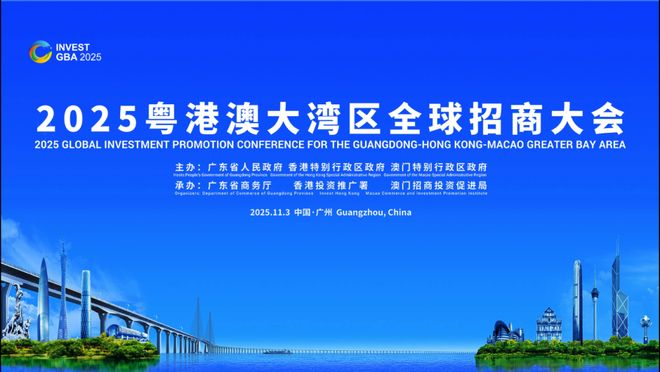
Group 1: Investment Trends in Guangdong - Amway China has invested over 2.2 billion yuan in Guangdong since 1995, completing 10 rounds of capital expansion [2] - Guangdong has established over 360,000 foreign-invested enterprises, with a 33.7% year-on-year increase in new foreign enterprises in the first nine months of this year [2] - The actual use of foreign capital in Guangdong reached 78.13 billion yuan, marking an 8.8% year-on-year growth [2] Group 2: Upcoming Investment Events - The 2025 Guangdong-Hong Kong-Macao Greater Bay Area Global Investment Conference will take place on November 3, featuring various activities to attract global investors [3] - Previous conferences have resulted in 3,645 signed projects with a total investment amount of 7 trillion yuan, including 92 projects exceeding 10 billion yuan [3] Group 3: Major Foreign Investments - BASF's Zhanjiang integrated base project represents the largest single investment by the German company, with a total investment of approximately 10 billion euros [4] - The Zhanjiang base will include a steam cracking unit with an annual capacity of 1 million tons of ethylene and various downstream facilities [4] Group 4: Foreign Companies' Perspectives - Foreign companies like ExxonMobil and Canon view Guangdong as a strategic hub for linking the Chinese market with global resources [5] - ExxonMobil's CEO highlighted Guangdong's supportive governance and infrastructure as key factors for their investment confidence [5] Group 5: Policy Support for Foreign Investment - Guangdong has implemented a series of policies to attract foreign investment, including tax incentives and financial rewards for R&D centers and headquarters [6] - The province's policies aim to create a strong magnetic field for attracting foreign capital, with rewards reaching up to 150 million yuan [6] Group 6: Shift in Foreign Investment Focus - There is a noticeable shift in foreign investment towards advanced manufacturing, with 29.1% of actual foreign capital used in Guangdong's manufacturing sector in the first seven months of the year [7] - Foreign enterprises are increasingly establishing R&D centers and supply chain hubs, integrating deeply into the local innovation ecosystem [7][8] Group 7: Historical Context and Evolution - Guangdong has evolved from attracting labor-intensive industries to becoming a hub for technology-intensive sectors, with significant investments from developed economies [9] - The province is now focusing on strategic emerging industries and integrating foreign investments into local supply chains [9] Group 8: Future Directions for Guangdong - Guangdong's "Five External Linkages" strategy aims to enhance its openness and attract more foreign investment by optimizing trade structures and international cooperation [10] - The province is expected to transition from a manufacturing center to an innovation center, enhancing its capacity to attract global innovation resources [10]
东海证券谢建斌:深化投融资综合改革,加强中小投资者保护力度
Xin Lang Cai Jing· 2025-10-29 08:53
Group 1 - The core viewpoint emphasizes the importance of deepening comprehensive reforms in investment and financing as highlighted by the Chairman of the China Securities Regulatory Commission, Wu Qing, during the Financial Street Forum [1] - China has established a multi-tiered capital market system with distinct focuses for different boards, which will enhance the differentiated positioning and synergistic effects of each segment, ultimately driving high-quality development of the real economy [1] - The introduction of the optimized QFII scheme is expected to increase the inclusiveness and convenience of the QFII mechanism, attracting long-term foreign capital to invest in quality Chinese assets and aligning capital market rules with international standards [1] Group 2 - Another key development focus is significantly improving the protection of investors' rights, with a comprehensive policy document marking a new phase in investor protection that enhances the sense of security for small and medium investors [1] - The "zero tolerance" approach towards fraudulent activities and financial misconduct is gradually optimizing the fair trading environment in the market [1] - The full-chain governance approach, which includes prevention, resolution, and punishment, aims to build a foundation of trust in the market and encourage various funds to invest sustainably, contributing to the high-quality development of the capital market [1]