
制造业景气水平

Search documents
中信建投期货:2月3日黑色系早报
Xin Lang Cai Jing· 2026-02-03 01:27
Market Overview - On February 2, the domestic commodity futures market saw widespread limit-downs, with major contracts for silver, palladium, platinum, copper, nickel, crude oil, and lithium carbonate all hitting the limit. The night session closed with the main silver contract down 20%, tin down 12.38%, crude oil down 4.8%, and gold down 3.86% [4][15]. Manufacturing Sector - China's official manufacturing PMI for January was 49.3%, a decrease of 0.8 percentage points month-on-month. The National Bureau of Statistics noted that some manufacturing sectors entered a traditional off-season, coupled with insufficient market demand, leading to a decline in manufacturing sentiment [4][15]. Shipbuilding Industry - In 2025, China's shipbuilding completion volume reached 53.69 million deadweight tons, a year-on-year increase of 11.4%, accounting for 56.1% of the global total. However, new orders received were 107.82 million deadweight tons, down 4.6% year-on-year, representing 69.0% of the global total. As of the end of December, the hand-held order volume was 27.44 million deadweight tons, up 31.5% year-on-year, making up 66.8% of the global total. China has maintained its leading position in the international shipbuilding market for 16 consecutive years [4][15]. Steel Market - On February 2, the national main port iron ore transactions were 817,000 tons, a decrease of 9.9% month-on-month. The transaction volume of construction steel from 237 mainstream traders was 46,800 tons, down 16.5% month-on-month [5][16]. - Last week, the operating rate of 247 steel mills was 79%, an increase of 0.32 percentage points from the previous week and up 1.02 percentage points year-on-year. The capacity utilization rate for ironmaking was 85.47%, a slight decrease of 0.04 percentage points week-on-week but up 0.83 percentage points year-on-year. The profit margin for steel mills was 39.39%, down 1.30 percentage points week-on-week and down 9.53 percentage points year-on-year. The average daily pig iron output was 2.2798 million tons, a decrease of 0.12 million tons week-on-week [5][16]. - The total supply of five major steel products last week was 8.2317 million tons, continuing to rise week-on-week. The production of rebar increased by 0.28 million tons to 1.9983 million tons, while hot-rolled production increased by 3.8 million tons to 3.0921 million tons. The total inventory of five major steel products was 12.7851 million tons, an increase of 214,300 tons week-on-week [5][16]. Rebar and Hot-Rolled Steel - Rebar production continued to increase slightly, with a total output of 1.9983 million tons, and total inventory rose by 234,300 tons to 4.7553 million tons. Demand decreased by 91,200 tons to 1.764 million tons. The current supply of rebar is recovering, but demand remains weak, leading to a seasonal downturn in the market. Prices are expected to remain stable in the short term, with continued narrow fluctuations [6][17]. - Hot-rolled steel production saw a slight increase, with actual output at 3.0921 million tons, up 38,000 tons week-on-week. Total inventory decreased by 22,000 tons, but the pace of reduction has slowed. Demand increased slightly by 14,500 tons to 3.1141 million tons. Traders are cautious about future market conditions, adopting a "low inventory, fast turnover" strategy [7][18]. Price Strategy - The short-term trading range for rebar 2605 is referenced at 3,050-3,200 yuan/ton, while the hot-rolled 2605 contract is referenced at 3,250-3,350 yuan/ton [8][19]. Alloy Market - The alloy market is experiencing increased volatility, with emotional trading becoming evident. Overall supply remains low, and production levels have stabilized. The cost side is seeing gradual increases, but fundamental support remains insufficient. Steel mills' production intensity is stable, and the winter restocking phase is nearing its end. Prices are expected to maintain a fluctuating pattern [9][20].



市场快讯:原油跌停,化工大面积飘绿
Ge Lin Qi Huo· 2026-02-02 09:40
Report Summary 1. Report Industry Investment Rating - Not provided 2. Core Viewpoints - As of the time of publication, the chemical sector has weakened significantly. The main contracts of crude oil and fuel oil have hit the daily limit down. Asphalt and LPG have both fallen by more than 4%, and the aromatics series including PTA, PX, pure benzene, and styrene have all declined by over 4%. The olefin series such as plastics and PP have dropped by more than 2%. The varieties with supply - demand mismatches due to Middle - East geopolitical factors in the early stage have larger declines [7]. - The decline is mainly affected by three factors: the nomination of Kevin Warsh as the Fed Chairman, which strengthens the expectation of a supportive dollar and weakens gold; the decline of China's manufacturing PMI in January 2026, indicating a slowdown in manufacturing market demand; and the cooling of geopolitical risks as the US and Iran show signs of peace talks and the cancellation of a planned military exercise [7]. - For the later trend, attention should be paid to the uncertainty of the geopolitical situation, the overseas economic downturn and the Fed's interest - rate cut rhythm, and the demand verification of chemical products from March to April after the Spring Festival [7]. - Short - term investors are advised to control positions and avoid risks, and chemical industry chain enterprises are advised to use futures or options to hedge risks [7]. 3. Summary by Related Content Current Market Situation - The chemical sector has weakened significantly. Crude oil and fuel oil main contracts have hit the daily limit down. Asphalt, LPG, aromatics series, and olefin series have all declined to varying degrees [7]. Reasons for the Decline - The nomination of Kevin Warsh as the Fed Chairman affects market sentiment and weakens gold [7]. - China's manufacturing PMI in January 2026 has declined, indicating a slowdown in market demand, and the chemical industry's peak - season expectation needs to be verified after the Spring Festival [7]. - Geopolitical risks have cooled, and the geopolitical premium of crude oil and methanol has been squeezed out [7]. Later Trend Focus - Pay attention to the uncertainty of the geopolitical situation [7]. - Overseas economic downturn and the Fed's interest - rate cut rhythm [7]. - Demand verification of chemical products from March to April after the Spring Festival [7]. Operation Suggestions - Short - term investors should control positions and avoid risks [7]. - Chemical industry chain enterprises should use futures or options to hedge risks [7].
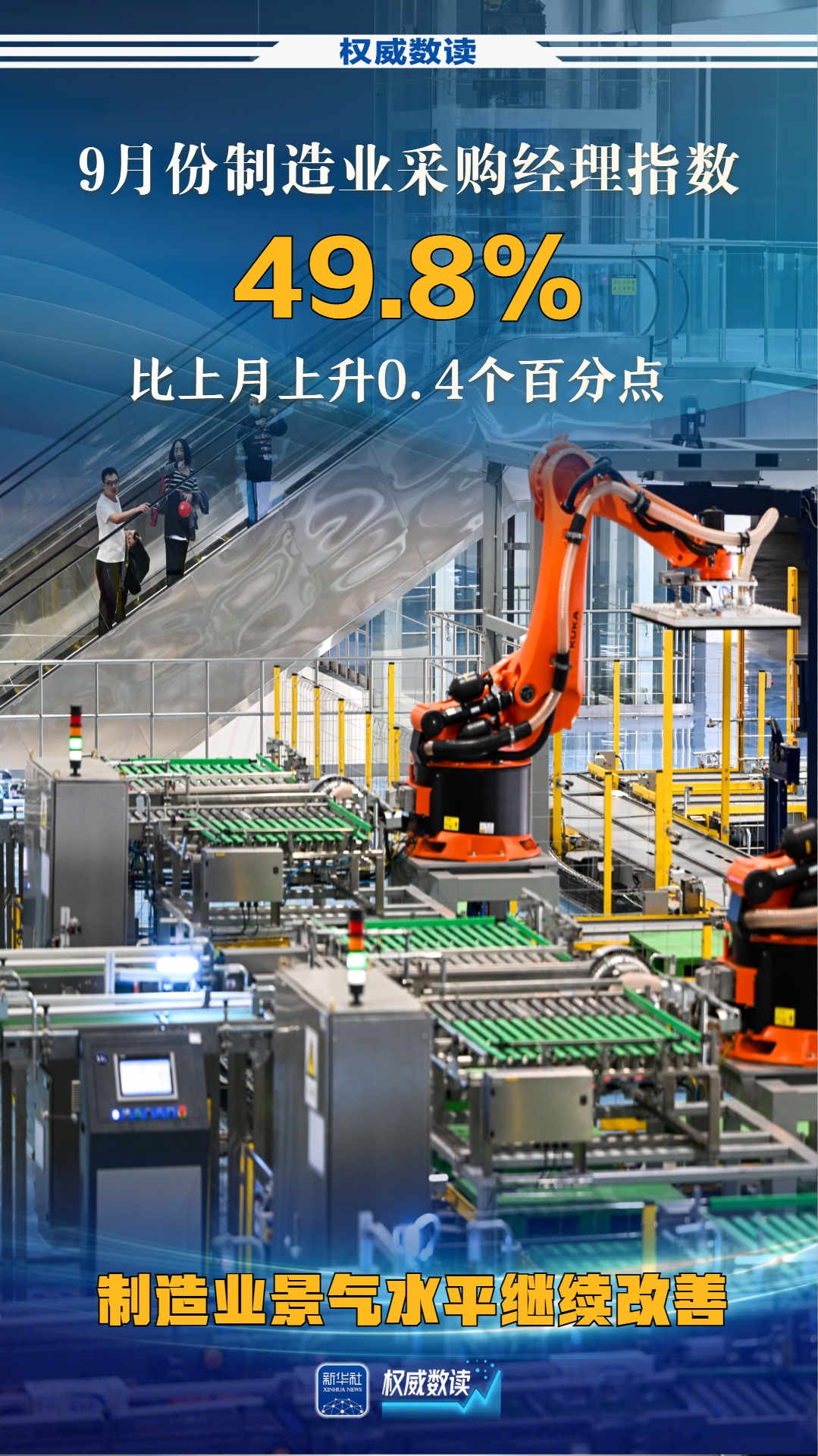
9月份,制造业景气水平继续改善!
Xin Hua She· 2025-09-30 06:37
Group 1 - The manufacturing sector's economic sentiment is influenced by ongoing reforms [3] - The non-manufacturing business activity index for September stands at 50.0%, indicating a critical point [4] - The comprehensive PMI output index for September is at 50.6%, which is an increase of 0.1 percentage points from the previous month [5]
9月PMI持续回升,A500ETF基金(512050)成交额超47亿元位居同类第一,中航沈飞等强势涨停
Mei Ri Jing Ji Xin Wen· 2025-09-30 06:28
Market Performance - As of September 30, the three major indices showed mixed results, with the Shanghai Composite Index up by 0.46%, the Shenzhen Component Index up by 0.23%, and the ChiNext Index down by 0.13% [1] - The A500 ETF (512050) increased by 0.60%, with a trading volume exceeding 4.7 billion yuan, ranking first among similar products [1] - The ETF's holdings, particularly Pioneering Technology, surged over 19%, while companies like China Metallurgical Group and AVIC Shenfei experienced a strong limit-up of 10% [1] Fund Flow - There has been a continuous net inflow into the A500 ETF for four consecutive trading days, accumulating 1.913 billion yuan over the past five days [1] Manufacturing Sector Insights - The National Bureau of Statistics reported that China's manufacturing Purchasing Managers' Index (PMI) rose by 0.4 percentage points to 49.8% in September, marking a six-month high and indicating ongoing improvement in manufacturing sentiment [1] - The manufacturing production index reached 51.9%, up by 1.1 percentage points from the previous month, also a six-month high; the new orders index increased to 49.7%, up by 0.2 percentage points; and the raw materials inventory index rose to 48.5%, up by 0.5 percentage points [1] Market Outlook - According to Industrial Securities, after a period of consolidation and digestion since September, a new upward momentum is expected to build, with the market likely to reach a new level in October [1] - Many sectors have seen a reduction in crowding, alleviating overall market pressure and setting the stage for a new upward movement [1]

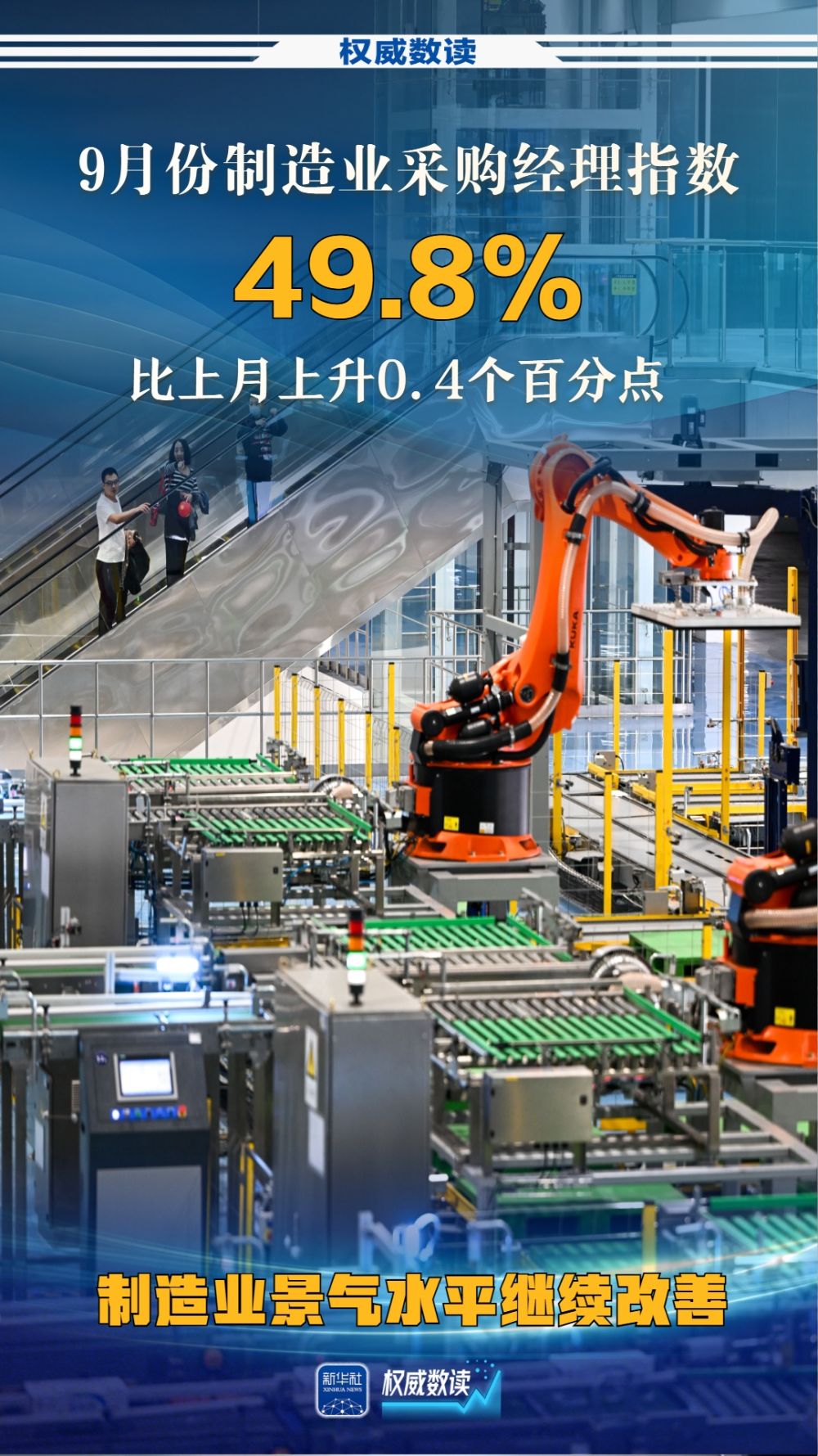
权威数读丨9月份,制造业景气水平继续改善!
Xin Hua She· 2025-09-30 05:15
Group 1 - The manufacturing sector's economic climate is undergoing significant reforms [3] - The non-manufacturing business activity index for September stands at 50.0%, indicating a critical threshold [4]
权威数读|9月份,制造业景气水平继续改善!
Xin Hua She· 2025-09-30 04:20
Group 1 - The manufacturing sector's prosperity level continued to improve in September, indicating a positive trend in production activities [1] - The non-manufacturing business volume remained generally stable, reflecting resilience in the service sector [1] - The comprehensive PMI output index was sustained above the critical point, suggesting an overall acceleration in business operations across enterprises [1] Group 2 - The comprehensive PMI output index for September was reported at 50.6%, which is an increase of 0.1 percentage points from the previous month [7]
大越期货沪铜早报-20250430
Da Yue Qi Huo· 2025-04-30 02:15
Report Industry Investment Rating - Not provided Core View of the Report - The copper market is expected to move in a volatile manner. The fundamentals are neutral with smelting enterprises reducing production and the scrap copper policy being relaxed. The manufacturing PMI in March was 50.5%, up 0.3 percentage points from the previous month, indicating a continued recovery in manufacturing sentiment. The basis shows a premium for the spot over the futures, which is bullish. The inventory situation is neutral, with a decrease in copper inventory on April 29 and a reduction in SHFE copper inventory compared to last week. The closing price is above the 20 - day moving average which is moving down, also neutral. The main positions are net long and the long positions are increasing, which is bullish. With the Fed slowing down rate - cuts, inventory reduction from a high level, and possible improvement in tariff sentiment, the market will mainly move in a volatile way [2] Summary by Relevant Catalogs Daily View - **Fundamentals**: Smelting enterprises have cut production, the scrap copper policy has been relaxed. In March, the manufacturing PMI was 50.5%, up 0.3 percentage points from the previous month, and the manufacturing sentiment continued to recover, considered neutral [2] - **Basis**: The spot price is 78090, with a basis of 490, indicating a premium for the spot over the futures, considered bullish [2] - **Inventory**: On April 29, copper inventory decreased by 300 to 202500 tons, and SHFE copper inventory decreased by 54858 tons to 116753 tons compared to last week, considered neutral [2] - **Disk**: The closing price is above the 20 - day moving average which is moving down, considered neutral [2] - **Main Positions**: The main positions are net long and the long positions are increasing, considered bullish [2] - **Expectation**: With the Fed slowing down rate - cuts, inventory reduction from a high level, and possible improvement in tariff sentiment, the market will mainly move in a volatile way [2] Recent利多利空Analysis - **Likely Influencing Factors**: The logic involves domestic policy easing and the escalation of the trade war, but specific details of the bullish and bearish factors are not fully provided [3] Exchange Inventory - The SHFE copper inventory decreased by 54858 tons to 116753 tons compared to last week [2] 保税区库存 - The bonded - area inventory has rebounded from a low level [13] 加工费 - The processing fee has declined [15] 供需平衡 - In 2024, there is a slight surplus, and in 2025, it is in a tight - balance state. The Chinese annual supply - demand balance table shows production, import, export, apparent consumption, actual consumption, and supply - demand balance data from 2018 - 2024. For example, in 2024, production is 12060000 tons, import is 3730000 tons, export is 460000 tons, apparent consumption is 15340000 tons, actual consumption is 15230000 tons, and there is a supply - demand surplus of 110000 tons [19][21]