剥离不良资产

Search documents
恒嘉融资租赁(00379)拟7000万元出售中国恒嘉资本集团全部股本以剥离非核心不良资产
智通财经网· 2026-02-03 14:15
Core Viewpoint - The company is undergoing a significant restructuring by selling its indirect wholly-owned subsidiary, China Hengjia Capital Group Co., Ltd., to address ongoing litigation and operational challenges, with the sale price set at RMB 70 million [1][2]. Group 1: Sale Agreement and Financial Details - The sale agreement involves the seller, a wholly-owned subsidiary of the company, and the buyer, Sheen Nation Holdings Limited, with the transaction valued at RMB 70 million [1]. - China Hengjia Capital Group primarily engages in investment holding and financial leasing, holding approximately 51.39% of Beijing Hengjia's equity, classified as equity investments measured at fair value through other comprehensive income [1]. Group 2: Operational Challenges and Litigation - The subsidiary has faced operational losses in recent years due to stricter regulatory frameworks and challenging market conditions in China [1]. - Since August 2023, the company lost actual control over Beijing Hengjia due to disputes with its Chinese joint venture partner, leading to operational stagnation and ongoing litigation [1]. Group 3: Strategic Implications of the Sale - The board has considered various solutions, including potential judicial liquidation, but found them uncertain and costly, prompting the decision to proceed with the sale as a means to eliminate litigation-related uncertainties [2]. - The sale provides an immediate exit opportunity to divest non-core underperforming assets and allows the company to focus on more promising and manageable business lines [2]. - Proceeds from the sale are intended to be used to expand the company's loan financing and securities investment business in Hong Kong, as well as to enhance operations in healthcare, pet products distribution, and health food manufacturing and sales [2].
多家上市公司出售资产“瘦身”
Zheng Quan Ri Bao· 2025-11-27 22:54
Core Viewpoint - Recent announcements from multiple A-share listed companies indicate a trend of asset disposals, with "focusing on core business" being a central theme. Companies are divesting non-core and underperforming assets to improve financial conditions and operational efficiency [1][2][3]. Group 1: Asset Disposals - Hangzhou Tiandi Digital Technology Co., Ltd. announced the transfer of 100% equity of its wholly-owned subsidiary for 49 million yuan, aiming to optimize asset structure and improve operational efficiency [1]. - China Travel Service International Logistics Co., Ltd. plans to publicly transfer 100% equity of its wholly-owned subsidiary, emphasizing resource concentration on core business and enhancing competitive advantages [1]. - Shanghai Chuangxing Resource Development Co., Ltd. intends to transfer 100% equity of its subsidiary, which has been affected by litigation and poor receivables, to improve financial health [2]. Group 2: Strategic Focus - The current market environment drives companies to reassess their resources and capabilities, leading to the divestiture of non-core assets to enhance core competitiveness and market share [2]. - Companies are focusing on strategic optimization by selling off loss-making or high-risk assets, which helps in cutting losses and improving financial statements [3]. - The sale of underperforming assets is seen as a dual benefit for companies, allowing them to isolate risks and prevent "problem businesses" from dragging down core operations [3].


聚焦主业优化结构 多家上市公司出售资产“瘦身”
Zheng Quan Ri Bao· 2025-11-27 15:49
Group 1 - Multiple A-share listed companies are announcing asset disposals, focusing on divesting subsidiaries and idle properties to optimize their asset structures and improve operational efficiency [1][2] - The core theme among these announcements is "focusing on core business," with companies aiming to concentrate resources on their main competencies and enhance competitive advantages [2] - Companies are also motivated to divest non-core or underperforming assets to improve their financial conditions, as seen in the case of Shanghai Chuangxing Resource Development Co., which is transferring a subsidiary involved in numerous lawsuits and poor receivables [2][3] Group 2 - For instance, Hangzhou Tiandi Digital Technology Co. plans to sell its wholly-owned subsidiary for 49 million yuan to optimize its asset structure and reduce management costs [1] - Guangxi Tourism Co. is transferring its wholly-owned subsidiary, which has been continuously losing money since 2008, for 34.5 million yuan to cut losses and improve asset efficiency [3] - The trend of divesting underperforming assets is seen as a dual benefit for companies, allowing them to stop losses and strategically optimize their operations while isolating risks from their core business [3]
*ST创兴:拟以20万元协议转让亏损子公司股权以剥离不良资产
2 1 Shi Ji Jing Ji Bao Dao· 2025-11-27 02:36
Core Viewpoint - *ST Chuangxing (600193.SH) plans to transfer 100% equity of its wholly-owned subsidiary, Zhuhong Construction, to Taizhou Guange Enterprise Management Co., Ltd. for 200,000 yuan, aiming to divest long-term loss-making assets and improve its asset structure [1] Financial Summary - As of September 30, 2025, Zhuhong Construction has a net asset value of 192,500 yuan and accounts payable of 142 million yuan [1] - The company is involved in multiple lawsuits and is listed as a dishonest executor [1] - For the period from January to September 2025, Zhuhong Construction reported a net loss of 2.41 million yuan [1] - After internal debt offsetting, the company will have approximately 56.20 million yuan payable to Zhuhong Construction [1]
1元卖股权、5折甩债权,知名品牌断臂求生,曾是中国女排赞助商
Mei Ri Jing Ji Xin Wen· 2025-09-06 03:21
Core Viewpoint - The company Huida Sanitary Ware (603385.SH) is divesting its loss-making assets through a drastic "amputation" strategy to mitigate financial losses and operational risks amid a challenging market environment [1][8]. Group 1: Asset Disposal Details - Huida Sanitary Ware plans to publicly transfer 100% equity and related debts of its subsidiary Guangxi Xingaosheng Thin Ceramic Co., Ltd. for a nominal price of 1 yuan, with debts being offered at a 53.6% discount [4][5]. - The equity of Guangxi Xingaosheng has a negative book value of -154 million yuan, with an assessed value of -63.08 million yuan, indicating a 59.08% increase in assessed value despite being negative [4][5]. - The total debt owed to Guangxi Xingaosheng amounts to 269 million yuan, with the public offering price set at 144 million yuan [4][5]. Group 2: Financial Performance and Market Context - Guangxi Xingaosheng has been experiencing continuous losses, reporting a net loss of 34.89 million yuan in 2024 and 29.31 million yuan in the first half of 2025, leading to a negative net asset situation [5][6]. - The ceramic industry is under pressure due to a downturn in the real estate market, with a reported 12.18% decrease in ceramic tile production in 2024 and a significant drop in production capacity utilization [7]. - Huida Sanitary Ware's revenue for the first half of 2025 was 1.425 billion yuan, a decline of 9.94% year-on-year, with net profit dropping by 70.21% to 17.97 million yuan [7][8]. Group 3: Strategic Implications - The divestiture is aimed at optimizing the company's industrial structure, reducing management costs, and improving asset operational efficiency [6][8]. - The company acknowledges the uncertainty surrounding the transaction, including potential buyers and the final sale price, indicating challenges in finding a willing buyer for the distressed assets [8].


1元卖股权、5折甩债权 知名品牌“断臂求生” 曾是中国女排赞助商!上半年净利下滑70% 股价持续震荡
Mei Ri Jing Ji Xin Wen· 2025-09-06 02:40
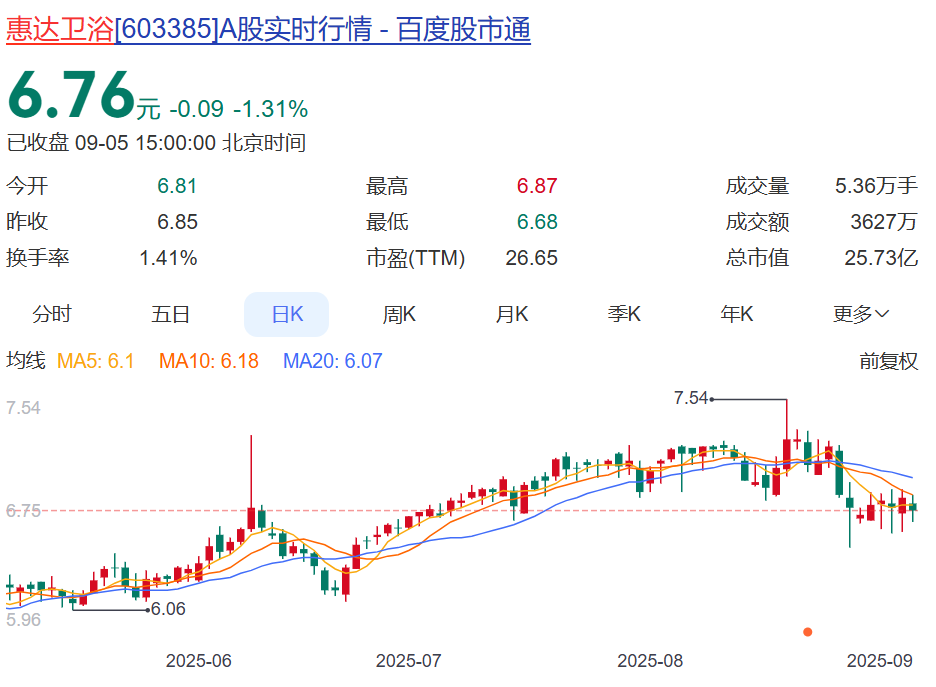
Core Viewpoint - The long-established bathroom brand Huida Sanitary Ware (603385.SH) is opting for a "self-mutilation" strategy by divesting its loss-making assets due to continuous losses over its 43-year history [2][3]. Group 1: Asset Disposal Details - Huida Sanitary Ware announced plans to publicly transfer 100% equity and related debts of its subsidiary, Guangxi Xingaosheng Thin Ceramic Co., Ltd. (广西新高盛), which has been consistently losing money [2][3]. - The asset disposal involves selling the equity for 1 yuan and the debts at a 50% discount, raising significant market attention [3][5]. - Guangxi Xingaosheng reported a net loss of 29.31 million yuan for the first half of 2025, with a net asset value of -154 million yuan, and is currently in a state of suspension [3][6]. Group 2: Financial Performance and Market Context - The ceramic industry is under pressure due to a downturn in the real estate market, leading to intensified competition and reduced profit margins [7]. - In 2024, the national ceramic tile production decreased by 12.18%, with a capacity utilization rate of less than 50% [7]. - Huida Sanitary Ware's revenue for the first half of 2025 was 1.425 billion yuan, a year-on-year decline of 9.94%, and net profit dropped by 70.21% to 17.97 million yuan [7][8]. Group 3: Strategic Implications - The company aims to optimize its industrial structure and improve asset operation efficiency through this asset sale [7][8]. - The transaction's success is uncertain, with potential challenges in finding a buyer for the loss-making assets, especially given Guangxi Xingaosheng's debt and operational status [8].
1元卖股权、5折甩债权,知名品牌“断臂求生”,曾是中国女排赞助商!上半年净利下滑70%,股价持续震荡
Mei Ri Jing Ji Xin Wen· 2025-09-06 02:37
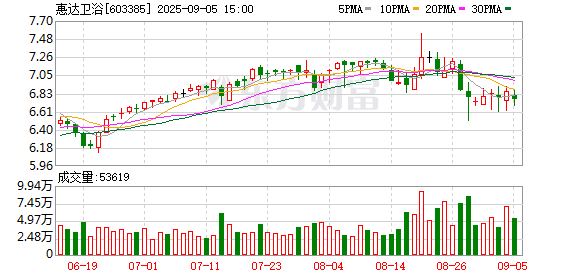
Core Viewpoint - The long-established bathroom brand Huida Sanitary (603385.SH) is divesting its loss-making assets through a drastic "amputation" strategy due to continuous losses, particularly focusing on the disposal of its subsidiary Guangxi Xingaosheng [1][5][9] Group 1: Asset Disposal Details - Huida Sanitary plans to publicly transfer 100% equity and related debts of Guangxi Xingaosheng, which has been incurring losses, with a net loss of 29.31 million yuan in the first half of 2025 and a negative net asset of 154 million yuan [1][6] - The equity will be sold for a nominal price of 1 yuan, while the total debt of 269 million yuan will be offered at a discounted price of 144 million yuan, representing only 53.6% of the total debt [6][8] - The decision to sell these assets is closely linked to Guangxi Xingaosheng's poor financial performance, with a net profit of -34.89 million yuan in 2024 and a significant debt burden [6][8] Group 2: Industry Context - The ceramic industry is facing significant challenges due to a downturn in the real estate market, leading to intensified competition and reduced profit margins [8] - National ceramic tile production decreased by 12.18% in 2024, with a capacity utilization rate of less than 50% [8] - Huida Sanitary's revenue for the first half of 2025 was 1.425 billion yuan, down 9.94% year-on-year, with net profit plummeting by 70.21% to 17.97 million yuan [8][9] Group 3: Future Considerations - The company aims to optimize its industrial structure and resource allocation through this asset sale, focusing on its core business [7][9] - There are uncertainties regarding the completion of the transaction, including potential buyers and pricing, which could pose challenges for the company [9]
惠达卫浴“断臂求生”,1元转让亏损子公司股权、5折出售债权
Xin Lang Cai Jing· 2025-09-05 05:28
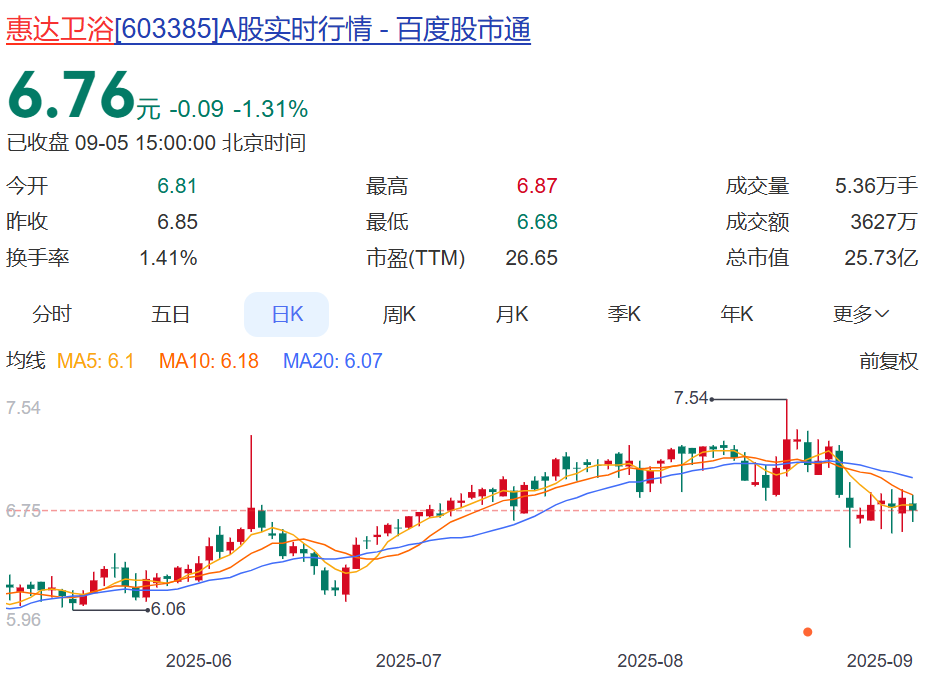
Core Viewpoint - Huidahome plans to transfer 100% equity and related debts of its subsidiary Guangxi Xingaosheng to reduce operational risks amid a challenging ceramics market [1][3] Group 1: Asset Transfer Details - Huidahome announced the transfer of Guangxi Xingaosheng's 100% equity at a base price of 1 yuan, with debts sold at nearly a 50% discount [1][2] - The total debt owed to Guangxi Xingaosheng amounts to 269 million yuan, with a listing price for the debts set at 144 million yuan [2] Group 2: Financial Performance - Guangxi Xingaosheng reported a net loss of 29.31 million yuan in the first half of 2025, with a negative net asset value of 154 million yuan [1][3] - Huidahome's revenue for the first half of 2025 was 1.425 billion yuan, a year-on-year decrease of 9.94%, and net profit dropped by 70.21% to 17.97 million yuan [3] Group 3: Market Context - The ceramics industry is under pressure due to a downturn in the real estate market, leading to liquidity issues for developers [3] - Huidahome's decision to divest is seen as a strategy to shed underperforming assets and mitigate operational risks [3]
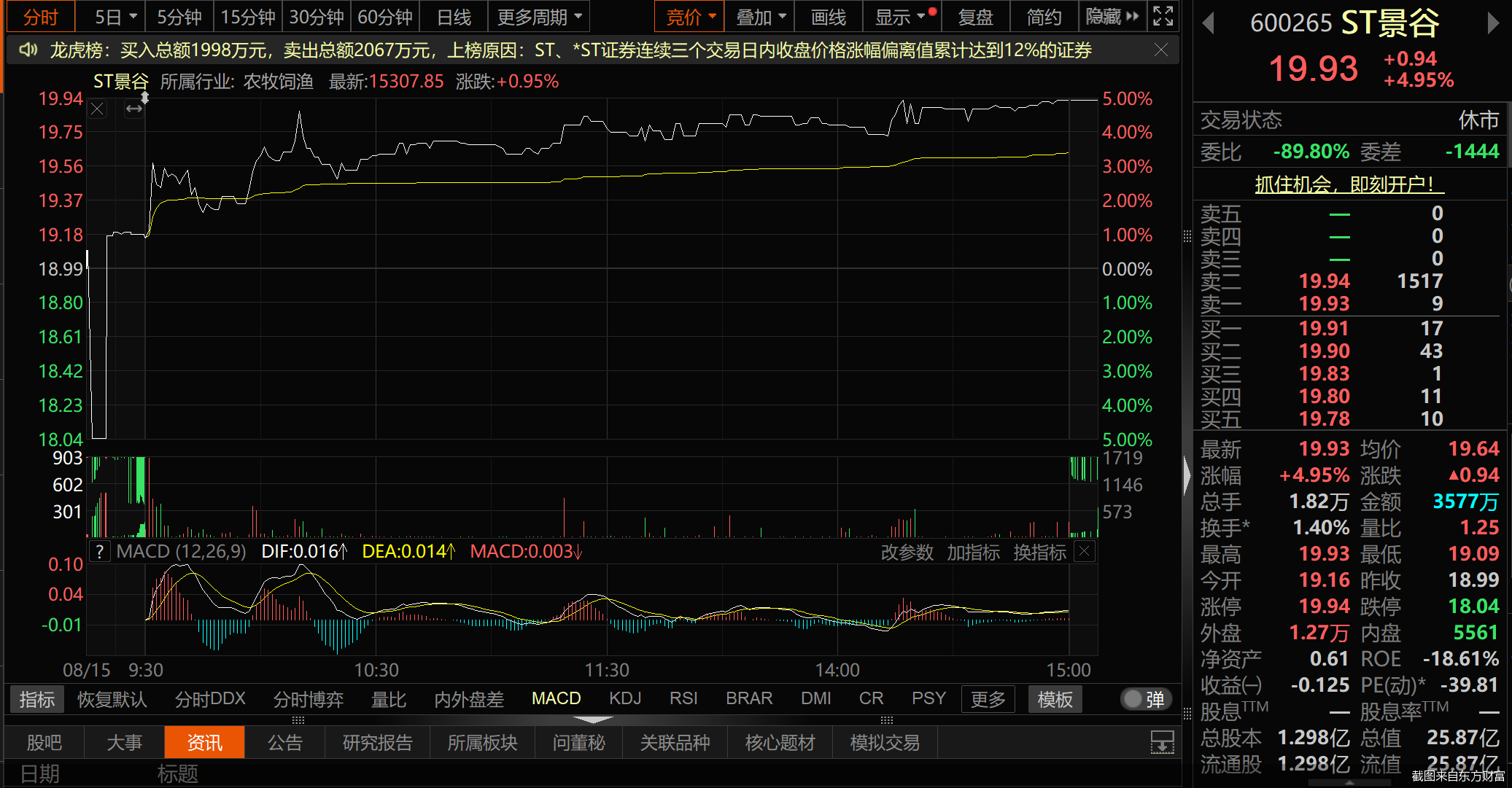
欲出售汇银木业51%股权,ST景谷“断臂求生”
Bei Jing Shang Bao· 2025-08-17 11:52
Core Viewpoint - ST Jinggu intends to divest its 51% stake in Tangxian Huiyin Wood Industry Co., Ltd. to alleviate the burden of non-performing assets and improve its financial health [1][3]. Group 1: Asset Divestiture - The transaction aims to transfer non-performing assets to reduce company pressure and promote long-term healthy development [3][4]. - The expected transaction price is not less than 133 million yuan, with the final price to be determined based on asset evaluation [1][3]. - The divestiture is classified as a major asset restructuring [1]. Group 2: Financial Performance - ST Jinggu reported significant financial losses, with projected net losses for the first half of 2025 estimated between 130 million yuan and 105 million yuan [5]. - The company’s revenue for 2022 to 2025 shows fluctuations, with revenues of approximately 113 million yuan, 590 million yuan, 447 million yuan, and 62.6 million yuan respectively [4]. - The company’s net profit figures for the same period were -22.27 million yuan, 6.32 million yuan, -72.87 million yuan, and -16.24 million yuan [4]. Group 3: Operational Challenges - Huiyin Wood Industry has faced operational difficulties since 2024, significantly impacting ST Jinggu's overall business performance [3][5]. - The company has reported a loss of approximately 19 million yuan in inventory due to mismanagement by a former director [3][4]. - The divestiture may lead to a sharp decline in the company's main business scale, potentially triggering delisting risk warnings [5]. Group 4: Industry Context - The company operates in the manufacturing sector, primarily engaged in engineered wood manufacturing and related activities [4]. - The ongoing challenges in the real estate sector and increased regional competition have adversely affected the sales prices and volumes of the company's products [5][6].

1元出售三文鱼业务,佳沃食品甩包袱
Bei Jing Shang Bao· 2025-06-23 14:34
Core Viewpoint - Jiawo Food has taken a significant step to alleviate the burden of long-term losses from its salmon business by transferring 100% of the equity of Beijing Jiawo Zhencheng Technology Co., Ltd. to a related party, Jiawo Pinxian (Beijing) Enterprise Management Co., Ltd. for a nominal price of 1 yuan, effectively divesting its salmon-related operations from the listed company structure [2][3]. Group 1: Business Operations and Financial Performance - Jiawo Zhencheng was the core operational entity for the salmon business, primarily managing the breeding, processing, and sales of salmon through its Chilean subsidiary, Australis [3]. - The acquisition of Australis in 2019 for approximately $920 million was significantly beyond Jiawo Food's financial capacity at the time, leading to reliance on debt for the purchase [3]. - Following the acquisition, the international demand for salmon plummeted, resulting in Jiawo Food's performance turning from profit to loss in 2019, with the salmon business reporting a gross margin of -12.2% in 2020 [3][4]. - Over the five years from 2018 to 2022, 33 out of 96 breeding centers owned by Australis were found to be overproducing, leading to a total excess production of 81,000 tons, necessitating a reduction in output and further impacting business performance [3]. Group 2: Financial Losses and Debt Management - Since the acquisition of Australis, Jiawo Food has recorded continuous losses for six consecutive years, totaling over 4.3 billion yuan, with a net asset value of -301 million yuan in 2022, resulting in a delisting risk warning [4]. - In 2024, the salmon business faced insolvency with a debt-to-asset ratio of 110.76%, contributing to a 256.39% year-on-year decline in net assets to -443 million yuan [4]. - After divesting the salmon business, Jiawo Food managed to reduce its debt-to-asset ratio from 104.92% to 12.56%, temporarily escaping the delisting risk [5]. Group 3: Strategic Recommendations - Following the divestiture of the loss-making salmon business, experts suggest that Jiawo Food should actively seek new growth opportunities and cultivate a second growth curve to enhance profitability and stabilize its market position [7][8]. - Analysts emphasize the need for Jiawo Food to adjust its market strategy to build sustainable core competitiveness, focusing on consumer demand to restructure its product, channel, and cost systems [8].