
动力平权

Search documents
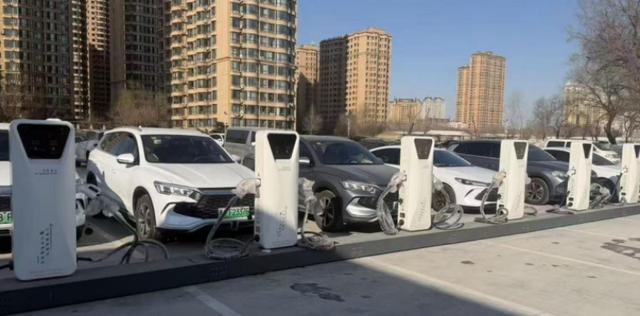
补能设施、技术路线日趋成熟,北方新能源汽车市场“破冰”
Hua Xia Shi Bao· 2026-02-05 09:33
Core Viewpoint - The automotive market in Harbin is undergoing a significant transformation, shifting from traditional fuel vehicles to a diverse range of powertrains, including electric and hybrid models, driven by changing consumer preferences and improved infrastructure [2][3][4]. Group 1: Market Dynamics - The sales of electric vehicles (EVs) in Harbin saw a remarkable year-on-year increase of 110.09% in the first quarter of 2025, while hybrid vehicles accounted for 30.08% of the market, emerging as a vital segment [4]. - Traditional fuel vehicles still maintain a solid market presence, particularly in scenarios requiring long-distance travel and reliability in cold starts, with models like Nissan Sylphy and RAV4 remaining popular [3][4]. - The shift in consumer behavior reflects a growing acceptance of various vehicle types, with families opting for different powertrains based on convenience, cost, and practicality [3][4]. Group 2: Infrastructure Development - The charging infrastructure in Harbin has rapidly evolved, with 250 charging stations established across highway service areas, ensuring comprehensive coverage for long-distance travel [6]. - Urban charging networks are expanding, with charging facilities integrated into public transport hubs and the creation of additional parking spaces equipped with charging stations [6][7]. - The transition to electric vehicles is supported by advancements in technology, such as range-extending solutions that address winter performance concerns, enhancing consumer confidence [6][7]. Group 3: Consumer Preferences - Consumers are increasingly making rational choices based on their specific driving needs, with compact and cost-effective models like the Wuling Hongguang MINI EV gaining popularity for urban commuting [3][4]. - The high-end market is witnessing a blend of traditional luxury fuel vehicles and new energy brands, indicating a diversification in consumer preferences and a shift towards a more nuanced understanding of vehicle value [5][7]. - The market is moving towards a "power equality" movement, where no single technology dominates, and consumers select vehicles based on their unique requirements and cost considerations [5][7]. Group 4: Systemic Changes - The transformation in Harbin's automotive market represents a shift from policy-driven growth to a more resilient system driven by suitable technology, available infrastructure, and trustworthy brand services [7]. - The integration of digital experiences and standardized services in new energy vehicle showrooms is lowering barriers for consumers, facilitating quicker acceptance of innovative technologies [7]. - The collective effort of policies, market dynamics, technology, and consumer trust is reshaping the narrative around electric vehicles in traditionally challenging markets like Harbin [7].


比亚迪(002594):兆瓦闪充提性能,员工持股凝信心
HTSC· 2025-03-19 03:07
Investment Rating - The investment rating for BYD is maintained as "Buy" with a target price of RMB 520.37 [7][11]. Core Views - BYD has launched the "Super e Platform" featuring advanced technologies such as a 1000V high-voltage architecture and 10C ultra-fast charging, which are expected to enhance user experience and alleviate range anxiety [1][2]. - The company has introduced a large-scale employee stock ownership plan worth up to RMB 4.1 billion, which is anticipated to strengthen employee confidence and cohesion [1][4]. - BYD's new electric platform aims to achieve "oil-electric synchronization," potentially capturing a larger market share and enhancing brand image [1][2]. Summary by Sections Product Development - BYD has achieved a significant milestone by mass-producing passenger vehicles with a 1000V high-voltage architecture, allowing for charging power of up to 1MW, enabling "5 minutes of charging for 443 km" [2]. - The introduction of the 10C ultra-fast charging technology is seen as a unique competitive advantage, especially with plans to build over 4,000 ultra-fast charging stations [2]. Performance Metrics - The performance of the new electric motor surpasses that of traditional V12 engines, with a peak power exceeding 1100 horsepower and a 0-100 km/h acceleration time of just 2.7 seconds for the Han L model [3][4]. - The pricing for the Han L and Tang L models is set at RMB 270,000 to 350,000 and RMB 280,000 to 360,000 respectively, with strong performance metrics [4]. Financial Forecasts - The projected net profits for BYD from 2024 to 2026 are RMB 39.47 billion, RMB 55.96 billion, and RMB 68.91 billion respectively, reflecting significant growth [5][6]. - The estimated revenue for the same period is expected to reach RMB 712.15 billion in 2024, RMB 910.05 billion in 2025, and RMB 1,075.40 billion in 2026, indicating a robust growth trajectory [6]. Valuation - The valuation method used is a segmented valuation approach, with a target market capitalization of RMB 15,814 billion and a price-to-earnings ratio of 28 times for the automotive business [11][12]. - The target price has been adjusted upwards from RMB 482.35 to RMB 520.37, reflecting the company's strong market position and growth potential [11].