势力范围

Search documents
赵隆:重建“势力范围”是开历史倒车
Xin Lang Cai Jing· 2026-02-02 23:09
Core Viewpoint - The article discusses the resurgence of the concept of "sphere of influence" in international relations, particularly in the context of recent U.S. military actions and statements, arguing that this approach misjudges the current international system and is fraught with contradictions [1]. Historical Paradox - The notion of spheres of influence is based on historical conditions that required concentrated power and exclusive systems, which is incompatible with the current international principles of sovereignty and non-interference [2]. - In the 21st century, countries are seeking strategic autonomy and actively shaping international rules through multilateral mechanisms, rather than passively accepting arrangements made by major powers [2]. Stability Paradox - Proponents of spheres of influence believe that clear boundaries can reduce misjudgments and conflicts, but this overlooks the inherent dynamics of hegemony, which require constant intervention to prevent competitors from gaining influence [2][3]. - Historical examples, such as the Cold War, demonstrate that defined spheres of influence do not eliminate conflict but can exacerbate tensions through proxy wars and sustained deterrence [3]. Capability Paradox - The arena of great power competition has expanded beyond geographical limitations to include new domains such as deep sea, polar regions, outer space, and digital realms, complicating the establishment of exclusive spheres [3]. - Attempts to limit the development space of other nations through spheres of influence incur high political, economic, and security costs [3]. Economic and Technological Implications - Efforts to enforce exclusive control over regions or sectors can provoke adjustments from both internal and external actors, leading to a shift towards diversification and self-sufficiency [4]. - The logic of spheres of influence, when applied to economic and technological domains, may result in countries reducing reliance on single systems and reallocating resources through risk mitigation strategies [4]. Moral Paradox - A nation's global leadership is not solely determined by military and economic power but also by its ability to lead agendas that align with global interests and provide public goods to address global challenges [5]. - The recent U.S. strategic shift towards a power-centric approach has intensified the global governance trust crisis, undermining its moral authority and long-term leadership foundation [5]. Conclusion - In a highly interconnected world, exclusive spheres of influence are not only difficult to replicate but may also lead to new confrontations and systemic risks [6]. - Countries should embrace the trends of multipolarity and democratization in international relations to promote a more just and equitable international order, rather than reverting to outdated geopolitical thinking [6].
美国对委内瑞拉的军事干预暴露霸权真相
Xin Lang Cai Jing· 2026-01-07 00:39
Group 1 - The core viewpoint of the articles revolves around the U.S. military action against Venezuela, which is seen as an imperialistic move to control the country and its resources, particularly oil [2][3][4] - The U.S. aims to reassert its influence in Latin America, with a focus on securing strategic resources and diminishing its international obligations [3][4] - The military intervention is characterized as a "war for oil," with Venezuela's vast oil reserves being a primary target for U.S. interests [6][8] Group 2 - The articles highlight the historical context of U.S.-Venezuela relations, noting that previous nationalization efforts by former President Hugo Chávez have led to ongoing tensions [6][8] - The U.S. military action is framed as a violation of international law, with widespread condemnation from various countries and organizations, emphasizing the need for adherence to international norms [10][11] - The potential implications of U.S. control over Venezuela's resources could destabilize global energy markets and undermine the transition to green energy [7][8]

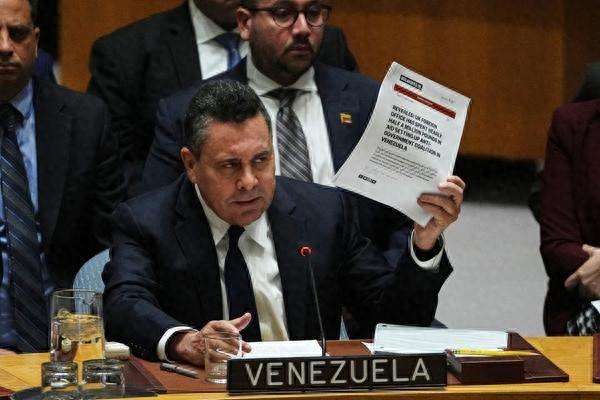
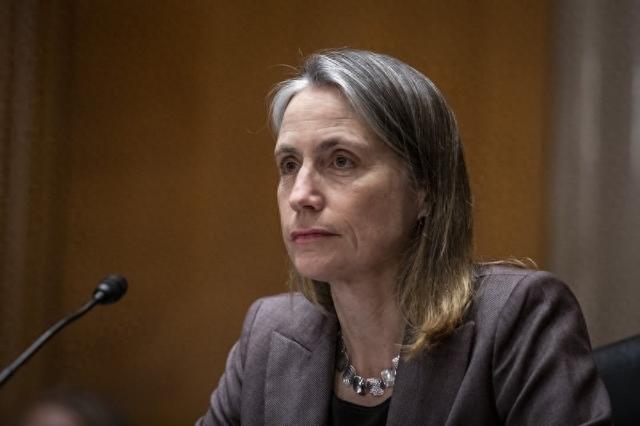
美国前官员声称:俄罗斯曾非正式提出“用委内瑞拉换乌克兰”
Xin Lang Cai Jing· 2026-01-06 15:26
Core Viewpoint - The recent U.S. actions against Venezuela have raised international concerns, with implications for U.S.-Russia relations, particularly regarding the ongoing Ukraine conflict [1][3]. Group 1: U.S. Actions and Implications - The U.S. has reportedly "kidnapped" Venezuelan President Maduro, which is seen as a significant blow to Russia, a key ally of Venezuela [3]. - Fiona Hill, a former U.S. National Security Council official, revealed that Russia had informally suggested a deal where the U.S. could act freely in Venezuela in exchange for U.S. concessions in Ukraine [1][3]. - The U.S. and Russia are believed to be discussing ways to end the Ukraine conflict, with Russia aiming to maintain a balance without making significant concessions [3]. Group 2: Russia's Response - Russia has condemned the U.S. actions, calling them a violation of international law and demanding the release of Venezuela's legitimate president [4]. - Dmitry Medvedev, Deputy Chairman of the Russian Security Council, criticized the U.S. for its actions, suggesting that such behavior could lead to broader conflicts [3][4]. - Russia's representative at the UN emphasized that the U.S. actions signify a return to lawlessness, which could destabilize other nations [4].
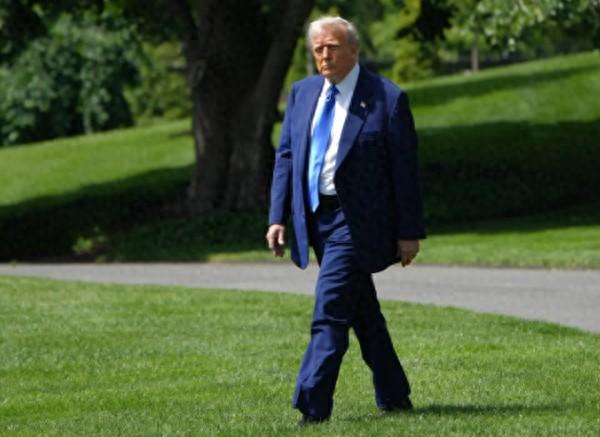
《纽约时报》:特朗普正以皇帝的眼光划分势力,美国、中国和俄罗斯三分天下
Guan Cha Zhe Wang· 2025-05-27 10:50
Group 1 - The article discusses Trump's vision of a world dominated by three major powers: the United States, China, and Russia, suggesting a potential new global order where each country has its own sphere of influence [1][3] - Trump's recent actions indicate a desire to normalize trade relations with Russia and engage China in discussions to mitigate the impacts of the ongoing trade war [1][3] - Observers note that Trump's approach lacks a strategic vision for global order, focusing instead on expanding U.S. influence in the Western Hemisphere, including ambitions regarding Greenland and Canada [3][4] Group 2 - Despite facing rejections from allies, Trump and his administration continue to pursue policies aimed at increasing U.S. influence, as evidenced by Vice President Pence's visit to military bases in Greenland [4][6] - Secretary of State Rubio's visits to Latin America and the Caribbean highlight efforts to manage immigration and exert pressure on regional governments, reflecting a broader strategy of influence [6] - The article suggests that Trump's handling of the Russia-Ukraine conflict aligns with a concept of spheres of influence, raising concerns among traditional allies about the potential weakening of U.S. presence in Europe and Asia [6][7]