匹配市场

Search documents
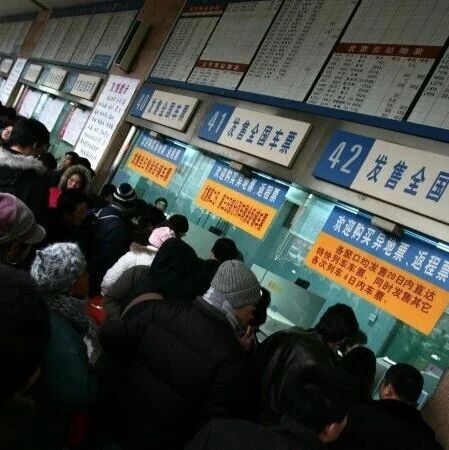
从填报志愿到抢火车票:如何设计一个运行顺畅的市场?
第一财经· 2026-03-26 15:05
Core Viewpoint - The article discusses the importance of market design in addressing inefficiencies and inequities in various sectors, particularly in education and healthcare, emphasizing that effective market mechanisms can lead to better outcomes for individuals and society as a whole [19]. Group 1: Education System and Market Design - The Chinese college admission system has evolved from a sequential choice to a parallel choice system, which has reduced the risk for students and allowed more to enroll in their preferred institutions [6]. - Despite improvements, issues remain in the current admission process, such as professional adjustments and the "congestion" of students not being matched with suitable schools, leading to anxiety and inefficiency [6][8]. - The article draws parallels between the college admission process and train ticket purchasing, illustrating how market design can alleviate chaos and improve fairness and efficiency in resource allocation [8]. Group 2: Market Design Principles - The article introduces the concept of "matching markets," where allocation does not rely solely on price but on effective matching between buyers and sellers, highlighting the potential for market failures in these contexts [10][11]. - Elinor E. Roth's work emphasizes that economists should act as market designers, creating systems that ensure efficient and fair matching rather than merely observing market dynamics [11][13]. - Roth identifies four key conditions for successful market mechanisms: sufficient market thickness, overcoming congestion, ensuring safety, and avoiding premature breakdown [13][15]. Group 3: Case Study of Kidney Exchange - The article presents kidney exchange as a successful example of market design, where paired donations and exchange chains have significantly improved patient outcomes by increasing matching opportunities [14][16]. - The success of kidney exchange is attributed to its ability to create a larger pool of donors, streamline communication, ensure safety through synchronized procedures, and allow for better timing in matching [15][16]. - This case illustrates that even in sensitive markets where price mechanisms fail, effective design can lead to successful outcomes and save lives [16][17]. Group 4: Broader Implications - The article suggests that the principles of market design can be applied to various societal issues in China, such as education reform, healthcare improvements, and resource allocation, indicating a need for thoughtful institutional changes [17][19]. - It emphasizes that access to essential resources like health, education, and opportunities is not solely determined by financial means but requires complex institutional arrangements to ensure fairness and efficiency [17][19].

如何决定“谁得到什么”
Xin Lang Cai Jing· 2026-01-09 16:41
Core Insights - The article emphasizes that market design is crucial for achieving effective matching in various sectors, particularly in education and other critical areas where price mechanisms alone are insufficient [8][10][16] Group 1: Market Design in Education - The traditional college admission process in China has evolved from a sequential preference system to a parallel preference system, which reduces the risk of high-scoring students being left out [5][6] - The efficiency of college admissions is not determined by tuition fees but rather by the design of the admission system, which can lead to various market failures if not properly structured [5][6][10] - The article draws parallels between college admissions and train ticket purchasing, illustrating how market design can improve fairness and efficiency in resource allocation [6][10] Group 2: Market Failures and Solutions - The article identifies four types of market failures: premature collapse, speed competition, congestion, and insecurity, which can hinder effective matching [9][10] - Nobel laureate Alvin E. Roth's work highlights that market failures often arise not from human greed but from flaws in market mechanisms, necessitating thoughtful design [8][9] - Roth's research suggests that economists should act as market designers, proposing practical solutions to improve market functionality [12][16] Group 3: Real-World Applications - The article discusses the matchmaking market in arranged marriages, noting its inefficiencies due to lack of depth, congestion, insecurity, and premature commitments [13][14] - The doctoral admission process in the U.S. is presented as a well-functioning market, yet it faces challenges such as "explosive offers" that disrupt established rules [14][15] - The need for continuous maintenance and adaptation of market designs is emphasized, as changing environments and technologies can lead to new challenges [15][16]

诺奖得主的市场设计课
3 6 Ke· 2025-12-09 02:51
Group 1 - The article discusses the concept of market design and its failures, illustrating how individuals who follow the rules can end up as losers in a poorly designed market [1][2] - It highlights the term "Sooners," referring to those who break the rules to gain an advantage, which has historical significance in Oklahoma [1] - The narrative emphasizes that market failures can lead to chaotic outcomes, where rule-followers are often disadvantaged [1][2] Group 2 - The article introduces the work of Nobel laureate Alvin Roth, who focuses on "matching markets" where both parties must mutually choose each other, such as in college admissions and organ transplants [4][5] - Roth's research aims to design rules that allow participants to express their true preferences, leading to optimal matching outcomes [4][5] - The concept of market design is applicable in various sectors, including education, healthcare, and job recruitment, where mutual selection is essential [4][5] Group 3 - Roth identifies four typical patterns of market failure that entrepreneurs should be aware of, which he refers to as a "business model death guide" [6][7] - The first failure is "jumping the gun," where early movers disrupt the market, leading to a situation where honest participants suffer [7][10] - The second failure is "speeding," where competition based on speed leads to resource wastage without creating social value [12][19] Group 4 - The third failure is "congestion," where a complex system can lead to bottlenecks, preventing successful transactions from occurring [21][27] - The fourth failure is "insecurity," where a lack of trust prevents transactions from happening, highlighting the importance of a reliable feedback system [28][33] - Roth emphasizes that these failures stem from poor market design rather than moral issues, suggesting that effective design can mitigate these problems [34][35] Group 5 - Roth's successful kidney exchange system exemplifies effective market design, allowing incompatible donors to facilitate successful transplants through a chain donation process [37][38] - This system addresses the challenges of matching markets by ensuring sufficient participation, optimizing algorithms, and maintaining safety [37][38] - The article concludes that market design is crucial for creating value in situations where traditional price mechanisms fail, such as in sharing economies and carbon trading [38][39]
日常生活中的市场设计|《财经》书摘
Sou Hu Cai Jing· 2025-11-11 13:38
Core Insights - The article discusses the pervasive nature of market design in everyday life, illustrating how even simple choices, like breakfast, are influenced by complex market operations [2][3] - It highlights the transformation of markets from traditional matching systems to standardized commodity markets, using wheat and coffee as primary examples [4][6] Market Transformation - The Chicago Mercantile Exchange established a standardized grading system for wheat, allowing for anonymous and efficient trading, which eliminated the need for buyers to know the seller's identity [4][5] - The transition from a matching market to a commodity market increases market "thickness," enabling any buyer to purchase from any seller, thus enhancing efficiency [5] Coffee Market Evolution - The establishment of the Ethiopian Commodity Exchange in 2008 introduced an anonymous coffee grading system, allowing buyers to purchase coffee without knowing the supplier's identity [6][7] - The grading system incentivizes coffee farmers to harvest only ripe cherries, improving the overall quality of coffee available in the market [7] Market Dynamics - There exists a tension between commoditization and product differentiation, where sellers aim to attract buyers in a thick market while also wanting their products to stand out [8][9] - The article illustrates that while consumers may prefer standardized products for convenience, they also appreciate unique offerings that require more effort to find [9][10] Local Market Appeal - Farmers' markets are presented as a blend of matching and commodity markets, where buyers can connect with local sellers, enhancing the shopping experience [10]