医保便捷支付体系

Search documents
医保便民服务再升级
Jing Ji Ri Bao· 2026-01-09 22:07
Core Viewpoint - The National Healthcare Security Administration (NHSA) is set to enhance payment systems in healthcare, aiming to alleviate long queues and improve patient experience through various payment methods over the next three years [1] Group 1: Payment System Improvements - The NHSA plans to promote face recognition payment, one-code payment, mobile payment, and credit payment [1] - The goal is to establish a convenient payment system covering outpatient, emergency, and inpatient services within approximately three years [1] Group 2: Benefits to Healthcare Management - The construction of a convenient payment system will empower healthcare institutions, improve patient flow, and optimize the use of quality medical resources [1] - The initiative aims to reduce the need for patients to physically visit healthcare facilities, allowing data to be processed more efficiently [1]
新华时评:把好事办好,让少排队成常态
Xin Hua She· 2026-01-09 03:13
Group 1 - The core viewpoint emphasizes the need to improve the medical payment experience for the public by implementing convenient payment systems such as facial recognition, QR code payments, mobile payments, and credit payments within three years [1] - The initiative aims to optimize payment processes, reduce waiting times, and enhance the overall medical experience for citizens by allowing data to be more accessible and minimizing the need for physical presence [1] - The article highlights the importance of a collaborative approach among various sectors, including healthcare, insurance, and finance, to create a long-term mechanism that addresses data barriers and process bottlenecks [1] Group 2 - The article points out that while reducing queues at payment windows is a step forward, new challenges such as longer lines at pharmacies may arise, indicating the need for a comprehensive approach to healthcare reform [2] - It stresses the importance of addressing existing pain points while also preventing new ones, advocating for a gradual and coordinated implementation of reforms based on the specific circumstances of hospitals [2] - The expectation is set for further reforms across various sectors to enhance the quality of life for citizens, emphasizing the need for practical and effective measures [2]
力争3年左右看病缴费不再“排长队”
Xin Lang Cai Jing· 2026-01-08 23:07
Core Viewpoint - The National Healthcare Security Administration (NHSA) is set to enhance payment systems in healthcare, aiming to alleviate long queues and multiple payment processes for patients within three years [1][2]. Group 1: Payment Methods - Four payment methods are being introduced to address different patient needs: - Facial recognition payment allows for identity verification and payment without physical cards or smartphones, particularly benefiting elderly patients [2]. - One-code payment enables simultaneous completion of medical insurance reimbursement, personal account payments, and out-of-pocket expenses, streamlining the payment process [2]. - Mobile payment facilitates the entire process of appointment booking, payment, and reimbursement through apps, catering to patients with mobility issues [2]. - Credit payment allows patients to receive medical services first and pay later, easing the financial burden on those who may struggle to pay upfront [2]. Group 2: Implementation Timeline - The NHSA has outlined a clear timeline for the rollout of these payment systems, with at least two pilot cities in each province by 2026, aiming for comprehensive coverage by 2028 [2]. Group 3: Broader Implications - The initiative is part of a broader effort to upgrade healthcare services, including cross-province direct settlement of medical insurance and the sharing of medical imaging data, ultimately improving patient experience and resource allocation [3]. - The establishment of a convenient payment system is expected to enhance healthcare management, improve patient flow, and contribute valuable data to the social credit system [3].
力争3年左右 看病缴费不再“排长队”
Xin Lang Cai Jing· 2026-01-08 22:05
Core Viewpoint - The National Medical Insurance Administration aims to enhance payment convenience in healthcare by implementing various payment methods over the next three years, addressing long-standing issues faced by the public regarding payment processes [1][2]. Payment Methods - **Facial Recognition Payment**: Allows patients to complete identity verification and payment without physical cards or smartphones, particularly benefiting elderly individuals who may struggle with technology [2]. - **Unified Code Payment**: Enables a single scan to simultaneously handle medical insurance reimbursement, personal account payments, and out-of-pocket expenses, streamlining the payment process [2]. - **Mobile Payment**: Patients can complete the entire process of appointment booking, payment, and insurance reimbursement through mobile apps or mini-programs, reducing the need for physical queues [2]. - **Credit Payment**: Allows patients to receive medical services first and pay later, with banks covering the cash portion upfront, which is particularly useful for elderly patients [2]. Implementation Timeline - The initiative will see the first batch of cities implementing these payment methods by 2026, with a goal of achieving provincial coverage by 2027 and full implementation in eligible medical institutions by 2028 [2]. Broader Context - Recent upgrades in medical insurance services include direct settlement for cross-province medical care, sharing of medical imaging data, and the development of a convenient payment system, all aimed at alleviating public concerns regarding healthcare access [3]. - The establishment of a convenient payment system is expected to enhance the management of medical institutions, improve patient flow, and contribute to a more robust social credit system [3].
国家医保局:推进刷脸支付、一码支付等
Xin Lang Cai Jing· 2026-01-08 22:05
Core Insights - The National Healthcare Security Administration (NHSA) is set to advance a convenient payment system for medical services, aiming for a comprehensive implementation within three years [1][2] Group 1: Payment Methods - Four payment methods will be introduced to address different payment challenges faced by various demographics: facial recognition payment, one-code payment, mobile payment, and credit payment [1] - Facial recognition payment allows users to complete identity verification and payment without physical cards or smartphones, targeting elderly individuals who may struggle with technology [1] - One-code payment enables simultaneous completion of medical insurance reimbursement, personal account payments, and out-of-pocket expenses through a single scan, streamlining the payment process [1] - Mobile payment facilitates the entire process of appointment booking, payment, and reimbursement through apps or mini-programs, particularly benefiting individuals with mobility issues [1] - Credit payment allows for upfront payment of out-of-pocket expenses by banks within a pre-approved credit limit, enabling patients to receive care before settling their bills [1] Group 2: Implementation Timeline - The NHSA has outlined a clear timeline for the rollout of these payment systems, with at least two pilot cities in each province by 2026 [1] - By 2027, the goal is to achieve provincial coverage in the initial pilot areas, with full implementation in eligible medical institutions by 2028 [1] Group 3: Benefits to Healthcare System - The establishment of a convenient payment system is expected to enhance the management of healthcare institutions, improve patient flow, and optimize the use of quality medical resources [2] - The initiative will also extend credit scenarios from financial consumption to the public welfare sector, contributing valuable behavioral data to the social credit system [2]
力争3年左右让看病缴费不再“排长队”
Xin Lang Cai Jing· 2026-01-08 22:04
Core Viewpoint - The National Medical Insurance Administration aims to enhance payment convenience for medical services through various innovative payment methods, targeting to establish a comprehensive payment system within three years [1][3]. Group 1: Payment Methods - Face recognition payment allows for identity verification and payment without physical cards or smartphones, particularly benefiting elderly individuals who may forget their cards or struggle with technology [2]. - One-code payment enables simultaneous completion of medical insurance reimbursement, personal account payments, and out-of-pocket expenses, streamlining the payment process for patients [2]. - Mobile payment facilitates the entire process of appointment booking, payment, and insurance reimbursement through mobile apps or mini-programs, catering to individuals with mobility challenges [2]. - Credit payment allows insured individuals to have their out-of-pocket expenses covered by banks within a pre-approved credit limit, enabling them to receive medical care first and settle payments later [2]. Group 2: Implementation Timeline - The initial rollout will involve at least two cities from each province, with a target for the first regions and designated medical institutions to be operational by 2026 [2]. - By 2027, the goal is to achieve provincial coverage, and by 2028, all eligible designated medical institutions within the province will be fully operational [2]. Group 3: Broader Implications - The establishment of a convenient payment system is expected to enhance the management of medical institutions, improve patient flow, and optimize the use of quality medical resources [3]. - The initiative also aims to extend credit scenarios from financial consumption to the public welfare sector, contributing valuable behavioral data to the social credit system [3].
医保便捷支付体系力争3年左右建成
Xin Lang Cai Jing· 2026-01-08 19:02
Core Viewpoint - The National Medical Insurance Administration is promoting convenient payment methods in healthcare, aiming to establish a comprehensive medical insurance payment system within three years [1][2] Group 1: Payment Methods - Four payment methods are being integrated: facial recognition payment, one-code payment, mobile payment, and credit payment, catering to diverse patient needs [1] - Facial recognition payment allows users to complete identity verification and payment without physical cards or smartphones, particularly benefiting elderly individuals [1] - One-code payment enables simultaneous completion of medical insurance reimbursement, personal account payments, and out-of-pocket expenses with a single scan, simplifying the payment process [1] - Mobile payment facilitates the entire process of appointment booking, payment, and reimbursement through apps and mini-programs, reducing the need for physical queuing [1] - Credit payment allows medical expenses to be paid upfront by banks within a predetermined credit limit, enabling a "hospital visit now, pay later" model [1] Group 2: Implementation Timeline - The policy outlines a clear timeline for implementation, with at least two cities in each province to be included in the first phase, aiming for effectiveness by 2026 [2] - By 2027, the goal is to achieve coverage across provincial coordinated areas, with full rollout to eligible medical institutions by 2028 [2] Group 3: Impact on Financial Institutions - The establishment of a convenient payment system will enhance management for medical institutions and create compliant, precise consumer scenarios for financial institutions [2] - It aims to innovate medical consumer credit products, extending credit scenarios from financial consumption to the public welfare sector [2] - The initiative will contribute high-quality, real behavioral data to the social credit system, addressing gaps in credit coverage in the inclusive finance sector [2]
把好事办好,让少排队成常态
Xin Hua Wang· 2026-01-08 13:50
Core Viewpoint - The National Medical Insurance Administration aims to enhance the medical payment experience by implementing various payment methods, including facial recognition and mobile payments, within three years to reduce waiting times for patients [1]. Group 1: Payment System Improvements - The initiative focuses on streamlining payment processes to alleviate the burden of long queues for medical services, thereby improving patient experience [1]. - The plan includes the establishment of a convenient payment system that integrates healthcare, finance, and medical insurance, promoting collaboration among various departments to eliminate data barriers and process bottlenecks [1]. Group 2: Broader Healthcare Reforms - While reducing queues at payment windows is a positive step, there is a concern that other areas, such as medication pick-up lines, may become problematic, indicating the need for a comprehensive approach to healthcare reform [2]. - The focus on addressing existing pain points in the healthcare system is seen as a critical opportunity for further reforms, emphasizing the importance of coordinated efforts across different healthcare segments to prevent new issues from arising [2]. Group 3: Commitment to Service Quality - The initiative emphasizes the importance of not only technological upgrades but also enhancing service quality, particularly for vulnerable groups like the elderly, through measures such as "green channels" [1]. - The overall goal is to ensure that efficient service becomes the norm, thereby improving the quality of life for citizens [3].
新华鲜报|力争3年左右!看病缴费不再“排长队”
Xin Hua She· 2026-01-08 02:37
Core Viewpoint - The National Medical Insurance Administration aims to enhance payment convenience for medical services through various innovative payment methods, targeting to establish a comprehensive payment system within three years [1][5]. Group 1: Payment Methods - Facial recognition payment allows for identity verification and payment without physical cards or smartphones, particularly benefiting elderly individuals who may forget their cards or struggle with technology [2][3]. - One-code payment enables simultaneous completion of medical insurance reimbursement, personal account payments, and out-of-pocket expenses, streamlining the payment process for patients [2][3]. - Mobile payment facilitates the entire process of appointment booking, payment, and insurance reimbursement through mobile apps or mini-programs, catering to patients with mobility issues [2][3]. - Credit payment allows insured individuals to have their out-of-pocket expenses covered by banks within a pre-approved credit limit, enabling them to receive medical care first and settle payments later [2][3]. Group 2: Implementation Timeline - The initial rollout will involve at least two cities from each province, with a target for effective implementation in designated medical institutions by 2026 [3]. - By 2027, the goal is to achieve provincial coverage in designated areas, and by 2028, to fully implement the system in all eligible medical institutions within the province [3][5]. Group 3: Broader Implications - The establishment of a convenient payment system is expected to enhance the management of medical institutions, improve patient flow, and optimize the use of quality medical resources [5]. - This initiative is part of a broader effort to reform healthcare services, including cross-province direct settlement of medical insurance and the promotion of cloud data sharing [5].

力争3年左右!看病缴费不再“排长队”
Xin Hua She· 2026-01-08 01:54
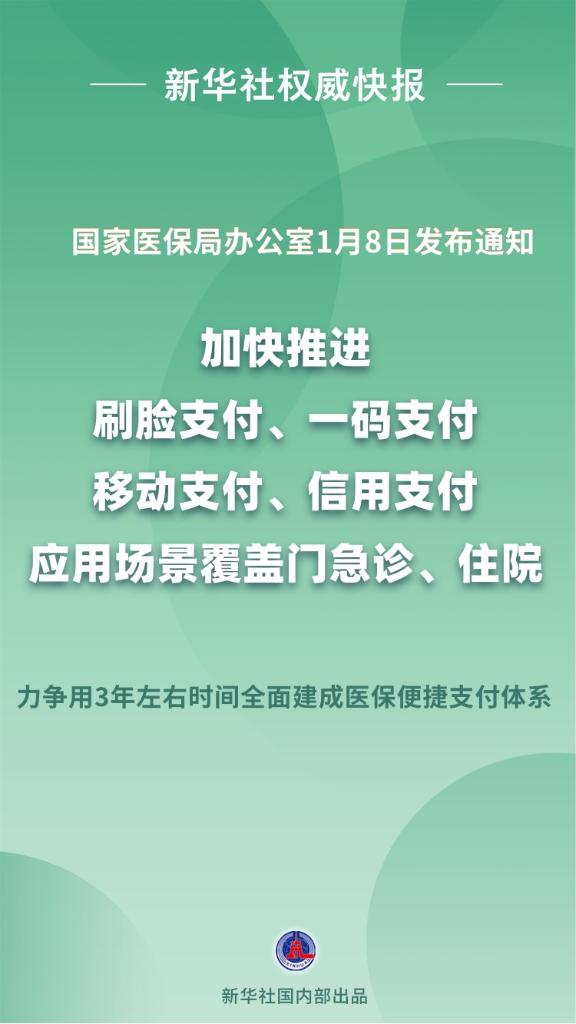
Core Insights - The National Healthcare Security Administration (NHSA) is set to enhance payment systems for medical services, aiming to implement a convenient payment framework within three years that covers outpatient, emergency, and inpatient services [1][5] Group 1: Payment Methods - Four payment methods will be introduced to address different demographic needs: - Facial recognition payment allows for identity verification and payment without physical cards or smartphones, targeting elderly individuals [1] - One-code payment enables simultaneous completion of medical insurance reimbursement, personal account payments, and out-of-pocket expenses, streamlining the payment process [1] - Mobile payment facilitates online registration, payment, and reimbursement through apps, particularly benefiting those with mobility issues [1] - Credit payment allows patients to receive medical services first and pay later, easing the financial burden on individuals who may struggle with immediate payments [1] Group 2: Implementation Timeline - A clear timeline for the rollout of these services has been established, with at least two cities in each province to be prioritized for implementation by 2026, aiming for full provincial coverage by 2028 [2] Group 3: Broader Implications - The establishment of a convenient payment system is expected to enhance the management of medical institutions, improve patient flow, and optimize the use of quality medical resources, while also contributing to the social credit system by providing reliable behavioral data [5]