医康养生态体系

Search documents
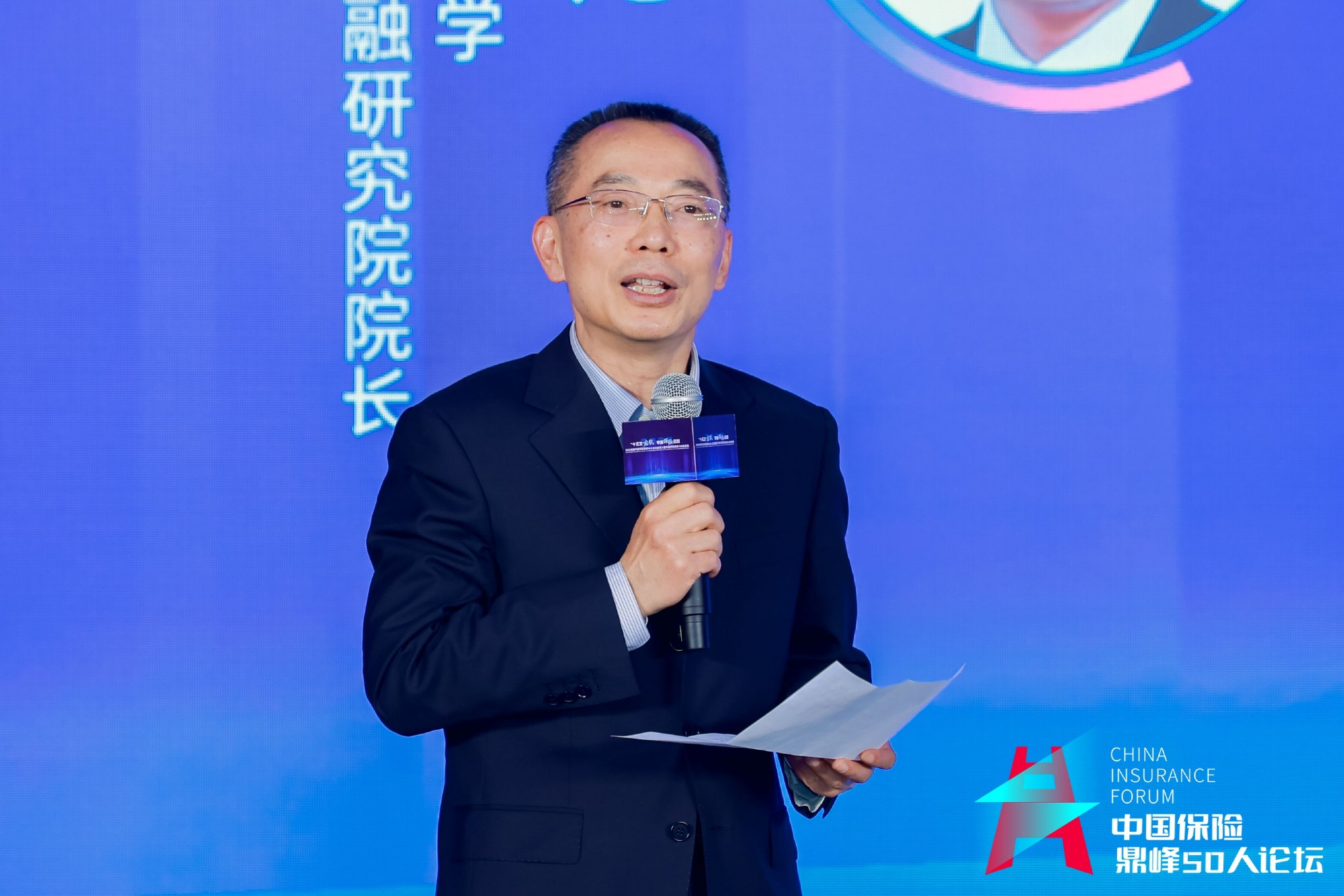
中国养老金融研究院院长刘云龙:政企协同与多元金融支持是医康养发展的关键
Xin Lang Cai Jing· 2025-12-22 01:47
Core Viewpoint - The forum focused on the theme "'14th Five-Year Plan' Launch: Charting the Insurance Blueprint," discussing the high-quality development paths for the insurance industry during the "14th Five-Year Plan" period [6]. Group 1: Industry Development - The forum gathered nearly a hundred representatives from the "Top 108 in Chinese Insurance," along with senior experts from financial regulation, authoritative scholars, and core executives from enterprises to discuss the future development of the insurance industry [6]. - Liu Yunlong emphasized the need for a robust medical, health, and elderly care ecosystem, highlighting three key areas: industrial ecosystem construction, government-enterprise ecosystem collaboration, and policy ecosystem development [8][9]. Group 2: Industrial Ecosystem - Liu pointed out that central enterprises, insurance companies, and small and medium-sized enterprises are the three main players in the medical and elderly care sector, with insurance companies being the backbone due to their substantial financial resources and customer base [8]. - The current distribution of elderly care methods shows that home and community care account for nearly 99%, indicating a shift from the traditional "9073" model [8]. Group 3: Government-Enterprise Collaboration - Liu stressed that understanding public needs and aligning with government requirements are crucial for insurance companies to effectively serve society [9]. - Local governments play a vital role in supporting the development of medical and elderly care, which can be facilitated through state-owned assets and government procurement services [8]. Group 4: Policy Ecosystem - Liu highlighted the importance of combining financial and fiscal policies in developing the medical and elderly care sector, citing the U.S. retirement REITs market, which reached $1.4 trillion (approximately 10 trillion RMB) in 2024 [10]. - The domestic public REITs market for infrastructure is still in its early stages, with issuance scale not exceeding 200 billion RMB, but opportunities for development are expected to emerge as policies evolve [10]. Group 5: Financial Sector Involvement - By the end of 2024, the total assets of financial institutions in China are projected to reach 496 trillion RMB, with the banking sector accounting for 445 trillion RMB and the insurance sector for 36 trillion RMB [11]. - Liu suggested that relying solely on insurance funds to drive the development of medical and elderly care is insufficient, advocating for the involvement of commercial banks through financial asset investment companies (AIC) [11].

“十五五”红利点!构建康养生态,有这些着力点
券商中国· 2025-12-21 23:28
Core Viewpoint - The article emphasizes the importance of developing a high-quality elderly care system in response to population aging, highlighting the role of government and market collaboration in building a comprehensive elderly care ecosystem [2][3]. Group 1: Policy Guidance for Elderly Care Ecosystem - The current stage presents a significant opportunity in the elderly care industry, with a consensus on the need to establish a robust medical and elderly care ecosystem [3]. - The core of building an elderly care ecosystem involves integrating the elderly care industry with supply chains, services, and financial aspects to provide precise services for the elderly [3]. - Key stakeholders in the medical and elderly care sector include central enterprises, insurance companies, and small to medium enterprises, with insurance companies playing a pivotal role due to their financial strength and customer base [3][4]. Group 2: Development Strategies - The construction of a medical and elderly care ecosystem requires efforts in three areas: industrial ecosystem construction, government-enterprise ecosystem construction, and policy ecosystem construction [3][6]. - The industrial ecosystem should focus on market demand and align with government needs, with local governments playing a crucial role in providing inclusive elderly care services [3][4]. - The government can participate through state-owned assets and procurement services, emphasizing the importance of long-term care insurance and inclusive insurance [3][4]. Group 3: Role of Insurance Industry - The insurance industry is not just a payer but should act as a resource integrator, supervisor, and service provider within the elderly care ecosystem [5]. - Insurance companies can help clients plan for long-term health and elderly care expenses, leveraging their advantages in risk management and funding [5][6]. - The insurance sector's role includes promoting collaboration with medical institutions to enhance service efficiency and risk management [5]. Group 4: Policy Ecosystem Construction - The combination of financial and fiscal policies is crucial for developing the medical and elderly care ecosystem [6][7]. - Learning from the U.S. REITs model, there is potential for pension funds to invest in real estate that meets elderly care needs, contributing to stable returns [6]. - Local governments should take initiative by establishing guiding funds and collaborating with financial institutions to promote the development of the elderly care industry [7].

人口老龄化催生新赛道,保险业如何破解养老“内卷”困局?
Hua Xia Shi Bao· 2025-12-20 07:56
Core Insights - The aging population in China is becoming a national strategic focus, with projections indicating that by 2035, the elderly population (aged 60 and above) will exceed 400 million, accounting for over 30% of the total population [2] - The rapid growth of the elderly care industry is driven by increasing demand and supportive government policies, with the industry expected to surpass 12 trillion yuan by 2025 and 20 trillion yuan by 2030 [2] - The insurance sector is positioned as a key player in the development of a comprehensive healthcare and elderly care ecosystem, moving beyond mere payment roles to become integrators of resources and risk managers [2][4] Industry Trends - The traditional elderly care model is evolving, with home and community care now accounting for nearly 99% of services, indicating a shift in how elderly care is delivered [3] - The focus of the "14th Five-Year Plan" was on the availability of elderly care services, while the "15th Five-Year Plan" emphasizes the quality and diversity of these services [4] - The insurance industry is undergoing a transformation, moving from a reliance on human expansion and channel-driven growth to a service-driven and ecosystem-building model [4] Financial and Technological Innovations - Financial support is crucial for the development of the elderly care ecosystem, with suggestions for commercial banks to participate in funding and innovation [6] - The potential for innovative financial products in elderly care is significant, with examples from the U.S. indicating a growing market for real estate investment trusts (REITs) focused on elderly care [6] - Technology is seen as a vital tool for improving service accessibility and efficiency, addressing labor shortages, and managing long-term costs in elderly care [7] Collaborative Ecosystem Development - Effective market and government collaboration is essential for the healthy development of the elderly care industry, with insurance companies needing to align their services with government needs [5][8] - The role of government is multifaceted, acting as an enabler, planner, and regulator to support the ecosystem [8] - Differentiation and avoiding homogenized competition are critical for sustainable industry growth, with various stakeholders needing to clarify their roles and unique contributions [8]