
医疗大模型

Search documents
2025年医疗大模型品牌推荐:海量知识深度整合,智能生成革新医疗范式
Tou Bao Yan Jiu Yuan· 2026-02-27 12:15
Investment Rating - The report does not explicitly state an investment rating for the industry Core Insights - The Chinese medical large model industry is evolving from single-modal text processing to multi-modal clinical intelligent collaboration, driven by algorithm innovation and compliance system construction [5] - The market size of China's medical large model is projected to grow from 100 million to 7.58 billion by 2029, with a compound annual growth rate (CAGR) of 46.8% [8] - The demand for AI-assisted diagnostic systems is characterized by a strong recognition of AI's value among physicians, with over 95% acknowledging its benefits [10] Market Background - The medical large model is defined as an AI system that integrates vast medical data for various healthcare scenarios, including diagnosis, research, and management [5][6] - The evolution of the market has seen a transition from general models to specialized medical knowledge alignment and integration with clinical workflows [7] Market Status - The market size of China's medical large model is expected to reach 1.08 billion in 2024, with a CAGR of 81.6% from 2020 to 2024 [8] - By September 2025, 197 projects in the medical large model field have been disclosed, indicating a balanced development across computing power, large models, and comprehensive sectors [9] Market Competition - The competitive landscape features a mix of technology giants leading the market, specialized companies focusing on specific medical fields, and innovative firms targeting niche applications [15] - The core competitive strengths of leading brands include high-quality algorithms, application depth, and compliance with safety regulations [11][12][14] Recommended Brands - Baidu Lingyi Zhihui focuses on AI solutions across the medical process [16] - Tencent Miyi leverages its social ecosystem for multi-modal applications in medical imaging [17][18] - Alibaba Health applies its capabilities in intelligent medication consultation and health management [19] Development Trends - Future developments will focus on creating native medical large models that integrate medical knowledge from the pre-training stage [28] - The application forms are diversifying from simple Q&A to embedding deeply into business processes, with mixed deployment models emerging [29] - The commercialization is shifting from project-based to a platform and ecosystem model, encouraging third-party development [30]
国产医疗大模型登顶权威榜单,核心秘籍:PB级训练数据、模拟医生真实会诊过程
3 6 Ke· 2026-02-13 12:06
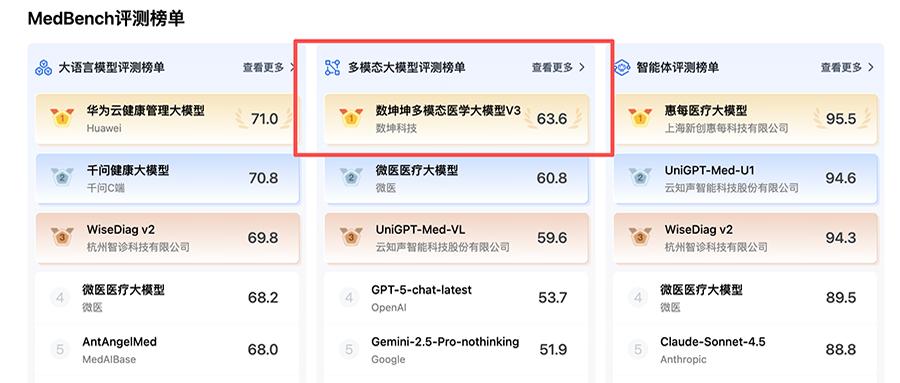
Core Insights - The latest multi-modal medical model ranking by MedBench shows that Shukun Technology's Shukun Multi-modal Medical Model V3 achieved the highest score of 63.6, surpassing models from WeDoctor, Yunzhisheng, OpenAI, Google, and Alibaba [1][2]. Model Performance - Shukun's V3 model scored 73.4 in medical visual perception, 51.1 in cross-modal semantic understanding, and 66.4 in clinical decision support, indicating strong capabilities in these areas [3][8]. - The model's performance is attributed to its training data and strategy, which includes a multi-disciplinary consultation approach that mimics human expert diagnosis [4][11]. Training and Data Accumulation - Shukun Technology has accumulated PB-level medical data through partnerships with over a thousand hospitals, enhancing the model's training process [11][12]. - The training strategy involves simulating the clinical decision-making process of doctors, integrating various modalities of medical data for comprehensive analysis [12][16]. Industry Context - The AI healthcare sector is rapidly evolving, with Shukun Technology being a pioneer in applying AI to medical imaging and diagnostics [13][17]. - The model's success reflects a shift in the competitive landscape, where the effectiveness of medical models is increasingly determined by their practical application in real clinical settings rather than just their parameter size [18].

全国三甲医生24小时在线 京东互联网医院开展“新春健康守护”活动
Sou Hu Wang· 2026-02-10 03:08
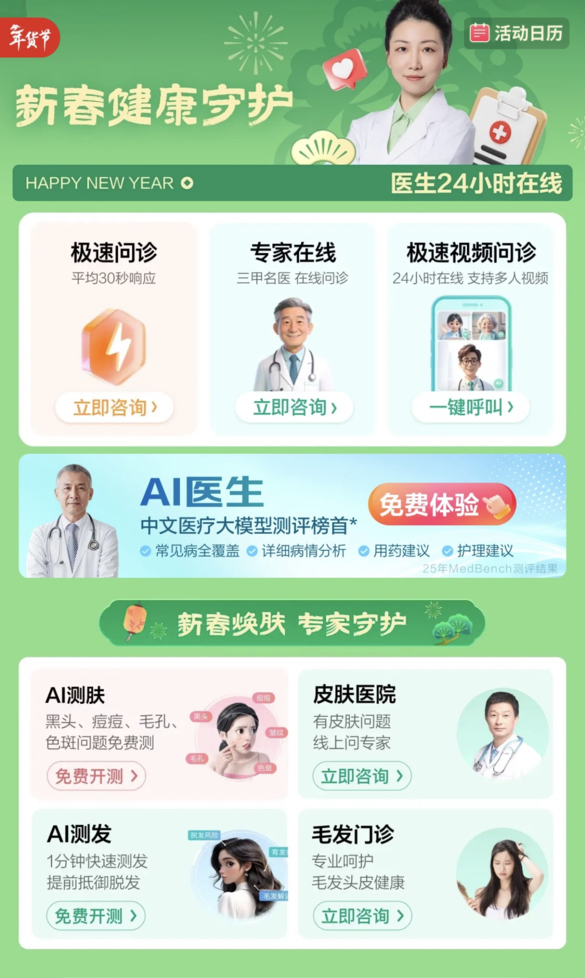
Core Viewpoint - JD Internet Hospital is launching the "New Year Health Guard" initiative to provide 24-hour online consultation services, integrating resources from top-tier hospitals to address health needs during the Spring Festival [1] Group 1: Service Overview - The initiative aims to alleviate healthcare access issues during the holiday season, ensuring timely and professional medical support for users [1] - Users can access the service through the JD APP by searching for "New Year Health Guard" or "Ask a Doctor," allowing for quick entry into the consultation channel [1] Group 2: User Experience - Previous experiences highlight the effectiveness of JD Internet Hospital's online consultation, such as a case where a user abroad received timely advice for a burn injury through video consultation with a top-tier hospital [3] - Another case involved a 71-year-old user who received a diagnosis and treatment plan for severe skin itching, demonstrating the platform's ability to provide effective medical guidance [3] Group 3: AI Integration - JD Health's AI doctor, "Dai Wei," operates around the clock, utilizing a self-developed medical model and comprehensive medical knowledge base to offer multi-round symptom collection, analysis, and recommendations [4] - The AI doctor integrates authoritative clinical guidelines and medical literature, providing evidence-based suggestions to enhance the quality of health services [4] Group 4: Strategic Goals - JD Health aims to leverage its internet medical service advantages and robust pharmaceutical supply chain capabilities to ensure quality medical resources are accessible regardless of users' locations [4] - The initiative seeks to provide peace of mind and health support for families during the reunion moments of the Spring Festival [4]
无惧OpenAI,2026年国内最值得期待的十个医疗大模型
3 6 Ke· 2026-02-09 01:31
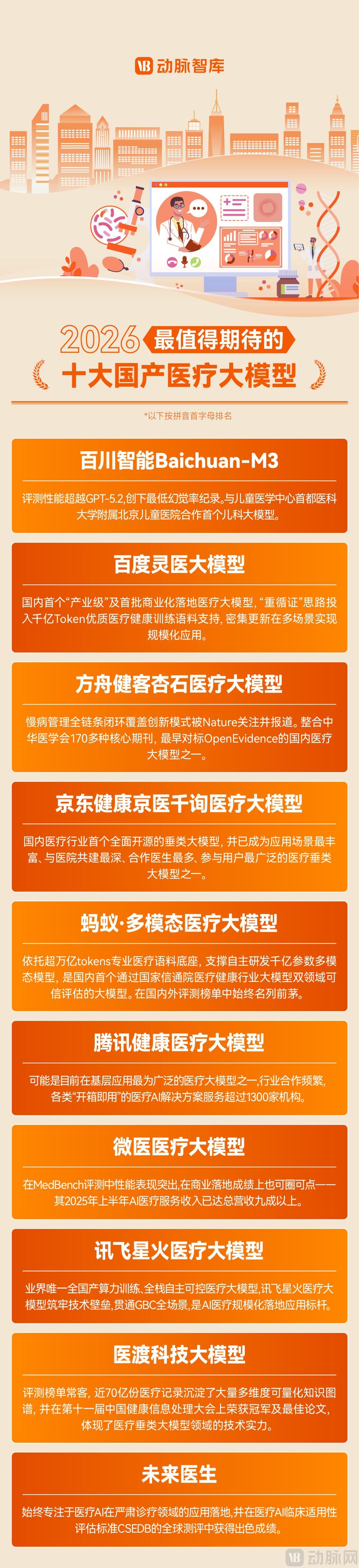
Core Insights - The medical large model sector is experiencing significant advancements, particularly with the recent launches from OpenAI, Anthropic, and Google, indicating a competitive landscape in healthcare AI [1][3][4] - Domestic companies in China, such as Baichuan Intelligence and Ant Group, are making substantial progress, showcasing their capabilities and innovations in the medical AI field [5][6][10] Group 1: OpenAI's Developments - OpenAI launched ChatGPT Health and OpenAI for Healthcare, which comply with HIPAA regulations and aim to enhance patient care services [2] - ChatGPT Health integrates a new module based on the latest GPT-5 model, allowing users to connect personal health data while ensuring data privacy [2] - OpenAI for Healthcare targets medical institutions, offering enterprise-level solutions for clinical environments, including automated documentation [2] Group 2: Competitors' Responses - Anthropic released Claude for Healthcare, directly competing with OpenAI's offerings, highlighting its commitment to the healthcare sector [3] - Google updated its open-source medical large model, MedGemma 1.5, improving its capabilities in text, medical records, and medical imaging [3] Group 3: Domestic Innovations - Baichuan Intelligence launched Baichuan-M3, surpassing GPT-5.2 in benchmark tests, with a hallucination rate of only 3.5%, which was later improved to 2.6% [4][5] - Ant Group's medical model has gained significant traction, achieving 30 million monthly active users and doubling daily inquiries within a month [5] - JD Health and other domestic firms are also releasing new models and solutions, contributing to a vibrant competitive landscape in China's medical AI sector [5][10] Group 4: Benchmarking and Performance - HealthBench and MedBench are the primary benchmarking systems for evaluating medical large models, assessing safety, clinical applicability, and professional reasoning [7][8] - The performance of medical large models is crucial, with ongoing iterations and resource investments being necessary for advancements [8] Group 5: Industry Trends and Future Outlook - The medical large model sector is expected to grow significantly, with various domestic models emerging as strong contenders in 2026 [6][10] - The integration of local clinical guidelines and data security measures positions domestic models as more suitable for the Chinese market [6] - The increasing support from the government and the focus on localized solutions are likely to enhance the competitiveness of domestic models [6]


2025WAIC“AI+医疗健康产业图谱首发”:十大洞见解码人工智能医疗的"中国方案"
Di Yi Cai Jing· 2026-02-03 12:47
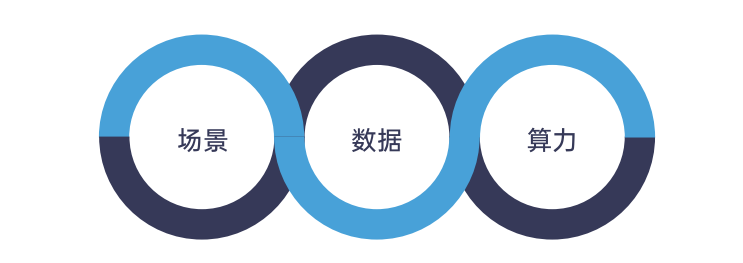
Group 1 - The core viewpoint is that AI in healthcare is integrated into national strategic planning, leading to an accelerated phase of industry development through a comprehensive policy framework [1][6] Group 2 - Infrastructure support focuses on standardization to enhance data interoperability and smart hospital construction, laying the groundwork for AI applications in healthcare [2] - Regulatory governance has established a tiered framework to balance innovation and safety, providing clear guidelines for AI medical software classification and lifecycle regulation [3] - Payment mechanism reforms are crucial for the commercialization of AI healthcare products, with policies supporting AI-assisted diagnosis and innovative payment models [4] Group 3 - Application scenarios are being expanded, with the government identifying key areas for AI in healthcare, creating a positive cycle of policy guidance and innovation [5] - The integration of AI with pharmaceutical manufacturing and healthcare services is encouraged, fostering a diversified innovation ecosystem [6] Group 4 - Shanghai is leading the way in medical AI development with the first provincial-level plan, aiming to create a nationally replicable model for AI in healthcare [7] - The plan emphasizes enhancing innovation sources, building support platforms, and creating comprehensive application scenarios in clinical and public health [8][9][10] Group 5 - Companies are focusing on three critical elements: application scenarios, data, and computing power, which are essential for breakthroughs in the AI healthcare industry [11][12] - There is a pressing need for high-value application scenarios, as many AI technologies face challenges in adapting to clinical and industry needs [13][14] - Data sharing and quality are significant concerns, with companies advocating for unified data-sharing mechanisms to overcome barriers [16][17] - The demand for computing power is high, and companies are calling for centralized computing resources to reduce costs and improve efficiency [17] Group 6 - The trend of companies expanding internationally is becoming essential, with different paths for AI in drug development and medical devices [18] - AI in drug development is characterized by a dual approach of licensing out and independent international expansion, focusing on regions with established clinical trial systems [19][20] - AI in medical devices is pursuing multiple strategies to adapt to global market needs, including remote surgery and tailored solutions [20] Group 7 - A comparison of capabilities between Chinese and American companies in various AI healthcare fields shows differences in market maturity and regulatory environments [30] Group 8 - Specialized medical models are gaining traction, with hospitals leading the deployment of AI models tailored to specific diseases [34] - Evidence-based medicine is being utilized to address challenges in AI reliability and accuracy [37][38] Group 9 - The emergence of embodied intelligence is expected to bridge the gap between digital healthcare and physical health services, focusing on autonomous medical interventions and human-robot collaboration [45][49][51] Group 10 - AI technology is fundamentally reshaping the healthcare industry by enhancing operational efficiency and expanding access to quality medical resources [54] - The shift from hospital-centered systems to personal health information systems marks a significant transformation in healthcare delivery, emphasizing proactive health management [56][60]
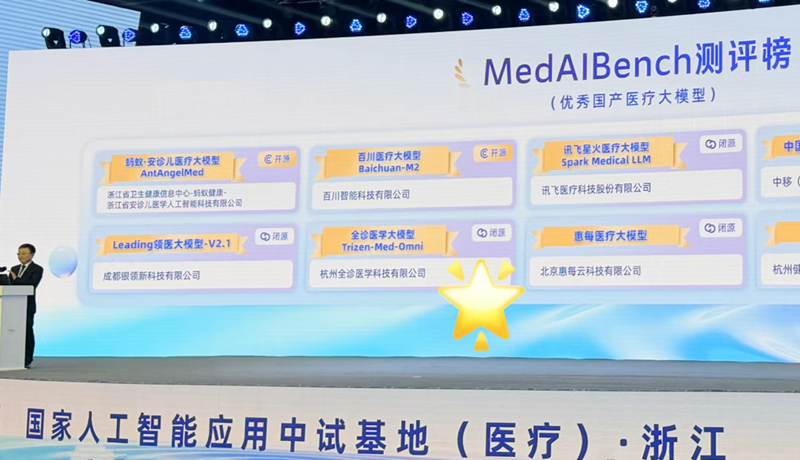
“Ai好医生诊疗支持系统”基座模型荣膺年度优秀国产大模型
Jing Ji Wang· 2026-01-23 08:57
Core Insights - The "MedAIBench Medical Large Model Evaluation List" was unveiled at the annual industry conference in Zhejiang, highlighting the "Ai Good Doctor Diagnosis Support System" based on the Trizen-Med-Omni model as an outstanding domestic medical AI model [1][2] Group 1: Evaluation System - The MedAIBench evaluation system was developed by the National AI Application Pilot Base (Medical) in collaboration with authoritative institutions like the Chinese Academy of Medical Sciences and Peking Union Medical College, adhering to national health guidelines [2] - The evaluation results establish a "gold standard" for the admission of medical large models by focusing on practical capabilities in real-world scenarios such as intelligent medical record writing, diagnostic assistance, and medical safety, rather than just parameter scale [4] Group 2: Strategic Collaboration - In 2025, Good Doctor Group and Trizen-Med announced a strategic partnership to provide intelligent solutions for grassroots medical institutions, leveraging Good Doctor's network and Trizen-Med's AI technology [6] - The "Ai Good Doctor Diagnosis Support System" incorporates the award-winning Trizen-Med-Omni model, enhancing its capabilities in medical record writing, diagnostic assistance, and decision-making [6] Group 3: System Capabilities - The system excels in medical record writing, achieving top industry accuracy in voice recognition and record generation in noisy outpatient environments, based on the model's perfect score in intelligent medical record writing [6] - It offers safe diagnostic assistance by providing triage-level diagnostic suggestions and quality control measures, utilizing compliant technology registered with the National Cyberspace Administration [6] - The company aims to transform this national-level technological achievement into widely accessible applications, promoting the "Ai Good Doctor Diagnosis Support System" across clinics nationwide [6]
百川发布医疗大模型Baichuan-M3 Plus:采用“证据锚定”技术 幻觉率降至2.6%
Feng Huang Wang· 2026-01-22 07:20
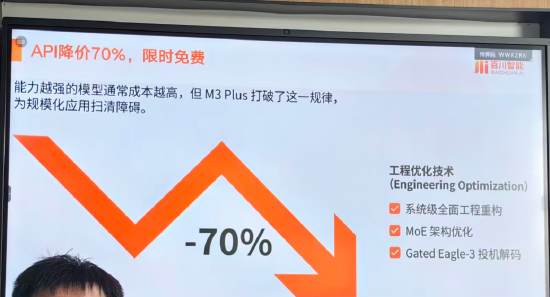
Core Insights - Baichuan Intelligent officially launched the evidence-enhanced medical model Baichuan-M3Plus on January 22, achieving leading results in multiple medical evaluations with a factual hallucination rate reduced to 2.6%, the lowest reported level to date [1] Group 1: Model Features - M3Plus utilizes "evidence anchoring" technology, allowing each medical conclusion generated by the model to be precisely linked to specific evidence paragraphs in original papers or guidelines, ensuring traceability and verifiability of conclusions [1] - The accuracy of matching conclusions to evidence exceeds 95%, indicating a high level of reliability in the model's outputs [1] Group 2: Service Model - Baichuan Intelligent announced the "Haina Baichuan (301667)" plan, which will provide free access to the M3Plus API for Chinese medical service institutions [1] - The API call cost for M3Plus has been reduced by 70% compared to the previous generation, making it more accessible for developers [1] - All developers can apply for a limited-time 15-day free trial of the API, promoting wider adoption of the model [1]

百川推出最低幻觉循证增强医疗大模型M3 Plus,并发起「海纳百川」计划
IPO早知道· 2026-01-22 07:14
Core Insights - Baichuan Intelligence has launched Baichuan-M3 Plus, which significantly improves accuracy and reliability in serious medical scenarios, surpassing its predecessor M3 and achieving a new world record [2] - The M3 model has outperformed GPT-5.2 in various authoritative evaluations, achieving a hallucination rate of only 3.5%, and M3 Plus further reduces this to 2.6%, a decrease of over 30% compared to GPT-5.2 [2][4] - The introduction of the "Evidence Anchoring" technology ensures that every medical conclusion generated by the model is directly traceable to specific evidence segments in original papers or guidelines, achieving a matching accuracy of over 95% [4] Technical Innovations - M3 Plus employs a unique reinforcement learning paradigm called Fact-Aware RL, which significantly reduces hallucination rates without the use of external tools, achieving state-of-the-art (SOTA) levels [2] - The system architecture has been comprehensively restructured, utilizing key technologies such as MoE architecture optimization and Gated Eagle-3 speculative decoding, resulting in a 70% reduction in API call costs compared to the previous generation [9] Industry Impact - Baichuan has launched the "Haina Baichuan" initiative, offering the world's lowest hallucination evidence-enhanced medical model as a free API to Chinese medical institutions, aiming to foster the domestic AI medical ecosystem [9] - This initiative represents a commitment to advancing AI in healthcare, ensuring that every healthcare worker in China has access to reliable and effective AI assistance, ultimately benefiting public health [9]

时隔9天!百川智能再发布M3 Plus新模型,API调用降价70%
Xin Lang Cai Jing· 2026-01-22 03:17
Core Insights - Baichuan Intelligent has released the Baichuan-M3 Plus model, enhancing the accuracy and reliability of medical Q&A compared to the previous M3 model, setting a new record for low hallucination rates in medical models [1][3] Group 1: Model Performance - The hallucination rate of M3 Plus has significantly decreased from 3.5 in the M3 model to 2.6 in the M3 Plus model [1][3] - In a live testing session, M3 Plus outperformed several domestic AI medical models, providing the most accurate answers despite competitors having varying degrees of misleading information [1][3] Group 2: Cost Efficiency - M3 Plus has addressed the issue of high model costs by reducing API call prices by 70%, facilitating large-scale application [1][3]
讯飞医疗科技(02506):讯飞医疗科技:AI 医疗龙头,GBC 全场景贯通:&中试基地卡位明确,规模化落地有望加速
Changjiang Securities· 2026-01-19 06:03
Investment Rating - The report assigns a "Buy" rating for the company, marking its first coverage [10][12]. Core Insights - The company has established a comprehensive GBC (Government, Business, Consumer) business model that integrates AI capabilities across the entire medical service cycle, from health risk warning to chronic disease management [4][20]. - The company is expected to achieve revenues of 920 million, 1.18 billion, and 1.47 billion RMB for the years 2025, 2026, and 2027, respectively, reflecting year-on-year growth rates of 25.6%, 27.6%, and 25.0% [4][10]. Summary by Relevant Sections Company Overview - Founded in 2016, the company leverages the iFlytek Spark Medical Model to provide solutions covering the entire medical service cycle [7][20]. - The ownership structure is concentrated, with iFlytek Group holding 49.4% of shares, ensuring strategic alignment and resource allocation [26][28]. Business Model and Market Position - The company has a significant first-mover advantage, having accumulated extensive data assets through early strategic positioning [8][10]. - The GBC model encompasses a complete medical service loop, addressing challenges in data flow within the healthcare industry [8][10]. Financial Performance - Revenue has shown robust growth, increasing from 373 million RMB in 2021 to an expected 734 million RMB in 2024, with a compound annual growth rate of 25.4% [36]. - The company has improved its net loss from -189 million RMB in 2022 to -133 million RMB in 2024, indicating a positive trend in financial health [37]. Growth Drivers - The company is positioned to benefit from accelerating digitalization and intelligence demands in the healthcare sector, with G and B segments providing stable revenue growth in the short term [10][20]. - The C segment, focusing on patient management services, is anticipated to be a core growth driver in the medium term [10][20]. Technological Advancements - The company has developed the Spark Medical Model, which is the only medical deep reasoning model trained on fully domestic computing power, enhancing its competitive edge [60][61]. - The integration of AI technologies into various healthcare applications is expected to significantly improve operational efficiency and patient outcomes [60][61].