讯飞晓医APP

Search documents
神仙打架+1!讯飞星火X2硬核亮相,行业深度全面升级
量子位· 2026-02-11 14:57
Core Viewpoint - The article highlights the significant advancements of iFLYTEK's Starfire Model X2, showcasing a 50% improvement in reasoning performance compared to its predecessor, Starfire X1.5, achieved within just three months, and emphasizes its capabilities based on domestic computing power [2][10][50]. Group 1: Model Performance and Capabilities - Starfire X2 demonstrates outstanding general capabilities, ranking among the top in the industry, and competes closely with international models like GPT-5.2 and Gemini-3-Pro [2][12]. - The model excels particularly in mathematical calculations and logical reasoning, maintaining proficiency in over 130 languages [3][12]. - Starfire X2's reasoning training efficiency has improved by 50%, a notable achievement given the diminishing returns in performance enhancement for large models [8][9]. Group 2: Technical Innovations - The model incorporates several technical innovations, including weight quantization, low-precision KVCache, and a two-stage reasoning sampling method, which enhance training efficiency by 10% [24][27][30]. - A new adaptive calibration algorithm ensures that the model maintains logical consistency during training and inference, addressing common issues in large model architectures [24]. - The recursive high-difficulty data synthesis method allows for the creation of high-quality training data, improving the model's reasoning accuracy [25][26]. Group 3: Industry Applications and Market Position - Starfire X2 is positioned to drive significant advancements in various industries, with a focus on practical applications and user experience [31][54]. - In the healthcare sector, Starfire X2 outperforms competitors in key metrics, establishing a new benchmark for medical AI models [34][35]. - The model's deployment in education enhances personalized learning experiences, allowing for detailed feedback and analysis of student performance [37][41]. Group 4: Strategic Direction and Future Outlook - iFLYTEK's strategy emphasizes a combination of a general-purpose model and specialized industry models, aiming for rapid deployment and practical applications [54][55]. - The company has established itself as a leader in the domestic AI landscape, leveraging its unique approach to overcome challenges related to computing power and model performance [50][56]. - The advancements of Starfire X2 signal a shift towards the application of domestic AI models, marking the beginning of a new phase of growth and opportunity in the industry [56].


讯飞医疗(02506)的增长逻辑:从科大讯飞70%利润增长看AI医疗的估值重构
智通财经网· 2026-01-30 07:15
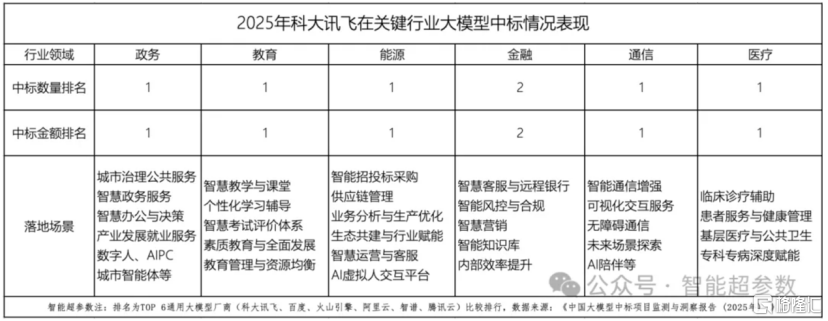
Core Viewpoint - The announcement from Keda Xunfei regarding its 2025 profit forecast indicates a projected net profit growth of 40% to 70%, highlighting the resilience of its core business and signaling that AI-driven vertical commercialization has entered a harvest phase [1] Group 1: Company Performance - Keda Xunfei's growth is attributed to its "platform + scenario" strategy, with the medical sector being a significant contributor to this growth [2] - The medical business has achieved substantial market penetration, with over 77,000 grassroots medical institutions deploying its core product, the Intelligent Medical Assistant [2] - The download count for the personal health assistant app "Xunfei Xiaoyi" has surpassed 26 million, indicating strong user engagement and service capability [2] Group 2: Technological Advancements - The "Xunfei Spark" large model is the only mainstream model in China trained on domestically produced computing power, maintaining competitive technical indicators globally [3] - The medical deep reasoning model, based on the Spark model, has outperformed leading models like GPT-5 in various medical applications, achieving capabilities equivalent to senior hospital physicians [3] - In 2025, Keda Xunfei's large model projects won contracts worth 2.316 billion yuan, surpassing the combined total of the second to sixth competitors in the industry [3] Group 3: Market Dynamics - The global AI medical market is projected to exceed $100 billion by 2025, with a compound annual growth rate of over 25%, driven by the demand for AI applications in grassroots healthcare [5] - Keda Xunfei is positioned to leverage its domestic experience to address global healthcare challenges, particularly in emerging markets [6] - The company is actively exporting its successful grassroots medical AI solutions, aiming to capture growth opportunities in the global market [6] Group 4: Investment Implications - The profit growth forecast from Keda Xunfei signals to the capital market that medical AI has transitioned from concept to scalable profitability, with the company positioned as an industry leader [7] - Unlike many US competitors that remain unprofitable, Keda Xunfei has achieved profitability and continues to optimize its business model, suggesting significant valuation upside [7] - The sustainable technological barriers established by Keda Xunfei, through its comprehensive ecosystem of large models, data, and application scenarios, provide a strong foundation for long-term valuation support [7] Conclusion - Keda Xunfei's 2025 profit forecast reflects confidence in the commercialization of AI, indicating not only a spillover effect on the parent company's performance but also the independent commercial value of its medical technology [8] - The company is carving out a unique path in AI medical commercialization, deeply embedding itself in the transformation of China's healthcare system [8]
讯飞医疗的增长逻辑:从科大讯飞70%利润增长看AI医疗的估值重构
Zhi Tong Cai Jing· 2026-01-30 07:14
Core Viewpoint - The announcement from Keda Xunfei (002230) regarding its 2025 annual performance forecast indicates a projected net profit growth of 40% to 70% year-on-year, highlighting the resilience of its core business and signaling that AI-driven vertical scene commercialization has entered a harvest phase [1] Group 1: Company Performance - Keda Xunfei's growth is attributed to its "platform + scene" strategy, with the medical sector being a significant contributor to this growth [1] - The medical segment has achieved substantial market penetration, with core product "Smart Medical Assistant" deployed in over 77,000 grassroots medical institutions nationwide [2] - The company reported that its medical AI projects won contracts worth 2.316 billion yuan in 2025, surpassing the combined total of the second to sixth competitors in the industry [3] Group 2: Technological Advancements - The "Xunfei Spark" large model is the only mainstream model in China trained on domestically produced computing power, maintaining competitive technical indicators globally [3] - The medical deep reasoning model, based on the Spark model, has outperformed competitors like GPT-5 and DeepSeek V3.2-Exp in various medical applications [3] - The company has established a complete ecosystem combining large models, data, and application scenarios, creating a competitive advantage that is difficult for peers to replicate [7] Group 3: Market Trends - The global AI medical market is projected to exceed $100 billion by 2025, with a compound annual growth rate of over 25%, particularly in grassroots medical AI applications [5] - Keda Xunfei is positioned to provide replicable solutions for global healthcare challenges, leveraging its experience in the Chinese market [6] - The company is seen as a leader in the AI medical sector, with its valuation expected to rise as it continues to optimize its business model and maintain its technological barriers [7] Group 4: Future Outlook - The performance forecast serves as a confidence vote for the commercialization of AI, indicating that Keda Xunfei's medical technology is not only a spillover effect from its parent company but also a signal of its independent commercial value [8] - The company is on a unique path of AI medical commercialization, deeply embedded in the transformation of the Chinese healthcare system [8]
以国产化铸壁垒,讯飞医疗(2506.HK)凭全栈能力掘金AI医疗资本市场
Ge Long Hui A P P· 2026-01-30 07:08
Core Insights - Data security and domestic substitution have become the core benchmarks for government and enterprise procurement, particularly in the medical technology sector, where competition has shifted from pure technology comparison to a comprehensive contest of full-stack capabilities and commercial implementation [1] Group 1: Company Performance - In 2025, iFlytek secured 210 large model bidding projects with a total bid amount of 2.316 billion yuan, ranking first among the top six general large model vendors [1] - iFlytek's medical sector leads in both the number and amount of bids, becoming a core growth driver for the company in the large model arena [1][3] - The company anticipates a net profit growth of 40% to 70% year-on-year for 2025, with non-recurring net profit expected to grow by 30% to 60% [2] Group 2: Market Position and Competitive Advantage - iFlytek's medical model orders have seen explosive growth, showcasing significant growth potential and establishing a unique full-stack capability that differentiates it from competitors like Baidu and Alibaba Health [3][4] - The "iFlytek Spark" model is the only mainstream large model in China trained on fully domestic computing power, achieving global leading performance in various sectors including education and healthcare [4] - The company has established a strong foothold in the CDSS market for grassroots medical institutions, achieving a market share of 61.5% in 2023 [10] Group 3: Policy Alignment and Market Demand - iFlytek's technology aligns well with national policies aimed at improving grassroots medical service capabilities and optimizing healthcare resource allocation, making its medical large model a key tool in government procurement [7][8] - The company's intelligent medical assistant has covered over 77,000 grassroots institutions across 31 provinces, providing 1.1 billion diagnostic suggestions, thus enhancing the quality of care in line with national healthcare policies [8] Group 4: Long-term Growth Potential - iFlytek's unique position as the "first stock of medical large models" provides it with significant capital market recognition and advantages in resource integration [9] - The GBC (Global Business Collaboration) commercial loop enhances its long-term growth value by effectively linking technology implementation with commercial monetization [10][11] - The company reported a revenue of 299 million yuan in the first half of 2025, a year-on-year increase of 30.26%, with a significant reduction in net losses by 42.86% [11]
讯飞医疗科技(02506):讯飞医疗科技:AI 医疗龙头,GBC 全场景贯通:&中试基地卡位明确,规模化落地有望加速
Changjiang Securities· 2026-01-19 06:03
Investment Rating - The report assigns a "Buy" rating for the company, marking its first coverage [10][12]. Core Insights - The company has established a comprehensive GBC (Government, Business, Consumer) business model that integrates AI capabilities across the entire medical service cycle, from health risk warning to chronic disease management [4][20]. - The company is expected to achieve revenues of 920 million, 1.18 billion, and 1.47 billion RMB for the years 2025, 2026, and 2027, respectively, reflecting year-on-year growth rates of 25.6%, 27.6%, and 25.0% [4][10]. Summary by Relevant Sections Company Overview - Founded in 2016, the company leverages the iFlytek Spark Medical Model to provide solutions covering the entire medical service cycle [7][20]. - The ownership structure is concentrated, with iFlytek Group holding 49.4% of shares, ensuring strategic alignment and resource allocation [26][28]. Business Model and Market Position - The company has a significant first-mover advantage, having accumulated extensive data assets through early strategic positioning [8][10]. - The GBC model encompasses a complete medical service loop, addressing challenges in data flow within the healthcare industry [8][10]. Financial Performance - Revenue has shown robust growth, increasing from 373 million RMB in 2021 to an expected 734 million RMB in 2024, with a compound annual growth rate of 25.4% [36]. - The company has improved its net loss from -189 million RMB in 2022 to -133 million RMB in 2024, indicating a positive trend in financial health [37]. Growth Drivers - The company is positioned to benefit from accelerating digitalization and intelligence demands in the healthcare sector, with G and B segments providing stable revenue growth in the short term [10][20]. - The C segment, focusing on patient management services, is anticipated to be a core growth driver in the medium term [10][20]. Technological Advancements - The company has developed the Spark Medical Model, which is the only medical deep reasoning model trained on fully domestic computing power, enhancing its competitive edge [60][61]. - The integration of AI technologies into various healthcare applications is expected to significantly improve operational efficiency and patient outcomes [60][61].
一纸中标4.276亿国家级项目,讯飞医疗(2506.HK)如何撬动AI医疗产业新坐标?
Sou Hu Cai Jing· 2025-12-05 01:09
Core Insights - The core viewpoint of the articles is that iFlytek Medical's recent bid win of 427.6 million yuan for a national AI application pilot base in healthcare signifies a breakthrough in the AI medical industry, which has been struggling with technology implementation and unclear profit models [1][10]. Group 1: Market Demand and Policy Support - The healthcare sector in China faces significant demand, with the average life expectancy reaching 79 years and over 141.36 million elderly individuals requiring health management in grassroots medical institutions by 2024 [1][3]. - The number of patient visits to grassroots medical institutions has increased by 230 million to 3.98 billion, highlighting a growing supply-demand imbalance in healthcare services [1]. - National policies aim for widespread application of intelligent assistance in grassroots diagnosis by 2027 and full coverage by 2030, with various provinces implementing AI support policies to promote technology penetration [3]. Group 2: Brand Value and Market Position - Winning the national project enhances iFlytek Medical's brand value by providing a "national endorsement," which strengthens its authority in the AI medical field [1][4]. - The project allows iFlytek Medical to transition from an "industry participant" to a "standard setter," addressing challenges like the lack of standards and data fragmentation in medical AI applications [4][9]. Group 3: Strategic Implementation and GBC Model - The project validates iFlytek Medical's GBC (Government, Business, Consumer) strategy, which integrates policy, business scale, and consumer demand to create a complete value chain [5][6]. - The G-end business serves as a foundational strategy, with the core product "Smart Medical Assistant" already covering 31 provinces and providing over 1.1 billion AI-assisted diagnoses [6][7]. - The project will enable the conversion of successful local experiences into nationwide standards, facilitating deeper penetration into B-end medical institutions and ultimately supporting C-end consumer growth [7][8]. Group 4: Technological Foundation and Competitive Edge - iFlytek Medical's AI model is the only fully domestically controlled medical model, outperforming competitors like GPT-5 in various capabilities, ensuring compliance with data security requirements [9]. - The technological strength not only meets G-end data security demands but also builds trust among C-end users regarding health data safety, which is crucial for long-term growth [9][10].

一纸中标4.276亿国家级项目,讯飞医疗如何撬动AI医疗产业新坐标?
Ge Long Hui· 2025-12-05 01:01
Core Insights - The announcement of a 427.6 million yuan bid by iFlytek Medical serves as a breakthrough for the AI healthcare industry, which has been struggling with "technological stagnation" and "unclear profit models" [1] - The project awarded to iFlytek Medical is a result of the convergence of policy direction, market demand, and technical strength, marking a significant recognition of the company's capabilities [1][3] Industry Demand - In 2024, the average life expectancy in China reached 79 years, with a significant increase in the elderly population requiring health management, particularly among those aged 65 and above, totaling 141.36 million [1] - The number of outpatient visits at grassroots medical institutions reached 3.98 billion, an increase of 230 million from the previous year, highlighting the growing demand for healthcare services [1] Brand Value and Recognition - The national-level project bid provides iFlytek Medical with a "national endorsement," enhancing its brand value and establishing it as a key player in the AI healthcare sector [1][3] - The project aligns with national goals to achieve widespread application of intelligent assistance in grassroots healthcare by 2027 and full coverage by 2030, further amplifying the brand's influence [3] Strategic Transition - The bid signifies a shift for iFlytek Medical from being an "industry participant" to a "standard setter," addressing challenges such as the lack of standards and data fragmentation in medical AI applications [4] - The company aims to develop a replicable "medical AI operating system" based on its extensive medical model and high-quality data platform [4] GBC Strategy Implementation - The successful bid validates iFlytek Medical's GBC (Government-Business-Consumer) strategy, which integrates policy, business, and consumer needs into a cohesive value chain [5] - The G-end business serves as a foundational strategy, with the company's core product "Smart Medical Assistant" already covering 31 provinces and providing over 1.1 billion AI-assisted diagnoses [6] B-end Market Penetration - iFlytek Medical has established deep collaborations with over 500 top-tier hospitals, facilitating the transition of proven solutions into standardized products that meet the digital transformation needs of various healthcare institutions [7] - The project is expected to significantly reduce procurement and validation costs for healthcare institutions, enhancing the company's competitive edge in the B-end market [7] C-end Business Growth - The aging population and rising chronic diseases have transformed proactive health management from an optional service to a necessity, driving demand for iFlytek Medical's consumer products [8] - The "iFlytek Xiaoyi APP" has achieved over 1.6 billion AI consultations and 26 million downloads, indicating strong user engagement and satisfaction [8] Technological Foundation - iFlytek's medical model is the only fully domestically produced and controllable model in the industry, surpassing competitors in various capabilities, thus ensuring data security and trust among users [9] - The company's technological strength is expected to be a core driver of long-term value growth, especially as policies continue to support grassroots healthcare [9] Conclusion - iFlytek Medical's value lies not only in its leading AI healthcare technology but also in its role as a core participant in the new infrastructure of AI healthcare, benefiting from policy incentives and market demand [10] - The ongoing project is set to enhance the company's data reserves and industry standards, accelerating the industrialization of AI healthcare infrastructure and driving significant growth in performance [10]
中标4.28亿元国家AI中试基地项目,讯飞医疗引领行业进入高成长通道
Zhi Tong Cai Jing· 2025-12-02 08:47
Core Viewpoint - Recently, iFlytek Medical (02506) won a bid for a software service project worth 428 million yuan at the National Artificial Intelligence Application Pilot Base, marking a significant step in the AI healthcare sector driven by policy support [1] Industry Overview - The National Development and Reform Commission, along with multiple departments, is actively promoting the establishment of application pilot bases in key sectors such as manufacturing, healthcare, and transportation, with AI in healthcare leading the way [1] - The AI healthcare sector in China has experienced a compound annual growth rate (CAGR) of 33.8% from 2019 to 2023, and it is expected to continue leading the AI sector with a projected CAGR of 43% from 2023 to 2033, reaching a market size of 315.7 billion yuan [1] Company Impact - The recent bid win allows iFlytek Medical to solidify its leadership position in the industry by transitioning from "experimental exploration" to "industry definition" [2] - The company is positioned to benefit from the commercialization of AI healthcare technology, taking advantage of policy and market dividends [2] - iFlytek Medical has developed a robust AI technology foundation, with its medical model surpassing international benchmarks in key areas, achieving capabilities equivalent to senior physicians in top-tier hospitals [2] Product and Market Performance - The core product "Zhi Yi Assistant" has reached over 250,000 grassroots doctors across 31 provinces, providing over 1.1 billion diagnostic assists [3] - The iFlytek Xiaoyi APP, integrated with the Starfire medical model, has surpassed 24 million downloads and completed over 140 million AI consultations [3] - The company anticipates a revenue CAGR of 24.7% from 2022 to 2024, with a projected growth rate of 30% in the first half of 2025 [3] Strategic Positioning - The focus on "grassroots health services" aligns with the most urgent needs in the healthcare system, supported by strong policy backing, aiming for full coverage of intelligent auxiliary applications by 2030 [3] - The recent bid changes the company's previous single product delivery model to a "model as a service" business model, expected to enhance user stickiness and generate continuous service revenue [3] Long-term Investment Value - iFlytek Medical is viewed positively by multiple investment banks, with reports indicating rapid growth across various business segments, leading to overall revenue growth and market share expansion [4] - The company is expected to benefit from the commercialization of AI in healthcare, driving its market capitalization and providing investment opportunities [4]
中标4.28亿元国家AI中试基地项目,讯飞医疗(02506)引领行业进入高成长通道
智通财经网· 2025-12-02 08:40
Core Viewpoint - Recently, iFlytek Medical (02506) won a bid for a software service project worth 428 million yuan for the National Artificial Intelligence Application Pilot Base in the medical field, marking a significant step in the AI healthcare sector driven by policy support [1] Industry Overview - The National Development and Reform Commission, along with multiple departments, is actively promoting the establishment of pilot bases in key sectors such as manufacturing, healthcare, and transportation, with AI in healthcare leading the way [1] - The AI healthcare sector in China has experienced a compound annual growth rate (CAGR) of 33.8% from 2019 to 2023, and it is expected to continue leading the AI sector with a projected CAGR of 43% from 2023 to 2033, reaching a market size of 315.7 billion yuan [1] Company Impact - The recent bid win allows iFlytek Medical to solidify its leadership position in the industry by transitioning from "experimental exploration" to "industry definition" [2] - The company is positioned to benefit from the commercialization of AI medical technology, taking advantage of policy and market dividends [2] - iFlytek Medical's AI medical products have shown significant commercial success, with its core product "Zhi Yi Assistant" covering 31 provinces and serving over 250,000 grassroots doctors, providing over 1.1 billion diagnostic assists [3] Business Model Transformation - The focus on "grassroots health services" aligns with the most urgent needs in the healthcare system, supported by strong policy backing, with a goal of achieving full coverage of intelligent auxiliary applications by 2030 [3] - The recent project win shifts the company's business model from a single product delivery approach to a "model as a service" model, expected to enhance user stickiness and generate continuous service revenue [3] Future Outlook - 2025 is anticipated to be a pivotal year for the "Artificial Intelligence+" national strategy, with significant applications expected to emerge in 2026 [3] - iFlytek Medical's leading advantages in the industry, particularly in AI medical models, and its extensive user base position it as a major beneficiary in the high-growth AI healthcare sector [3][4]
AI迎来“红利检验”时刻
Zhong Guo Jing Ying Bao· 2025-11-14 02:56
Core Concept - The article discusses the launch of "AI that understands you better," aimed at creating a more open, multilingual large model application ecosystem to address industry needs and promote the inclusive sharing of artificial intelligence [2][3]. Group 1: AI Development and Applications - The current era of large models is transitioning from "potential benefits" to "realized benefits," with AI becoming a core force reshaping industries and daily life [2][4]. - AI applications in education include intelligent grading machines and AI learning assistants that provide personalized tutoring, enhancing the learning experience [3][4]. - In healthcare, the AI-powered app "Xiao Yi" integrates personal health data to offer tailored health management plans, acting as a "family doctor" [3]. Group 2: AI in Business Operations - AI is being integrated into various business functions such as legal, document writing, and market analysis, moving from "efficiency improvement" to "value reconstruction" [4][5]. - The digital assistant "Xiao Fei" showcases advanced multimodal interaction capabilities, enhancing user experience through emotional intelligence and personalized interactions [4][13]. Group 3: Technical Innovations - The newly launched deep reasoning model "Xunfei Spark X1.5" boasts a 100% improvement in reasoning efficiency compared to its predecessor, with a total parameter count of 293 billion [7][10]. - The model's training efficiency has significantly improved, reducing the time required for training on domestic computing power, which is crucial for achieving self-sufficiency in AI technology [8][10]. Group 4: Strategic Focus Areas - The article emphasizes four key areas for the realization of "AI that understands you better": self-control, integrated software and hardware, industry depth, and personalization [6][10]. - The importance of a fully domestic computing power platform is highlighted, as it ensures technological security and the autonomy of the AI industry [10][11]. Group 5: Ecosystem and Collaboration - The company aims to foster a prosperous AI ecosystem by collaborating with global partners in technology, industry, and education [20]. - The growth of the developer community, with over 968 million developers, indicates the vibrant potential of artificial intelligence [18].