医药流通行业集中度提升

Search documents
2025年国药控股公司深度报告:医药流通龙头行稳致远,“高股息&经营质量优化”或助力估值提升(附下载)
Xin Lang Cai Jing· 2025-12-16 13:18
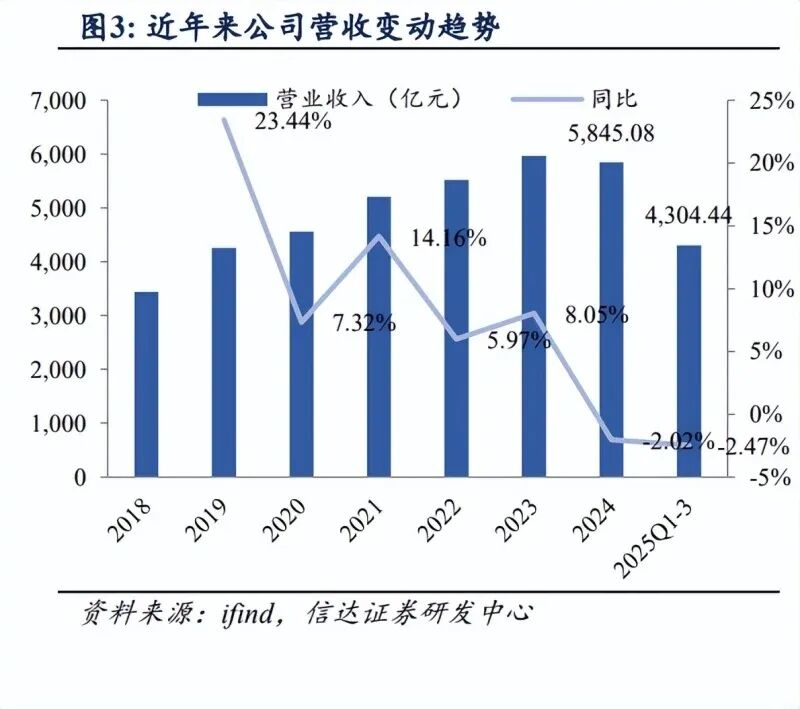
Group 1 - The core viewpoint of the article highlights that China National Pharmaceutical Group (Sinopharm) is a leading player in the pharmaceutical distribution industry, with a significant increase in net profit growth of 17% in Q3 2025 [1][3][6] - Sinopharm operates in three main segments: pharmaceutical distribution, medical device distribution, and retail, with a comprehensive distribution network covering over 700,000 terminals across various provinces [1][3][10] - The company achieved a revenue of 584.5 billion RMB in 2024, with pharmaceutical distribution maintaining its leading position and a steady increase in market share [1][3][10] Group 2 - As of June 30, 2025, the controlling shareholder of Sinopharm is China National Pharmaceutical Group, with a stake of 50.36% held by Sinopharm Industry Investment Co., Ltd. [2][17] - The company has a clear business distribution among its subsidiaries, which include pharmaceutical wholesale, medical device sales, and pharmaceutical storage and transportation [2][17] - Sinopharm holds significant stakes in listed companies such as Sinopharm Holdings (approximately 55%) and Sinopharm Concord (approximately 56.06%) [2][17] Group 3 - The company's revenue compound annual growth rate (CAGR) from 2018 to 2024 is approximately 9.21%, with a decline of 2.02% in 2024 revenue compared to the previous year [3][19] - In H1 2025, the company's revenue was approximately 430.44 billion RMB, with a decline in pharmaceutical and medical device distribution revenues, while retail revenue grew by 3.65% [3][19] - The revenue composition in H1 2025 shows that pharmaceutical distribution accounts for about 73%, medical devices for 20%, and retail for 6% [3][19] Group 4 - From a profit perspective, the company's net profit CAGR from 2020 to 2023 is about 8%, with a net profit of approximately 7.05 billion RMB in 2024, a decline of 22.14% year-on-year [6][21] - In Q3 2025, the net profit reached 1.85 billion RMB, marking a 17% increase compared to the same quarter last year, indicating a turning point in profitability [6][21] - The main source of operating profit comes from pharmaceutical distribution, which accounted for about 75% of the operating profit in H1 2025 [6][21] Group 5 - The gross profit margin has remained between 7% and 10% from 2018 to 2024, with a slight decline in 2024 attributed to decreased revenues from high-margin medical device and industrial businesses [7][22] - The net profit margin decreased to 1.78% in 2024, primarily due to impairment provisions for goodwill and intangible assets [7][22] - The company's asset-liability ratio has been declining annually since 2019, reaching 67.8% in 2024, with a further decrease to 68.4% in Q3 2025 [8][23] Group 6 - The pharmaceutical distribution segment is the company's main business, benefiting from the increasing industry concentration and the introduction of high-value clinical products [10][26] - The company has been expanding its marketing services and partnerships with major pharmaceutical manufacturers, enhancing its professional marketing platform [10][26] - The growth drivers for pharmaceutical distribution include the normalization of centralized procurement and the introduction of high-demand products, which have shown double-digit growth in sales and gross profit [10][28] Group 7 - The medical device distribution segment has seen a compound annual growth rate of approximately 15.69% from 2018 to 2024, although revenue declined by 9.32% in 2024 [10][29] - The company has been actively expanding its SPD (Smart Procurement and Distribution) business, which has contributed to a 13% revenue increase in H1 2025 [10][29] - The decline in the medical device distribution segment is linked to strategic adjustments and reduced procurement projects due to fiscal policies [10][29]

广药东进,江药北上
Jing Ji Guan Cha Wang· 2025-12-14 05:10
Group 1 - Guangzhou Pharmaceutical Co., Ltd. announced a 500 million yuan acquisition of Zhejiang Pharmaceutical, which ranks 32nd in the national pharmaceutical industry with a revenue of 4.777 billion yuan [3] - The acquisition of Zhejiang Pharmaceutical is part of a broader trend of cross-provincial mergers in the pharmaceutical distribution sector, aimed at expanding market presence beyond local regions [3][4] - The pharmaceutical distribution industry is facing significant competition from larger players, with the top five companies generating over 100 billion yuan in annual revenue, prompting smaller firms to pursue mergers for scale and market reach [4][6] Group 2 - Guangzhou Pharmaceutical has previously invested 749 million yuan to acquire an 11.04% stake in Nanjing Pharmaceutical, becoming its second-largest shareholder [5] - The company is actively pursuing a strategy to transform and expand its operations, focusing on innovative drugs and high-end medical devices, while also enhancing digital transformation efforts [5] - The 2024 Pharmaceutical Distribution Industry Report indicates a trend towards increased market concentration, with a forecast for higher chain rates in the future [6]



国药控股(01099):公司深度报告:医药流通龙头行稳致远,“高股息&经营质量优化”或助力估值提升
Xinda Securities· 2025-12-05 11:58
Investment Rating - The report assigns a "Buy" investment rating to the company [2] Core Views - The report highlights that the company is undergoing a significant improvement in profitability, with a notable 17% year-on-year growth in net profit for Q3 2025, driven by a reduction in sales and management expense ratios [5][27] - The company is expected to benefit from the ongoing consolidation in the pharmaceutical distribution industry, with its market share increasing to 20.36% in 2023 [5][44] - The report emphasizes the company's commitment to enhancing operational quality and optimizing its business structure, which is anticipated to lead to sustained profit growth in 2026 [5][15] Summary by Sections Company Overview - The company, China National Pharmaceutical Group Corporation (Sinopharm), is a leading player in the pharmaceutical distribution industry, with a comprehensive business layout that includes pharmaceutical distribution, medical device distribution, and retail [17][18] - The company has achieved a compound annual growth rate (CAGR) of approximately 9% in revenue over the past seven years, with a significant 17% growth in net profit for Q3 2025 [22][27] Industry Dynamics - The pharmaceutical distribution industry has seen an increase in concentration, with the market share of the top four companies rising from 38.38% in 2019 to 42.69% in 2023 [13][43] - The report notes that the company's pharmaceutical distribution revenue is projected to grow at a CAGR of about 7% from 2018 to 2024, with a focus on high-demand and high-value products [5][36] Financial Performance - The company reported total revenue of approximately 584.5 billion yuan in 2024, with a projected revenue of 577.2 billion yuan for 2025, reflecting a slight decline of 1% [6][27] - The net profit attributable to the parent company is expected to reach 80.77 billion yuan in 2025, representing a 15% increase year-on-year [6][27] Dividend Policy - The company has steadily increased its dividend payout ratio from 28.1% in 2021 to 30.98% in 2024, with an average dividend yield of 4.45% over the past five years [5][16] - The report indicates that the company's price-to-book (PB) ratio is currently around 0.71, which is below the five-year average of 0.81, suggesting potential for valuation improvement [5][16]
两医药流通区域龙头达成合作,白云山将成南京医药第二大股东
Xin Jing Bao· 2025-09-30 09:28
Core Viewpoint - Baiyunshan and Nanjing Pharmaceutical have entered into a strategic investment agreement, with Baiyunshan's subsidiary acquiring an 11.04% stake in Nanjing Pharmaceutical for 749 million yuan, marking Baiyunshan as the second-largest shareholder in Nanjing Pharmaceutical [1][2]. Group 1: Investment Details - Baiyunshan's subsidiary, Guangzhou Guangyao Phase II Fund, will acquire approximately 145 million non-restricted shares from Alliance Healthcare Asia Pacific Limited, representing 11.04% of Nanjing Pharmaceutical's total shares, for a total price of 749 million yuan [2]. - The acquisition is part of a broader strategy to enhance business cooperation between Baiyunshan and Nanjing Pharmaceutical, focusing on capital, distribution channels, and traditional Chinese medicine [2]. Group 2: Strategic Importance - This acquisition is the first major external investment project by the new leadership team of Guangzhou Pharmaceutical Group, led by Chairman Li Xiaojun, since their appointment in November 2024 [2]. - The collaboration aims to strengthen Baiyunshan's competitive advantage in the pharmaceutical distribution business and optimize its industrial layout in the East China region [2][3]. Group 3: Market Context - The pharmaceutical distribution business is a significant segment of Guangzhou Pharmaceutical Group's operations, with its subsidiary, Guangzhou Pharmaceutical Co., being a leading player in South China's pharmaceutical distribution market [3]. - Nanjing Pharmaceutical is a leading enterprise in Jiangsu's pharmaceutical distribution industry, with strong advantages in wholesale and retail across several provinces [3]. - The trend of increasing concentration in the pharmaceutical distribution industry is evident, with the top ten companies projected to hold an 82% market share by 2025 [3].

白云山成为南京医药二股东,医药流通领域整合加速
Hua Xia Shi Bao· 2025-09-29 12:57
Core Insights - The pharmaceutical distribution sector is experiencing a rapid increase in market concentration, with significant moves from major players like Nanjing Pharmaceutical and Guangzhou Pharmaceutical [2][3][6] Group 1: Strategic Investment and Partnerships - Nanjing Pharmaceutical and Guangzhou Pharmaceutical have signed a strategic investment agreement, with Guangzhou Pharmaceutical's fund planning to acquire approximately 749 million RMB worth of shares, representing 11.04% of Nanjing Pharmaceutical's total equity [2][4] - The strategic cooperation aims to enhance capital collaboration, distribution channel cooperation, and collaboration in traditional Chinese medicine [4] Group 2: Industry Trends and Benefits - The trend towards increased concentration in the pharmaceutical distribution industry is leading to systemic optimization across the supply chain, allowing companies to expand purchasing scale and enhance bargaining power with upstream manufacturers [3][7] - Enhanced industry concentration is expected to improve regulatory efficiency and facilitate the implementation of drug traceability systems, ultimately benefiting healthcare institutions and patients [7] Group 3: Innovations in Traditional Chinese Medicine - Nanjing Pharmaceutical has been innovating in traditional Chinese medicine services, with its subsidiary providing comprehensive services to over 200 medical institutions and participating in the establishment of national standards for traditional Chinese medicine preparation [5]
预见2025:《2025年中国医药流通行业全景图谱》(附市场现状、竞争格局和发展趋势等)
Qian Zhan Wang· 2025-07-22 08:49
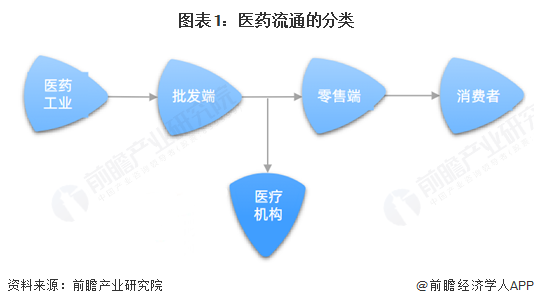
Industry Overview - Pharmaceutical distribution connects upstream manufacturers with downstream distributors and end customers, involving procurement from manufacturers and wholesale to distributors or direct sales to retail outlets like hospitals and pharmacies [1][3] - The distribution process is divided into two main segments: wholesale, characterized by large volumes and low margins, and retail, which has higher margins and sales costs [1] Industry Chain Analysis - The pharmaceutical distribution chain includes three segments: drug wholesale, retail enterprises, and hospital outpatient pharmacies, with hospital pharmacies holding a monopolistic position in the market [3] Industry Development History - The pharmaceutical distribution industry in China has undergone several transformations, from a planned economy system to a competitive regional structure, and now to a more concentrated market post "Two Invoice System" reform [6][7] Current Industry Status - The pharmaceutical circulation market has exceeded 3 trillion yuan, with a projected growth of 4.4% in 2024 [15] - State-owned enterprises dominate the pharmaceutical distribution sector, accounting for 61.8% of total revenue among reporting enterprises [20] - The B2B segment constitutes 50% of the pharmaceutical e-commerce market, indicating a significant focus on wholesale transactions [25] Competitive Landscape - The market is segmented into three tiers based on sales scale, with major national wholesalers like China National Pharmaceutical Group and Shanghai Pharmaceuticals leading the first tier [28] Future Development Trends - The pharmaceutical distribution market is expected to surpass 4 trillion yuan by 2030, driven by increased concentration, reduced distribution costs, and improved drug quality and safety [30] - The industry is moving towards greater integration and information technology adoption, enhancing service capabilities and efficiency [33]

掉队的区域医药流通龙头
Zhong Guo Jing Ying Bao· 2025-07-18 19:53
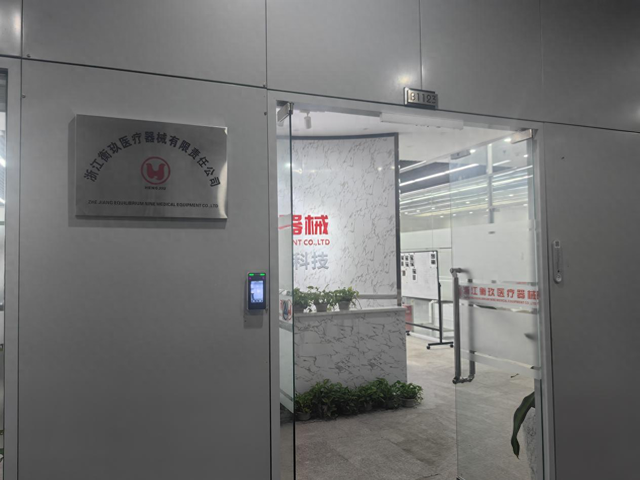
Core Viewpoint - The frequent personnel changes at Ruikang Pharmaceutical are indicative of the company's declining performance, with significant revenue drops and market share losses over recent years [2][5]. Group 1: Company Performance - Ruikang Pharmaceutical's revenue has plummeted from a peak of 35.3 billion yuan in 2019 to 7.966 billion yuan in 2024, representing a decrease of approximately 77% [5]. - The company has fallen from being among the top 10 in the industry to outside the top 20, highlighting a significant decline in its market position [2]. - In 2023, Ruikang ranked 26th among pharmaceutical distribution companies, with major competitors like China National Pharmaceutical, Shanghai Pharmaceutical, and others significantly outperforming it [5]. Group 2: Business Strategy - Following a period of nationwide expansion, Ruikang has initiated a strategy of business contraction, focusing on core markets such as Shandong and Beijing [4]. - The company has been closing and transferring numerous subsidiaries, with 53 and 29 subsidiaries being closed or transferred in 2023 and 2024, respectively [4]. Group 3: Personnel Changes - The resignation of Vice President Han Chunlin and the detention of Secretary Li Zhe by local authorities have raised concerns about the company's governance and operational stability [2][5]. - The company claims that Han's departure was due to personal reasons and will not impact its operational development [2]. Group 4: Related Transactions - Ruikang's planned acquisition of a 76.01% stake in Zhejiang Hengjiu Medical Equipment for 151 million yuan has drawn scrutiny due to the target company's poor financial performance, with no revenue reported for three consecutive years [6][8]. - The acquisition is part of Ruikang's strategy to expand into the medical device sector, despite Zhejiang Hengjiu's ongoing losses and lack of revenue [9].