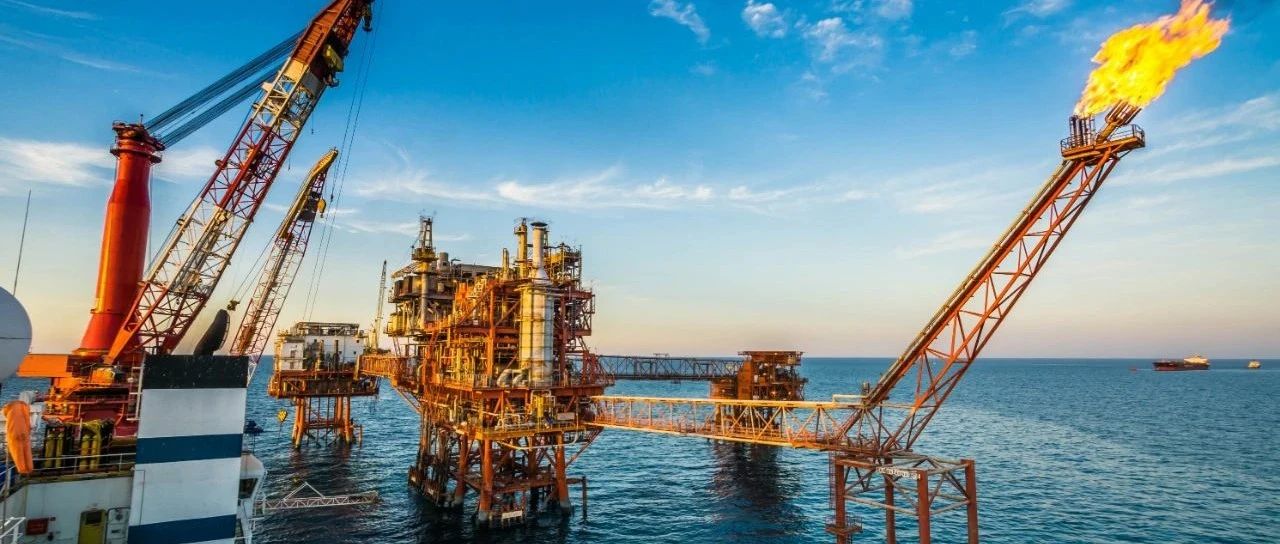
原油供应扰动

Search documents
原油成品油早报-20250918
Yong An Qi Huo· 2025-09-18 02:31
Group 1: Report Industry Investment Rating - No relevant information provided Group 2: Core Viewpoints of the Report - This week, oil prices closed higher, and the absolute price volatility increased due to geopolitical news. The global oil market is in a state of inventory accumulation, with the U.S. EIA commercial crude oil inventory increasing by 3.93 million barrels, and gasoline and diesel inventories also increasing. The refining profit of global refineries has declined. Under the baseline scenario, the crude oil balance sheet will have a surplus of over 2 million barrels per day in the fourth quarter, and the expected surplus in 2026 is 1.8 - 2.5 million barrels per day. It is estimated that refinery maintenance in October globally will exceed previous levels, and the fundamental situation is turning into the off - season, with the medium - term surplus pattern remaining unchanged. The absolute price center in the fourth quarter is expected to fall to $55 - 60 per barrel. Attention should be paid to the impact of U.S. sanctions on Russia and whether it will cause disruptions to Russian supply, as well as the impact of geopolitics and sanctions on the reduction of supply from Iran and Russia [6] Group 3: Summary by Relevant Catalogs 1. Daily News - Due to the impact of Ukrainian drone attacks on key facilities in Russia, the weekly crude oil exports from Russia dropped significantly. As of the week of September 14, the daily average of Russia's seaborne crude oil exports was about 3.18 million barrels, a decrease of 934,000 barrels from the previous week, the largest single - week decline since July last year. However, the less - volatile four - week average export volume increased slightly, reaching 3.46 million barrels per day as of the week of September 14, up from 3.42 million barrels per day in the week of September 7 [3] - The U.S. Secretary of State Rubio announced that the U.S. imposed sanctions on four armed groups allied with Iran [3] - The Slovakian Minister of Economy, Denisa Sakova, stated that Slovakia, as an EU member, will resist Trump's demand to cut Russian oil and gas imports unless the country has sufficient alternative energy supplies. She also mentioned that sufficient infrastructure must be built to support alternative energy transportation routes. She had made Slovakia's position clear during a meeting with the U.S. Energy Secretary Chris Wright in Vienna this week, and the U.S. official expressed understanding and admitted that the U.S. needs to increase investment in European energy projects [4] 2. Regional Fundamentals - According to the EIA report, in the week of September 12, U.S. crude oil exports increased by 2.532 million barrels per day to 5.277 million barrels per day [4] - In the week of September 12, U.S. domestic crude oil production decreased by 13,000 barrels to 13.482 million barrels per day [4] - Commercial crude oil inventories excluding strategic reserves decreased by 9.285 million barrels to 415 million barrels, a decrease of 2.19% [5] - The four - week average supply of U.S. crude oil products was 20.671 million barrels per day, a year - on - year increase of 1.69% [5] - In the week of September 12, the U.S. Strategic Petroleum Reserve (SPR) inventory increased by 504,000 barrels to 405.7 million barrels, an increase of 0.12% [5] - In the week of September 12, U.S. commercial crude oil imports excluding strategic reserves were 5.692 million barrels per day, a decrease of 579,000 barrels per day from the previous week [5] - From September 5 to September 11, the operating rate of major refineries fluctuated slightly, and the operating rate of Shandong local refineries increased slightly. Both domestic gasoline and diesel production and inventories increased. The comprehensive profit of major refineries fluctuated weakly, and the comprehensive profit of local refineries decreased month - on - month [5] 3. Weekly Viewpoints - This week, oil prices closed higher, and the absolute price volatility increased due to geopolitical news. The global oil market is in a state of inventory accumulation, with the U.S. EIA commercial crude oil inventory increasing by 3.93 million barrels, and gasoline and diesel inventories also increasing. The refining profit of global refineries has declined. Under the baseline scenario, the crude oil balance sheet will have a surplus of over 2 million barrels per day in the fourth quarter, and the expected surplus in 2026 is 1.8 - 2.5 million barrels per day. It is estimated that refinery maintenance in October globally will exceed previous levels, and the fundamental situation is turning into the off - season, with the medium - term surplus pattern remaining unchanged. The absolute price center in the fourth quarter is expected to fall to $55 - 60 per barrel. Attention should be paid to the impact of U.S. sanctions on Russia and whether it will cause disruptions to Russian supply, as well as the impact of geopolitics and sanctions on the reduction of supply from Iran and Russia [6]
阿塞拜疆原油出现有机氯污染,乌拉尔装船因检查延迟
Hua Tai Qi Huo· 2025-07-25 07:05
1. Report Industry Investment Rating - Short - term: The oil price is expected to fluctuate within a range. Medium - term: Bearish allocation [3] 2. Core View - There have been continuous short - term disturbances in crude oil supply recently. The loading of Russian Urals crude has been delayed due to additional inspection procedures, and Azerbaijani crude has an organic chloride pollution problem. However, the crude oil supply problems in Latin America have eased, and the supply in Venezuela may increase [2] 3. Summary by Directory Market News and Important Data - The price of light crude oil futures for September delivery on the New York Mercantile Exchange rose 78 cents to $66.03 per barrel, a 1.2% increase. The price of Brent crude oil futures for September delivery rose 67 cents to $69.18 per barrel, a 0.98% increase. The SC crude oil main contract closed up 0.56% at 507 yuan per barrel [1] - Russia is expected to impose a gasoline export ban on fuel producers in a few days [2] - The Russian Federal Security Service has started issuing permits to foreign oil tankers to enter Black Sea ports, paving the way for the resumption of Kazakhstan's oil exports [2] - Iranian President Pezeshkiyan is not optimistic about the prospect of a cease - fire with Israel and Iran is prepared for any situation [2] - Iran's deputy foreign minister said that to resume nuclear negotiations with the US, it is necessary to build mutual trust, recognize Tehran's nuclear rights, and ensure non - aggression against Iran [2] - As of the week ending July 23, Singapore's fuel oil inventory rose 314,000 barrels to a two - week high of 23.699 million barrels [2] Investment Logic - The loading of Russian Urals crude has been delayed due to additional inspection procedures. Since July 21, ships bound for Russia from foreign ports must obtain prior approval from the Federal Security Service. Underwater inspections may lead to more serious delays in Urals exports from the Baltic Sea [2] - Azerbaijani crude has an organic chloride pollution problem, which may affect the loading of Azeri crude [2] - The crude oil supply problems in Latin America have eased. Two crude oil pipelines in Ecuador (OCP and STOE) will restart soon, and crude oil transportation will resume. Trump is considering restoring Chevron's operating license in Venezuela, which will help increase Venezuelan crude oil supply [2] Strategy - Short - term: The oil price will fluctuate within a range. Medium - term: Bearish allocation [3] Risk - Downside risks: The US relaxes sanctions on Iranian oil, and there are macro black - swan events [3] - Upside risks: The US tightens sanctions on Russian oil, and large - scale supply disruptions occur due to Middle East conflicts [3]
冲突持续升级,影响多大?
Wind万得· 2025-06-14 22:18
Core Viewpoint - The ongoing tensions in the Middle East have led to immediate impacts on capital markets, with a surge in global risk aversion and significant increases in oil and energy stocks [1][5][17]. Market Impact - Global stock markets experienced declines on June 13, with major indices falling, except for the Russian RTS index which saw a slight increase [1][3]. - In the Asia-Pacific region, the A-share Shanghai Composite Index and Hong Kong's Hang Seng Index had smaller declines compared to Japan's Nikkei 225 and South Korea's KOSPI [1]. - European markets showed mixed results, with the UK FTSE 100 down less than 0.5%, while France's CAC40 and Germany's DAX fell over 1% [1][3]. - In the Americas, the three major US indices saw significant drops, with the Dow Jones down 1.79% and both the NASDAQ and S&P 500 down over 1% [1][3]. Oil and Energy Sector Performance - International oil prices surged over 10% during the day, with NYMEX WTI and ICE Brent crude both exceeding $70 per barrel [5]. - Energy stocks in the US saw dramatic increases, with Houston energy stocks rising over 176% at one point, closing with a 119.19% increase [7]. - Major US energy companies also reported significant gains, with Halliburton up over 5%, Occidental Petroleum up over 3%, and ExxonMobil, Devon Energy, and ConocoPhillips all rising over 2% [7]. Oil Production and Export Projections - Current oil production in the Middle East shows Saudi Arabia leading with 9.07 million barrels per day, followed by Iran at 4.27 million barrels, while Israel and Turkey produce less than 200,000 barrels combined [9]. - Analysts estimate Iran's oil exports could reach 1.7 to 1.8 million barrels per day by 2025, potentially impacting around 4% of global oil exports [11]. - JPMorgan warns that a larger conflict in the Middle East could disrupt Iran's exports of 2.1 million barrels per day, leading to severe supply chaos in the oil market [11]. Historical Context and Price Trends - Historical data indicates that conflicts in the Middle East typically cause sharp short-term disruptions in oil supply, with long-term effects stabilizing over time [13][15]. - The oil price response to geopolitical tensions has historically shown a pattern of sharp increases followed by corrections, influenced by changes in supply and demand dynamics [15][17].