去风险策略

Search documents
不装了:美国掏出广场协议的刀,却发现中国脖子比刀还硬
Sou Hu Cai Jing· 2026-01-16 04:50
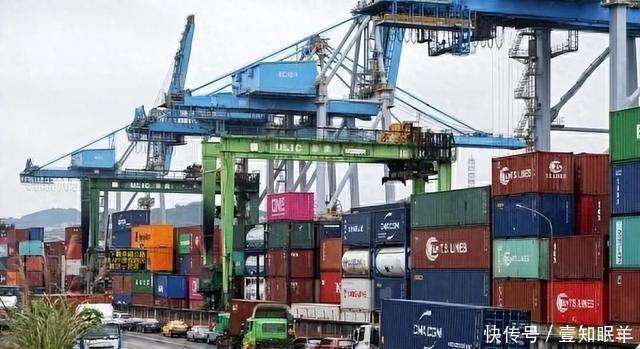
Core Viewpoint - The article emphasizes that China's manufacturing industry has significantly challenged U.S. economic dominance, with a trade surplus reaching $1.08 trillion, indicating a shift in global economic power dynamics [1][3]. Trade Surplus and Economic Impact - By November 2025, China's trade surplus increased by 21.7% to $1.076 trillion, contradicting U.S. efforts to reduce reliance on Chinese goods through tariffs [3]. - The U.S. tariffs have resulted in an additional burden of $2,400 per American household, impacting middle-class living standards [4]. U.S. Economic Strategy and Consequences - The U.S. finds itself in a dilemma: avoiding Chinese goods could lead to inflation, while continued purchases result in a loss of economic power [6]. - The "Restoring Trade Fairness Act" aims to impose a 35% baseline tariff on China, but this has led to a decrease in U.S. exports to China by 18.9%, while exports to ASEAN, EU, and Latin America have increased [6]. Historical Context and Current Dynamics - The article draws parallels between current U.S.-China relations and the 1985 Plaza Accord, suggesting that the U.S. may attempt to manipulate currency values to weaken China's economic position [7][9]. - Unlike Japan in the 1980s, China possesses significant economic sovereignty and control over its currency, making it less susceptible to U.S. pressure [9]. Manufacturing and Innovation - China's manufacturing value added is $4.44 trillion, nearly double that of the U.S., highlighting its dominance in industrial production [9]. - U.S. sanctions on companies like Huawei have inadvertently accelerated China's technological advancements, leading to breakthroughs in various sectors [9]. Conclusion on Economic Transition - The $1.08 trillion trade surplus symbolizes a shift in economic power, marking the end of an era where the U.S. could rely on financial manipulation to maintain its global position [9].

APEC前欲温和,特朗普怒斥卢特尼克,中国稀土夺回节奏
Sou Hu Cai Jing· 2025-10-24 05:50
Group 1 - The U.S. is facing internal conflicts regarding its China policy, highlighted by a recent incident where Secretary of Commerce Lighthizer was criticized for unapproved sanctions against Chinese tech companies, disrupting the White House's diplomatic strategy ahead of APEC [1] - China's tightening of rare earth material exports has significant implications for high-end manufacturing, semiconductors, clean energy, and military industries, directly challenging the U.S. "de-risking" strategy [1][2] - The U.S. has implemented various measures such as tariffs and technology restrictions, but these have not effectively pressured China, which is accelerating its self-research and supply chain restructuring in critical areas [1] Group 2 - The impact of rare earth controls is not limited to individual components but leads to a chain reaction affecting production lines, R&D delays, and financial pressures on companies, which will be reflected in quarterly reports [2] - The current chaotic situation in U.S. policy-making is attributed to a "grab the spotlight" culture, where agencies act independently rather than in a coordinated manner, resulting in a perception of disorder rather than strength [2] - The ongoing geopolitical competition has entered a phase of precise strikes and long-term attrition, requiring the U.S. to stabilize its strategy, clarify objectives, and improve coordination among departments to regain initiative [4]