反身性循环

Search documents
“AI 2028危机”,究竟有多少已然发生
Xi Niu Cai Jing· 2026-02-26 06:57
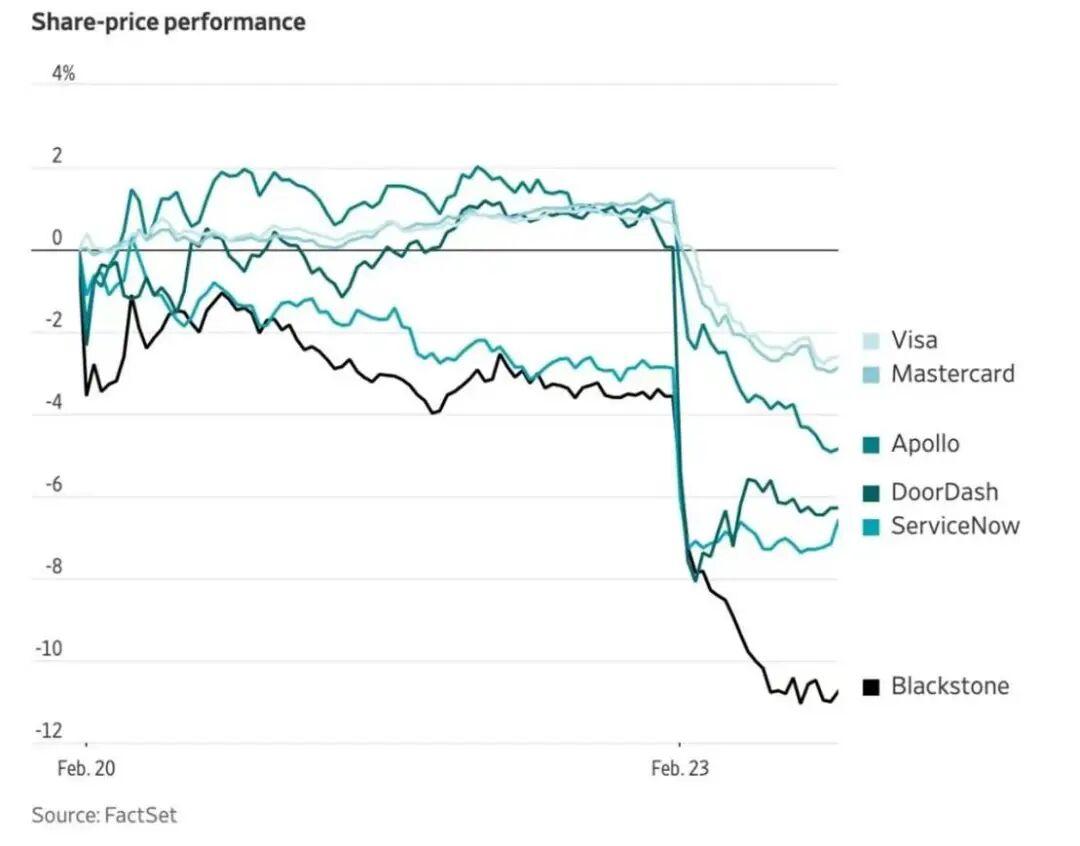
Group 1 - The capital market is experiencing a unique atmosphere as it anticipates structural changes related to AI, with concerns about a potential macroeconomic crisis driven by self-reinforcing AI capabilities [1][3] - Citrini's memo outlines a recursive chain of events leading to systemic risks, including job losses in white-collar sectors, a decline in consumer spending, and rising default rates in private credit and mortgages [3][4] - The narrative that "software is just the beginning" is gaining traction, as recent advancements by Anthropic suggest that high-value knowledge work may soon be systematically replaced by AI [3][4] Group 2 - Anthropic's Claude Code is challenging the long-term value of legacy IT services, as its capabilities extend beyond programming to various vertical industries, raising concerns about the future of SaaS companies [4][5] - The emergence of AI agents capable of direct transactions marks a shift from traditional e-commerce to "AI commerce," potentially disrupting existing business models reliant on intermediaries [8][9] - The job market is facing turbulence, with executives predicting a decrease in employment despite expectations of productivity gains from AI, highlighting a disconnect between employee and executive outlooks [11][14]

不是比特币崩了,是储币模式被清算
Sou Hu Cai Jing· 2025-11-24 16:25
Core Viewpoint - The recent decline in Bitcoin prices, from approximately $125,000 to around $84,000, is attributed to a complex interplay of factors beyond just a typical market correction, including macroeconomic conditions and significant changes in the cryptocurrency ecosystem driven by companies like Strategy Inc. [2][4] Group 1: Bitcoin Price Movement - Bitcoin reached a historical high of approximately $125,000 on October 6, 2025, before experiencing a decline to about $84,000 by late November, marking a maximum drawdown of nearly 30% [2][4] - The decline is characterized as a typical "high position correction," influenced by cooling interest rate expectations, overall risk asset declines, and a shift from net inflows to net outflows in ETF investments [4][30] Group 2: Strategy Inc. and Its Bitcoin Holdings - Strategy Inc., formerly known as MicroStrategy, has transformed from a software company into a significant holder of Bitcoin, with a total of 649,870 Bitcoins acquired at a total cost of approximately $48.37 billion, averaging $74,433 per Bitcoin [5][8] - The current estimated market value of Strategy's Bitcoin holdings is between $54 billion and $56 billion, representing about 3% of the global Bitcoin supply [8] - Bitcoin constitutes approximately 75% to 80% of Strategy's total assets, indicating a shift towards being a Bitcoin treasury rather than a software company [8][12] Group 3: MSCI's Impact on Strategy Inc. - MSCI has initiated a consultation regarding how to classify companies with significant digital asset holdings, suggesting that companies with over 50% of their total assets in digital assets should be treated as investment funds rather than operating companies [16][22] - The consultation period ends on December 31, 2025, with a decision expected to take effect on January 15, 2026, potentially leading to the exclusion of such companies from mainstream stock indices [17][20] - If Strategy is removed from major indices, passive funds tracking MSCI could be forced to sell approximately $2.8 billion worth of Strategy stock, with total potential sell pressure reaching around $8.8 billion if other index providers follow suit [23][24] Group 4: Market Reactions and Valuation Changes - Following MSCI's announcement, the market has begun to react, with Strategy's market-to-net-asset-value (mNAV) ratio dropping from a peak of 2.5 to approximately 1.1, indicating a significant reduction in the premium investors are willing to pay [29][30] - The decline in mNAV suggests that the previous cycle of using high premiums to issue new shares for Bitcoin purchases has been disrupted, leading to a more traditional and costly approach to financing [29][30]


程实︱2026年全球经济展望:在混沌中构建秩序
Di Yi Cai Jing· 2025-11-23 12:14
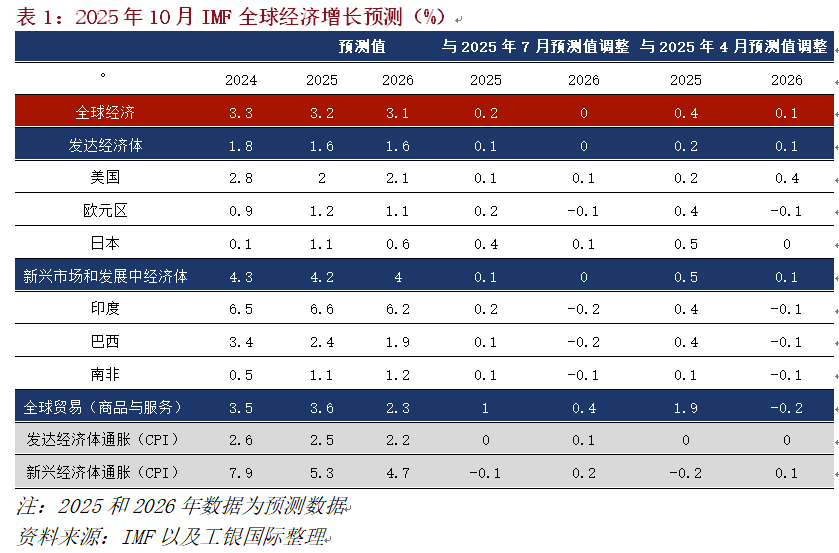
Group 1 - The global economy is transitioning from a linear trajectory to a complex system shaped by non-linearity, path dependence, and adaptability, driven by structural reforms, supply chain restructuring, and technological innovation under fiscal leadership [1][2][5] - The International Monetary Fund (IMF) forecasts global economic growth rates of 3.2% for 2025 and 3.1% for 2026, reflecting an improvement from previous predictions but still indicating a phase of moderate growth intertwined with high uncertainty [2][3] - The current chaotic non-linear evolution is attributed to three main factors: ongoing external shocks, structural differentiation disrupting economic rhythms, and reflexive cycles exacerbating instability [5][6] Group 2 - The global economy is expected to exhibit four key characteristics in 2026: adaptability, non-linearity, high sensitivity, and bidirectionality, indicating a complex interplay of upward potential and downward risks [6][7] - Fiscal policies are becoming increasingly central to economic management as monetary policy faces limitations due to high debt levels and persistent inflation, with major economies expected to rely on fiscal expansion to counteract downward pressures [10][11] - The economic outlook for major regions in 2026 includes a projected GDP growth of 1.8% for the US, 1.1% for the Eurozone, and 0.7% for Japan, with inflation rates expected to stabilize around 2.9%, 1.8%, and 1.8% respectively [13][14]