
持续学习

Search documents
北大团队提出 SHINE:将任意文本转化为大模型 LoRA,仅需一次前向传播!
机器之心· 2026-03-23 07:10
Core Insights - The article introduces a novel hypernetwork architecture called SHINE, which can convert any text into LoRA parameters with a single forward pass, allowing for multi-turn dialogue based on the text [2][3][43] - SHINE addresses key challenges in constructing hypernetworks for large language models (LLMs), achieving a balance between parameter scale and expressive capability [9][23] - The method demonstrates significant practical potential and scalability, providing a new technical pathway for knowledge injection and rapid adaptation in large models [8][10][43] Background and Methodology - Hypernetworks are specialized neural networks that output parameters for another neural network. SHINE trains a hypernetwork to generate LoRA parameters directly from any text input [3][5] - The architecture consists of two main components: an LLM and an M2P Transformer, which together enhance the hypernetwork's ability to generate parameters without adding extra parameters [19][20] - The training process follows a "pre-training - instruction fine-tuning" paradigm, utilizing large-scale training data to improve model performance continuously [10][25] Performance and Efficiency - SHINE achieves high-quality LoRA generation with minimal time and token overhead, outperforming traditional methods like Supervised Fine-Tuning (SFT) and In-Context Learning (ICL) in efficiency [11][36][39] - Experimental results show that SHINE closely approaches the performance of the In-Context method while significantly reducing inference time and computational costs [36][37] - In comparison to Test-Time Training (TTT), SHINE provides superior performance with negligible latency and no additional training overhead [38][39] Scalability and Future Prospects - The architecture exhibits strong scalability, with performance improvements observed as the size of the base model, LoRA dimensions, and M2P Transformer layers increase [41] - The article emphasizes the growing importance of hypernetwork-based methods for generating parameters in LLMs, with potential applications expanding into various domains [44] - Future research directions include enhancing the handling of long texts, integrating reasoning mechanisms, and optimizing model architecture for better performance [44]


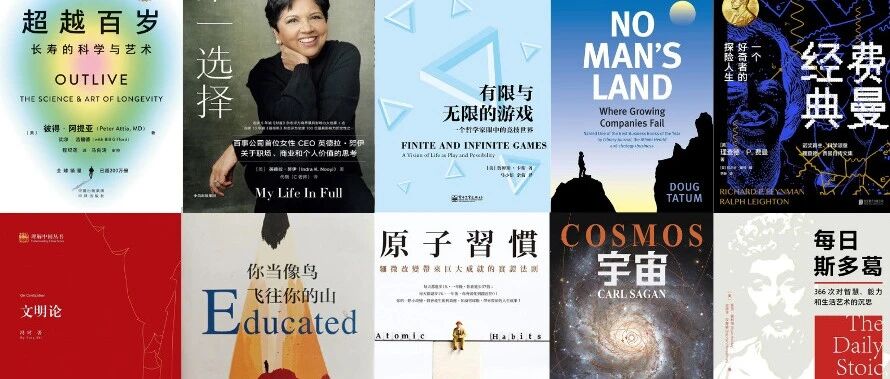
在被速度统治的时代,我们需要一份“慢”书单
财富FORTUNE· 2026-03-08 13:32
Core Insights - The article presents an annual reading list curated by influential female leaders in business, emphasizing a shift from traditional business-focused literature to broader, more philosophical works that encourage readers to reflect on their lives and the world around them [2][3]. Group 1: Reading List Overview - The reading list includes 16 books recommended by 12 prominent figures, with a notable low concentration of business-related content, steering readers towards deeper existential and philosophical inquiries [2]. - Key titles include "Civilization" by Professor Feng Shi, "The Universe" by Carl Sagan, and "The Meaning of Human Existence" by Edward O. Wilson, which encourage a long-term perspective on life and existence [2][38]. Group 2: Themes and Messages - The list emphasizes the importance of maintaining perspective and order in a fast-paced world, suggesting that understanding broader contexts can alleviate the urgency of current pressures [2][3]. - Books like "You Should Be Like a Bird Flying to Your Mountain" and "The Daily Stoic" focus on personal growth, resilience, and the importance of learning as a means of self-reinvention rather than mere competition [2][3][17][29]. Group 3: Personal Development and Leadership - "First Choice" by Indra Nooyi discusses the challenges of balancing personal and professional life, advocating for prioritizing what truly matters at different life stages [42][43]. - "The Infinite Game" highlights the distinction between finite and infinite games in business, encouraging a mindset focused on long-term sustainability rather than short-term victories [24][25]. Group 4: Health and Well-being - "Outlive" by Peter Attia emphasizes the importance of health as a foundation for life and career, advocating for a proactive approach to personal well-being [21]. - "The Pursuit of Happiness" by Martin Seligman introduces a framework for cultivating happiness systematically, aligning with contemporary discussions on education and personal fulfillment [39][41].
“AI 2028危机”,究竟有多少已然发生
Xi Niu Cai Jing· 2026-02-26 06:57
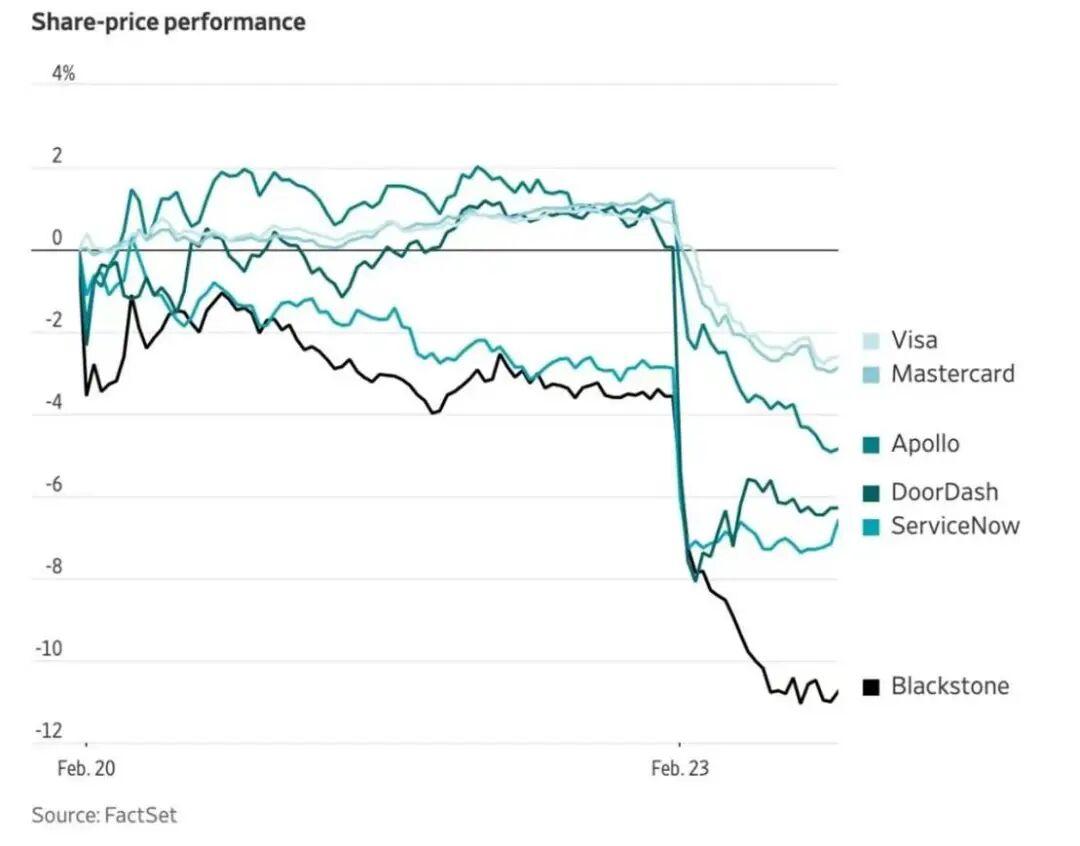
Group 1 - The capital market is experiencing a unique atmosphere as it anticipates structural changes related to AI, with concerns about a potential macroeconomic crisis driven by self-reinforcing AI capabilities [1][3] - Citrini's memo outlines a recursive chain of events leading to systemic risks, including job losses in white-collar sectors, a decline in consumer spending, and rising default rates in private credit and mortgages [3][4] - The narrative that "software is just the beginning" is gaining traction, as recent advancements by Anthropic suggest that high-value knowledge work may soon be systematically replaced by AI [3][4] Group 2 - Anthropic's Claude Code is challenging the long-term value of legacy IT services, as its capabilities extend beyond programming to various vertical industries, raising concerns about the future of SaaS companies [4][5] - The emergence of AI agents capable of direct transactions marks a shift from traditional e-commerce to "AI commerce," potentially disrupting existing business models reliant on intermediaries [8][9] - The job market is facing turbulence, with executives predicting a decrease in employment despite expectations of productivity gains from AI, highlighting a disconnect between employee and executive outlooks [11][14]
AI主线开年布局-春节期间海内外大模型产业动态
2026-02-24 14:15
Summary of Key Points from the Conference Call Industry Overview - The conference call discusses the developments in the AI industry, particularly focusing on domestic models like Zhipu and Minimax, which have shown strong performance in Agent AI and cost optimization, leading in usage on third-party platforms like Open Router [1][2]. Core Insights and Arguments - **Domestic Model Performance**: Zhipu and Minimax have released new versions (GM5 and M2.5) that excel in coding and agent capabilities, with Zhipu performing well in benchmark tests and Minimax leading in agent capabilities and cost optimization [2]. - **Token Demand Growth**: The rise of Agent AI has significantly increased token demand, making global developers more price-sensitive. Domestic models are capturing substantial demand due to their high cost-performance ratio [1][2]. - **Revenue Growth**: Kimi's K2.5 version generated revenue equivalent to its entire previous year's income within 20 days post-launch, with a higher proportion of revenue coming from overseas [4]. - **ByteDance's C-DOS 2.0**: ByteDance's C-DOS 2.0 is recognized as a leader in video generation, outperforming competitors in effectiveness, cost-performance, and usability, especially during the Spring Festival [5]. - **Alibaba's Progress**: Alibaba's Qianwen 3.5 has improved in multi-modal understanding and reasoning capabilities, maintaining a strong open-source approach despite a slower C-end deployment compared to ByteDance [6]. - **OpenAI's Revenue Goals**: OpenAI aims for $280 billion in revenue by 2030, planning to invest $665 billion in computing power, indicating strong commercial expectations [7]. - **Google's Gemini 3.1**: Google released Gemini 3.1, which is considered to have the leading comprehensive capabilities globally, competing closely with OpenAI's GPT-5.2 [7]. Additional Important Insights - **Future Trends**: The AI industry is expected to see significant advancements in reasoning technology by 2026, with unified models being a key trend that integrates content understanding and generation across various media [3][9]. - **SaaS Model Challenges**: The SaaS model faces challenges, particularly with user-based pricing, but underlying demand for AI infrastructure remains strong, benefiting companies in cloud computing and related fields [11]. - **Investment Opportunities**: Despite short-term pressures, companies with strong industry knowledge and customer barriers are expected to prove their value in the long term, with high-margin companies like TaxFriend and Glodon maintaining significant advantages in the AI era [12]. - **Multi-Agent Collaboration**: The Multi-Agent Scaling Law suggests that collaborative agents can significantly enhance overall efficiency, as demonstrated by Kimi K2.5, which utilizes multiple agents for improved task performance [17]. Conclusion - The AI industry is rapidly evolving, with domestic companies gaining ground through innovative models and competitive pricing. Key players like ByteDance and Alibaba are making strides in multi-modal capabilities, while global giants like OpenAI and Google set ambitious revenue targets. Investors should focus on the ongoing demand for AI solutions and the potential for significant advancements in technology and infrastructure.
深度|Gemini 3预训练负责人揭秘Gemini 3巨大飞跃的关键,行业正从“数据无限”向“数据有限”范式转变
Z Potentials· 2026-02-21 03:43
Core Insights - The success of Gemini 3 is attributed to high-quality pre-training and post-training, emphasizing collaboration and numerous innovations rather than just computational power [5][6][23] - The industry is transitioning from a "data unlimited" to a "data limited" paradigm, necessitating careful use of synthetic data and improvements in model architecture to achieve better results with less data [5][29] - Continuous learning is emerging as a significant trend, allowing models to update with new knowledge as it becomes available, which could change the approach to retraining [43][44] Group 1: Gemini 3 Development - Gemini 3's advancements are a result of a large team's collaborative efforts, integrating various improvements and innovations [5][6] - The model employs a hybrid expert architecture based on Transformers, separating computational usage from parameter scale [5][24] - The architecture has not drastically changed from previous versions, but multiple enhancements have contributed to its significant performance leap [23][24] Group 2: Industry Trends - The AI industry is witnessing a convergence of technologies while also exploring differentiated research paths, with various labs focusing on unique aspects of AI [9][10] - There is a growing concern about the potential for data exhaustion, but the industry is adapting to a new model that emphasizes efficiency and effective use of available data [28][29] - The importance of evaluation in pre-training is highlighted, as it must accurately predict the performance of larger models and guide future improvements [34][35] Group 3: Future Directions - Long-context capabilities are a promising area for future innovation, allowing models to handle larger tasks effectively [32] - The integration of retrieval-augmented generation and search capabilities into models is seen as a potential future direction, enhancing their functionality [33] - The balance between short-term and long-term goals in research is crucial, with a focus on immediate improvements while also exploring more exploratory research avenues [20][21]

ARR 140亿美元,新融300亿美元,Anthropic CEO说AI行业2030年将是万亿美元生意 | Jinqiu Select
锦秋集· 2026-02-14 09:08
Core Insights - Anthropic recently completed a $30 billion Series G funding round, achieving a valuation of $380 billion, marking the second-largest single funding round in venture capital history, with an annual revenue of $14 billion [2] - The CEO of Anthropic, Dario Amodei, predicts that the AI industry will likely reach a trillion-dollar revenue level by 2030, driven by technological and diffusion indices [3][17] - Amodei's aggressive forecast suggests that within 1 to 3 years, AI systems will reach or exceed the capabilities of Nobel Prize winners in various fields [5] Company Strategy and Growth - Anthropic's revenue is projected to grow approximately tenfold each year, from nearly zero to $1 billion in 2023, $10 billion in 2024, and around $90-100 billion in 2025, with significant increases already noted in January 2025 [14][48] - The company has adopted an aggressive yet calculated investment strategy in computing resources, emphasizing the importance of early procurement to avoid potential bankruptcy due to demand forecasting errors [15] - The internal perception at Anthropic indicates that AI tools have significantly enhanced productivity, contributing to an overall acceleration of 15-20% in operations [12] Industry Dynamics and Predictions - The AI industry's competitive landscape is expected to resemble that of cloud computing, characterized by a few dominant players and high entry barriers, ensuring that profits will not be driven to zero [16] - Amodei believes that while AI diffusion into the economy is rapid, it will not happen instantaneously due to factors like corporate procurement processes and compliance reviews [13] - The anticipated "genius nation in data centers" is expected to emerge within 1 to 3 years, fundamentally transforming various professional fields [8][41] Technological Insights - The scaling laws for pre-training and reinforcement learning (RL) remain effective, supporting the hypothesis that large computational blocks are essential for AI development [9] - Continuous learning is not deemed necessary for models, as pre-training and RL generalization, combined with longer context windows, are likely sufficient for performance [10] - The spectrum of coding capabilities ranges from AI writing 90% of code to potentially replacing software engineering entirely, though full replacement is still some distance away [11] Safety and Ethical Considerations - Amodei advocates for transparency in AI safety standards, suggesting that regulations should evolve as risks are validated, rather than imposing blanket bans [21][22] - The potential for AI to dissolve authoritarian structures is viewed optimistically, akin to the early expectations surrounding social media [23] - The importance of building data centers in developing countries is emphasized to ensure they do not fall behind in the AI-driven economy [24] Cultural and Operational Insights - Maintaining company culture is a priority for Anthropic, with regular all-hands meetings and open communication to foster cohesion among employees [27] - Decision-making speed is highlighted as critical, with the potential for significant historical decisions to be made in brief moments [28]

2026开年关键词:Self-Distillation,大模型真正走向「持续学习」
机器之心· 2026-02-10 03:46
Core Insights - The article discusses the emerging consensus among researchers in the large language model (LLM) field regarding the concept of Self-Distillation as a solution to the challenges of continual learning in AI models [3][4]. Group 1: Self-Distillation in Continual Learning - Traditional supervised fine-tuning (SFT) is criticized for causing "catastrophic forgetting," where new knowledge acquisition leads to a significant drop in existing capabilities [7]. - The proposed Self-Distillation Fine-Tuning (SDFT) method allows models to learn from demonstrations while maintaining their original capabilities, thus addressing the catastrophic forgetting issue [11]. - SDFT has shown superior performance in skill learning and knowledge acquisition tasks, achieving higher accuracy on new tasks and significantly reducing catastrophic forgetting [14]. Group 2: Reinforcement Learning via Self-Distillation - Current reinforcement learning methods often rely on binary feedback, which can lead to severe "credit assignment" problems and stagnation in model evolution [16]. - The Self-Distillation Policy Optimization (SDPO) framework introduces a "rich feedback" environment that transforms vague scalar rewards into dense supervision signals, enhancing learning efficiency [19]. - SDPO demonstrates a significant improvement in sampling efficiency, requiring only about one-third of the attempts to achieve the same discovery rate as traditional algorithms [21]. Group 3: On-Policy Self-Distillation for Large Language Models - The OPSD framework addresses the challenges of large models in complex reasoning tasks by creating "information asymmetry" within the model to guide self-evolution [23][25]. - OPSD achieves high learning efficiency, outperforming traditional algorithms in token utilization by 4-8 times in challenging reasoning benchmarks [27]. - The three papers collectively emphasize leveraging existing model capabilities through context construction to achieve self-driven upgrades, positioning Self-Distillation as a standard configuration in post-training phases for large models [27].

中金:2026年大模型将取得更多突破 向实现AGI长期目标更进一步
Zhi Tong Cai Jing· 2026-02-05 01:39
Core Insights - The report from CICC indicates that by 2025, global large model technology will advance significantly in productivity scenarios, achieving notable improvements in reasoning, programming, agentic capabilities, and multimodal abilities, although there are still shortcomings in model generalization, stability, and hallucination rates [1] - Looking ahead to 2026, CICC anticipates further breakthroughs in large models regarding reinforcement learning, model memory, and context engineering, moving from short context generation to long reasoning chain tasks and from text interaction to native multimodal capabilities, progressing towards the long-term goal of AGI [1] Group 1: Model Development and Architecture - CICC expects the re-emergence of pre-training Scaling-Law in 2026, with flagship model parameters reaching new heights [1] - The Transformer-based model architecture will continue, with a consensus on balancing performance and efficiency through Mixture of Experts (MoE), while different attention mechanism routes are still being optimized and switched [1] - The paradigm shift will involve pre-training phase Scaling-Law, high-quality data, and reinforcement learning collectively enhancing model capabilities [1] Group 2: Importance of Reinforcement Learning - The introduction of reinforcement learning is crucial for unlocking advanced model capabilities, enabling models to think and reason more logically and in line with human preferences [2] - The essence of reinforcement learning lies in "self-generated data + multi-round iteration," with its effectiveness dependent on large-scale computing power and high-quality data [2] - Both international and domestic model manufacturers, such as OpenAI, Gemini, DeepSeek, and Alibaba Qianwen, are placing significant emphasis on reinforcement learning, which is expected to increase in proportion by 2026 [2] Group 3: New Directions in Learning - Continuous learning and model memory are set to achieve core breakthroughs, addressing the "catastrophic forgetting" issue in large models by implementing selective memory mechanisms [3] - Algorithms and architectures like Google's Titans, MIRAS, and Nested Learning aim to allow models to dynamically adjust their learning and memory based on task duration and importance, facilitating continuous and even lifelong learning [3] - The exploration of world models focusing on understanding causal relationships in the physical world presents opportunities for breakthroughs under different model paths like Genie 3 and Marble [3]
中金 | AI十年展望(二十六):2026关键趋势之模型技术篇
中金点睛· 2026-02-04 23:52
Core Insights - The article discusses the advancements in large model technology, highlighting improvements in reasoning, programming, agentic capabilities, and multimodal abilities, while also noting existing shortcomings in general reliability and memory capabilities [1][4]. Model Architecture and Optimization - The Transformer architecture continues to dominate, with a consensus on the efficiency of the Mixture of Experts (MoE) model, which activates only a subset of parameters, significantly reducing computational costs [17][18]. - The industry is exploring various attention mechanisms to balance precision and efficiency, including Full-Attention, Linear-Attention, and Hybrid-Attention [20]. Model Capabilities - Significant progress has been made in reasoning, programming, agentic tasks, and multimodal applications, with models achieving real productivity levels in various domains [3][4]. - The introduction of reinforcement learning is crucial for unlocking advanced model capabilities, allowing for more logical reasoning aligned with human preferences [2][23]. Competitive Landscape - Major players like OpenAI, Gemini, and Anthropic are intensifying their competition, with OpenAI focusing on enhancing reasoning and multimodal integration, while Gemini has made significant strides in model capabilities and is leveraging high-quality data for improvements [11][42][43]. - Domestic models are catching up, maintaining a static gap of about six months behind their international counterparts, with companies like Alibaba and ByteDance producing competitive models [12][14]. Future Directions - The focus for 2026 includes further advancements in reinforcement learning, continuous learning, and world models, with expectations for models to tackle more complex tasks and achieve long-term goals like AGI [27][40]. - Continuous learning and model memory are seen as essential for achieving lifelong learning capabilities, with new algorithms like MIRAS and HOPE being pivotal in this evolution [28][32].



OpenAI现离职潮
3 6 Ke· 2026-02-04 02:46
Core Insights - OpenAI is shifting its focus from long-term foundational research to accelerating the development of ChatGPT, leading to the departure of several senior employees [1][2] - The company, valued at $500 billion, is adapting to increasing competition from rivals like Google and Anthropic [1] - OpenAI is reallocating resources to enhance its flagship chatbot, ChatGPT, while reducing experimental research funding [1][2] Group 1 - Several employees, including VP of Research Jerry Tworek and model policy researcher Andrea Vallone, have left due to dissatisfaction with the strategic shift [1][2] - Under CEO Sam Altman's leadership, OpenAI is transitioning from a research lab to one of Silicon Valley's largest tech companies, necessitating proof of revenue growth to justify its valuation [1][3] - OpenAI's Chief Researcher Mark Chen asserts that foundational research remains a core focus, with significant resources still allocated to long-term projects [1][3] Group 2 - Researchers not involved in large language model development have faced resource limitations, impacting their ability to validate research hypotheses [2] - Teams working on video and image generation models, such as Sora and DALL-E, feel neglected as resources are prioritized for ChatGPT [2] - The competitive landscape is intense, with companies striving to release the strongest models quarterly, leading to a resource concentration on the most promising directions [2][3] Group 3 - Tworek left OpenAI after seven years, seeking to explore research types that are difficult to pursue within the company, such as continual learning [3] - Vallone joined competitor Anthropic after being assigned a challenging task related to user mental health concerning ChatGPT [3] - Investors remain optimistic, believing OpenAI's true competitive advantage lies in its large user base of ChatGPT [3][4] Group 4 - The focus on whether OpenAI has the strongest model is deemed misguided; the company is converting its technological lead into a platform lock-in effect [4] - The competitive edge has shifted from research capabilities to user behavior, making it harder to disrupt [4]