
古埃及文明

Search documents
古埃及展将在穗开展 169件文物首度来华
Xin Lang Cai Jing· 2026-01-16 00:34
Core Viewpoint - The "Gift of the Nile: Ancient Egyptian Artifacts and Digital Art Experience Exhibition" will open at the Nanyue King Museum on February 6, showcasing 4300 years of history and 32 dynasties of ancient Egypt, with 169 significant artifacts making their debut in China [1] Group 1: Exhibition Details - The exhibition features 169 artifacts, including 3 mummies and 2 animal mummies, utilizing VR, AI, and naked-eye 3D technology to enhance visitor experience [1] - The exhibition is divided into five sections: The Land of Gods, Kings and Rulers, Writing and Communication, Life and Beauty, and The Journey of Life [1] - The first section presents the mythological system of ancient Egypt through immersive scenes, while the second section narrates the legendary stories of extraordinary pharaohs over 3000 years [1] Group 2: Cultural Exchange - 26 artifacts from the Nanyue King Tomb will be displayed alongside ancient Egyptian artifacts, allowing visitors to explore the ultimate thoughts on the "dream of immortality" shared by both civilizations [2] - The exhibition will run until October 11, providing an extended opportunity for cultural engagement [3]
“古埃及文明大展——埃及博物馆珍藏”在港揭幕
Xin Hua She· 2025-11-19 02:20
Core Points - The Hong Kong Palace Museum's major exhibition "Ancient Egyptian Civilization - Treasures from the Egyptian Museum" officially opened on November 18 and will be open to the public starting November 20 [1] - The exhibition features 250 artifacts from seven significant Egyptian museums, making it the largest and most comprehensive exhibition of ancient Egyptian artifacts in Hong Kong's history [1] - The exhibition is a collaboration between the Hong Kong Palace Museum and the Egyptian Supreme Council of Antiquities, showcasing many items for the first time outside of Egypt [1][2] Summary by Sections Exhibition Details - The exhibition spans over nine months and is divided into four main thematic units, including over 60 statues of pharaohs and gods, painted inscriptions, mummies, exquisite jewelry, and daily necessities [1] - The exhibition will run until August 31, 2026, coinciding with the 70th anniversary of diplomatic relations between China and Egypt [2] Strategic Partnerships - The exhibition is supported by the Hong Kong Palace Museum's strategic partner, Bank of China (Hong Kong), which aims to promote cultural exchange and support Hong Kong's development as a cultural and artistic exchange center [2] - The collaboration reflects a commitment to fostering dialogue between two ancient civilizations [2] Technological Integration - The exhibition incorporates creative design and cutting-edge digital technology, featuring over ten original multimedia installations that vividly narrate the treasures and stories of ancient Egypt [2]
大埃及博物馆掀开神秘面纱
Huan Qiu Shi Bao· 2025-11-13 22:45
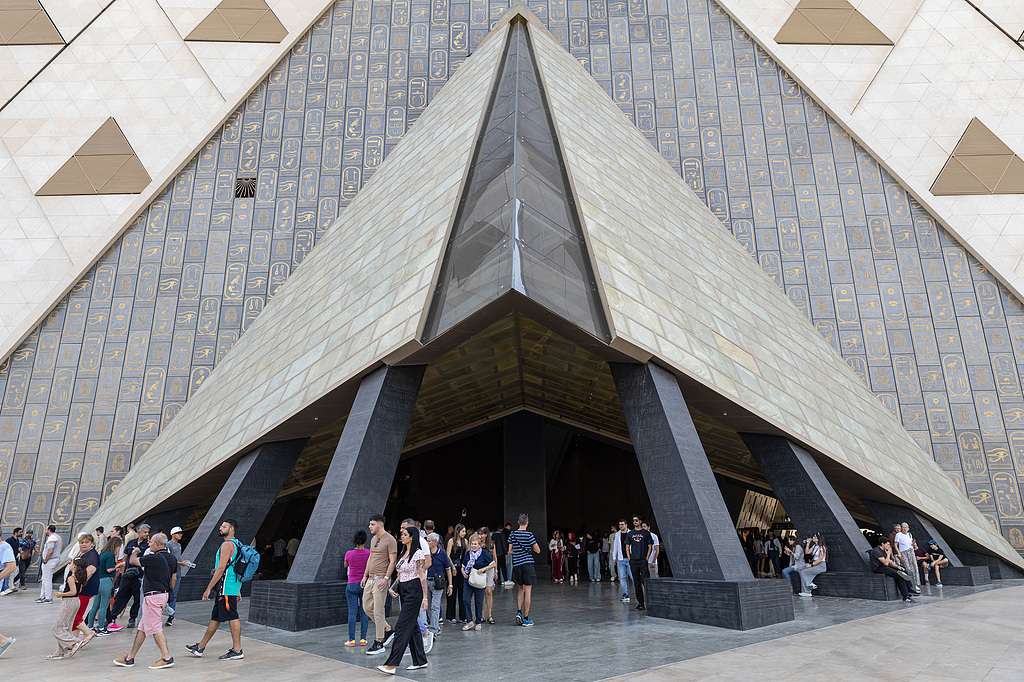
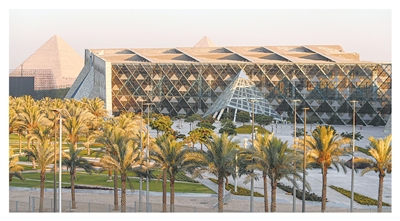
Core Insights - The Grand Egyptian Museum, a monumental project costing $1.1 billion and taking 22 years to complete, has finally opened to the public, showcasing Egypt's rich history and culture [1][3][10] Architecture and Design - The museum's architecture is a blend of granite and glass, covering an area of 500,000 square meters, designed to connect ancient and modern Egypt through a carefully planned axis leading to the Great Pyramid of Giza [1][3][6] - The entrance features an 87-ton obelisk and a 45-meter high "pyramid wall," creating a dramatic visual impact that draws visitors into the historical narrative [3][6] Exhibits and Collections - The museum houses nearly 6,000 artifacts from the tomb of the young Pharaoh Tutankhamun, marking the first time these treasures have been displayed together in such a grand space since their discovery in 1922 [7][8] - Notable exhibits include Tutankhamun's gold mask and the solar boat of Pharaoh Khufu, which is 43.5 meters long and dates back over 4,600 years, showcasing ancient engineering prowess [8][9] Sustainability and Technology - The museum incorporates advanced energy-saving technologies and a large artifact restoration center, emphasizing the balance between exhibition and preservation [9] - Solar panels and a sophisticated monitoring system are in place to ensure optimal conditions for the artifacts, including real-time alerts for any environmental changes [9][10] Cultural Significance - The opening of the Grand Egyptian Museum is seen as a revival of ancient Egyptian civilization, blending history with modernity and offering a new narrative for future generations [10]

推开古埃及文明之门(旅人心语)
Ren Min Ri Bao· 2025-11-06 22:11
Core Insights - The Grand Egyptian Museum, a significant cultural project, has finally opened after over 20 years of preparation and an investment exceeding $1 billion, showcasing ancient Egyptian civilization to the public [1][2]. Group 1: Museum Overview - The Grand Egyptian Museum is the largest museum dedicated to a single civilization, housing over 100,000 artifacts, with more than 50,000 items on display, including over 30,000 never-before-seen treasures [1]. - The museum's design features a glass facade facing the Great Pyramid of Giza, creating a visual dialogue between modern architecture and ancient structures [1]. Group 2: Exhibits and Artifacts - The museum features 12 exhibition halls that chronologically and thematically present the rise and fall of various ancient Egyptian dynasties [2]. - Notable exhibits include over 5,000 burial items of Pharaoh Tutankhamun, including the famous golden mask weighing over 10 kilograms, and the solar boat of Pharaoh Khufu, which is approximately 4,500 years old [2]. - The museum employs advanced technology, such as real-time monitoring of artifacts and 3D modeling for restoration, ensuring the preservation of these historical items [3]. Group 3: Cultural Significance - The museum serves as a bridge between the past and the future, allowing visitors to engage with ancient history through innovative displays and interactive technologies [5]. - The opening of the museum is seen as a pivotal moment for Egypt, enhancing its cultural heritage and tourism potential [1][5].
历时20多年 这座当代“金字塔”终开幕
Yang Shi Wang· 2025-11-02 08:57
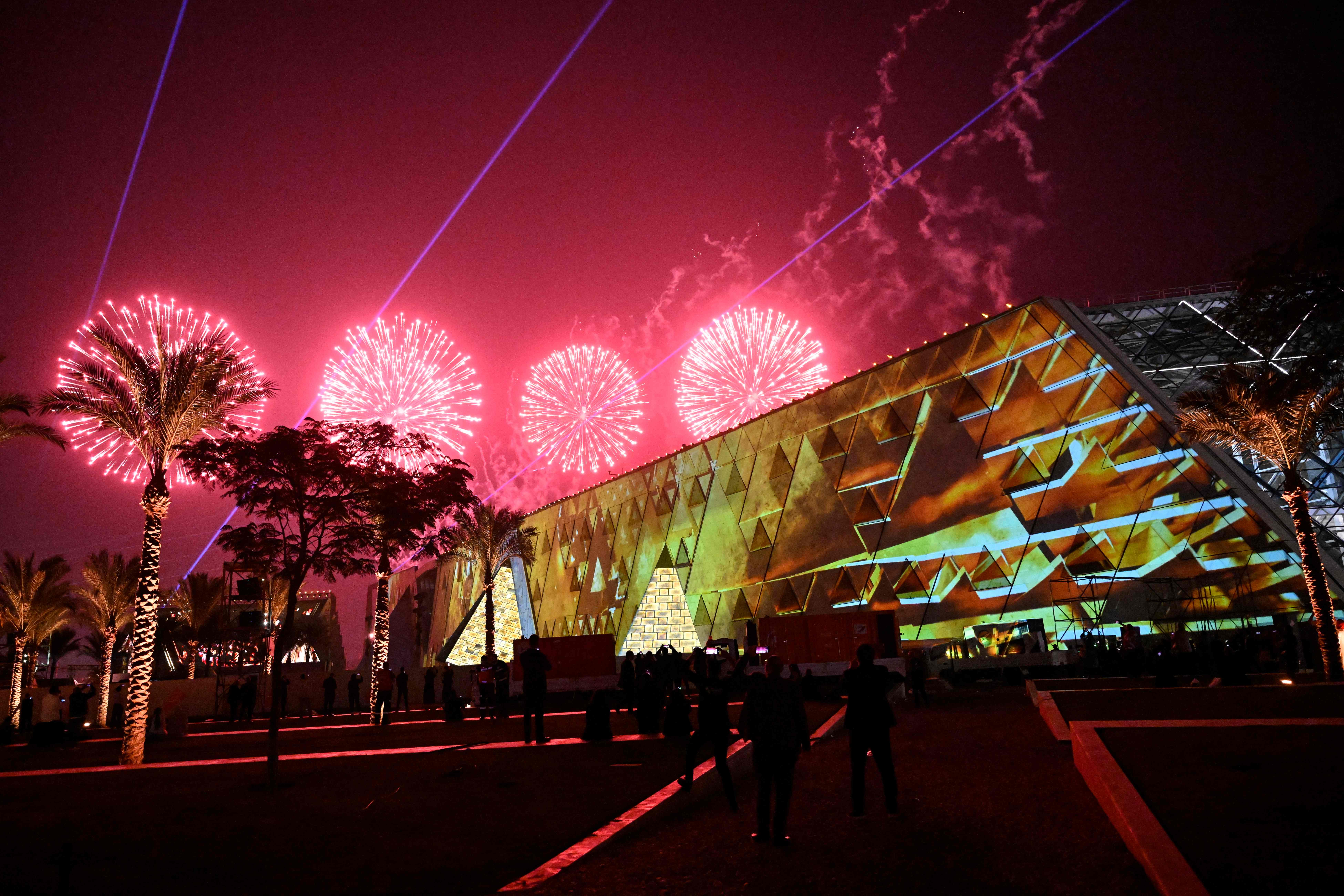
Core Points - The Grand Egyptian Museum has officially opened after over 20 years of construction, becoming the largest single-civilization museum in the world [1] - Egyptian President Sisi emphasized the museum as a testament to the wisdom of the Egyptian people, showcasing their historical achievements [1] - The opening ceremony featured impressive performances, including drones and fireworks, highlighting the essence of ancient Egyptian civilization [1] Summary by Sections - **Museum Overview** - The Grand Egyptian Museum is located approximately 5 kilometers southwest of Cairo, near the Giza Pyramids, and covers an area of about 500,000 square meters [1] - The museum houses over 100,000 artifacts, including a 83-ton statue of Ramses II prominently displayed in the central plaza [1] - **Visitor Projections** - Egyptian officials anticipate that the museum will attract approximately 5 to 7 million visitors annually, allowing them to experience the grandeur of ancient Egyptian civilization [5]
粗粝与精细
Ren Min Ri Bao· 2025-08-07 22:40
Core Insights - The pyramids, particularly the Great Pyramid of Giza, are celebrated as one of the Seven Wonders of the World, showcasing ancient Egyptian architectural prowess and historical significance [1][2]. Group 1: Architectural Significance - The Great Pyramid of Giza, built for Pharaoh Khufu, consists of approximately 2.3 million stone blocks, each averaging 2.5 tons, demonstrating the advanced engineering techniques of ancient Egyptians [1]. - The alignment of the Great Pyramid's meridian with the North Star indicates a sophisticated understanding of astronomy and its integration into architectural design [1]. Group 2: Construction Techniques - Ancient Egyptians utilized the seasonal flooding of the Nile River to transport massive stones, significantly easing the construction process [1]. - The construction of the pyramids involved a unique ramp system, allowing workers to gradually elevate the stones to their intended positions, showcasing remarkable ingenuity [1]. Group 3: Cultural Legacy - The enduring nature of the pyramids reflects the ancient Egyptians' pursuit of perfection and their desire for immortality, symbolizing a deep respect for time and history [2][3]. - The juxtaposition of the Great Pyramid's rough exterior with the finely crafted Valley Temple of Khafre illustrates the duality of ancient Egyptian architecture, merging strength with precision [3].
一周展讯|从邓散木、唐云看海派艺术系列大展
Xin Lang Cai Jing· 2025-08-04 00:50
Group 1 - The article highlights various ongoing and upcoming art exhibitions in Shanghai and other regions, emphasizing the cultural significance and diversity of the showcased artworks [1][3][4] - The "Ancient Egyptian Civilization Exhibition" at the Shanghai Museum will feature 788 artifacts from different periods, aiming to reveal the essence of ancient Egyptian civilization and present the latest archaeological findings [3][4] - The "Life as Architecture" exhibition dedicated to architect I.M. Pei will present over 400 items, including drawings, models, and photographs, many of which are being displayed for the first time [4][6] Group 2 - The "Deng Sanmu Art Exhibition" will showcase a collection of calligraphy, seal carving, manuscripts, and personal items, reflecting the artist's contributions to Shanghai's cultural heritage [6] - The "Tang Yun Art Exhibition" will feature over 80 works divided into three thematic sections, exploring the evolution of Shanghai's flower-and-bird painting style [9] - The "Mogao Caves Art Exhibition" will present a dialogue between ancient and contemporary art through various artistic forms, including sculptures and contemporary works [11] Group 3 - The "Chinese Contemporary Art Yearbook Exhibition" will document and showcase the current state of Chinese art through a combination of literature and artworks [15] - The "Chinese Lunar Exploration Project 20 Years" exhibition will narrate the journey of China's lunar exploration from the launch of Chang'e 1 to the return of lunar soil by Chang'e 5 [17] - The "Greek Civilization Exhibition" will present 270 artifacts from 14 cultural institutions in Greece, covering a timeline from 5800 BC to the 1st century AD, showcasing the social and cultural aspects of ancient Greece [19]
Nature重磅:首次从木乃伊中提取完整人类基因组序列
生物世界· 2025-07-03 03:57
Core Insights - The article discusses the successful extraction of a complete human genome from an ancient Egyptian mummy dating back approximately 4800 years, marking the first complete genome sequence of an ancient Egyptian [4][6] - The findings reveal genetic similarities between the mummy and ancestors from the North African Neolithic period as well as populations from the Fertile Crescent, indicating a complex ancestry [4][6] - The research enhances understanding of the social status and lifestyle of ancient Egyptians during the Old Kingdom period, suggesting the individual was likely a skilled laborer with a higher social standing but not part of the elite ruling class [6][7] Summary by Sections - **Historical Context**: The mummy studied lived during the early pyramid construction period, around 2855-2570 BC, a time when mummification was not yet widespread [4] - **Genetic Analysis**: The research team extracted seven DNA samples, with two being suitable for sequencing, and compared the results with a database of 3233 modern and 805 ancient genomes [6] - **Ancestry Findings**: Approximately 20% of the genome was closely related to populations from the Fertile Crescent, a region known for early civilizations and writing systems [6] - **Physical Condition**: The individual exhibited signs of arthritis and osteoporosis, indicating a physically demanding lifestyle, likely as a potter, which aligns with his higher social status [6][7] - **Implications for Future Research**: The study provides insights into burial conditions that may aid in the preservation of DNA, paving the way for future discoveries in ancient genetics [7]

香港将举办古埃及文明大展
Ren Min Ri Bao Hai Wai Ban· 2025-06-27 01:01
Core Points - The Hong Kong Palace Museum and the Egyptian Supreme Council of Antiquities signed a cooperation agreement to launch a special exhibition titled "Ancient Egyptian Civilization Exhibition: Treasures from the Egyptian Museum" in November 2025 [1] - The exhibition will feature 250 precious artifacts from seven major museums in Egypt, marking their first appearance in Hong Kong and many being showcased outside Egypt for the first time [1] - This exhibition will be the largest, most comprehensive, and longest-running exhibition of ancient Egyptian treasures in Hong Kong's history, running from November 20, 2025, to August 31, 2026 [1] Exhibition Details - The exhibition will be divided into four sections: "The Realm of the Pharaohs," "The Legend of Tutankhamun," "Secrets of Saqqara," and "Ancient Egypt and the World" [1] - Artifacts will include statues, reliefs, stelae, gold ornaments, large sets of mummified coffins, and animal mummies, dating from approximately 7300 years ago to 2000 years ago [1] - The artifacts will come from notable institutions such as the Egyptian National Museum, Luxor Museum, and Suez Museum, as well as recent discoveries from the Saqqara archaeological site [1] Cultural Exchange - The Secretary-General of the Egyptian Supreme Council of Antiquities expressed the hope to share the rich connotations, mysterious charm, and historical relics of ancient Egyptian civilization with audiences in Hong Kong and globally [2] - The CEO of the West Kowloon Cultural District Authority highlighted that this exhibition represents an excellent opportunity to present ancient Egyptian civilization to both local and international audiences, marking an important milestone in cultural exchange between China and Egypt [2]