
可回收运载火箭

Search documents
商业航天:可回收运载火箭的高价值量环节和成本构成(附PPT)
材料汇· 2026-01-15 15:38
Core Viewpoint - The article provides an in-depth analysis of rocket structures, engines, and the application of 3D printing technology in the aerospace industry, highlighting advancements in rocket design and manufacturing processes. Section 1: Rocket Structure - The article explores various components of rocket structures, including the rocket engine, fuel tanks, and recovery technologies, emphasizing the importance of materials and design in enhancing performance and reliability [5][6][8]. - Liquid rocket engines are categorized into two main types: liquid and solid propellants, with a focus on the efficiency and reusability of liquid engines like the Merlin engine [9][11]. - The cost structure of rockets is detailed, with the Falcon 9 rocket's first stage costing approximately $30 million and the second stage around $10 million, totaling about $45 million for a new rocket [10]. Section 2: Rocket Enterprises and Their Rockets - The article discusses various rocket companies, including state-owned and private enterprises, highlighting their contributions to the commercial space sector [51]. - China’s Long March rockets are noted for their extensive launch capabilities, with Long March 8 and Long March 9 being key models for future missions [54]. - Private companies like Blue Arrow and Tianbing Technology are recognized for their innovative approaches, such as the development of reusable liquid oxygen and methane rockets [52][51]. Section 3: 3D Printing Technology in Rocket Engines - 3D printing technology is identified as a transformative force in rocket manufacturing, significantly reducing production time and costs while allowing for complex designs [19][18]. - The article mentions that companies like Tianbing Technology have achieved nearly 90% of their engine components through 3D printing, leading to a 70%-80% reduction in manufacturing cycles and a 40%-50% decrease in costs [19][18]. - The advantages of 3D printing include the ability to create lightweight structures and complex geometries that traditional manufacturing methods cannot achieve [17]. Section 4: Rocket Recovery Technologies - Various rocket recovery methods are discussed, including vertical landing, sea recovery, and innovative techniques like the "chopstick" capture method, which aims to reduce costs and improve efficiency [40][50]. - The article highlights successful recovery missions, such as SpaceX's Falcon 9, which has demonstrated the feasibility of reusing rocket stages [46][50]. - The development of a net recovery system for rockets is noted as a significant advancement in enhancing recovery reliability and reducing operational costs [47].


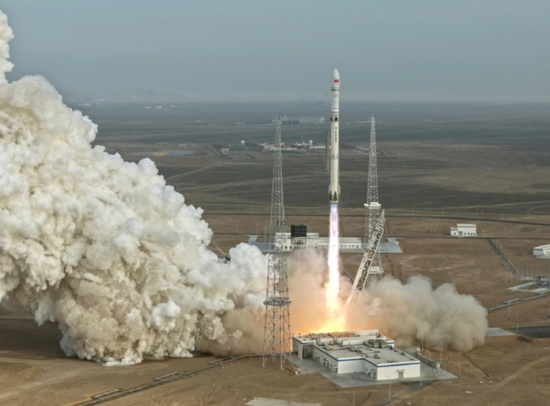
“国家队”出手,可回收运载火箭长征12号甲首飞
Xin Lang Cai Jing· 2025-12-23 05:37
Core Viewpoint - The successful launch of the Long March 12A rocket marks a significant step in China's aerospace capabilities, particularly in the development of reusable rocket technology, which is essential for meeting the increasing demand for low Earth orbit satellite constellations [3][18][30]. Group 1: Long March 12A Overview - The Long March 12A is a two-stage liquid rocket designed for medium payloads, with a height of over 60 meters and a diameter of 3.8 meters, capable of carrying 12 tons to a 200 km low Earth orbit and 7.3 tons to a 700 km sun-synchronous orbit [6][21]. - This rocket utilizes liquid oxygen and methane as propellants, which offer advantages such as reduced carbon buildup and easier maintenance, although it requires further flight validation due to limited engineering experience [21][24]. Group 2: Technological Innovations - The Long March 12A represents a shift from traditional expendable rockets to a new generation of reusable rockets, integrating advanced technologies and design principles aimed at enhancing reusability and operational efficiency [22][29]. - The rocket's design incorporates features for reusability from the outset, including structural strength, control systems for recovery, and propulsion capabilities that allow for variable thrust [24][25]. Group 3: Industry Context and Collaboration - The development of reusable rockets in China is characterized by a dual approach, with state-owned enterprises focusing on reliability and systematic capability, while commercial companies pursue rapid iteration and innovation [26][29]. - The collaboration between state and commercial sectors in rocket development is seen as a complementary relationship, where state enterprises provide foundational technology and commercial entities drive market responsiveness and innovation [29][30]. Group 4: Strategic Importance - The Long March 12A's successful flight is crucial for establishing a low-cost, high-frequency launch capability, which is essential for the future of satellite internet and other space-based services [30]. - As the demand for satellite constellations grows, the Long March 12A is positioned to play a key role in meeting these needs, thereby enhancing China's competitive edge in the global aerospace market [30].
盟升电子20251211
2025-12-12 02:19
Summary of Key Points from the Conference Call Industry Overview - The commercial aerospace industry is entering its 3.0 era, with significant advancements in technology and investment, exemplified by SpaceX's valuation soaring to $800 billion and plans for a $30 billion IPO, potentially reaching a $1.5 trillion valuation, setting a new benchmark for the industry [2][6]. - The domestic satellite launch pace has significantly accelerated, with Longxin Network conducting 15 launches in 2025 compared to just one in 2024, indicating a shift in focus from satellite manufacturing to the entire industry chain, with application market space being over ten times the value of space segment construction [2][7][8]. Company-Specific Insights Alliance Electronics (盟升电子) - Alliance Electronics has seen a remarkable rebound in performance, achieving a record quarterly revenue of 250 million yuan in Q3 2025, a 185% year-on-year increase, with a full-year revenue target exceeding the historical high of 470 million yuan [2][10]. - The company has set a revenue target of 650 million yuan for 2026, representing a 30% increase from the current year, aiming for a total of 1.15 billion yuan over two years [10]. Business Directions - The company focuses on three main business areas: 1. **Guidance and Navigation**: Involves satellite navigation and data link products, primarily for defense applications [11][12]. 2. **Electronic Countermeasures**: Includes end-defense equipment and electronic decoys, with a strong emphasis on expanding into engineering machinery and training equipment [11][12][13]. 3. **Engineering Machinery and Training**: Provides electronic warfare equipment and training devices to enhance military training efficiency [11][12]. Strategic Partnerships - Alliance Electronics has partnered with Sichuan Development to leverage its state-owned background and industry resources, accelerating the transition from military to civilian applications, particularly in Beidou navigation, satellite internet, and smart grid sectors [4][17][19][20]. Market Outlook - The company maintains an optimistic outlook for future market prospects, particularly in missile guidance and data link sectors, expecting continued high growth due to the conversion of historical backlog orders and the release of tasks from the 14th Five-Year Plan [12]. - The commercial aerospace application market is projected to grow significantly, with CVCS having launched over 14,000 satellites and user numbers expected to exceed 8 million, indicating a strong upward trend in user acquisition [2][9]. Technological Developments - The successful recovery of the Zhuque 3 rocket marks a significant milestone for China's capabilities in reusable launch vehicles, with expectations for operational use by 2026 [2][5]. - The company has made strides in low Earth orbit satellite communication, with recent tenders indicating a high demand for terminal equipment, positioning Alliance Electronics favorably in the market [22]. Investment Considerations - The commercial aerospace sector is gaining traction, with increasing interest from capital markets, although concerns remain about the attractiveness of satellite and rocket industries [26]. - The development of low Earth orbit satellite communication is anticipated to follow the model of the Beidou system, transitioning from military to civilian applications, with a focus on high-value components like phased array antennas [27]. Recommendations - Investors are advised to focus on companies with strong positions in the military industry, such as Alliance Electronics, Haige Communication, and China Satellite, while also considering their operational management capabilities and cost-reduction potential [28].
