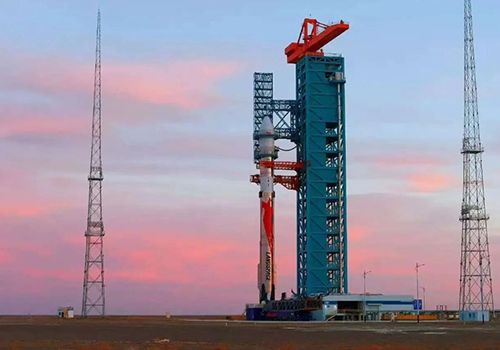
长征十二号甲运载火箭

Search documents
商业航天强势行情持续演绎,全面看多国产大飞机产业链
ZHONGTAI SECURITIES· 2026-01-25 08:53
Investment Rating - Maintain "Buy" rating for the industry [6] Core Viewpoints - The commercial aerospace sector is experiencing strong momentum, with short-term fluctuations providing investment opportunities. The industry is expected to enter a period of explosive growth over the next two years, driven by technological advancements and increasing demand for launch services, satellite networking, and space computing [9][30] - The domestic large aircraft industry is expected to see a dual increase in delivery and localization rates, with key milestones in certification and international cooperation becoming critical in 2026 [15][34] Summary by Sections 1. Policy Developments - The "14th Five-Year Plan" emphasizes the development of strategic emerging industries, including aerospace, and the establishment of a dedicated regulatory body for commercial aerospace [10][28] - New measures have been introduced to promote the development and utilization of satellite remote sensing data, encouraging mergers and acquisitions in the satellite data industry [10][28] 2. Technological Advancements - The successful maiden flight of the "Zhuque-3" rocket and the Long March 12 rocket marks significant progress in China's launch capabilities, with the latter achieving its mission of placing 19 low-orbit satellites into orbit [11][29][50] - The CJ-1000A engine is nearing certification, with expectations for small-scale production to begin soon [18][36] 3. Market Dynamics - The commercial aerospace sector is projected to grow significantly, with the integration of artificial intelligence and space computing driving demand for satellite manufacturing and launch services [12][32] - The upcoming Beijing International Commercial Aerospace Exhibition is expected to generate substantial procurement demand, showcasing advancements across the aerospace industry [13][32] 4. Key Companies to Watch - In the missile and military electronics sector, companies such as Hongyuan Electronics, Torch Electronics, and Huada Electronics are highlighted [24][37] - For aircraft manufacturing, focus on domestic large aircraft manufacturers like AVIC Xi'an Aircraft Industry Group and Guanglian Aviation [38][39] 5. International Competition - The global competition for space resources is intensifying, with significant developments from both China and the U.S. in satellite constellations and launch capabilities [14][33]
酒泉:将建设国家商业航天发射基地
Guan Cha Zhe Wang· 2026-01-23 08:08
Core Viewpoint - Gansu Province's Jiuquan City has officially released the "Jiuquan Commercial Aerospace Industry Development Plan (2026-2035)", aiming to establish "China's Jiuquan Commercial Aerospace Port" and outlining the development path for the commercial aerospace industry over the next decade [1][2]. Group 1: Development Goals and Strategies - The plan emphasizes the strategic positioning of Jiuquan City as a national commercial aerospace launch base, research and testing base, technical support base, and data application base [1]. - It outlines a development framework consisting of "one port, two zones, and multi-point linkage", focusing on seven key industries: launch and testing, rocket manufacturing, satellite manufacturing and application, aerospace data backup and application, technical support, logistics, and aerospace tourism [2]. - Specific actions to ensure effective implementation include attracting investment, project breakthroughs, improving park quality, comprehensive support, empowering with technology finance, and enhancing aerospace branding [2]. Group 2: Policy and Market Context - Jiuquan's initiative reflects a broader trend of intensified policy support for the commercial aerospace industry at both central and local levels, with Beijing and Guangdong also launching their respective action plans to accelerate development [4]. - The establishment of the Commercial Aerospace Department by the National Space Administration in November 2025 marks a significant step in regulatory oversight and strategic planning for the industry [5]. - Recent policy changes have catalyzed technological advancements and market activity, exemplified by the successful launch of the Long March 12 rocket and the introduction of new listing standards for commercial rocket companies on the Sci-Tech Innovation Board [6][5]. Group 3: Future Outlook - Analysts suggest that with the development of Jiuquan's commercial aerospace port and the ongoing refinement of the policy framework, the industry is entering a new phase characterized by market-driven growth, comprehensive layout, and differentiated competition [8].

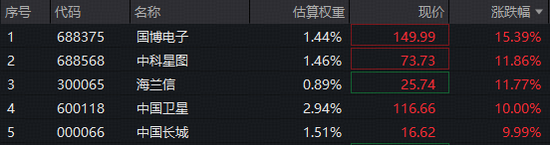
商业航天迎爆发期!军工ETF华宝(512810)飙升逾3.5%再创历史新高! 中国卫星、中国长城涨停
Xin Lang Cai Jing· 2026-01-12 02:03
Core Viewpoint - The military industry ETF, Huabao (512810), has seen a price increase of over 3.5%, reaching a new high since its listing, with significant capital inflow indicating a strong positive trend [1][9]. Group 1: ETF Performance - The military ETF Huabao (512810) recorded a price of 0.936, reflecting a daily increase of 3.54% [2][10]. - Over 30 million yuan was invested in the military ETF Huabao (512810) in the previous trading day, marking a strong positive capital flow [1][9]. - The ETF's trading volume reached 31.34 million, with a turnover rate of 3.42% [10]. Group 2: Commercial Aerospace Developments - China has submitted an application for a large-scale satellite network, planning to add 203,000 satellites to form 14 satellite constellations, setting a new record for domestic satellite network construction [10]. - The application is likely related to China's strategic layout for low-orbit internet constellations, aligning with recent policy support for the satellite internet industry [10]. - The commercial aerospace sector is entering a high-growth cycle, with expectations of a global boom in the next two years, driven by technological advancements and increasing demand for launch services and satellite networking [11][12]. Group 3: Investment Opportunities - The military ETF Huabao (512810) covers 24 commercial aerospace concept stocks, with a combined weight exceeding 32%, making it an efficient investment tool for core military assets [12][13]. - The ETF also includes exposure to various sectors such as deep-sea technology, military AI, low-altitude economy, and large aircraft [12].

技术突破驱动与政策红利释放,推动商业航天长期发展
ZHONGTAI SECURITIES· 2026-01-03 11:47
Investment Rating - The report maintains an "Accumulate" rating for the industry [6] Core Viewpoints - The commercial aerospace industry is expected to enter an explosive growth phase over the next two years, driven by technological breakthroughs and policy incentives. The demand for launch services and satellite networking is anticipated to increase significantly, supported by the U.S. "America First" space policy and China's advancements in rocket launch capabilities [9][21] - The establishment of a dedicated regulatory body, the "Commercial Aerospace Administration," and the rapid acceptance of Blue Arrow Aerospace's IPO indicate accelerated policy and capital support for the commercial aerospace sector [11][22] - The integration of artificial intelligence with commercial aerospace is transforming "space computing" from a concept into a commercial reality, enhancing demand for satellite manufacturing and launch services [12][23] Summary by Sections Industry Overview - The industry comprises 142 listed companies with a total market value of 32,882.43 billion CNY and a circulating market value of 28,949.45 billion CNY [3] Key Developments - The successful launch of the "Fengyun-4C" satellite and the "Long March 7" rocket demonstrates China's growing capabilities in aerospace technology [14][30] - The first operational 30 MW pure hydrogen gas turbine marks a significant milestone in aviation equipment, showcasing advancements in green energy technology [13][28] Market Performance - The defense and military industry index rose by 3.05%, ranking second among 31 major industry sectors, with a current PE(TTM) of 78.4 times [41][48] Investment Opportunities - Recommended companies in the missile and military electronics sector include Hongyuan Electronics, Torch Electronics, and Macro Electronics [24] - In the aerospace engine sector, companies like Aero Engine Corporation of China and supporting firms such as Yingliu Co. and Aerospace Technology are highlighted [25] - For military trade, key players include AVIC Chengfei, AVIC Shenyang, and AVIC Xi'an [26] - In the new domain construction, companies like Guolian Aviation and Superjet Co. are suggested for investment in commercial aerospace [27]
长征十二号甲首飞入轨成功,我国持续探索可回收火箭技术
Changjiang Securities· 2025-12-29 14:29
Investment Rating - The industry investment rating is "Positive" and maintained [8] Core Viewpoints - The successful launch of the Long March 12甲 rocket marks a significant step in China's exploration of reusable rocket technology, despite the failure to recover the first stage. This event lays a solid foundation for future reusable launches, which are expected to significantly reduce launch costs and accelerate the development of China's commercial space industry [10][11] - The report emphasizes that short-term setbacks are a necessary part of industry development, and as technology advances, the cost of rocket launches is likely to decrease, thereby promoting the growth of the commercial space sector. It is recommended to pay attention to key suppliers across the industry chain, particularly those related to satellite applications [10][11] Summary by Sections Event Description - On December 23, at 10:00 AM, the Long March 12甲 rocket was launched from the Dongfeng Commercial Space Innovation Test Area, successfully placing its second stage into the designated orbit, although the first stage was not successfully recovered. The flight test was deemed a basic success [5][10] Event Commentary - The Long March 12甲 rocket, designed for "first-stage reuse," is approximately 70.4 meters long and weighs about 437 tons. Although the first stage recovery was not achieved, valuable data was collected for future launches. The report highlights that reusable technology will greatly enhance rocket capacity and reduce average launch costs, supporting the acceleration of satellite constellation deployment [10][11] - The report notes that both state-owned and commercial space sectors are progressing together, with various companies working on reusable rockets across different payload capacities and technologies, which will complement China's aerospace industry [10][11]
(年终特稿)星河摆渡间,感知中国太空探索“航线”新突破
Zhong Guo Xin Wen Wang· 2025-12-27 02:39
Core Insights - China's space exploration has made significant advancements in 2025, with over 10 flight missions in December alone, including record-breaking launches and successful missions in lunar and deep space exploration [1][4]. Group 1: Lunar and Deep Space Exploration - The Tianwen-2 probe has commenced a decade-long mission to explore asteroid 2016HO3 and comet 311P, marking China's first attempt at asteroid sampling and return [1]. - China has successfully completed lunar and Mars missions, including orbiting, landing, and returning, with the Tianwen-2 mission representing a critical step in catching up with global standards in asteroid exploration [1]. Group 2: Manned Space Missions - The new generation of manned spacecraft and lunar landers is progressing steadily, with a goal set for Chinese astronauts to land on the Moon by 2030 [3]. - The Tianzhou cargo spacecraft has improved its delivery efficiency, achieving a "three-hour express delivery" for space packages, significantly reducing the time for astronauts' return trips [4]. Group 3: Rocket Technology and Launches - The Long March series of rockets has surpassed 600 launches, demonstrating a rapid increase in launch frequency, with the sixth hundred achieved in just 1 year and 10 months [5]. - The successful launches of private sector rockets, such as the Lijian-1, indicate a growing demand for satellite launches and a maturing rocket technology landscape in China [5]. - China is actively pursuing reusable rocket technology, with recent tests of the Zhuque-3 and Long March 12甲 rockets providing critical data for future launches [5]. Group 4: Future Outlook - China's space industry is positioned for significant growth, with policies encouraging the development of a strong space nation included in the 14th Five-Year Plan [7]. - The current advancements in various space technology fields indicate that China is reaching world-class standards, with vast market potential awaiting further release [7].
大消息引爆!集体涨停
Ge Long Hui A P P· 2025-12-25 09:23
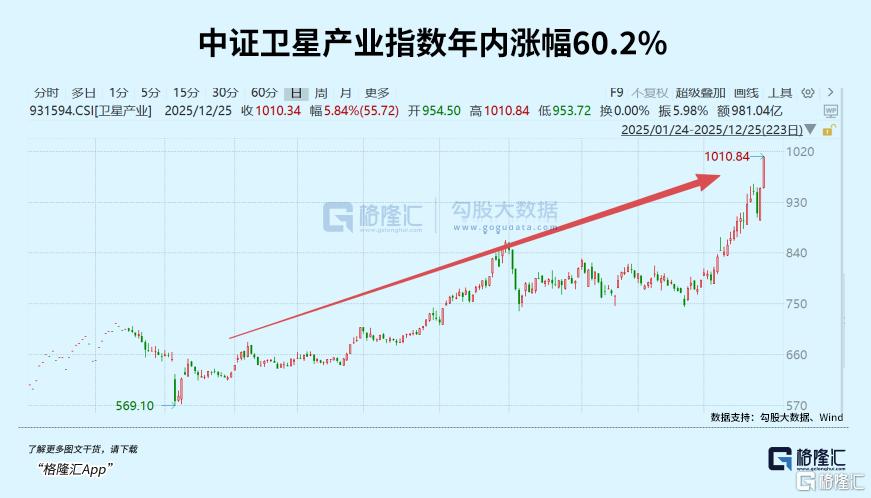
Core Viewpoint - The A-share market continues its upward trend, driven by favorable catalysts in the commercial aerospace and robotics sectors, with significant gains in related ETFs [1][2]. Group 1: Commercial Aerospace - The commercial aerospace sector is experiencing multiple positive catalysts, including the successful launch of the Long March 12 rocket, which provided key engineering data for future technology iterations [2]. - Blue Arrow Aerospace, a leading private aerospace company, has completed its IPO guidance work, marking a significant step towards entering the capital market [2]. - Upcoming industry events, such as the 2025 Commercial Aerospace Development Conference, are expected to further promote industry consensus and accelerate the commercialization of aerospace [2]. Group 2: Robotics - Fenglong Co., Ltd. announced a change in its controlling shareholder to UBTECH, the first publicly listed humanoid robot company globally, which is expected to enhance business synergy [3]. - The recent unveiling of Tesla's humanoid robot in Berlin demonstrated its commercial application potential, performing tasks like packaging and delivery [4]. - The launch of the first robot rental platform, "Qingtian Rent," in Shanghai aims to provide integrated solutions and is expected to expand to 200 cities, serving over 400,000 people [4]. Group 3: Market Trends and Investment Opportunities - Both commercial aerospace and humanoid robotics are identified as high-growth sectors with potential market sizes exceeding trillions [7]. - Continuous technological breakthroughs in both sectors are accelerating commercialization, with humanoid robots already being deployed in manufacturing environments [8]. - Supportive policies from major countries are encouraging investment in both sectors, with initiatives aimed at simplifying processes and promoting collaboration between state and private enterprises [9]. Group 4: Capital Activity - The commercial aerospace sector is projected to exceed 20 billion RMB in financing by 2025, with various stakeholders, including internet giants and local government funds, establishing dedicated funds [11]. - The robotics sector has seen over 600 financing events in the first three quarters of 2025, with significant investments from tech giants and venture capital targeting early-stage technologies [13]. - The enthusiasm in the primary market is beginning to influence the secondary market, with notable increases in relevant indices, such as the China Satellite Industry Index and the National Robot Industry Index [15]. Group 5: Investment Strategies - Investors are advised to focus on leading companies with core technological advantages and clear business models in both sectors [22]. - A gradual investment approach is recommended, emphasizing long-term holdings to navigate the high volatility associated with these growth sectors [22]. - ETFs like the E Fund Satellite ETF and the E Fund Robotics ETF provide convenient investment tools for exposure to the entire industry chain [23].
等着!这事没完!
债券笔记· 2025-12-24 11:31
Group 1: Commercial Aerospace - The Long March 12甲 rocket successfully completed its maiden flight on December 23, achieving its second-stage orbit insertion goal, although the first-stage recovery did not meet expectations. This event highlights the importance of commercial aerospace development [3][5]. - The successful verification of the liquid oxygen-methane technology route is significant, as this fuel is considered a "clean gasoline" for rockets, allowing for carbon-free and reusable applications, which could facilitate future missions to Mars [5]. - The collaboration between state-owned enterprises and private companies is enhancing the aerospace industry, with the Aerospace Eight Institute providing a framework and private firms supplying core engines, thus activating the entire industry chain [5]. Group 2: Market Indices - Despite over 3,800 stocks declining in the market, the indices managed to close slightly positive, indicating a divergence where the index appears strong while individual stocks are underperforming [6]. - The market is currently fluctuating around the 5-day moving average, with increasing short-term divergence, suggesting a cautious approach is warranted as investors await clearer direction [7]. Group 3: Macro and Fixed Income - The 30-year government bond futures surged by 0.89%, reaching nearly 113, driven by a favorable liquidity environment despite the central bank's net withdrawal of funds. This has attracted institutional investors, leading to a drop in the yield of ultra-long bonds to 2.2% [7][8]. - The U.S. GDP for the third quarter grew at an annualized rate of 4.3%, significantly exceeding expectations, primarily due to strong consumer spending, although core PCE inflation rose to 2.9%, dampening interest rate cut expectations [8]. - The Chinese yuan strengthened, breaking the 7.05 mark against the dollar, reaching a 14-month high, with a year-to-date appreciation of 3%, making Chinese assets attractive to foreign investors amid global market pressures [8].

沪指“六连涨” 商业航天板块走强
Zhong Guo Xin Wen Wang· 2025-12-24 09:53
Market Performance - The A-share market in China continued its upward trend on December 24, with major indices closing in the green, marking a "six consecutive days" rise for the Shanghai Composite Index [1] - The Shanghai Composite Index closed at 3940 points, up by 0.53%; the Shenzhen Component Index closed at 13486 points, up by 0.88%; and the ChiNext Index closed at 3229 points, up by 0.77% [1] - The total trading volume in the Shanghai and Shenzhen markets was approximately 188.03 billion yuan, a decrease of about 19.6 billion yuan compared to the previous trading day [1] Sector Performance - Most sectors in the A-share market experienced gains, with the commercial aerospace sector showing a notable increase of 4.18% [1] - Individual stocks such as Youyan Powder Materials, Chaojie Co., New Ray Energy, and Ruihua Tai reached the daily limit, with price increases of approximately 20% [1] Industry Outlook - Analysts predict that the commercial aerospace sector is expected to enter a period of explosive growth over the next two years, driven by accelerated technological iteration and increased demand for launch services and satellite networking [2] - The establishment of the Commercial Aerospace Department by the China National Space Administration aims to optimize policies and regulatory environments, contributing to the rising prosperity of the commercial aerospace industry [2]
前瞻全球产业早报:长征十二号甲运载火箭回收未达预期
Qian Zhan Wang· 2025-12-24 09:49
Group 1: Solar Thermal Power Development - The National Development and Reform Commission and the National Energy Administration aim to achieve a total installed capacity of approximately 15 million kilowatts for solar thermal power by 2030, with electricity costs comparable to coal power [2] - The initiative emphasizes the importance of advancing solar thermal power project construction and expanding new application scenarios to ensure large-scale development [2] Group 2: Electric Vehicle Charging Infrastructure - By 2026, China plans to install over 10,000 charging guns in highway service areas, with at least 25% being high-power chargers [2] - The initiative targets busy service areas during holidays and those with over 40% utilization of charging facilities [2] Group 3: Space and Rocket Technology - The Long March 12A rocket successfully completed its maiden flight, achieving its second-stage orbital goal, although the first-stage recovery did not meet expectations [3] - This rocket is China's second liquid oxygen-methane rocket to attempt recovery on its first flight, providing valuable data for future technology iterations [3] Group 4: Electric Grid Development - The successful operation of the 750 kV power transmission and transformation project in Hanzhong, Shaanxi, marks the first of its kind to cross the Qinling Mountains [4] - This project enhances the power transmission capacity of southern Shaanxi and facilitates the integration of clean energy sources like wind and solar [4] Group 5: Robotics and AI Technology - Yushu Technology has received a patent for a new method to improve the precision and reliability of robot control, which addresses limitations in current robotic models [5] - The patented method involves predicting the impact of robot actions on their environment, allowing for more accurate control commands [5] Group 6: Autonomous Driving and AI Integration - Beijing has issued the first L3-level autonomous driving vehicle license plates, marking a significant step towards mass production of autonomous vehicles in China [3] - The L3 autonomous driving feature is currently limited to specific highways in Beijing, indicating a controlled rollout of this technology [3] Group 7: Corporate Developments - Geely Auto has completed the privatization of Zeekr, acquiring all outstanding shares and delisting from the New York Stock Exchange [7] - This move positions Zeekr as a wholly-owned subsidiary of Geely, streamlining its operations [7] Group 8: Semiconductor Supply Chain Changes - Apple is increasing its procurement of DRAM from Samsung to approximately 60-70% for the iPhone 17, due to rising storage chip prices [13] - This shift indicates a significant change in the supply dynamics for Apple's iPhone storage components [13] Group 9: AI and Cloud Technology Investments - Google is set to acquire Intersect for $4.75 billion, aiming to support the energy demands of its AI development initiatives [14] - This acquisition reflects the ongoing trend of tech companies investing heavily in AI capabilities and infrastructure [14]