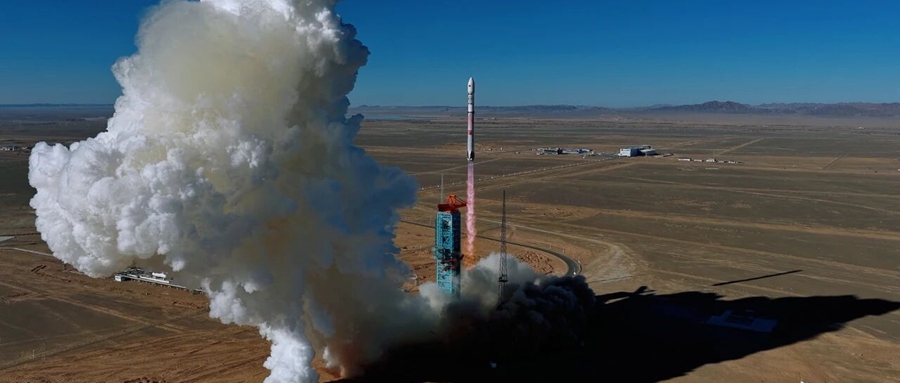
天龙三号运载火箭

Search documents
商业航天“五小龙”,谁是中国版SpaceX?
凤凰网财经· 2026-03-23 11:58
Core Viewpoint - The commercial space industry is experiencing a significant surge, particularly with the upcoming IPO of SpaceX, which has reached a valuation of $1.75 trillion, surpassing Meta and nearing Amazon. This has led to increased investment and interest in China's private space companies and related industries, with notable growth in stock prices and funding rounds [4][6]. Group 1: Market Dynamics - The commercial space sector in China has seen a dramatic increase in investment, with 67 financing rounds recorded in 2025, nearly double that of 2024 [4]. - The private rocket company, Galactic Glory, recently completed a financing round of 5.037 billion yuan, setting a record for private rocket financing in China [4]. - The valuation of the five leading private rocket companies in China exceeds 100 billion yuan, with Blue Arrow Aerospace leading the way in the IPO process [5]. Group 2: Technological and Business Model Insights - The success of SpaceX is attributed to its reusable rocket technology and the Starlink satellite internet service, which generates continuous cash flow and reduces launch costs [7][9]. - The Chinese commercial space sector currently lacks advancements in reusable technology and the rapid deployment of its satellite internet systems, which are crucial for future growth [11][12]. - The planned satellite constellations, GW and Qianfan, aim to deploy 12,992 and 15,000 low-orbit satellites by 2027 and 2030, respectively, but as of December 2025, only 244 satellites have been launched [11][12]. Group 3: Investment Valuations and Market Potential - The total valuation of the five leading private rocket companies has increased significantly, with a combined valuation of approximately 1 billion yuan as of early 2026, reflecting a growth of over 325 million yuan in just over a year [16]. - Investors believe that the combined valuation of these companies should not exceed SpaceX's valuation of $1.5 trillion, indicating a speculative market environment [16]. - The market for satellite manufacturing and launch services in China is projected to reach approximately 26.8 billion yuan by 2026, with a growth rate of 49% [39]. Group 4: Challenges and Future Outlook - Despite the optimistic market sentiment, the financial performance of companies like Blue Arrow Aerospace shows significant losses, with cumulative losses exceeding 3.5 billion yuan from 2022 to mid-2025 [6][36]. - The industry consensus suggests that achieving cost-effective rocket recovery is essential for sustainable operations, yet no Chinese private rocket company has successfully implemented this technology to date [38]. - The future of the commercial space industry in China may see consolidation, with expectations that only a few private rocket companies will survive in the long term [42].


商业航天“五小龙”,谁是中国版SpaceX?
创业邦· 2026-03-23 10:20
Core Viewpoint - The commercial space industry is experiencing significant growth, with a focus on private rocket companies in China, which are seen as potential counterparts to SpaceX. The valuation of SpaceX has reached $1.75 trillion, prompting increased investment and interest in China's private space sector [6][8]. Group 1: Market Dynamics - The commercial space sector has seen a surge in investment, with 67 financing rounds in 2025, nearly double that of 2024. The private rocket company, Space Honor, raised 5.037 billion yuan, setting a record for private rocket financing in China [6][8]. - The commercial space industry in China has experienced a stock price increase of over 40% in a short period, although it has faced volatility since then, with a year-to-date increase of nearly 10% [6][8]. Group 2: Key Players - Five private rocket companies in China are on track for IPOs, with a combined valuation exceeding 100 billion yuan. These companies include Blue Arrow Aerospace, Tianbing Technology, Zhongke Aerospace, Space Honor, and Xinghe Power [7][8]. - Blue Arrow Aerospace is currently in the review process for listing on the Sci-Tech Innovation Board, while the other four companies are in the counseling stage [8]. Group 3: Technological Challenges - The commercial space industry is heavily reliant on launch vehicles, which are essential for satellite deployment and network formation. However, the Chinese private sector has yet to achieve successful rocket recovery, which is crucial for reducing launch costs [9][22]. - The lack of a successful recovery technology in the Chinese commercial space sector is a significant hurdle, as it requires substantial investment and technological advancement [22][23]. Group 4: Financial Performance - Blue Arrow Aerospace reported cumulative losses exceeding 3.5 billion yuan from 2022 to mid-2025, highlighting the financial challenges faced by private rocket companies [23]. - The company generated revenue of 36.43 million yuan in the first half of 2025, with 97.96% coming from single rocket launch services, indicating a heavy reliance on this revenue stream [23]. Group 5: Future Outlook - The market for satellite manufacturing and launch services in China is projected to reach approximately 26.8 billion yuan by 2026, with a growth rate of 49% [25]. - The valuation of private rocket companies is influenced by their ability to secure launch orders within the framework of China's satellite network, with expectations that only a few companies will survive in the long term [28][30].

决战2026:中国民营火箭企业该“交卷”了
经济观察报· 2026-02-07 05:53
Core Viewpoint - The Chinese commercial space industry has reached a critical juncture after 11 years of development since the government encouraged private investment in space infrastructure in 2014. Despite recent launch failures, market enthusiasm remains high, with significant IPO activities and capital inflow into the sector [4][6][24]. Group 1: Recent Launch Failures - On January 17, 2026, both a state-owned Long March 3B rocket and a private company, Xinghe Power's "Gushenxing No. 2" rocket, experienced launch failures on the same day [2][3]. - In December 2025, another private rocket, Zhuque No. 3, faced issues during its recovery phase, highlighting ongoing challenges in the industry [3]. Group 2: Market Response and IPO Activities - Despite the setbacks, the capital market's interest in commercial space remains strong, with companies like Blue Arrow Aerospace and Star Glory making significant progress towards IPOs [4][5][24]. - The commercial space sector has seen a surge in stock prices, with many companies experiencing rapid increases in market value, even if they have not yet generated substantial revenue [5][8]. Group 3: Satellite Production and Capacity - China submitted an application for 203,000 satellites, which has led to a bullish market reaction, with many companies seeing their stock prices double [8]. - The production capacity for satellites is not a limiting factor, as companies like Galaxy Aerospace have significantly reduced manufacturing times through advanced production techniques [8]. Group 4: Structural Challenges in Launch Capacity - The reliance on state-owned rockets for major launches has created a bottleneck for private companies, which struggle to secure launch opportunities [10][11]. - Private companies have primarily used solid rockets, which are less capable of meeting the demands for large-scale satellite deployments, leading to a mismatch in supply and demand [10][11]. Group 5: Development of New Rocket Companies - Due to dissatisfaction with existing launch options, companies like "Xinghuo Shikong" have been established to develop new rockets, indicating a shift towards self-reliance in launch capabilities [12]. - The new company is backed by significant investment and aims to produce larger rockets capable of carrying more substantial payloads [12]. Group 6: Cost and Technology Challenges - The high costs associated with launching rockets, particularly at commercial launch sites, have led some companies to consider alternative methods, such as sea launches [13]. - The industry is focused on developing reusable rocket technology to reduce costs, with various companies exploring different propulsion systems [16][20]. Group 7: Financial Pressures and IPO Timing - The urgency for companies to go public is driven by early investors seeking liquidity, with many companies nearing IPOs despite ongoing technical challenges [27][28]. - The year 2026 is seen as a pivotal moment for the industry, where successful launches and technology validation are critical for maintaining investor confidence [28].
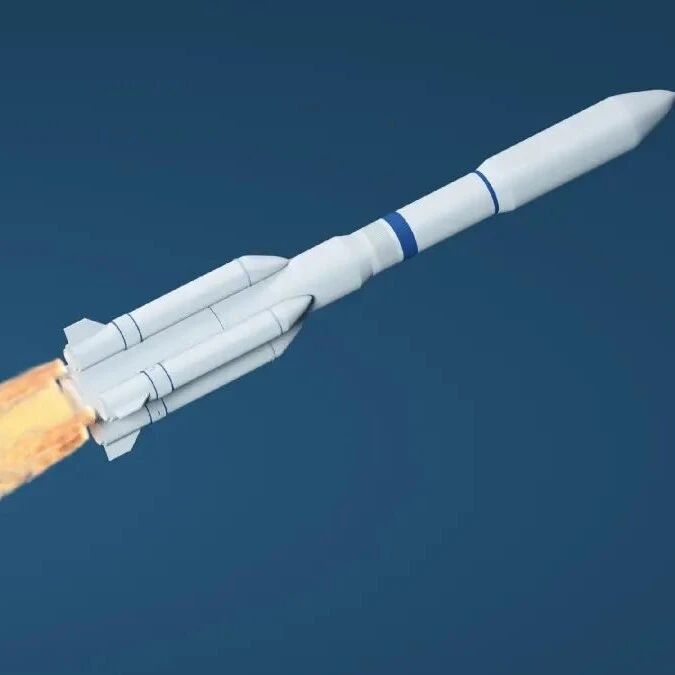
商业航天迎来“决战时刻”
Jing Ji Guan Cha Wang· 2026-02-06 13:52
Core Insights - The Chinese commercial space industry is facing significant challenges, highlighted by the failures of both state-owned and private rocket launches on January 17, 2026, marking a critical moment in the sector's development [1][2][3] - Despite recent launch failures, investor enthusiasm for commercial space remains high, with multiple companies advancing towards IPOs and significant market activity in related stocks [2][16] - The industry is at a pivotal point, with a pressing need for liquid rocket capabilities to meet the ambitious goal of deploying 203,000 satellites [4][10] Industry Developments - On January 10, 2026, China submitted a large-scale application for frequency and orbital resources for 203,000 satellites, which spurred a surge in stock prices within the commercial space sector [4] - The production capabilities of companies like Galaxy Space have improved significantly, with a reported annual capacity of 100 to 150 medium-sized satellites [5] - The commercial space sector is experiencing a structural mismatch in launch capacity, as most private companies are still reliant on solid rockets, which are not suitable for large-scale deployments [6][10] Market Dynamics - The demand for launch services has led companies like Yuanxin Satellite to explore in-house rocket development due to dissatisfaction with existing commercial options [7][8] - High costs associated with launch facilities, such as the Hainan commercial space launch site, are pushing companies to consider alternative solutions like sea-based launches [9] - The urgency for private companies to demonstrate liquid rocket capabilities is underscored by the need to fulfill the ambitious satellite deployment plans [10][12] Financial Landscape - The IPO landscape for commercial space companies is becoming increasingly competitive, with several firms, including Blue Arrow Aerospace and Tianbing Technology, nearing public offerings [16][17] - The regulatory environment has shifted to support commercial space ventures, allowing companies to meet IPO requirements even with recent setbacks in rocket recovery [16][17] - Early investors are feeling pressure to exit, leading to a trend of share sell-offs as companies approach IPOs, highlighting the need for liquidity in the sector [18][19] Technological Challenges - The focus on reusable rocket technology is critical for reducing launch costs, with estimates suggesting that reusability could lower costs by 40% to 60% [11][12] - The industry is divided between two main propulsion technologies: liquid oxygen and kerosene versus liquid oxygen and methane, each with its own advantages and challenges [14][15] - Achieving successful rocket recovery remains a significant hurdle, with technical complexities involved in ensuring reliable performance during re-entry and landing [13][14]
“国家队”出手,可回收运载火箭长征12号甲首飞
Xin Lang Cai Jing· 2025-12-23 05:37
Core Viewpoint - The successful launch of the Long March 12A rocket marks a significant step in China's aerospace capabilities, particularly in the development of reusable rocket technology, which is essential for meeting the increasing demand for low Earth orbit satellite constellations [3][18][30]. Group 1: Long March 12A Overview - The Long March 12A is a two-stage liquid rocket designed for medium payloads, with a height of over 60 meters and a diameter of 3.8 meters, capable of carrying 12 tons to a 200 km low Earth orbit and 7.3 tons to a 700 km sun-synchronous orbit [6][21]. - This rocket utilizes liquid oxygen and methane as propellants, which offer advantages such as reduced carbon buildup and easier maintenance, although it requires further flight validation due to limited engineering experience [21][24]. Group 2: Technological Innovations - The Long March 12A represents a shift from traditional expendable rockets to a new generation of reusable rockets, integrating advanced technologies and design principles aimed at enhancing reusability and operational efficiency [22][29]. - The rocket's design incorporates features for reusability from the outset, including structural strength, control systems for recovery, and propulsion capabilities that allow for variable thrust [24][25]. Group 3: Industry Context and Collaboration - The development of reusable rockets in China is characterized by a dual approach, with state-owned enterprises focusing on reliability and systematic capability, while commercial companies pursue rapid iteration and innovation [26][29]. - The collaboration between state and commercial sectors in rocket development is seen as a complementary relationship, where state enterprises provide foundational technology and commercial entities drive market responsiveness and innovation [29][30]. Group 4: Strategic Importance - The Long March 12A's successful flight is crucial for establishing a low-cost, high-frequency launch capability, which is essential for the future of satellite internet and other space-based services [30]. - As the demand for satellite constellations grows, the Long March 12A is positioned to play a key role in meeting these needs, thereby enhancing China's competitive edge in the global aerospace market [30].
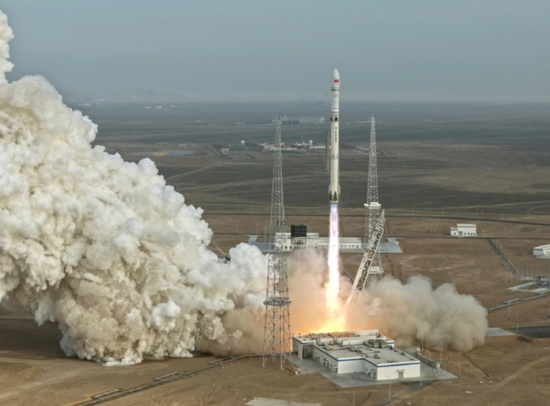
中国商业航天迈入爆发期
21世纪经济报道· 2025-12-19 06:10
Core Viewpoint - 2025 is projected to be a pivotal year for China's commercial space industry, transitioning from technological accumulation to explosive growth, with multiple private aerospace companies completing rocket launch tests and accelerating satellite internet deployment [1] Group 1: Industry Developments - The Chinese government is providing strong support for commercial space through policies, including the "14th Five-Year Plan" emphasizing the construction of a "space power" and the establishment of a dedicated Commercial Space Administration [1] - Despite a promising outlook, the industry faces significant supply chain challenges, particularly in upstream infrastructure, with a consensus that the bottleneck is not in downstream applications but in launch capacity and costs [1] - The recent successful launch of the Zhuque-3 rocket and the upcoming maiden flight of the Long March 12甲 rocket are seen as significant milestones for China's commercial space sector, potentially reshaping market dynamics [3][4] Group 2: Technological Innovations - The Zhuque-3 rocket, developed by Blue Arrow Aerospace, is a new generation of low-cost, high-capacity, reusable rocket, utilizing a self-developed liquid oxygen-methane engine [3][7] - The Long March 12甲 rocket, developed by China Aerospace Science and Technology Corporation, emphasizes a stable supply chain by using a liquid oxygen-kerosene engine, reflecting a dual risk approach in China's aerospace strategy [8] - The ultimate goal of reusable rocket technology is to significantly reduce launch costs, with the Zhuque-3 aiming to lower the cost per kilogram to below 20,000 RMB, enhancing China's competitive edge in the global market [9][10] Group 3: Market Dynamics and Future Outlook - Predictions indicate that within three years, launch prices in China could approach those of SpaceX, with the potential to undercut SpaceX's Falcon 9 prices in about five years [11] - The competitive focus in the coming years will center on cost control, reliability, fulfillment capabilities, and service responsiveness, as companies strive to meet the growing demand for satellite deployment [11] - The challenges faced by Chinese rocket companies include not only technological hurdles but also the need for systematic engineering and industrialization to catch up with established players like SpaceX [11]
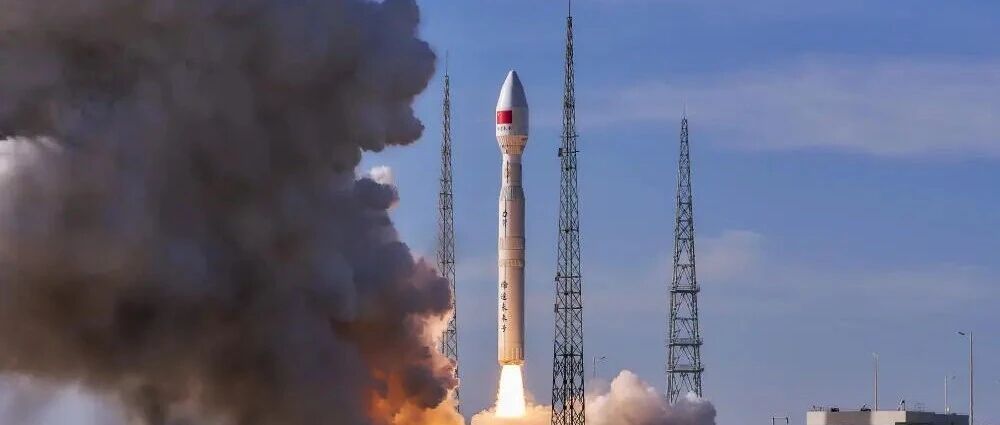
中国可回收火箭蓄力突围
2 1 Shi Ji Jing Ji Bao Dao· 2025-12-18 23:43
Core Insights - 2025 is projected to be a pivotal year for China's commercial space industry, transitioning from technological accumulation to explosive growth, with multiple private aerospace companies completing rocket launch tests and accelerating satellite internet deployment [1][11] - Policy support is intensifying, with the "14th Five-Year Plan" emphasizing the construction of a "space power," and the establishment of a dedicated Commercial Space Administration by the National Space Administration [1][11] - Despite a promising outlook, supply chain weaknesses remain evident, particularly in upstream infrastructure, which is seen as a critical bottleneck for the industry [1][11] Industry Developments - December marked significant advancements in China's reusable rocket technology, highlighted by the launch of the Zhuque-3 rocket, which, despite a recovery failure, provided valuable experience for future developments [2][12] - The Zhuque-3 rocket, developed by Blue Arrow Aerospace, is a new generation of low-cost, high-capacity, reusable liquid oxygen-methane rocket, showcasing advanced features such as a reaction control system and landing legs [2][12] - Following Zhuque-3, the Long March 12甲 rocket, developed by China Aerospace Science and Technology Corporation, is set for its maiden flight, indicating a rapid progression in China's commercial space capabilities [2][12][13] Market Dynamics - Currently, only the United States has mastered reusable rocket technology, with SpaceX leading the way, having completed over 500 launches and capturing 86% of the global orbital payload market in 2023 [3][13] - In contrast, China's commercial launch capacity remains limited, with a market share in commercial payloads only in the single digits, insufficient to support the ambitious deployment of satellite constellations [3][14] - The urgency for breakthroughs in reusable rocket technology is underscored by the need to address the significant launch capacity gap in the market [4][15] Technological Innovations - The Zhuque-3 rocket's development process emphasized a unique engineering approach, integrating market demand insights and innovative materials like stainless steel to reduce production cycles [6][16] - The Long March 12甲 rocket adopts a different strategy, focusing on stable supply chains and leveraging domestic resources to ensure reliable operations [7][17] - The Tianlong-3 rocket, set for its first flight, aims for high reliability and low-cost delivery, utilizing advanced materials and 3D printing technology [7][17] Cost Reduction Strategies - The ultimate goal of reusable rocket technology is to significantly lower launch costs, with a focus on recovering the first stage of rockets, which constitutes the highest cost component [8][19] - The Zhuque-3 is designed for 20 reuses, with operational costs expected to decrease by approximately 45% after five uses, reflecting a model of high initial investment followed by diminishing marginal costs [8][19] - The target cost for launching per kilogram is set below 20,000 RMB, which would enhance China's competitive edge in the global market [20] Competitive Landscape - The future competition in the rocket market will center on cost control, reliability, fulfillment capabilities, and service responsiveness [10][20] - Chinese companies face significant challenges in catching up with established players like SpaceX, which has spent over a decade refining its technology [10][21] - The ongoing developments in China's commercial space sector indicate a gradual resolution of previously deemed insurmountable challenges, as companies continue to innovate and validate their technologies [21]
主题风向标 12 月第 1 期:聚焦国家重大战略,布局科技与能源
GUOTAI HAITONG SECURITIES· 2025-12-14 05:38
Group 1: Core Insights - The report highlights a recovery in trading activity for key themes, particularly in commercial aerospace, energy independence, AI applications, and domestic consumption, driven by improved market risk appetite and supportive macroeconomic policies [2][3][5]. Group 2: Commercial Aerospace - The upcoming launch of the Long March 12 reusable rocket and the completion of ground tests for the Tianlong 3 rocket are significant milestones, with China's StarNet completing a network of 127 low-orbit satellites, accelerating its deployment [3][20][25]. - The National Space Administration's action plan for commercial aerospace emphasizes the development of new technologies and products, predicting a tenfold increase in satellite launch demand by 2030 compared to 2024 [3][20][25]. - Investment recommendations include focusing on rocket manufacturing, satellite communication, and new technologies such as reusable rockets [21][25]. Group 3: Energy Independence - The central government emphasizes accelerating the construction of a new energy system and expanding green electricity applications, with a target of 25% non-fossil energy consumption by 2030 [5][22][35]. - The share of clean energy in total installed capacity has reached 60%, with 84% of new capacity in the first ten months of 2025 coming from clean sources [22][35][39]. - Investment directions include smart grids, new energy storage solutions, and nuclear fusion energy [22][35]. Group 4: AI Applications - The report notes significant growth in AI applications, with Alibaba's Qianwen app experiencing a 149.03% increase in monthly active users, leading globally [23][41]. - The government aims for over 70% penetration of new-generation intelligent terminals and systems by 2027, with a target of over 90% by 2030 [23][41]. - Investment opportunities are identified in internet applications across various sectors, including finance, gaming, and government services, as well as in data center power equipment [23][41]. Group 5: Domestic Consumption - The central government is focused on boosting domestic consumption through various initiatives, including enhancing the supply of quality goods and services [5][47]. - New consumption scenarios, such as sports events and winter tourism, are emerging, with the ice and snow sports market projected to exceed 187.5 billion yuan in the 2024-2025 season, reflecting a 25% year-on-year growth [47][48]. - Investment recommendations include sectors benefiting from consumption promotion measures, such as tourism, hotels, and sports equipment [47][48].
国产可重复使用运载火箭成功发射入轨
Zheng Quan Ri Bao Wang· 2025-12-04 03:56
Core Viewpoint - The successful launch of the Zhuque-3 rocket marks a significant step in China's commercial space industry, despite the failure of the recovery test, providing valuable data for future improvements [1][2]. Group 1: Zhuque-3 Rocket Overview - Zhuque-3 is a new generation of low-cost, high-capacity, and reusable liquid oxygen-methane launch vehicle developed by Blue Arrow Aerospace [1]. - The rocket features a two-stage design with a diameter of 4.5 meters and a total length of 66.1 meters, powered by Blue Arrow's self-developed Tianque series engines [1]. - The first stage is equipped with a control system for vertical landing recovery, although the recovery attempt failed due to an abnormal combustion incident [1]. Group 2: Industry Implications - The test flight provided critical engineering data that will support the optimization of future rocket designs and enhance overall reliability [2]. - The launch is seen as a confidence booster for China's commercial space sector, indicating that the mission execution met expectations despite the recovery setback [2]. - The upcoming launches of two additional reusable rockets in December highlight the increasing frequency of such missions in China's commercial space landscape [3]. Group 3: Future Prospects - The industry anticipates a shift towards regular operational flights of reusable rockets, with ongoing improvements based on data collected from test flights [2][3]. - The successful collection of key data during the Zhuque-3 mission fills a gap in China's capabilities regarding large rocket vertical recovery [3]. - Continuous iteration and technical enhancements are expected to bring China closer to achieving reliable reusable launch vehicle operations [3].
朱雀升空背后,谁在改写中国商业航天版图?
Mei Ri Jing Ji Xin Wen· 2025-12-03 14:02
Core Viewpoint - The successful first flight of the Zhuque-3 rocket marks a significant step in China's commercial space industry, despite not achieving the recovery verification task. This event highlights the dual breakthrough of "technological advancement" and "scale explosion" in the commercial space sector since its inception in 2015 [1][2]. Industry Overview - The commercial space sector is becoming a focal point for major powers, with China integrating it into its national space development strategy through the establishment of a dedicated Commercial Space Administration [1][2]. - The industry is experiencing rapid expansion, with at least 20 provinces in China implementing supportive policies to enhance their commercial space capabilities [1][2]. Technological Developments - The Zhuque-3 mission achieved five domestic firsts in technology, indicating progress in the development of reusable rockets [6][7]. - The development of reusable rockets is expected to reduce launch costs and increase launch frequency, addressing the current bottleneck of insufficient launch capacity [2][6]. Market Dynamics - The commercial space market in China is projected to grow from approximately 0.38 trillion yuan in 2015 to 2.3 trillion yuan by 2024, with an annual growth rate of about 22%. By 2030, the market could approach 10 trillion yuan [14][15]. - The competition among local governments to develop commercial space industries is intensifying, with regions like Hubei aiming to establish significant commercial space hubs by 2028 [16][18]. Company Landscape - Various private companies are focusing on developing large reusable rockets, with Blue Arrow Aerospace being one of the closest to achieving this goal [6][7]. - A list of companies and their respective rocket projects indicates a diverse landscape, with firms like Star River Power and Tianbing Technology also targeting reusable rocket technologies [9][10]. Financing Trends - In 2024, the commercial space sector in China saw 52 financing events totaling 15 billion yuan, with significant investments in satellite operations and rocket manufacturing [20][19]. - The financing landscape is concentrated in regions like Beijing and Shanghai, reflecting their potential for commercial space development [20][19].